
Close to You
Carpenters · 1970
Close to You is a studio-crafted pop record defined by Karen Carpenter’s voice, Richard Carpenter’s arrangements, and familial oversight — not myth, not rebellion, not accident.
Close to You is a studio-crafted pop record defined by Karen Carpenter’s voice, Richard Carpenter’s arrangements, and familial oversight — not myth, not rebellion, not accident.
Joan Armatrading (1976) is a London-recorded studio album produced by Glyn Johns. It features slide guitar on 'Like Fire', steel guitar on 'Down to Zero', alto saxophone on 'Love and Affection', and string arrangement on 'Help Yourself'. It mixed acoustic work with jazz-influenced material and spawned the Top-10 hit 'Love and Affection'. Johns considered it the best album he had ever been associated with. He used strings, added guitars and voices with economy and precision — strengthening each song without overcrowding the singer or the song.
Mad Dogs & Englishmen is a live double-album recorded during a hastily assembled 1970 US tour. The band — over 20 musicians — was named Mad Dogs & Englishmen by Denny Cordell after the Noël Coward song. Leon Russell recruited most players, many from Delaney & Bonnie. It includes material not from Cocker’s first two studio albums.
Sheryl Crow’s 1996 self-titled album is a self-produced, self-performed pivot — rich in texture, rooted in New Orleans, and unflinching in its lyrics. It trades collaboration for control, ambiguity for consequence, and polish for presence.
Tea for the Tillerman is Cat Stevens’s fourth studio album, recorded between May and July 1970 across three London studios — Morgan, Island, and Olympic — and features contributions from Alun Davies (guitar, backing vocals), Harvey Burns (drums and percussion), John Ryan (double bass), Del Newman (string arrangements), Jack Rothstein (solo violin), and Paul Samwell-Smith (backing vocals), alongside Stevens’s multi-instrumental and vocal performances. The album includes iconic songs such as 'Wild World' and 'Father and Son', and Stevens also created the front cover illustration. A previously unreleased version of 'But I Might Die Tonight' was used in the 1970 film Deep End and later released in 2020. The album has been reissued multiple times, including a 2020 Super Deluxe Edition with remastered and newly mixed versions, and a reimagined version titled Tea for the Tillerman2, released the same year. Critical reception varied contemporaneously but grew more laudatory over time, with retrospective praise for its themes and melodic craftsmanship, and inclusion in numerous 'greatest albums' lists. It was released on 23 November 1970 by Island Records in the UK and A&M in North America. All songs were written by Cat Stevens. The personnel details are adapted from the liner notes of the 2020 CD reissue. Shepard 'Shep' Sherbell provided photography for the album. The album reached the top 10 in the US and top 20 in the UK, and has been certified and referenced widely in popular culture, including films and television shows. The original release included eleven tracks, all written by Stevens, and the Deluxe Edition added demos and live recordings. The Super Deluxe Edition contains five discs, including remasters, new mixes, Tea for the Tillerman2, music videos, live videos, and a 12" vinyl of 1970 Troubadour recordings. In November 2008, a Deluxe Edition was released; in January 2012, a hi-res 24/192 kHz remaster appeared on HDtracks.com. On 28 May 2020, Yusuf announced Tea for the Tillerman2, released 18 September 2020, described as a reimagining of the same eleven songs for a new age with dramatic results. Four songs from the album appeared in Harold and Maude (1971), and 'Father and Son' featured in Guardians of the Galaxy Vol. 2 (2017) and The Boat That Rocked (2009). The album was used as the closing title track of the British sitcom Extras, and its artwork was parodied in a 2014 episode of The Simpsons. The album was included in 1001 Albums You Must Hear Before You Die (2006), The Definitive 200 Albums of All Time (2007), and Colin Larkin's All Time Top 1000 Albums (voted number 342). Rolling Stone ranked it number 205 in its 2020 revision of the 500 Greatest Albums of All Time. Robert Christgau found the music monotonous in a contemporary Village Voice review, while Ben Gerson of Rolling Stone noted its resonance despite occasional overuse of dynamics. William Ruhlmann of AllMusic praised its spirituality and melodic craft, calling it a big seller and crediting it with making Stevens a pop star for the second time in four years. Stevens, a former art student, created the cover artwork. The album features songs including 'Where Do the Children Play?', 'Hard Headed Woman', 'Wild World', 'Sad Lisa', 'Into White', and 'Father and Son'.

Crime of the Century is Supertramp’s third studio album, recorded in 1974 at Trident and Ramport Studios with co-producer Ken Scott. It features eight songs selected from ~42 demos, includes field recordings from London Paddington and Leicester Square, and reflects collaborative and individual songwriting between Rick Davies and Roger Hodgson.

Just As I Am is a 1971 soul debut defined by acoustic guitar, vocal clarity, and disciplined arrangement. It was recorded in three sessions due to funding constraints, produced by Booker T. Jones, and features Stephen Stills on lead guitar, Al Jackson Jr. and Jim Keltner on drums, and Bobbye Hall on percussion. Its sound is dry, warm, and immediate — no reverb, no overdubs beyond live takes, no embellishment. It establishes Withers as a writer of quiet emotional precision, not grand gesture. It falls short only if you expect fireworks — there are none. This is music built to last because it refuses to shout.

Outlandos d’Amour is a tightly wound, rhythm-first debut—punk’s architecture with pop’s hooks and reggae’s ghost notes. It succeeds by subtraction: no overdubs, no reverb, no safety net. Its power lies in what it refuses to do.
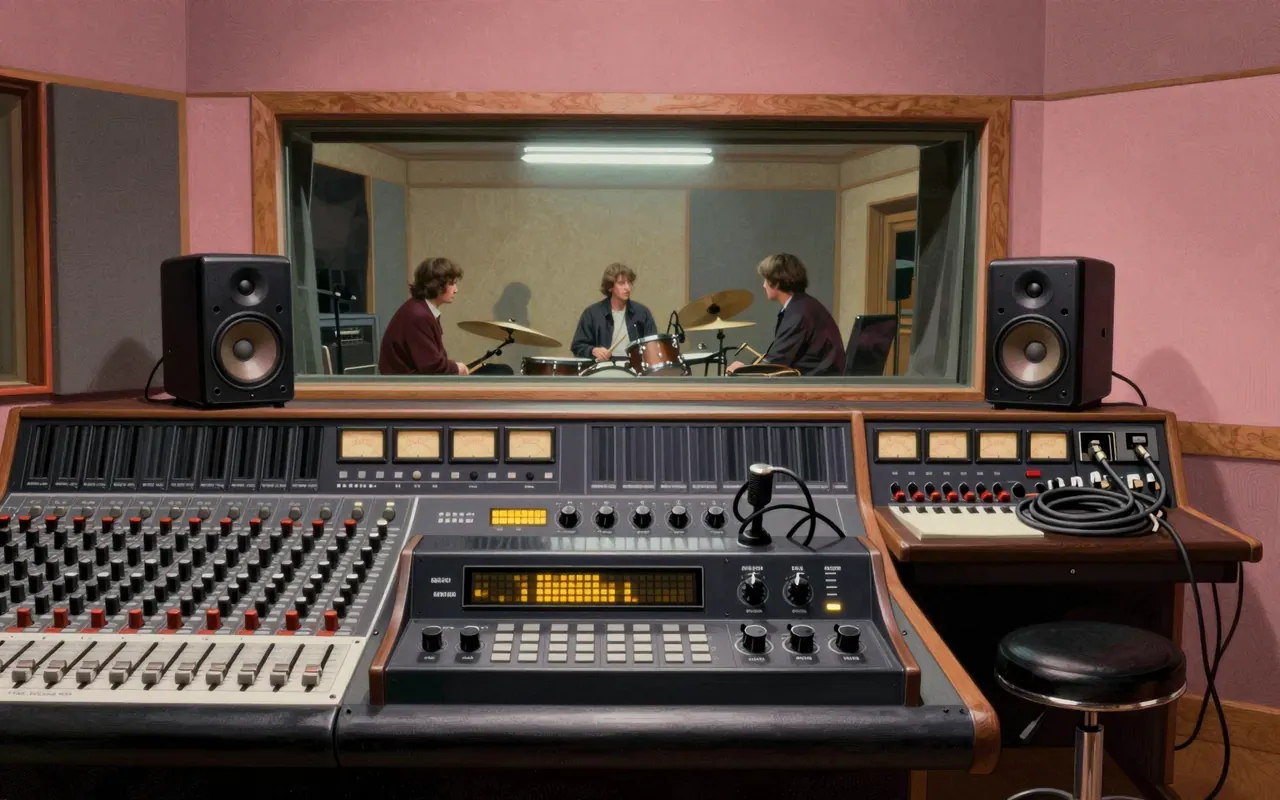
Synchronicity is a pop record built on architectural restraint—synths instead of skank, separation instead of syncopation, clarity instead of clutter.
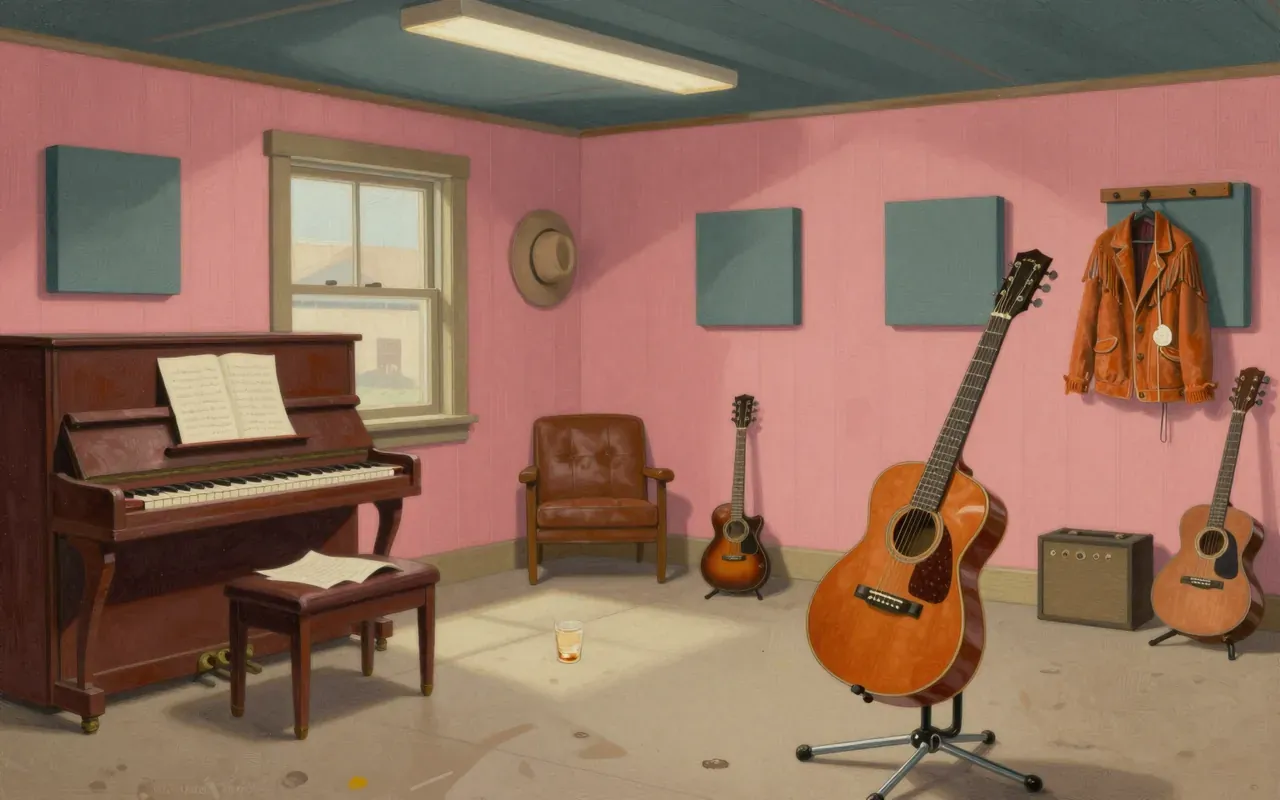
The Gilded Palace of Sin is the Flying Burrito Brothers’ 1969 debut, recorded at A&M Studios in Hollywood with producer Larry Marks and engineer Henry Lewy. It features Sneaky Pete Kleinow’s B6-tuned pedal steel guitar — routed through a rotating Hammond Leslie amplifier and fuzzbox — alongside vocal harmonies modelled on the Everly and Louvin Brothers. Most songs were written by Gram Parsons and Chris Hillman at their San Fernando Valley residence, ‘Burrito Manor’. The album includes originals by Parsons, Hillman, and Chris Ethridge, plus two covers by Dan Penn and Chips Moman. Fast Eddie Hoh was dismissed mid-session due to substance abuse, leading to use of session drummers including Jon Corneal and Popeye Phillips. Its themes fuse country, soul, and psychedelic rock with lyrical references to Larry Spector and Robert F. Kennedy, framed by irony — ‘gilded’ as surface opulence masking moral decay.

Unhalfbricking is Fairport Convention’s third studio album and their first 1969 release, marking a pivotal transition from American folk-rock influences toward a British folk-slanted sound. It features traditional English folk songs—including the influential 'A Sailor's Life'—and previously unreleased Bob Dylan material sourced from The Basement Tapes sessions, including 'Percy's Song', 'Million Dollar Bash', and 'Si Tu Dois Partir', the latter adapted with improvised French lyrics during a Middle Earth Club interval. The album was recorded at Sound Techniques and Olympic Studios in London with engineer John Wood, and includes early contributions from Dave Swarbrick on fiddle, notably on 'Cajun Woman', where the band improvised microphone placement using a dismantled telephone. Sandy Denny sang lead on all but one track, following Iain Matthews' departure mid-recording; her composition 'Who Knows Where the Time Goes?' became a signature song and enduring classic. The title originated from the word game Ghost, and the UK sleeve photograph—taken at the Denny family home—was captured shortly before the fatal May 1969 crash that killed drummer Martin Lamble and Jeannie Franklyn, casting the album's release in a context of profound personal and collective reckoning.

Wave is Antônio Carlos Jobim’s fifth studio album, released in 1967 on A&M Records. It was recorded in the US with mostly American musicians. Claus Ogerman arranged and conducted. The album features trombonists Urbie Green and Jimmy Cleveland, flautist Jerome Richardson, bassist Ron Carter, and a string section. Jobim performed piano, guitar, harpsichord, and vocals.
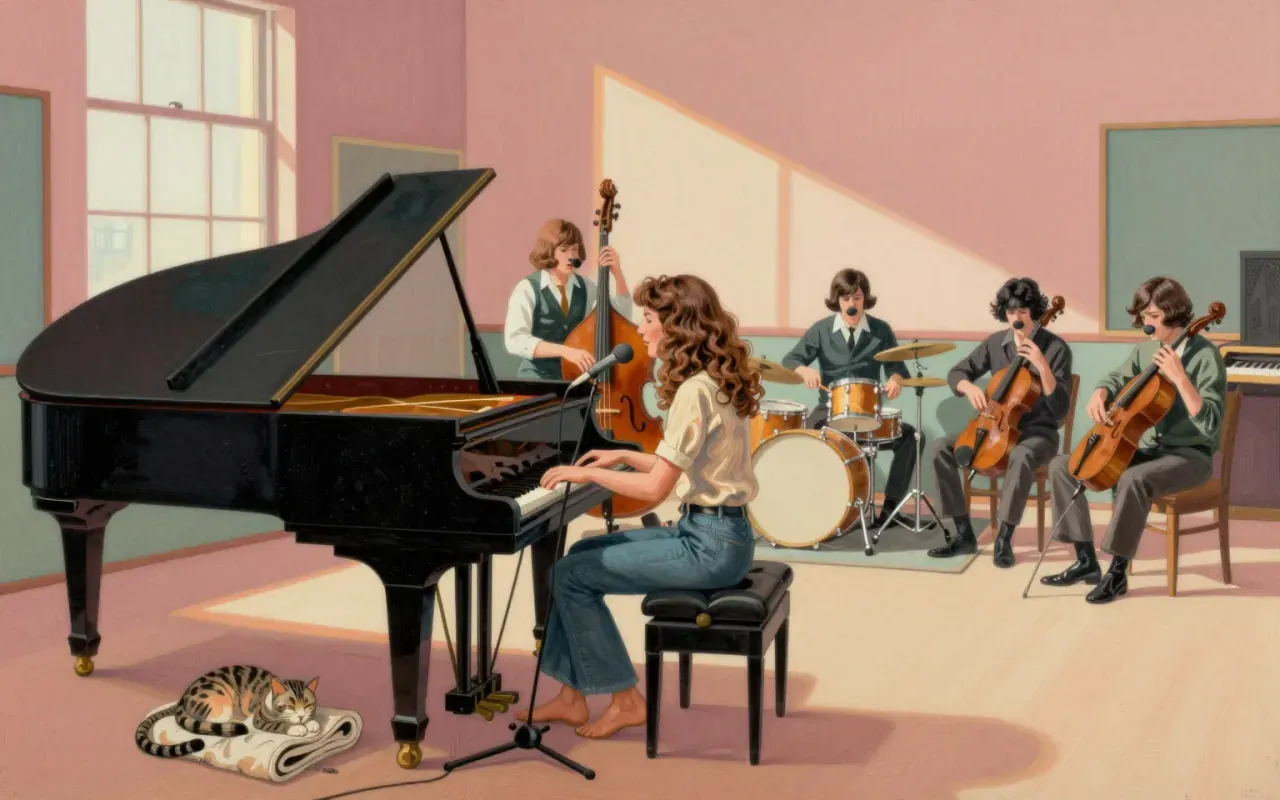
Recorded at A&M's Hollywood studios with James Taylor and a small circle of session players, Tapestry lets Carole King sing her own catalogue for the first time, trading polish for conviction across twelve mostly piano-led songs.
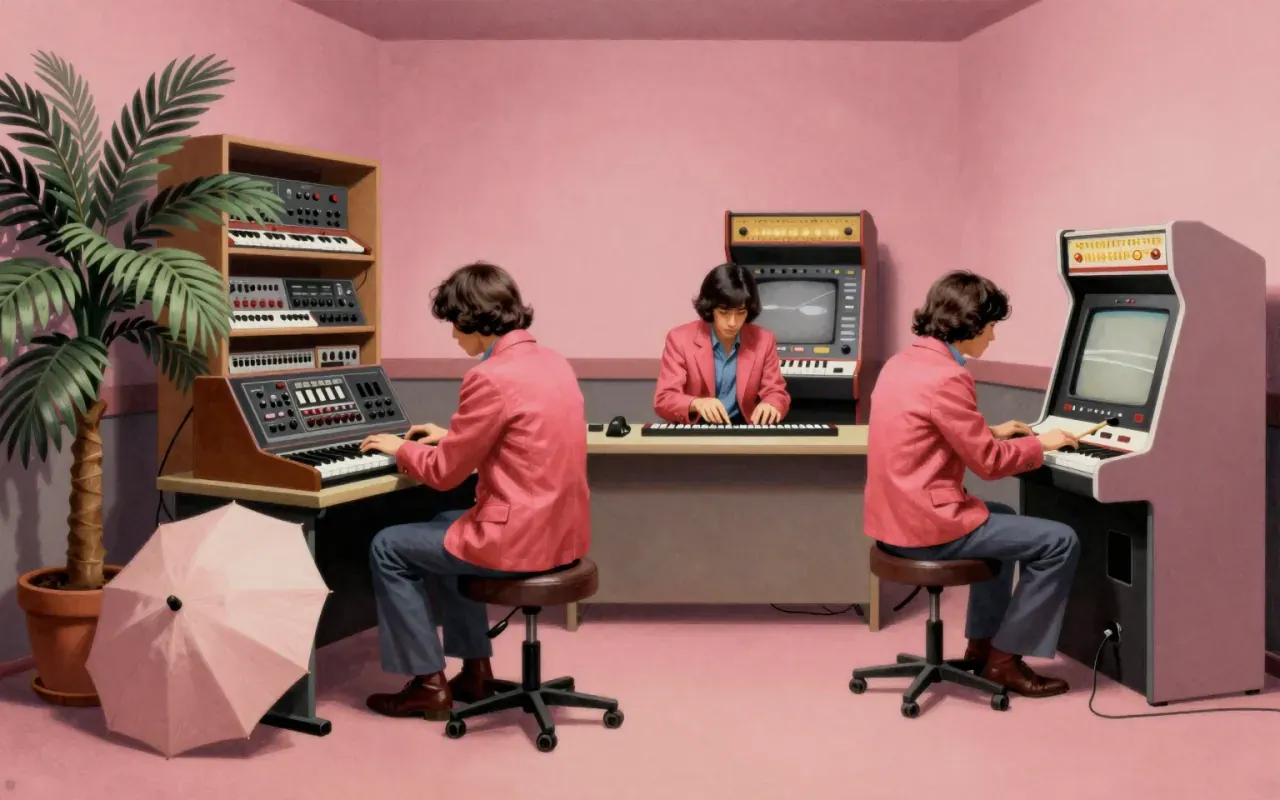
Yellow Magic Orchestra's 1978 debut turned a mocking cover of a 1959 exotica tune into a synth-pop landmark, built almost entirely on a Roland Microcomposer and a rack of early synthesizers. Playful, cool and stranger than its chart success suggests, it is now heard less as a novelty than as an ancestor of electro, techno and much of the sampling culture that followed.