Saved
Rock · Pop

Brothers in Arms

This is not a rock album—it’s a studio document disguised as one.

Worth your time?4/5Yes.Hear the whole thing.What works, what does not, who it is for ↓
10:55in productionCh. 1 · The Room Was the Instrument/ 10:55 · ceiling 15 min
4 chapters · 10:55Ceiling 15:00

The brief is written and checked. The video joins this page when it is cut.4 chapters · 2 min read · 10:55 planned

Read the brief

A digitally recorded rock album made in two phases: initial tracking at AIR Studios in Montserrat between 2 November and 21 December 1984, followed by overdubs at Power Station in New York in February 1985. Produced by Mark Knopfler and Neil Dorfsman, it features deliberate spatial arrangement of instruments in a small, acoustically limited room whose sonic character derived from its Neve 8078 desk; was among the first major rock albums recorded digitally on a Sony 24-track machine; suffered loss of material due to defective tape; and underwent key personnel changes—including Hal Lindes’ departure, Terry Williams’ suspension and replacement by Omar Hakim, and Guy Fletcher joining full-time as second keyboardist.

Chapters & takeaways4
  1. 1:34
    The Room Was the Instrument

    The sound comes from the room’s limits—not its size.

  2. 3:10
    Tape Failed. They Kept Going.

    Digital recording wasn’t futuristic—it was fragile.

  3. 4:38
    No One Played What They Were Hired To Play

    Every major guitar and drum part is a replacement.

  4. 6:29
    Accident Was the Arranger

    The biggest hit was built on a mic setup no one meant to use.

1 more chapterFewer chapters
Running order9
  1. 01
    So Far Away5:14

    Heard in Let It Be (1970)Bill & Ted's Excellent Adventure (1989)

  2. 02
    Money for Nothing8:25

    Heard in Electric Dreams (1984)Digger (2026)Niu LaiThe "Weird Al" Yankovic Video Library

  3. 03
    Walk of Life4:13

    Heard in Show of Hands (2008)

  4. 04
    Your Latest Trick6:34
  5. 05
    Why Worry8:31

    Heard in Dogs of War!

  6. 06
    Ride Across the River6:59
  7. 07
    The Man’s Too Strong4:40
  8. 08
    One World3:41

    Heard in The Magnificent Seven (1960)

  9. 09
    Brothers in Arms6:56

    Heard in Under the Volcano (2021)Platoon (1986)

Film placements are the ones described in each film's own entry, so the list is partial rather than complete.

Worth your time?

Yes. Hear the whole thing.

4/ 5
What works
  • guitar tone on 'Money for Nothing'
  • spatial clarity of 'So Far Away'
  • bass-and-synth interplay on 'Walk of Life'
  • dry, close-miked intimacy of 'Your Latest Trick'
What does not
  • live-band spontaneity
  • analog warmth
  • unmediated performance
Hear it if
  • people who listen to rooms, not just players
  • people who care how a Neve 8078 desk shapes a mix
  • people who want to hear what happens when a band replaces its drummer mid-session
Skip it if
  • people who want to hear Dire Straits as a live quartet
Who should hear it, and who should skipHide who it is for
The written brief2 min read

What the record is and where it came from

A digitally recorded rock album made in two phases: initial tracking at AIR Studios in Montserrat between 2 November and 21 December 1984, followed by overdubs at Power Station in New York in February 1985. It was produced by Mark Knopfler and Neil Dorfsman, with personnel shifts including Hal Lindes’ departure, Terry Williams’ suspension, Omar Hakim’s drum re-recording, and Guy Fletcher joining full-time as second keyboardist.

How it sounds, and how it was made

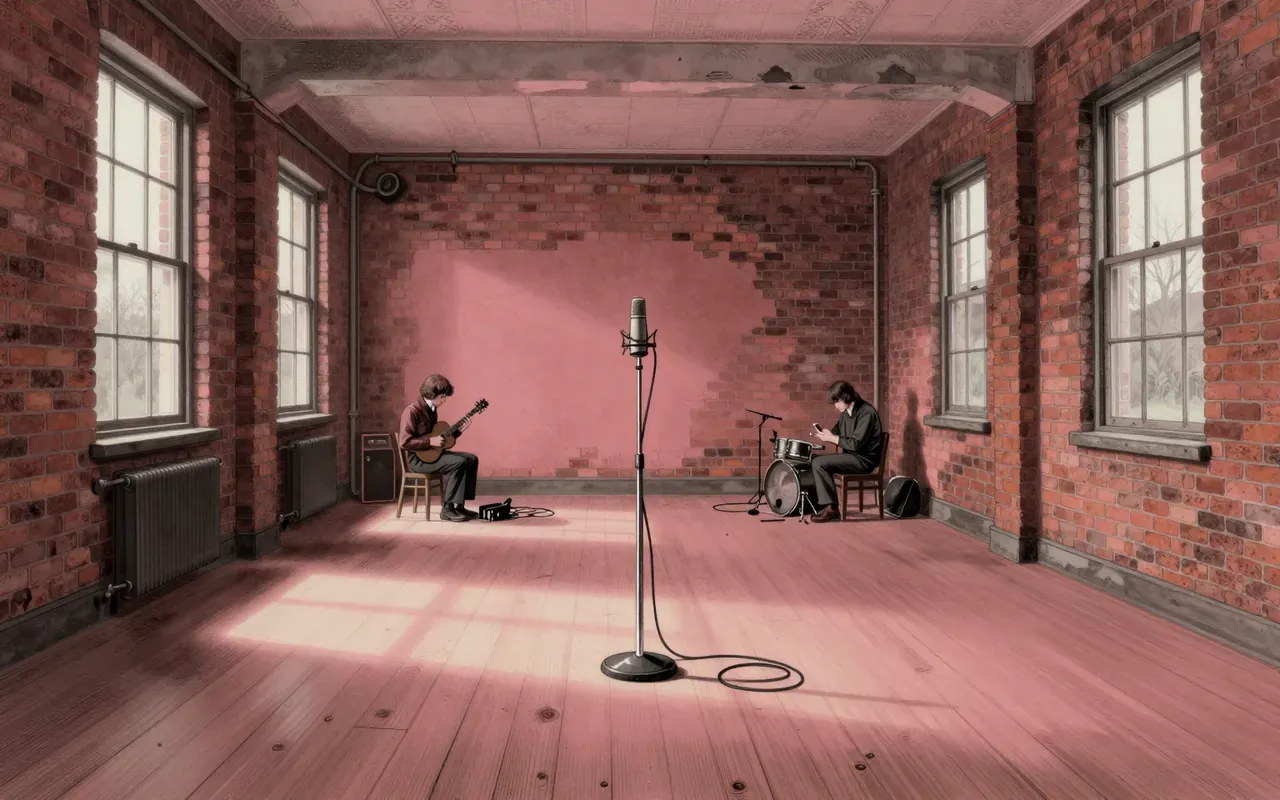
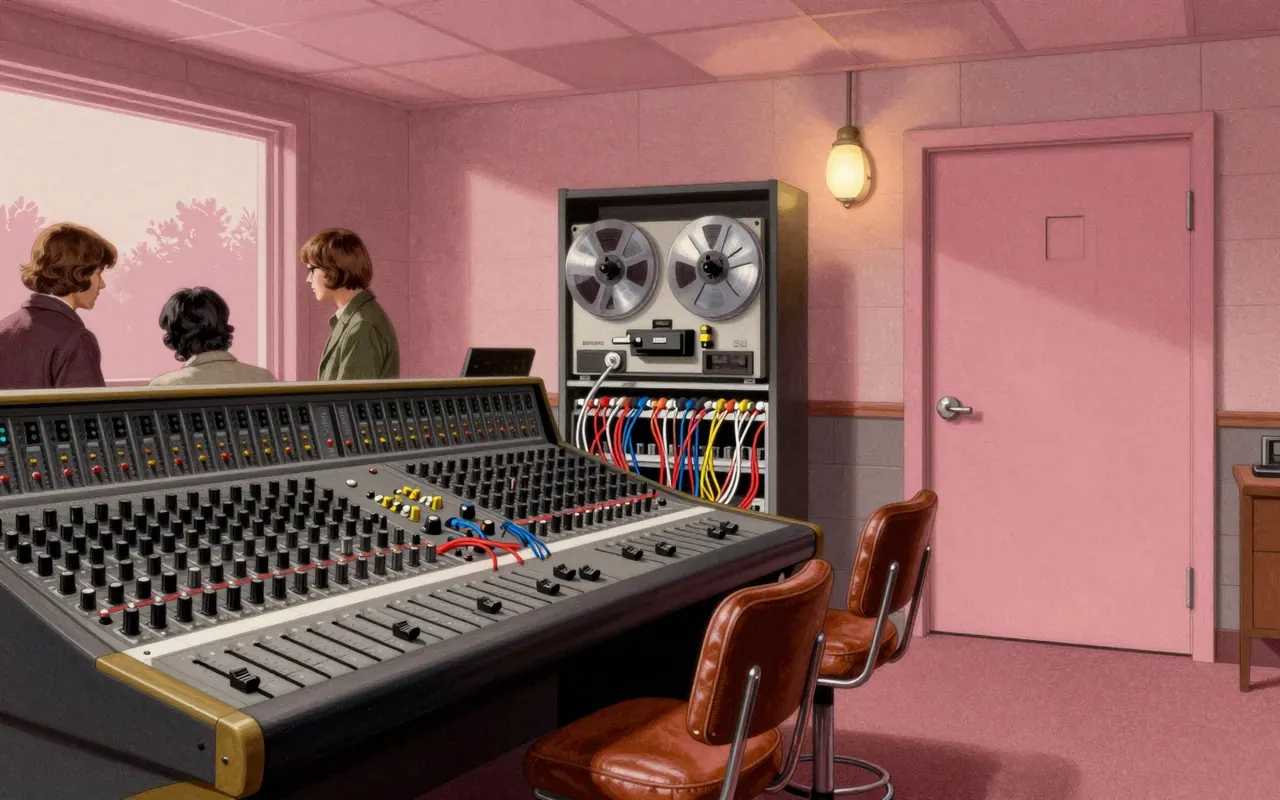
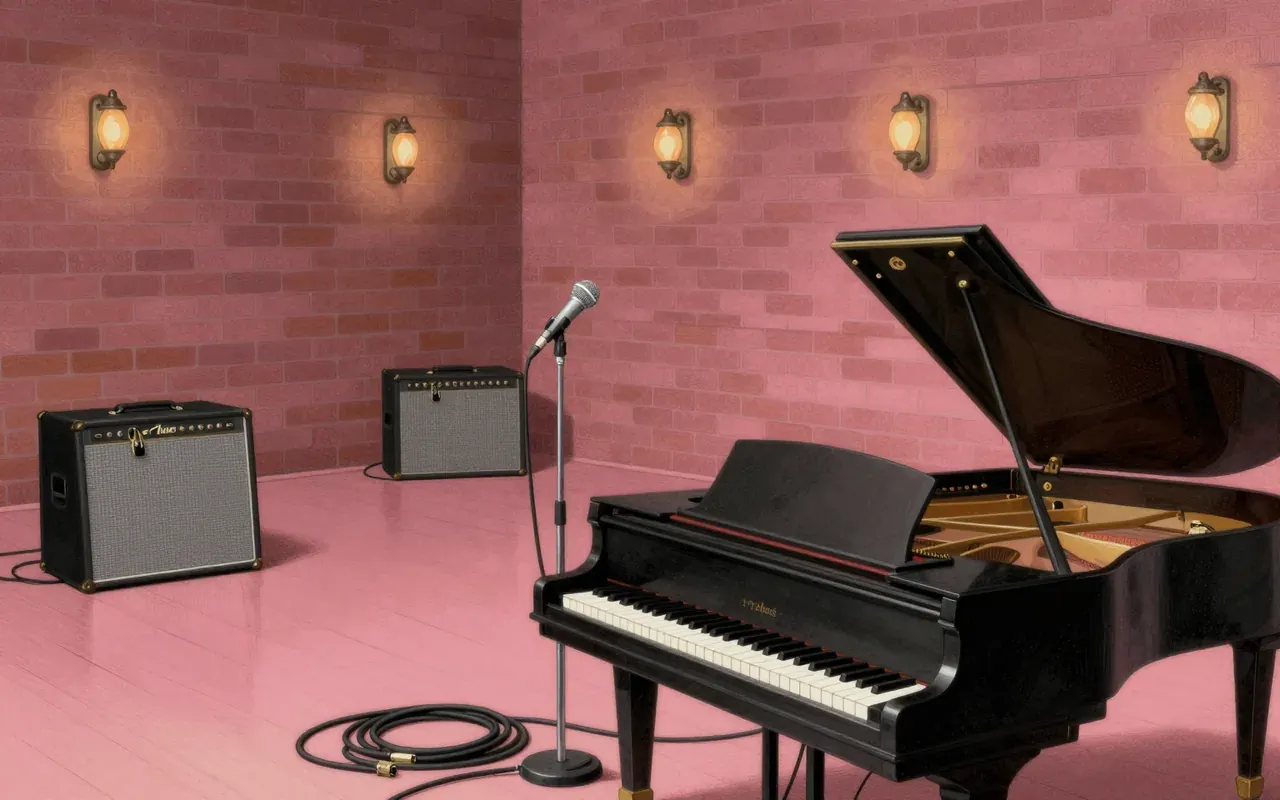
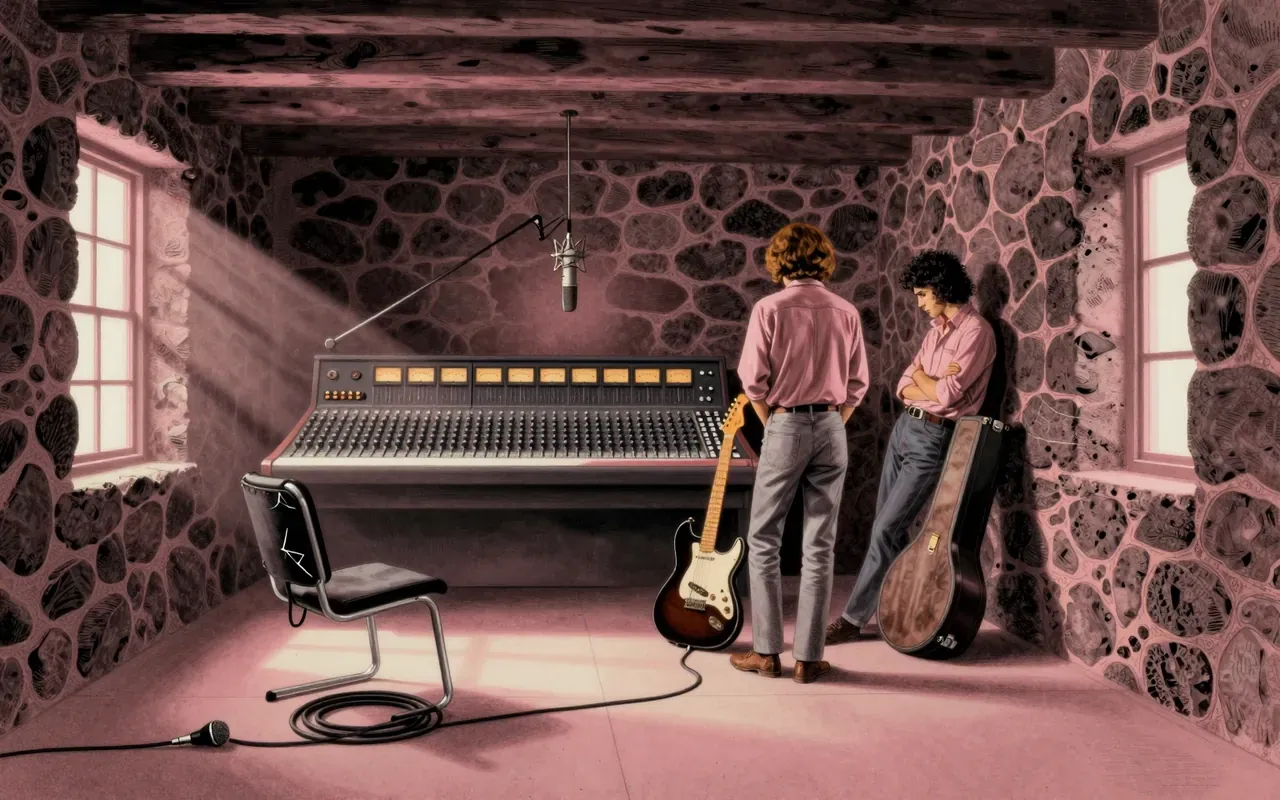
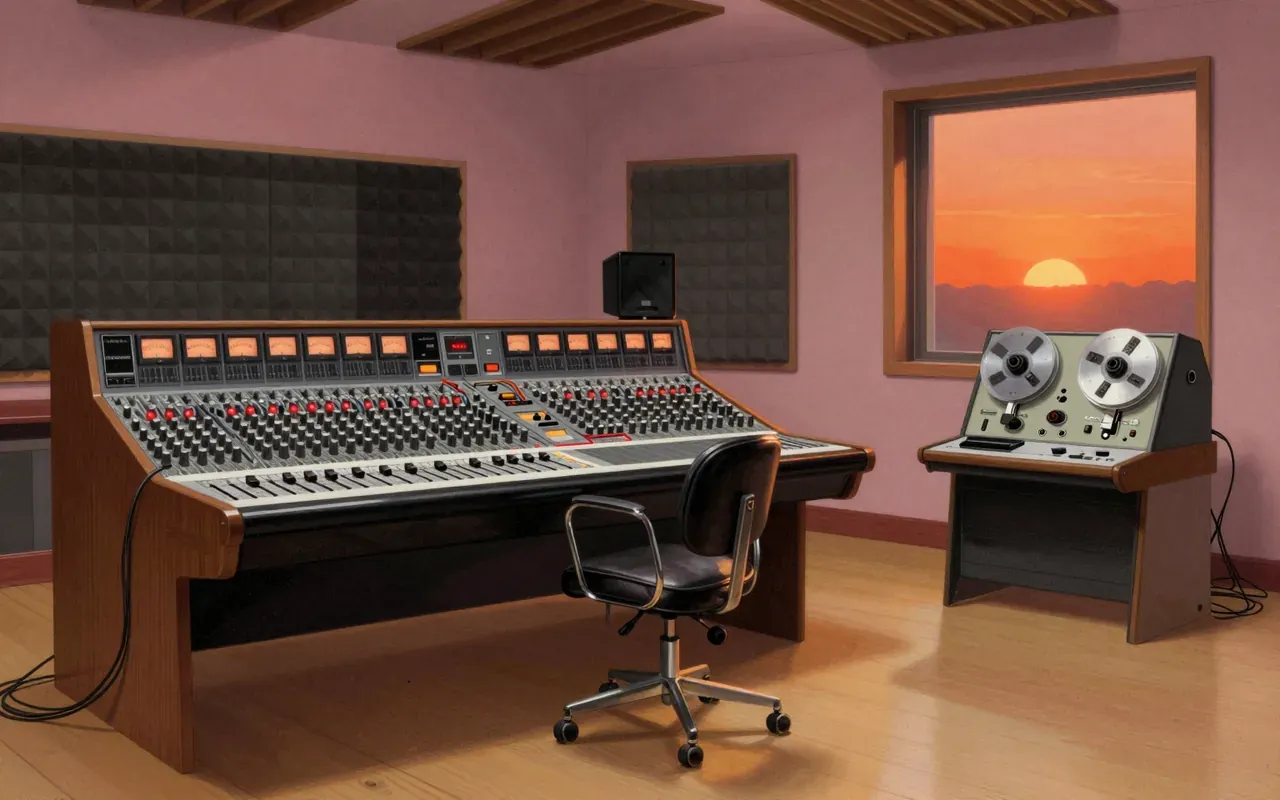
It sounds like a small, unisolated room with instruments placed deliberately: drums in the far left corner, piano in a tight right-corner booth, Hammond B3 with Leslie speaker wedged in the control-room entryway or outdoors, bass amp in a vocal booth, guitar amps miked with Shure 57s, AKG 451s and Neumann U67s, synths in the control room. It was recorded digitally on a Sony 24-track machine at AIR Studios in Montserrat, then overdubbed at Power Station in New York. The guitar tone on ‘Money for Nothing’ came from an accidental mic setup—mics pointing at the floor, off-axis, elsewhere—left over from incomplete preparation and used without processing.

What lands

The guitar tone on ‘Money for Nothing’ lands. The spatial clarity of ‘So Far Away’ lands. The bass-and-synth interplay on ‘Walk of Life’ lands. The dry, close-miked intimacy of ‘Your Latest Trick’ lands.

What does not

It does not sound loose or improvised. It does not foreground Hal Lindes’ guitar. It does not use Terry Williams’ original drum parts. It does not treat the studio as a neutral container.

The ideas inside it

The album’s ideas are not lyrical themes but sonic decisions: fidelity as priority, space as instrument, accident as authorship, and digital capture as constraint—not convenience.

Who should hear it, and who should not

People who listen to rooms, not just players. People who care how a Neve 8078 desk shapes a mix. People who want to hear what happens when a band replaces its drummer mid-session and records bass through a Neumann FET 47 in a vocal booth. Not people who want to hear Dire Straits as a live quartet.

Is it worth your time

Yes—if you want to hear how spatial discipline, digital ambition and unplanned engineering shaped a rock record’s texture. No—if you expect analog warmth, live-band spontaneity or unmediated performance.
Same genre · Rock4 of 319
10:36
Van HalenVan Halen · 1978Van Halen (1978) is a live-band-in-a-room document made with deliberate constraints: three weeks, minimal overdubs, intentional mistakes, and one electric sitar. It lands hard on guitar tone, rhythmic lock, and frontman energy—not lyrics, concept, or polish. Its ideas are sonic, not thematic. It rewards listeners who hear music as physical event, not narrative. It is worth your time if you want to hear how urgency is built—not faked.
11:08
Last SplashThe Breeders · 1993Last Splash is a record built on refusal: refusal to accept a bad room, refusal to separate performance from process, refusal to let gear choices remain neutral. Its sounds are specific, physical, and intentional — not atmospheric or symbolic. It is rock music as carpentry, not mythmaking.
10:30
Dire StraitsDire Straits · 1978Dire Straits’ 1978 debut is a document of restraint: no reverb, no doubling, no vocal harmonies, no studio tricks. Its power comes from what is left out—not what is added.
10:24
MurmurR.E.M. · 1983Murmur is R.E.M.'s 1983 debut, recorded at Reflection Sound Studios in Charlotte, North Carolina, with producers Mitch Easter and Don Dixon after rejecting Stephen Hague’s technically precise approach. The band adopted a 'process of negation', omitting guitar solos and synthesizers to avoid datedness. Bill Berry insisted on recording drums in an antiquated isolation booth. Peter Buck used Easter’s Ampeg Gemini II amplifier on all tracks except 'Pilgrimage'. Mike Mills played a borrowed Rickenbacker 4001. The production prioritised live feel over polish — vocals were re-recorded only when 'very substandard'. Rolling Stone named it record of the year, though sales remained modest.
Up next in Music

Brown Sugar

D’Angelo · 1995 · 9:32

Soul music didn’t return in 1995 — it rebuilt itself from scratch, in a room with no mirrors.

9:32