musicbriefs
2:05in production/ 2:05 · ceiling 15 min
Folk & singer-songwriter

I Want to See the Bright Lights Tonight

Richard and Linda Thompson give the desire for escape a dark and distinctly social setting.

Recorded in London in 1973 and released the following year, I Want to See the Bright Lights Tonight was Richard and Linda Thompson's first credited album together. Richard co-produced with John Wood. Its songs move through a world where pleasure is attractive partly because ordinary life can be hard.

Worth your time?

Yes. Hear the whole thing.

What works
    What does not
      Hear it if
      • Listeners drawn to English folk-rock and unsentimental character songs
      Skip it if
      • Listeners seeking reassuring narratives or uniformly light material
      The written brief1 min read

      What the record is and where it came from

      Recorded in London in 1973 and released the following year, I Want to See the Bright Lights Tonight was Richard and Linda Thompson’s first credited album together. Richard co-produced with John Wood. Its songs move through a world where pleasure is attractive partly because ordinary life can be hard.

      How it sounds, and how it was made

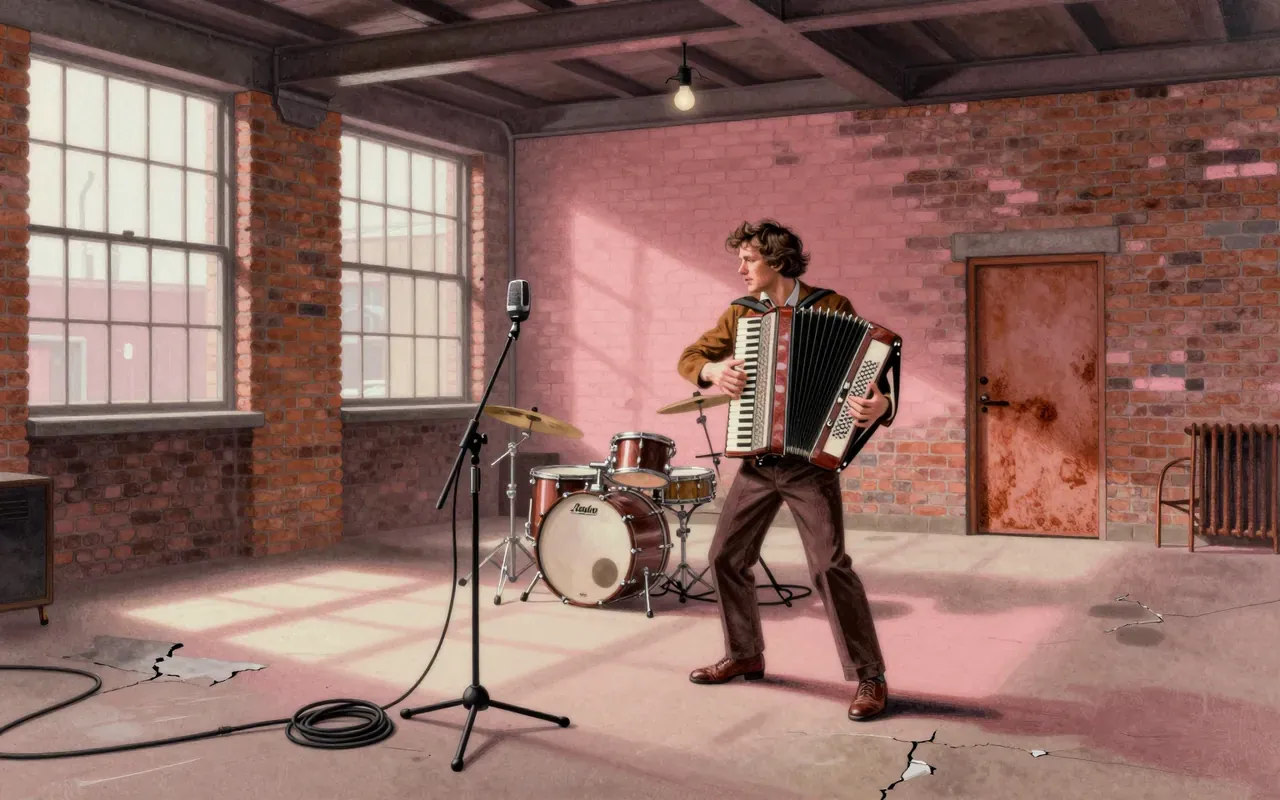
      Richard’s guitar and the two lead voices sit among bass, drums, accordion, concertina and less usual instruments including krummhorn. The range of timbres gives the material a stronger connection to vernacular and folk traditions than a standard guitar-band setting alone would provide.

      What lands

      The title’s appetite for a night out gains meaning from the darker company around it. “The End of the Rainbow” makes disillusionment a direct subject. Linda’s singing and Richard’s instrumental work give these views a musical form that does not depend on softening their implications.

      What does not

      The bleakness can become oppressive. Listeners who want the songs to reassure their characters may find the record unwilling to do so. Its folk-derived colours can also feel austere to someone expecting a fuller contemporary rock production.

      The ideas inside it

      Entertainment can be a temporary release without becoming a cure. The album recognises the pull of bright lights while retaining an awareness of the lives people return to afterward. That makes the desire for pleasure understandable rather than trivial.

      Who should hear it, and who should not

      Hear it if you value songs that observe difficult lives without sentimental rescue. It asks for tolerance of a dark outlook as well as an interest in folk-rock arrangement.

      Is it worth your time

      Yes. The title track is an invitation, but its surrounding songs explain the need behind that invitation and give the album its depth.
      Same genre · Folk & singer-songwriter4 of 174
      8:15
      Forever ChangesLove · 1967Forever Changes is a 1967 studio album by Love, recorded at Sunset Sound Recorders. It features acoustic guitars, orchestral arrangements, and dark lyrical themes. It was co-produced by Arthur Lee and Bruce Botnick.
      9:36
      Rum Sodomy & the LashThe Pogues · 1985Rum Sodomy & the Lash is The Pogues’ 1985 second studio album, recorded live at Elephant Studios in Wapping with Elvis Costello producing after initially being hired for just two tracks. Its production prioritised natural acoustic presence and raw ensemble performance — Costello described his role as capturing the band’s 'dilapidated glory' before external interference altered it. The title references a misattributed Churchill quote about naval tradition; the cover reimagines Géricault’s The Raft of the Medusa with painted band members’ faces replacing those of the original figures. Musically, it pivots from traditional covers to Shane MacGowan’s original songwriting — mythic, urban, fatalistic — while retaining authoritative renditions of 'Dirty Old Town' and 'And the Band Played Waltzing Matilda'. It does not sound polished, controlled, or studio-perfect. There are no synthesizers, no overdubbed strings, no vocal comping, no reverb tails stretched for effect. It lands strongest where rhythm and narrative lock: 'The Sick Bed of Cuchulainn' opens with harp-like guitar urgency; 'Dirty Old Town' closes the first side as a bruised, communal lament. It is worth your time if you want folk music that bites, not soothes — if you listen for rhythm first, then story — and if you distrust studio sheen. Not for those who need clarity, comfort, or clean separation between instruments.
      9:29
      WildflowersTom Petty · 1994A 1994 solo album shaped by executive decision, not studio revelation.
      10:39
      Nick of TimeBonnie Raitt · 1989Nick of Time is Bonnie Raitt’s tenth studio album, released March 21, 1989. Produced by Don Was, it features a smooth and understated rock sound rooted in Raitt’s earlier laid-back blues rock style. There is grit in her singing and playing, even when surfaces are clean. The album explores blues rock, country, R&B, and pop. It was built around stripped-down arrangements developed first in demos at Was’ home studio, then recorded live over one week at Ocean Way Recording in Los Angeles. There is less production and less slickness — a return to Raitt’s roots. It was her first sober album and first Capitol Records release, reaching number one on the U.S. album chart and selling over five million copies in the U.S. It marked the debut of her enduring rhythm section with Ricky Fataar and James 'Hutch' Hutchinson.
      Up next in Music

      The Immaculate Collection

      Madonna · 1990 · 1:57

      Madonna’s first retrospective edits her singles history into a newly produced listening experience.

      1:57