Saved
Pop

So

So ditches texture for tune—but keeps its teeth in the groove.

Worth your time?4.5/5Yes.Hear the whole thing.What works, what does not, who it is for ↓
9:31in productionCh. 1 · Three people, one drum machine/ 9:31 · ceiling 15 min
4 chapters · 9:31Ceiling 15:00

The brief is written and checked. The video joins this page when it is cut.4 chapters · 1 min read · 9:31 planned

Read the brief

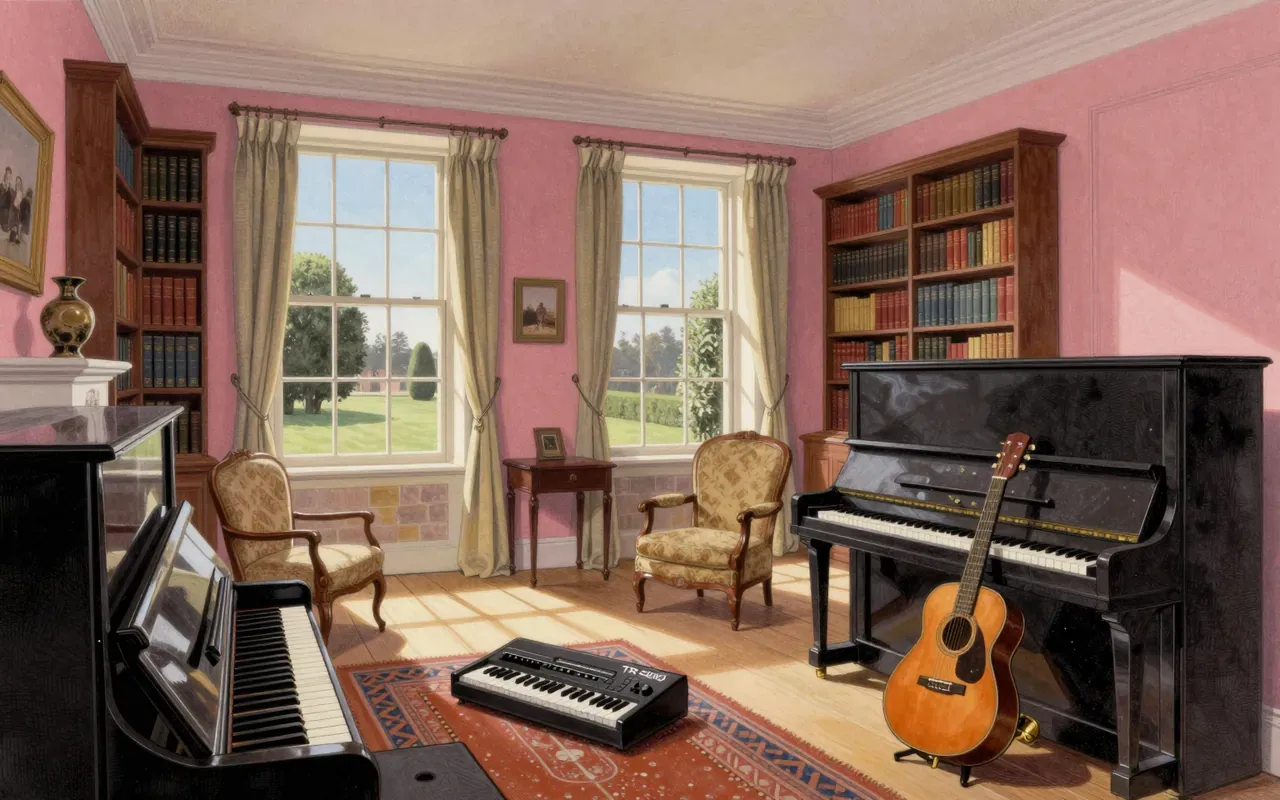
So is Peter Gabriel’s fifth studio album, recorded at Ashcombe House in Somerset between February 1985 and February 1986, co-produced with Daniel Lanois, and completed at Power Station Studios in New York.

Chapters & takeaways4
  1. 1:01
    Three people, one drum machine

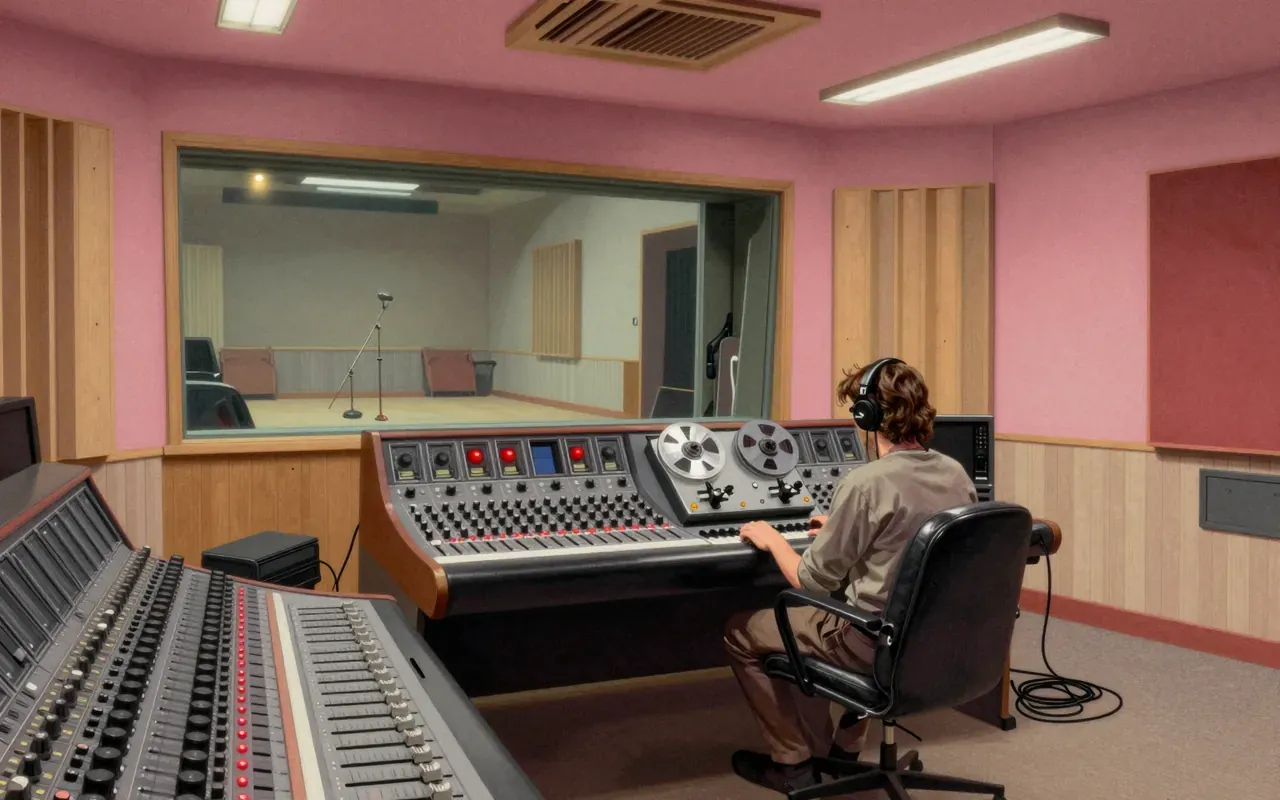
    Songs began as live trio sketches over a drum machine, guided by Gabriel’s chord ideas or demos.

  2. 2:28
    Rhythm first, genre second

    It fuses pop, soul, and art rock with African and Brazilian rhythms—not as garnish, but as structural foundation.

  3. 3:56
    Less sampling, more singing

    The Fairlight CMI is present, but used sparingly—this is Gabriel’s least experimental album since his debut.

  4. 5:38
    Pop that pays attention

    Three UK top 20 singles—and one US No. 1—proved Gabriel could dominate charts without abandoning complexity.

1 more chapterFewer chapters
Running order9
  1. 01
    Red Rain5:39

    Heard in Jack's Back (1988)

  2. 02
    Sledgehammer5:16

    Heard in Birdy (1984)Rebound (2005)1984 (advertisement) (1984)Star Trek Beyond (2016)

  3. 03
    Don’t Give Up6:33

    Heard in Starsky & Hutch (2004)Dìdi

  4. 04
    That Voice Again4:53
  5. 05
    In Your Eyes5:30

    Heard in Design for Dreaming (1956)Birdy (1984)The Rocker (2008)Marty Supreme (2025)

  6. 06
    Mercy Street6:21

    Heard in Waking the Dead (2000)

  7. 07
    Big Time4:29

    Heard in Norbit (2007)Showgirls (1995)

  8. 08
    We Do What We’re Told (Milgram’s 37)3:22
  9. 09
    This Is the Picture (Excellent Birds)4:18

    Heard in Home of the Brave (1986)

Film placements are the ones described in each film's own entry, so the list is partial rather than complete.

Worth your time?

Yes. Hear the whole thing.

4.5/ 5
What works
  • 'Sledgehammer' lands with its horn stabs, gospel choir, and rubbery bassline.
  • 'In Your Eyes' lands with Youssou N'Dour’s call-and-response and the slow, warm swell of its arrangement.
  • 'Don’t Give Up' lands with the stark contrast between Gabriel’s weariness and Bush’s resolve.
What does not
  • It does not sustain the textural density of Peter Gabriel four or the Birdy soundtrack.
  • It avoids extended instrumental passages, atonal experiments, or ambient drift.
  • There are no field recordings, no tape loops, no uncredited vocal chants.
Hear it if
  • People who want pop music with rhythmic intelligence and lyrical gravity.
  • Not people who need raw immediacy, lo-fi spontaneity, or genre purity—this is polished, deliberate, and globally sourced.
Skip it if
  • People who need raw immediacy, lo-fi spontaneity, or genre purity—this is polished, deliberate, and globally sourced.
Who should hear it, and who should skipHide who it is for
The written brief1 min read

What the record is and where it came from

So is Peter Gabriel’s fifth studio album, recorded at Ashcombe House in Somerset between February 1985 and February 1986, co-produced with Daniel Lanois, and completed at Power Station Studios in New York.

How it sounds, and how it was made

It sounds like live trio playing over a drum machine in a Somerset house, then layered with bass, horns, and guest vocals in New York. Gabriel, Lanois, and Rhodes built songs from demos made on a modified Yamaha piano and Prophet-5 over a Linn 9000 beat. The Fairlight CMI appears, but less experimentally than before. African and Brazilian rhythms anchor pop, soul, and art rock structures.

What lands

‘Sledgehammer’ lands with its horn stabs, gospel choir, and rubbery bassline. ‘In Your Eyes’ lands with Youssou N’Dour’s call-and-response and the slow, warm swell of its arrangement. ‘Don’t Give Up’ lands with the stark contrast between Gabriel’s weariness and Bush’s resolve.

What does not

It does not sustain the textural density of Peter Gabriel four or the Birdy soundtrack. It avoids extended instrumental passages, atonal experiments, or ambient drift. There are no field recordings, no tape loops, no uncredited vocal chants.

The ideas inside it

It explores surrender, surveillance, intimacy, moral complicity, and the tension between personal vulnerability and mass spectacle. ‘We Do What We’re Told’ cites Milgram; ‘Mercy Street’ responds to the death of poet Anne Sexton; ‘Don’t Give Up’ frames despair as relational, not individual.

Who should hear it, and who should not

People who want pop music with rhythmic intelligence and lyrical gravity. Not people who need raw immediacy, lo-fi spontaneity, or genre purity—this is polished, deliberate, and globally sourced.

Is it worth your time

Yes—if you want a meticulously assembled, rhythm-forward pop record that trades abstraction for melody without sacrificing texture or conceptual weight.

Same genre · Pop4 of 178
10:06
Full Moon FeverTom Petty · 1989Full Moon Fever is Tom Petty’s first solo album, released in 1989. It was recorded in 1988 in Mike Campbell’s garage studio, co-produced by Petty, Campbell, and Jeff Lynne, with contributions from Roy Orbison and George Harrison. The sound is cleaner and glossier than previous Heartbreakers records, shaped by Lynne’s use of layered keyboards and backing vocals. It features the hit singles 'I Won’t Back Down', 'Free Fallin’' and 'Runnin’ Down a Dream', plus a Byrds cover ('Feel a Whole Lot Better') and a nod to Del Shannon. Two tracks were cut — 'Down the Line' and 'Don’t Treat Me Like a Stranger' — and released as B-sides. An early draft of 'Mary Jane’s Last Dance', titled 'Indiana Girl', was written during the sessions. The album was interrupted to record the first Traveling Wilburys album. Ringo Starr appears in the 'I Won’t Back Down' video but did not play on the track — Phil Jones did.
11:44
The Head on the DoorThe Cure · 1985The Head on the Door is the Cure’s sixth studio album, released in August 1985. It is their first composed entirely by Robert Smith. Simon Gallup returned after absence. Porl Thompson and Boris Williams became official members. It was inspired by Kaleidoscope and Dare. It contains an oriental hook, flamenco guitar, and a reused piano motif. It synthesises optimism and pessimism. Its success was driven by ‘In Between Days’ and ‘Close to Me’.
12:46
ActuallyPet Shop Boys · 1987Actually is a synth-pop record made in short, rotating sessions at Sarm and Advision Studios. It uses Fairlight programming instead of orchestras. Producers included Julian Mendelsohn, Stephen Hague, and Andy Richards. Lyrics reference Thatcherism, AIDS, and pop songs including 'Tainted Love'. 'King’s Cross' unintentionally foreshadowed the November 1987 fire. It was Pet Shop Boys’ second album, released in September 1987.
8:36
On How Life IsMacy Gray · 1999On How Life Is is a voice-led, mid-tempo soul-pop record built on live bass, brushed drums, and piano. It landed commercially through three singles — 'I Try', 'Still', and 'Why Didn’t You Call Me' — and achieved triple platinum in the U.S., quadruple in the UK. It does not innovate sonically or structurally. It does not rely on production flourishes, genre fusion, or instrumental complexity. Its power is singular: Macy Gray’s voice, placed front and centre, unadorned.
Up next in Music

Some Girls

The Rolling Stones · 1978 · 9:34

A band that stopped trying to sound like itself — and finally sounded like nothing but the Stones.

9:34