Saved
Folk & singer-songwriter

Songs Our Daddy Taught Us

A stark, unblinking transmission of inherited sorrow — no ornament, no escape, no relief.

Worth your time?4/5Yes.Hear the whole thing.What works, what does not, who it is for ↓
10:54in productionCh. 1 · Harmony as architecture/ 10:54 · ceiling 15 min
4 chapters · 10:54Ceiling 15:00

The brief is written and checked. The video joins this page when it is cut.4 chapters · 1 min read · 10:54 planned

Read the brief

A 1958 album of traditional American folk and country ballads, sung by The Everly Brothers. It was their second studio album and their first without original material.

Chapters & takeaways4
  1. 1:06
    Harmony as architecture

    Don sang baritone, Phil tenor, harmonising mostly in diatonic thirds — a technical foundation, not a stylistic choice.

  2. 3:24
    No rock in country rock

    Though retrospectively called pioneers of country rock, this record contains no rock, no electric instruments, and no rhythmic drive beyond the guitar’s steady fingerpicking.

  3. 5:02
    The blueprint for harmony groups

    The Beatles, Beach Boys, Bee Gees and Simon & Garfunkel all learned how to lock voices from this record — not its sound, but its discipline.

  4. 7:15
    Transmission, not interpretation

    Twelve songs, all traditional, all sung straight, all recorded in one room — this is curation as constraint, not nostalgia.

1 more chapterFewer chapters
Running order12
  1. 01
    Roving Gambler3:41

    Heard in Kimberley Jim (1963)

  2. 02
    Down in the Willow Garden3:04

    Heard in Zachariah (1971)Raising Arizona (1987)

  3. 03
    Long Time Gone2:26
  4. 04
    Lightning Express4:52

    Heard in The Lightning Express (1930)

  5. 05
    That Silver Haired Daddy of Mine3:10

    Heard in Tumbling Tumbleweeds (1935)

  6. 06
    Who’s Gonna Shoe Your Pretty Little Feet2:41
  7. 07
    Barbara Allen4:42

    Heard in Scrooge (1951)A Love Song for Bobby Long (2004)

  8. 08
    Oh So Many Years2:37
  9. 09
    I’m Here to Get My Baby Out of Jail3:37
  10. 10
    Rockin’ Alone (in an Old Rocking Chair)3:01
  11. 11
    Kentucky3:11

    Heard in Avatar (2009)

  12. 12
    Put My Little Shoes Away3:23

Film placements are the ones described in each film's own entry, so the list is partial rather than complete.

Worth your time?

Yes. Hear the whole thing.

4/ 5
What works
  • the harmonies
  • the dryness of the room
  • the unbroken focus on vocal precision
  • the weight of repetition
What does not
  • build momentum
  • vary texture or tempo meaningfully
  • use space, silence or dynamics to shape attention
Hear it if
  • singers who study intonation
  • producers who work with voice-only rooms
  • anyone who needs to hear how little instrumentation a record can hold and still carry emotional gravity
Skip it if
  • listeners who rely on groove, timbre shifts or lyrical novelty
Who should hear it, and who should skipHide who it is for
The written brief1 min read

What the record is and where it came from

A 1958 album of traditional American folk and country ballads, sung by The Everly Brothers. It was their second studio album and their first without original material.

How it sounds, and how it was made

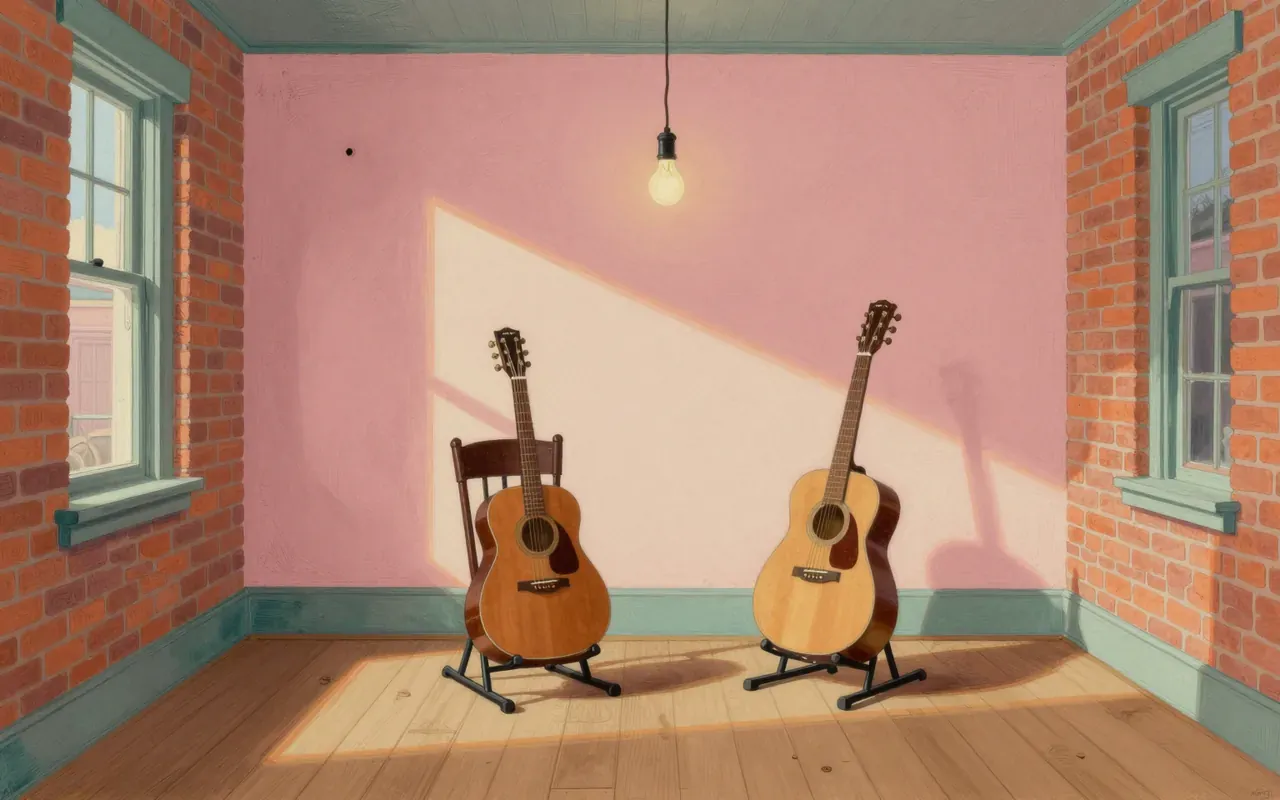
Twelve acoustic guitar-and-voice tracks, recorded in a single room with no overdubs. The brothers sing in close harmony, Don on baritone, Phil on tenor, mostly diatonic thirds. No percussion, no bass, no reverb — just two voices and two guitars in dry air.

What lands

The harmonies land. The dryness of the room lands. The unbroken focus on vocal precision lands. The weight of repetition — ‘Barbara Allen’, ‘Down in the Willow Garden’, ‘Kentucky’ — lands as ritual, not variation.

What does not

It does not build momentum. It does not vary texture or tempo meaningfully across the running order. It does not use space, silence or dynamics to shape attention.

The ideas inside it

Folk songs about death, abandonment, jail, old age and grief. The arrangements strip away narrative distance. There is no irony, no commentary, no framing — only transmission.

Who should hear it, and who should not

Singers who study intonation. Producers who work with voice-only rooms. Anyone who needs to hear how little instrumentation a record can hold and still carry emotional gravity. Not listeners who rely on groove, timbre shifts or lyrical novelty.

Is it worth your time

Yes, if you want to hear how tightly controlled intimacy sounds. No, if you expect development, contrast or instrumental colour.
Same genre · Folk & singer-songwriter4 of 174
11:54
Every Picture Tells a StoryRod Stewart · 1971Every Picture Tells a Story is Rod Stewart’s third studio album, released 28 May 1971. It blends folk, rock, and blues. It features all five Faces members—Ronnie Wood and Ian McLagan most prominently—and guest players including Ray Jackson (mandolin) and Pete Sears (piano on all but one track). It was Stewart’s first number-one album in the UK and US.
10:04
American BeautyGrateful Dead · 1970American Beauty is the Grateful Dead’s 1970 studio album — recorded fast, under pressure, without their usual crew, and produced by Stephen Barncard. It features pedal steel instead of lead guitar, mandolin from David Grisman, and songs from Lesh, Weir, and McKernan alongside Garcia and Hunter. Eight tracks became live staples. It helped pioneer Americana — not as revival, but as reinvention.
11:12
Gunfighter Ballads and Trail SongsMarty Robbins · 1959Gunfighter Ballads and Trail Songs is a tightly constructed Western concept album recorded live in one session. Its sound is lean and declarative—vocals, guitars, bass, drums, fiddle, and close harmonies—with no documented effects, no spatial processing, and no instrumental indulgence. It establishes Robbins as a master of narrative economy, but offers no psychological depth, sonic variation, or formal risk. It rewards listeners who prioritise story logic over atmosphere.
9:11
Gasoline AlleyRod Stewart · 1970Gasoline Alley is Rod Stewart’s second solo album, released in the autumn of 1969. It continues the musical approach of his debut and introduces mandolin into his sound.
Up next in Music

Soul Station

Hank Mobley · 1960 · 9:33

Mobley’s finest record isn’t revolutionary—it’s resolved.

9:33