musicbriefs
Artist

The Beatles

8
briefs
11:56
average
96 min
in total
On music.briefs8
10:57

A Hard Day’s Night

The Beatles · 1964

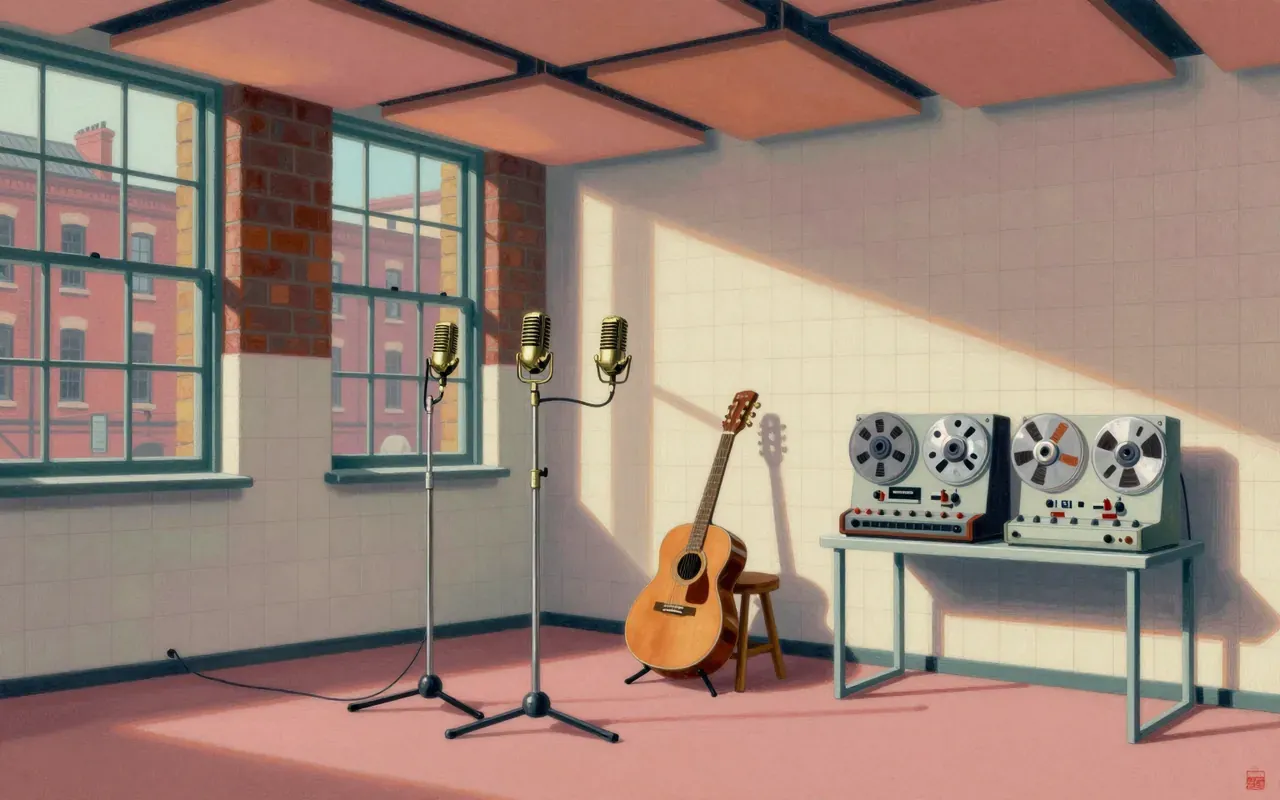
A Hard Day's Night is the Beatles’ third studio album and their first composed entirely of original Lennon–McCartney songs. Recorded between February and June 1964 at EMI Studios in London, it features Harrison’s debut use of a Rickenbacker 12-string guitar — a sound that shaped emerging folk rock and jangle pop. Side one contains songs from the film A Hard Day’s Night; side two comprises other new recordings written for the album. Musically, it departs from earlier rock and roll covers in favour of a tightly crafted pop sound defined by ringing guitars and layered vocal arrangements.
12:44

Help!

The Beatles · 1965

A studio pivot, not a stylistic peak. Lennon leads, McCartney expands. Flutes, strings, tape loops, and overdubs replace live-band urgency. The first Beatles record where the studio is the co-writer.

12:18

Meet The Beatles!

The Beatles · 1964

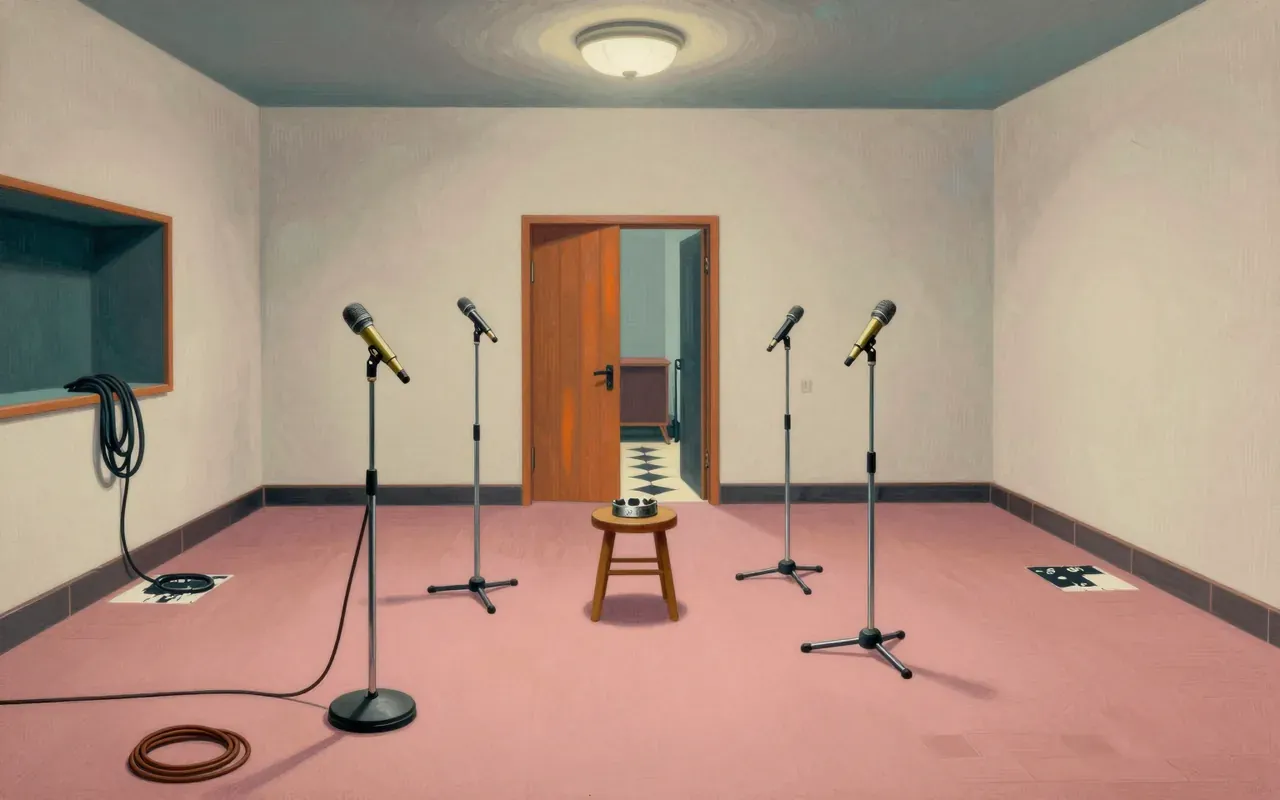
Meet the Beatles! is a commercially urgent, sonically direct US debut album — not a UK album repackaged. It foregrounds three current singles, omits five covers from With the Beatles, and uses duophonic stereo where real stereo masters were unavailable. Every instrument and voice belongs to the four Beatles, recorded live in a dry, intimate room. It is pop as propulsion — not nostalgia, not artifice, not myth.

9:12

Please Please Me

The Beatles · 1963

Please Please Me is the Beatles’ debut studio album, recorded in a single day on 11 February 1963 at EMI Studios, with overdubs added on 20 February. It captures their live stage repertoire — originals and covers — with minimal production. John Lennon sang 'Twist and Shout' while ill, in one take at 10 pm. The album was conceived as a live broadcast, not a studio construction. It reflects instinctive, derivative songwriting — sound over lyric, ensemble over individuality. It is essential as a document of performance energy, not as a polished record.

11:20

Rubber Soul

The Beatles · 1965

Rubber Soul is the Beatles’ sixth studio album, recorded at EMI Studios in London between 12 October and 15 November 1965. It was their first album made without concurrent live, radio, or film commitments — a shift that enabled intensive focus on arrangement and studio craft. Norman Smith engineered his final Beatles album here before promotion to producer. Thirteen days of recording (113 hours) and six days of mixing (17 hours) produced a record where the sitar debuted on 'Norwegian Wood', lyrics grew artful enough for fans to study, and Harrison and Starr both identified it as a turning point — 'the departure record'. Critics hailed its maturity and complexity. It is not psychedelic, orchestral, or technically experimental beyond the sitar; its innovation lies in intent, not gadgetry.

13:00

Abbey Road

The Beatles · 1969

Recorded mainly across April, July and August 1969 at Abbey Road and other London studios, Abbey Road was the Beatles' final recorded album, made under producer George Martin on the condition that the group work with the discipline of their earlier records. Built around McCartney's push for a continuous medley on side two and Harrison's two strongest contributions to the catalogue, it closed the group's studio career with the Moog synthesiser and a solid-state mixing desk giving it a different texture from anything they had made before.

13:00

Revolver

The Beatles · 1966

Made in the months after the Beatles stepped back from touring, this seventh album turns Abbey Road into an instrument in its own right — tape loops, a string octet, a sitar-led raga and songs about death, taxes and transcendence sit side by side across a lean thirty-five minutes.

13:00

Sgt. Pepper’s Lonely Hearts Club Band

The Beatles · 1967

Recorded across five months after the Beatles gave up live performance for good, this eighth album frames itself as a set by an imaginary Edwardian troupe, mixing music-hall whimsy, Indian classical instrumentation and orchestral overdubs into a record that helped establish the album, rather than the single, as pop's serious form.