musicbriefs
2:14in production/ 2:14 · ceiling 15 min
Jazz

Back at the Chicken Shack

An organ-led small group makes a clear, compact introduction to Jimmy Smith and his collaborators.

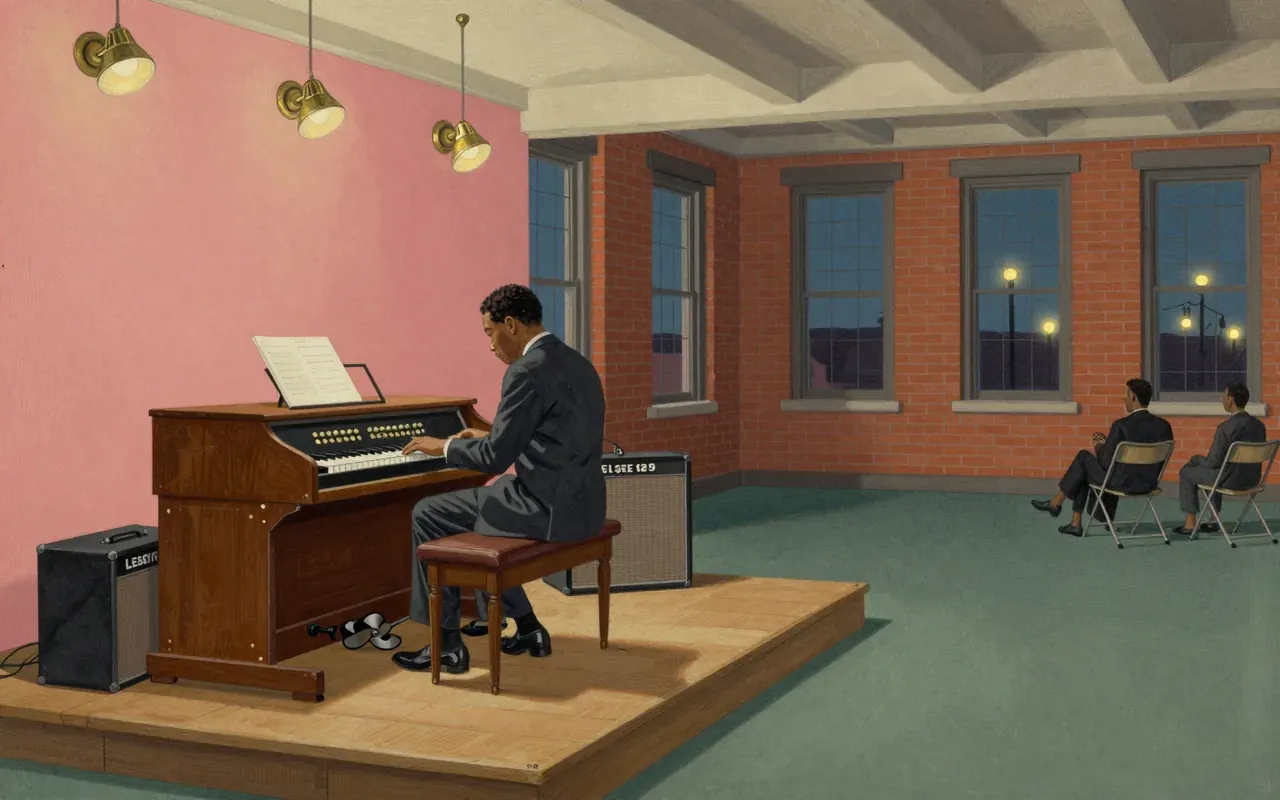
Back at the Chicken Shack was recorded in 1960 and released by Blue Note in 1963. The same session also produced Midnight Special. Alfred Lion produced and Rudy Van Gelder engineered, with Jimmy Smith joined by Stanley Turrentine, Kenny Burrell and Donald Bailey.

Worth your time?

Yes. Hear the whole thing.

What works
    What does not
      Hear it if
      • Listeners interested in organ jazz and a small ensemble with contrasting voices
      Skip it if
      • Listeners seeking acoustic piano jazz or a large arranged ensemble
      The written brief2 min read

      What the record is and where it came from

      Back at the Chicken Shack was recorded in 1960 and released by Blue Note in 1963. The same session also produced Midnight Special. Alfred Lion produced and Rudy Van Gelder engineered, with Jimmy Smith joined by Stanley Turrentine, Kenny Burrell and Donald Bailey.

      How it sounds, and how it was made

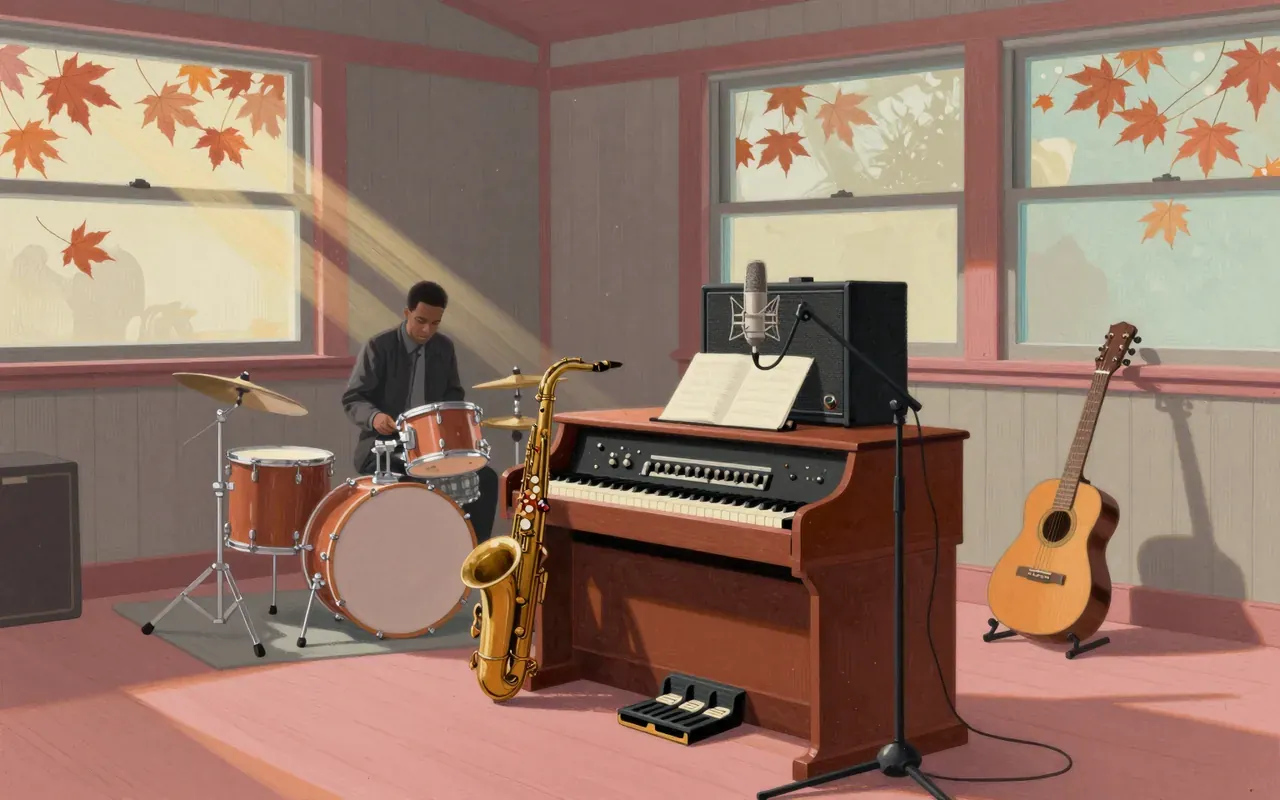
      Smith’s organ is the centre of a setting with Turrentine’s tenor saxophone and Bailey’s drums; Burrell’s guitar appears on part of the programme. Those instruments give the ensemble several clearly different voices. The changing presence of guitar is worth noticing instead of assuming the same quartet texture throughout.

      What lands

      The title performance provides a straightforward entrance into the group. The attraction is the opportunity to hear a strongly identified leader alongside musicians with distinguishable roles. A small ensemble keeps those relationships accessible without the listener first having to follow a dense arrangement or large cast.

      What does not

      The organ’s prominence is also a firm boundary on the experience. Listeners who dislike its sustained character are unlikely to be won over by the personnel alone. The compact original programme offers a particular session’s resources, rather than a survey of everything Smith or his collaborators could do.

      The ideas inside it

      An instrument can determine a group’s identity while still leaving room for other participants to matter. The record invites attention to that balance. Its release history also offers a practical reminder that recording dates and album dates describe different events, even when digital listings blur them.

      Who should hear it, and who should not

      Hear it if you want an accessible organ-led group to follow instrument by instrument. It is less suitable when you specifically want acoustic piano, orchestral writing or frequent changes of ensemble.

      Is it worth your time

      Yes. Begin with the original album rather than using the shared session date to merge it mentally with Midnight Special; each has its own selected programme.

      Same genre · Jazz4 of 167
      10:00
      The Sermon!Jimmy Smith · 1959The Sermon! is a document of engineering choices — not inspiration, not myth. Every sonic trait is traceable to a setting, a room, a mic, a preamp. It rewards attention to how things were made, not what they mean.
      2:10
      Waltz for DebbyBill Evans Trio · 1962Waltz for Debby was released in 1962 from the Bill Evans Trio's June 1961 Village Vanguard recordings. Evans, bassist Scott LaFaro and drummer Paul Motian also appear on Sunday at the Village Vanguard from the same date. LaFaro died ten days later, making these performances the trio's final recorded chapter.
      13:00
      Mingus Ah UmCharles Mingus · 1959Charles Mingus's first album for Columbia, recorded in May 1959, gathers tributes to Lester Young, Duke Ellington and Jelly Roll Morton alongside Fables of Faubus, a satire of Arkansas's segregationist governor recorded without its banned lyrics. A tight sextet, led from the bass, turns gospel, blues and big-band writing into a single, coherent argument about jazz's own history.
      10:13
      Songs for Swingin’ Lovers!Frank Sinatra · 1956Songs for Swingin’ Lovers! is Frank Sinatra’s tenth studio album and fourth for Capitol Records, released in March 1956. Arranged by Nelson Riddle, it departs from the introspective tone of In the Wee Small Hours in favour of exuberant, jazz-inflected interpretations of pop standards. Recorded in February 1956 in the newly opened Capitol Records Building studios, it features a 56-piece symphonic orchestra. ‘I’ve Got You Under My Skin’ required 22 takes to perfect. A slow ballad, ‘Memories of You’, was recorded but omitted to preserve the album’s uptempo, swinging concept — ‘We’ll Be Together Again’ stands alone as the sole ballad. The album was the first to top the UK Albums Chart upon its July 1956 launch.
      Up next in Music

      Back to Mono (1958–1969)

      Various Artists · 1991 · 1:57

      A producer-centred anthology reveals the many performers and arrangers inside a famous studio sound.

      1:57