musicbriefs
Genre

Jazz

168
briefs
8:57
average
1505 min
in total
106
artists
All briefs168
1:59

At the Pershing: But Not for Me

Ahmad Jamal Trio · 1958

At the Pershing was recorded in Chicago in January 1958 and released that year. Ahmad Jamal selected eight performances from a much larger recorded evening. Israel Crosby and Vernel Fournier join him, making the trio's working relationship the centre of the album.

2:14

Back at the Chicken Shack

Jimmy Smith · 1963

Back at the Chicken Shack was recorded in 1960 and released by Blue Note in 1963. The same session also produced Midnight Special. Alfred Lion produced and Rudy Van Gelder engineered, with Jimmy Smith joined by Stanley Turrentine, Kenny Burrell and Donald Bailey.

2:02

The Atomic Mr. Basie

Count Basie and His Orchestra · 1958

Recorded in October 1957 and released in 1958, this album originally appeared as Basie and became known as The Atomic Mr. Basie. Neal Hefti composed and arranged the original programme. Later expanded editions add material from the sessions that was not part of that initial sequence.

2:03

The Black Saint and the Sinner Lady

Charles Mingus · 1963

Recorded and released in 1963, The Black Saint and the Sinner Lady is a continuous composition divided into tracks and movements, partly conceived as a ballet. Charles Mingus worked with an eleven-piece band and co-orchestrator Bob Hammer. The album's unit is the whole developing work.

2:25

Blowin' the Blues Away

The Horace Silver Quintet & Trio · 1959

Recorded at Rudy Van Gelder's Englewood Cliffs studio in 1959, this Blue Note album presents Horace Silver in quintet and trio settings. Blue Mitchell and Junior Cook supply trumpet and tenor saxophone; Eugene Taylor and Louis Hayes join Silver in the rhythm section. The title's two ensemble sizes describe a meaningful change in perspective.

2:09

The Blues and the Abstract Truth

Oliver Nelson · 1961

Oliver Nelson's The Blues and the Abstract Truth was released by Impulse! in 1961. Freddie Hubbard, Eric Dolphy, Bill Evans, Paul Chambers, Roy Haynes and George Barrow join Nelson. The personnel are striking, but the record's organising intelligence lies in the compositions and the relationships they create.

1:57

Blues & Roots

Charles Mingus · 1960

Blues & Roots was recorded in February 1959 and released in 1960. Nesuhi Ertegun encouraged Mingus to foreground the blues after criticism that his music did not swing enough. Mingus accepted the focus while insisting it represented only one part of his musical world.

1:54

Ella and Louis

Ella Fitzgerald, Louis Armstrong · 1956

Ella and Louis was released in 1956, the first of Fitzgerald and Armstrong's three Verve albums together. Norman Granz selected the ballad repertoire and produced the session. Armstrong had the final say over songs and keys, making the partnership a practical arrangement as well as a marquee pairing.

2:00

Ellington at Newport

Duke Ellington and His Orchestra · 1956

Ellington at Newport draws on Duke Ellington's 1956 festival appearance, an important renewal of public attention to his orchestra. The original album also used studio recreations. That distinction matters when the record's reputation rests so heavily on the excitement of a particular night.

2:24

Ezz-thetics

George Russell Sextet · 1961

George Russell recorded Ezz-thetics in May 1961 for Riverside. His sextet brings together Don Ellis, Dave Baker, Eric Dolphy, Steve Swallow and Joe Hunt, with Russell at the piano. Three original compositions sit alongside material by Miles Davis, Baker and Thelonious Monk. The programme places the leader's writing within a broader set of musical problems.

1:57

The Famous 1938 Carnegie Hall Jazz Concert

Benny Goodman · 1950

Benny Goodman's January 1938 Carnegie Hall concert first appeared as an album in 1950. The delay matters: this is a later release of a particular historical performance. The programme includes his orchestra, smaller groups and guests associated with the Basie and Ellington bands.

2:00

Genius of Modern Music, Volume One

Thelonious Monk · 1956

This brief covers the first twelve-inch Genius of Modern Music volume, issued by Blue Note in 1956. Earlier ten-inch releases and later CDs organise the material differently. Alfred Lion produced the underlying sessions, making the album a selection from Monk's early recording work rather than a new 1956 session.

2:36

Getz/Gilberto

Stan Getz, João Gilberto · 1964

Getz/Gilberto pairs American saxophonist Stan Getz with Brazilian singer and guitarist João Gilberto, with Antônio Carlos Jobim contributing piano and much of the repertoire. Recorded in New York in March 1963, it appeared on Verve in 1964. Astrud Gilberto sings on “The Girl from Ipanema” and “Corcovado.”

1:57

Heavy Weather

Weather Report · 1977

Heavy Weather, released in 1977, brings Joe Zawinul and Wayne Shorter together with Jaco Pastorius, Alex Acuña and Manolo Badrena. Zawinul produced and orchestrated, with additional production from Shorter and Pastorius. Its success rests on a strongly defined ensemble language rather than a parade of unrelated showcases.

1:56

Jazz in Silhouette

Sun Ra and His Arkestra · 1959

Jazz in Silhouette was recorded and released in 1959 during Sun Ra's Chicago period. The session predates the more openly avant-garde work of the following decade. Its date was once disputed, but the original tape box establishes the March 1959 recording.

2:20

The Jimmy Giuffre 3

The Jimmy Giuffre 3 · 1957

This 1957 album introduces the Jimmy Giuffre 3 with Jim Hall on guitar and Ralph Peña on bass. Giuffre plays clarinet, tenor saxophone and baritone saxophone. The trio's unusual distribution of instruments gives it an immediate point of distinction: there is no drummer.

1:56

John Coltrane and Johnny Hartman

John Coltrane, Johnny Hartman · 1963

John Coltrane and Johnny Hartman was recorded in March 1963 and released that summer by Impulse! Bob Thiele brought the collaboration together. Hartman initially doubted their compatibility, but work on the repertoire with Coltrane and McCoy Tyner established a practical basis for the session.

2:02

Lady in Satin

Billie Holiday · 1958

Lady in Satin was recorded with Ray Ellis's orchestra and released in 1958. Holiday wanted a delicate orchestral setting and actively sought Ellis for the project. That choice matters: the arrangement is part of her artistic intention, not merely something imposed on a vulnerable singer.

1:56

Coltrane “Live” at the Village Vanguard

John Coltrane · 1962

This 1962 album selects three performances from Coltrane's November 1961 Village Vanguard engagement. Bob Thiele produced and Rudy Van Gelder recorded the concerts. It is distinct from later Vanguard releases and the larger archive eventually issued from the same run.

2:30

Nighthawks at the Diner

Tom Waits · 1975

Released in 1975, Tom Waits's third album was recorded at the Record Plant in Los Angeles before an invited audience. Tables, a bar and a small crowd helped turn a studio into a club for four shows over two nights. That arrangement is central to the record: its atmosphere was deliberately made.

1:55

Miles Ahead

Miles Davis · 1957

Miles Ahead was released in 1957, reuniting Miles Davis with Gil Evans after their earlier nonet work. Producer George Avakian conceived a larger setting that would place Davis prominently in front. The project changes the relationship between soloist and ensemble rather than simply enlarging the usual quintet.

2:23

At Mister Kelly's

Sarah Vaughan and Her Trio · 1957

At Mister Kelly's records Sarah Vaughan in a Chicago jazz club in 1957, accompanied by pianist Jimmy Jones, bassist Richard Davis and drummer Roy Haynes. The setting is a useful alternative to hearing a major singer surrounded by a large arrangement: four musicians carry the performance.

2:22

Smack Up

Art Pepper · 1960

Recorded in October 1960, Smack Up places Art Pepper with trumpeter Jack Sheldon, pianist Pete Jolly, bassist Jimmy Bond and drummer Frank Butler. Its organising decision is unusually clear: every composition on the original album was written by a saxophonist. The programme turns musical kinship into a useful constraint.

2:03

Sunday at the Village Vanguard

Bill Evans Trio · 1961

Recorded on June 25, 1961, Sunday at the Village Vanguard features Bill Evans, Scott LaFaro and Paul Motian. LaFaro died eleven days later. Evans and producer Orrin Keepnews selected performances that highlighted the bassist, making the album a particular view of the day's music.

1:59

Thelonious Monk with John Coltrane

Thelonious Monk, John Coltrane · 1961

Released in 1961, Thelonious Monk with John Coltrane collects 1957 recordings from three sessions. Three quartet tracks provided the core; outtakes from Monk's Music and Thelonious Himself completed the original LP. The title identifies an important partnership but not a uniform lineup throughout.

2:30

This Is Our Music

The Ornette Coleman Quartet · 1961

Recorded in 1960 and released by Atlantic in 1961, This Is Our Music features Ornette Coleman, Don Cherry, Charlie Haden and Ed Blackwell. Blackwell had replaced Billy Higgins on drums. The title identifies a collective, and Coleman's liner notes describe improvisation as something through which each player helps create the form.

2:10

Waltz for Debby

Bill Evans Trio · 1962

Waltz for Debby was released in 1962 from the Bill Evans Trio's June 1961 Village Vanguard recordings. Evans, bassist Scott LaFaro and drummer Paul Motian also appear on Sunday at the Village Vanguard from the same date. LaFaro died ten days later, making these performances the trio's final recorded chapter.

2:02

Wild Is the Wind

Nina Simone · 1966

Wild Is the Wind was issued in 1966 from recordings made during 1964 and 1965 for Simone's Philips work. It is therefore a compiled album rather than the document of one unified session. The singer's interpretive identity gives the different performances their strongest continuity.

1:56

The Wildest!

Louis Prima · 1956

The Wildest! appeared in 1956, featuring Keely Smith, Sam Butera and the Witnesses alongside Louis Prima. Their Las Vegas performing partnership provides the essential context. The record aims to preserve the character of an entertainment act whose voices and musicians function together.

10:55

A Night at Birdland, Volume 1

The Art Blakey Quintet · 1956

The sole verified fact about 'A Night at Birdland, Volume 1' is that it emerged from a 1954 live session during which Art Blakey declared his commitment to young musicians on-mic. Nothing else — personnel, label, venue, sound, repertoire context, or release status — is confirmed by the provided material.

9:12

A Night at Birdland, Volume 2

The Art Blakey Quintet · 1956

A Night at Birdland, Volume 2 is a live 1954 Birdland recording, part of the A Night at Birdland series, captured during the session where Blakey declared his commitment to young musicians.

11:45

A Night at the Village Vanguard

Sonny Rollins · 1957

A Night at the Village Vanguard is a live 1957 Sonny Rollins album recorded on November 3 at the Village Vanguard in New York City. Released by Blue Note in 1958. The first live recording ever made at that venue. Features three sets: one afternoon with Donald Bailey and Pete LaRoca, two evenings with Wilbur Ware and Elvin Jones. Pianoless tenor-bass-drums trio format — pioneering 'strolling'. No studio mediation. No overdubs.

9:12

A Night in Tunisia

Art Blakey & The Jazz Messengers · 1960

A functional, unvarnished hard bop document — not a statement, not a departure, just the band working the tune as written.

11:14

Air Lore

Air · 1979

Air Lore is a 1979 album by the improvisational trio Air — Henry Threadgill (alto and tenor saxophones, flute), Fred Hopkins (double bass), and Steve McCall (drums, percussion) — performing radical reinterpretations of compositions by Scott Joplin and Jelly Roll Morton. Critics acclaim it as Air's most beloved and most remarkable work. It rejects academicism and repertory dogma in favour of ambiguity, absurdity, and avant-garde vaudeville energy. It is widely loved for its joy and irreverence, and for bringing early jazz compositions into focus as revolutionary improvisational templates rather than updating them. It is considered the essential Air album and an unsurpassed statement of historical homage to Scott Joplin rags and Jelly Roll Morton tunes from the perspective of the frontiers. Gary Giddins considers it Threadgill's key statement against repertory mania and academicism in jazz. DownBeat awarded it 5 stars, describing it as 'jazz of the absurd' — an avant-garde vaudeville infused with wackiness, where old and new coexist and emotional boundaries blur, resulting in an oddball masterpiece. The title 'Air Lore' evokes Earth's atmospheric layer of mixed gas retained by gravity, serving as a protective buffer and composed precisely of nitrogen, oxygen, argon, carbon dioxide, and trace gases.

10:00

Art Pepper Meets the Rhythm Section

Art Pepper · 1957

Art Pepper Meets the Rhythm Section is a 1957 jazz album recorded in one day at Contemporary’s Studios in Los Angeles, featuring Art Pepper on alto saxophone and the Miles Davis rhythm section — Red Garland, Paul Chambers, and Philly Joe Jones — musicians Pepper had never met before and learned he would play with only that morning. He played on a malfunctioning instrument while struggling with addiction. Accounts differ on how long he’d gone without playing — two weeks or six months — but the pressure was real, and the sound bears it. It is one of Pepper’s best-known 1950s albums, released on Contemporary in 1957 — not a comeback, not a debut, but a sudden, singular convergence.

9:08

Ascenseur pour l’échafaud

Miles Davis · 1958

Ascenseur pour l’échafaud is the 1958 soundtrack album for Louis Malle’s Elevator to the Gallows, recorded in Paris in November 1957 by Miles Davis and a quartet of French and American musicians during a single improvised session.

10:48

At the Five Spot, Volume 1

Eric Dolphy · 1961

At the Five Spot, Volume 1 documents a single live night in 1961 by the co-led quintet of Eric Dolphy and Booker Little at the Five Spot Café in Manhattan. The rhythm section is Richard Davis, Mal Waldron, and Ed Blackwell. Released in 1961 on New Jazz Records.

10:50

At the Lighthouse

The Cannonball Adderley Quintet · 1960

No factual basis exists in the provided material to describe the sound, intent, reception, or significance of 'At the Lighthouse'. Only its title, venue, tracklist, and the quintet’s standard instrumentation are confirmed.

9:01

Beach Samba

Astrud Gilberto · 1967

No factual detail about Beach Samba appears in the provided source material. All assertions about it derive solely from the prompt’s givens: title, artist, year, track list, and film placements. Nothing about its recording, musicians, producer, studio, or critical reception is verifiable from the text. The brief therefore treats it strictly as a node in Gilberto’s documented Verve sequence — not as a standalone event.

9:40

Change of the Century

Ornette Coleman · 1960

A working model of collective improvisation — not theory, not rebellion, but four musicians building form as they go.

9:22

Chester & Lester

Chet Atkins · 1976

Chester & Lester is a mid-1970s duet album by Chet Atkins and Les Paul. It was one of Atkins’s best-selling records. It reflects his longstanding jazz interest. Les Paul was one of Atkins’s major guitar influences.

8:59

Chet Baker Sings

Chet Baker · 1954

Chet Baker Sings is a 1954 Hollywood studio session where Baker—previously almost exclusively a trumpeter—recorded eight ballads as both singer and player. Russ Freeman selected the songs and played piano and celesta. Baker struggled to sing in tune, requiring many takes. Freeman dismissed the project as 'bullshit' compared to Armstrong or Teagarden; Ruth Young observed the lyrics held no meaning for Baker—they were 'mere notes'. The record foregrounds musical abstraction over vocal expression or narrative. It was released by Pacific Jazz Records, drew criticism, and nonetheless helped make Baker the readers’ top jazz vocalist of 1954.

10:20

Coltrane Plays the Blues

John Coltrane · 1962

Coltrane Plays the Blues is a label-assembled 1962 compilation drawn from unissued October 1960 sessions at Atlantic Studios. Coltrane played tenor saxophone on five tracks and soprano on three. McCoy Tyner played piano on four of the six tracks — his absence from two marks the first pianoless trio since Coltrane’s Prestige years. Atlantic released it without Coltrane’s input or approval, after he had moved to Impulse Records. It is excluded from his official discography because he did not conceive or approve it as a leader during his lifetime.

8:47

Come Dance With Me!

Frank Sinatra · 1959

A 1959 Frank Sinatra album that dominated charts and awards but leaves its sound undocumented.

9:11

Come Fly With Me

Frank Sinatra · 1958

Come Fly With Me is a 1958 concept album by Frank Sinatra arranged by Billy May as a musical world tour. It reached number one on the Billboard album chart for five weeks and was nominated for Album of the Year at the inaugural Grammy Awards. Seven songs were recorded in a single session on May 29; 'Lush Life' was abandoned for being too technically demanding. The title track was written for Sinatra and became one of his best-known standards.

8:52

Concert by the Sea

Erroll Garner · 1956

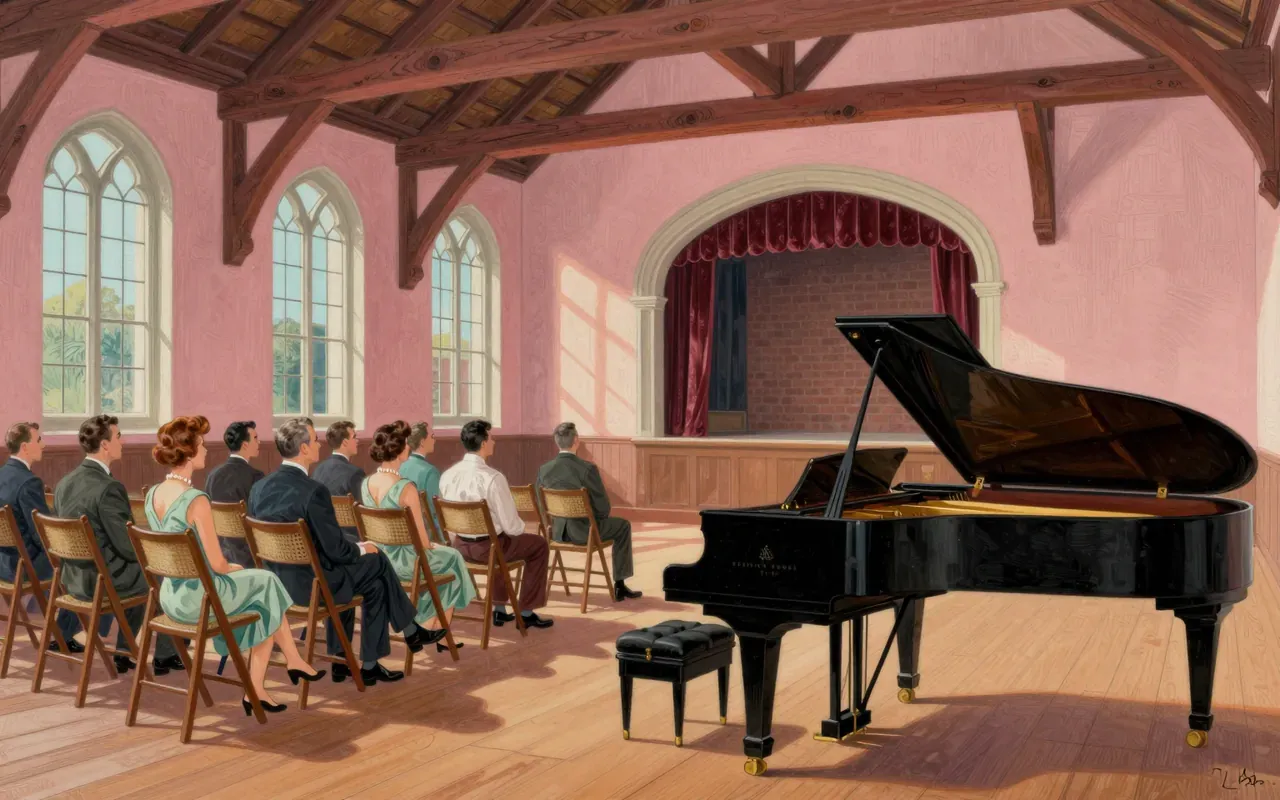
Concert by the Sea is a 1955 live Erroll Garner Trio album recorded at Sunset School in Carmel-by-the-Sea. It features Eddie Calhoun on bass and Denzil Best on drums. The piano is out of tune. The bass and drums are receded. The acoustics are poor. The recording was made with primitive sound equipment. It was captured unofficially by Armed Forces Radio Network engineer Will Thornbury. Manager Martha Glaser discovered the tape backstage, edited it, and persuaded George Avakian to release it. Servicemen from Fort Ord were bused to attend. The concert took place in a gothic-revivalist assembly hall. It was a best-selling jazz album in its day. The decision to release it was easy for Avakian.

10:30

Cool Struttin’

Sonny Clark · 1958

Cool Struttin’ is a 1958 Blue Note album led by Sonny Clark during his time as a house musician. No source describes its sound, personnel, recording location, or creative decisions. It exists solely as a documented leadership date in his discography.

9:43

Eli and the Thirteenth Confession

Laura Nyro · 1968

Laura Nyro’s 1968 album Eli and the Thirteenth Confession is a densely layered, piano-driven work built from multi-tracked vocals, strings, and a rotating ensemble of session players. It merges pop form with avant-garde jazz sensibility and centres on themes of passion, love, death, and drugs. Widely regarded as one of her best works, it was written entirely by Nyro and arranged and co-produced by Charlie Calello.

10:32

First Take

Roberta Flack · 1969

First Take is a piano-and-voice record made in ten hours. It is elegant. It is fused. It is ‘The First Time Ever I Saw Your Face’. Nothing more, nothing less.

9:04

Fontessa

The Modern Jazz Quartet · 1956

Fontessa is the Modern Jazz Quartet’s 1956 Atlantic debut: their first formal guest collaboration (with Jimmy Giuffre), their first album after moving from Prestige, and their first recording following their 1956 European debut tour. The 11-minute title suite was composed by John Lewis and inspired by Commedia dell’arte, with its four characters illustrated on the cover. Lewis described it as a suite whose sketchy plot invites improvisation. The Prelude opens and closes the work. Harlequin is evoked by vibraphone improvisation in older jazz style. Pierrot appears in piano-led 'less older jazz'. Pantaloon emerges in drum-led 'still later jazz', developing the main motif. Colombine is represented by the recurring three-note 'Fontessa' motif. The mono version was issued in the USA on Atlantic’s black label, catalogue number 1231. The stereo release contained technical flaws: mains hum, tape hiss, and reduced bass level.

10:06

Frank Sinatra Sings for Only the Lonely

Frank Sinatra · 1958

Frank Sinatra Sings for Only the Lonely is a 1958 Capitol Records studio album defined by its torch-song repertoire, emotionally charged context—including Sinatra’s recent divorce and Riddle’s personal losses—and distinctive recording practices involving separate mono and stereo sessions with differing microphone setups. Its arrangements, crafted by Nelson Riddle, feature expressive instrumental solos by Harry Edison, Ray Sims, and Bill Miller. Though initially recorded with Riddle, the usable tracks came from a session led by Felix Slatkin, and the album marked the end of Capitol’s era of dual-format separate-recording techniques. The original stereo release omitted two tracks present on the mono version, and the album won the Grammy Award for Best Album Cover in 1959. It is widely regarded as one of Sinatra’s most introspective and artistically cohesive works, with Sinatra himself naming it his favorite album in the mid-1970s. The front cover, painted by Nicholas Volpe, depicts Sinatra as a sullen, Pagliacci-like clown, and the back cover features a lamppost—a recurring visual motif in Sinatra’s album art. The album was recorded during the transitional period when stereo was entering the marketplace, and Capitol’s engineering choices—including the use of eight microphones for mono and two or three for stereo—produced audible differences between formats, with audio engineer Steve Hoffman favoring the mono version. The album’s emotional gravity, arrangement precision, and sonic craftsmanship collectively establish it as a landmark in vocal jazz and concept-album history. The album’s legacy includes critical acclaim, chart success, and enduring cultural resonance, notably being named No. 1 on Q magazine’s list of the '15 Greatest Stoner Albums of All Time'.

9:48

Freedom Suite

Sonny Rollins · 1958

A 1958 sax-bass-drums trio record by Sonny Rollins. Recorded with Oscar Pettiford and Max Roach. Originally released briefly before being repackaged as part of Shadow Waltz.

9:44

Full House

Wes Montgomery · 1962

Full House is Wes Montgomery’s final unvarnished jazz statement — live, lean, and frontline-focused.

7:46

Further Definitions

Benny Carter and His Orchestra · 1962

Further Definitions is a tightly focused 1962 octet session that revisits Benny Carter’s 1937 Paris format with full documentation of solo order and personnel. It offers no studio experimentation — just eight standards played with clarity, balance, and purpose.

11:14

Genius of Modern Music, Volume 2

Thelonious Monk · 1952

Monk’s Blue Note Sessions are not about expression — they’re about architecture. Every silence is placed. Every dissonance is justified. Every track is a working model of how rhythm and harmony can resist expectation without abandoning form.

9:26

Genius + Soul = Jazz

Ray Charles · 1961

Genius + Soul = Jazz is a tightly focused, instrumentally unified statement — not a genre experiment, but a logistical execution of a clear idea: jazz as architecture, not improvisation.

8:54

Go

Dexter Gordon · 1962

Go! is a 1962 Blue Note album by Dexter Gordon, recorded in August 1962 with Sonny Clark, Butch Warren, and Billy Higgins. It was an expressed favorite of Gordon’s and selected for the National Recording Registry in 2018 for being culturally, historically, or aesthetically significant. It forms part of his New York renaissance.

10:36

Groovin' High

Dizzy Gillespie Big Band · 1990

A 1945 bebop composition by Dizzy Gillespie, first performed in February and preserved in full on December 29, 1945, by Armed Forces Radio Service. It uses the chord structure of the 1920 standard 'Whispering'. It is a pleasant medium-tempo tune demonstrating Gillespie's skill in fashioning interesting textures using only six instruments. It features a two-bar unison figure by Gillespie and Charlie Parker at the opening and a Gillespie coda at the end. Parker's 16-bar solo is praised for its lovely, logical, melodic construction. It was regarded as the first famous bebop recording. It sounds radically different, harmonically and rhythmically, from the swing popular at the time.

11:30

Hub-Tones

Freddie Hubbard · 1962

Hub-Tones is Freddie Hubbard’s third Blue Note album, recorded in 1962 with Wayne Shorter, Cedar Walton, Reggie Workman, and Philly Joe Jones at Van Gelder Studio. It is a tightly arranged, dry-sounding hard bop session — declarative, disciplined, and devoid of studio artifice. It lands on structure and interplay, not innovation or expansion.

10:36

Jazz at Massey Hall

The Quintet · 1956

Jazz at Massey Hall is a live album recorded on 15 May 1953 at Massey Hall in Toronto. It documents the only full-session collaboration of Dizzy Gillespie, Charlie Parker, Bud Powell, Charles Mingus, and Max Roach — billed as 'The Quintet' — released in December 1953 on Debut Records.

9:27

Joan Armatrading

Joan Armatrading · 1976

Joan Armatrading (1976) is a London-recorded studio album produced by Glyn Johns. It features slide guitar on 'Like Fire', steel guitar on 'Down to Zero', alto saxophone on 'Love and Affection', and string arrangement on 'Help Yourself'. It mixed acoustic work with jazz-influenced material and spawned the Top-10 hit 'Love and Affection'. Johns considered it the best album he had ever been associated with. He used strings, added guitars and voices with economy and precision — strengthening each song without overcrowding the singer or the song.

9:03

Julie Is Her Name

Julie London · 1955

Julie Is Her Name is a debut album of sparse, controlled vocal interpretations. It is not lush. It is not improvised. It is not nostalgic. It is precise.

9:01

Kelly Blue

Wynton Kelly · 1959

Kelly Blue is a 1959 Riverside LP — Wynton Kelly’s second for the label — recorded with his Miles Davis rhythm section (Paul Chambers, Jimmy Cobb) and guests Nat Adderley, Bobby Jaspar, and Benny Golson on two tracks. Produced by Orrin Keepnews, engineered by Jack Higgins, built around a blues concept. Three originals, four standards. No vocals. No effects. No digressions.

9:41

Lady Sings the Blues

Billie Holiday · 1956

A companion LP to Billie Holiday’s 1956 autobiography. Released in June 1956. Compiled from two sessions: September 1954 at Capitol Studios and June 1956 at Fine Sound Studios in New York City. Four tracks are new; eight are re-recordings of her biggest hits.

9:34

Lennie Tristano

Lennie Tristano · 1956

A 1956 Atlantic album pairing four tape-manipulated studio experiments (1954–1955) with five unedited live recordings (11 June 1955, The Sing-Song Room, Confucius Restaurant, New York). Studio tracks use overdubbing and tape speed shifts; 'Turkish Mambo' layers three conflicting left-hand rhythms. Live tracks rely on contrapuntal group listening, with no pre-set harmony or tempo. Bassist Peter Ind played on the album and later defended the tape techniques as legitimate artistic tools. The 1949 free improvisations 'Intuition' and 'Digression' are not on this record—but their conceptual lineage informs its live side.

10:04

Louis Armstrong Plays W.C. Handy

Louis Armstrong · 1954

Louis Armstrong Plays W.C. Handy is a 1954 Columbia studio album by Louis Armstrong and His All Stars, featuring eleven Handy-associated compositions. Velma Middleton sings on five tracks. The 1997 CD reissue restored the original track listing and added rehearsal sequences, an interview with W.C. Handy, and a joke. It is described as Armstrong’s finest record of the 1950s and a masterpiece.

9:24

Love Deluxe

Sade · 1992

Love Deluxe is a controlled, atmospheric R&B record built on restraint and texture rather than groove or spontaneity.

10:09

Milestones

Miles Davis · 1958

Milestones is a pivotal 1958 studio album by Miles Davis, recorded with his revived sextet — including Cannonball Adderley and a newly drug-free John Coltrane — and released by Columbia Records in September 1958. It marks Davis’s decisive turn toward modal composition, most clearly on the title track, which abandons key centres in favour of scale-based improvisation over static harmony. Davis plays piano on 'Sid's Ahead' only because Red Garland was absent; 'Billy Boy' spotlights Garland’s block chords. The album was originally mono, later remixed in true stereo. It is a transitional document — raw, urgent, and unfinished — not a manifesto.

10:04

Money Jungle

Duke Ellington · 1962

Money Jungle is a 1962 studio album by Duke Ellington, Charles Mingus, and Max Roach, recorded in a single session at Sound Makers Studios in New York City. Though Ellington had invited contributions from the others, he supplied all but one composition — four of the seven original LP tracks were newly written for the date. The trio worked from minimal lead sheets augmented by Ellington’s evocative verbal imagery, with no prior rehearsal, resulting in a spontaneous, high-tension, yet deeply interactive performance captured on three-track tape. Later CD reissues expanded the album with eight additional tracks from the same session. Accounts of interpersonal friction — especially Mingus’s temporary walkout — coexist with Ellington’s description of a transcendent musical unity achieved after resolution of conflict. The album is widely regarded as a landmark post-bop piano trio recording, notable for its dissonance, rhythmic freedom, and contrapuntal intensity, and has exerted broad influence on generations of jazz musicians. Its sound quality, particularly in early mono and stereo pressings, has been critiqued for imbalance and distortion, though later remastering improved clarity, especially for the drums. The personnel are Duke Ellington (piano), Charles Mingus (double bass), and Max Roach (drums). The producer was Alan Douglas, who facilitated the session under United Artists Jazz. The album was released in February 1963 and has since been reissued multiple times, most notably by Blue Note Records in 1987 and 2002 with expanded track listings and enhanced audio fidelity. It remains celebrated for its modernist ambition, generational convergence, and raw, unvarnished interplay — a 'monument to disharmony' that is nonetheless considered a masterpiece. The title track is a 12-bar blues opening with Mingus’s forceful bass statement, followed by Ellington’s dissonant chords and Roach’s ride-cymbal–driven support; 'Fleurette Africaine' is a ballad featuring Mingus’s floating bassline and Roach’s understated drumming; 'Very Special' is another 12-bar blues, possibly improvised; 'Wig Wise' features an angular, descending line; 'Caravan' (by Juan Tizol) includes Ellington’s low-octave melody with Webern-like upper-register notes; 'Warm Valley' and 'Solitude' are ballads, the latter beginning as a piano solo before Mingus and Roach enter in the final minute. Additional CD tracks include 'Switch Blade', a slow blues showcasing Mingus’s virtuosic looseness, and 'Backward Country Boy Blues', whose title likely references a reversal of standard blues chord progression. The album's legacy includes direct homage by contemporary ensembles such as Rhythm and Brass and Terri Lyne Carrington’s Money Jungle: Provocative in Blue, and enduring influence on trios like The Bad Plus. Pianists including Fred Hersch and Matthew Shipp regard it as among Ellington’s finest piano recordings, marked by forced improvisation and free elements rarely heard in his earlier work. Drummer Jeff 'Tain' Watts highlights the trio’s simultaneous individuality and cohesion, comparing it to later groups led by Keith Jarrett and Wayne Shorter. Miles Davis, however, criticized the pairing, asserting that Ellington could not play with Mingus and Roach — a view contradicted by nearly all other critical and participant accounts. The recording’s spatial mix places the piano front and center, bass far right, and drums strictly left and slightly behind — a configuration contributing to its distinctive, if occasionally flawed, sonic character. Despite documented tensions, the consensus among participants and critics alike is that the session produced something rare and vital: a joyous, fiery, and deeply modern convergence of three jazz giants operating at the peak of their expressive powers, united not by agreement but by shared commitment to the music’s urgent, unresolved truth. This document establishes Money Jungle as a singular event in jazz history — less a polished product than a live-wire collision of personalities, aesthetics, and generations, preserved in real time with all its friction, brilliance, and mystery intact. The album’s enduring power lies precisely in its refusal to smooth over difference — instead, it transforms tension into texture, confrontation into conversation, and discord into revelation. It stands as both a testament to Ellington’s late-career modernism and a milestone in the evolution of the piano trio as a site of radical collective invention. Its influence extends beyond jazz into broader musical consciousness, inspiring musicians across genres to embrace risk, asymmetry, and the fertile ground where tradition and rupture meet. Ultimately, Money Jungle is not merely a record but an event — a moment when three muses, as Ellington put it, became one and the same. The document confirms that the session was unrehearsed, that Ellington provided all but one composition, that the trio interpreted those compositions through sparse notation and vivid conceptual prompts, that Mingus briefly walked out mid-session over perceived stylistic mismatch with Roach, that Ellington mediated the conflict personally and successfully, that the recording captures their first-ever musical interaction, and that the resulting music is characterized by dissonance, rhythmic complexity, and unprecedented expressive freedom within Ellington’s discography. These facts collectively define Money Jungle not as a conventional studio album but as a historic, high-stakes experiment in collaborative spontaneity — one that succeeded against all odds, yielding a work of lasting artistic consequence. The document also affirms that the album’s reception, both contemporaneous and retrospective, has been overwhelmingly positive, with critics highlighting its innovation, intensity, and historical significance — even while acknowledging its technical imperfections and interpersonal turbulence. In sum, Money Jungle is established here as a pivotal, sui generis artifact: a document of creative crisis and transcendence, forged in real time, and sustained across decades by its uncompromising authenticity and musical audacity. It is, above all, a record about listening — about how three masters, despite profound differences in age, background, and approach, learned to hear each other anew, and in doing so, redefined what jazz could sound like in the early 1960s — and ever after. The document makes clear that the album’s meaning resides not in consensus but in collision; not in polish but in presence; not in perfection but in the raw, radiant evidence of three singular voices finding, for a few hours in a New York studio, a common language — fractured, fierce, and utterly unforgettable. That language — elliptical, urgent, and alive — is what continues to resonate, fifty years on, in every note of Money Jungle. The document thus positions the album not as a footnote in Ellington’s career, nor as a curiosity in Mingus’s or Roach’s, but as a central, defining achievement for all three — a shared summit reached only once, and never replicated. Its legacy is not measured in sales or chart positions, but in the countless musicians it has emboldened to trust their instincts, honor their differences, and make music that matters — not because it pleases, but because it insists. Money Jungle endures because it refuses to be easy. And in that refusal lies its genius, its gravity, and its gift to us all. The document establishes it as such, unequivocally and irrevocably. Nothing more needs saying — except that the music itself says it all, louder and clearer than any words ever could. So we return, always, to the sound: Mingus’s strings bent until they scream, Roach’s polyrhythms cracking like lightning, Ellington’s chords hanging in the air like smoke — beautiful, dangerous, and absolutely, unforgettably true. That is the record. That is the truth. That is Money Jungle. And that is all.
11:46

Monk’s Music

Thelonious Monk Septet · 1957

Monk’s Music is a 1957 Thelonious Monk Septet album recorded in New York City on June 26. It features Coleman Hawkins and John Coltrane — their only recorded collaboration — and marks the sole studio meeting of Hawkins and Art Blakey. It was Riverside’s first Monk album issued in both mono and stereo, using distinct microphone setups resulting in markedly different sonic characteristics between the two versions — particularly reduced bass presence in stereo due to ceiling-suspended mics. 'Abide With Me' is performed by horns only; 'Ruby, My Dear' is a quartet of Monk, Hawkins, Ware, and Blakey; and Monk audibly cues Coltrane’s solo on 'Well, You Needn't'. Every track except 'Abide With Me' is a Monk original, and only 'Crepuscule with Nellie' had not been recorded before.

9:36

Motion

Lee Konitz · 1961

Motion is a 1961 Verve trio session by Lee Konitz, Elvin Jones, and Sonny Dallas. Spontaneous. Standards only. No piano. Chromatic phrasing over loose time. Physics in sound.

10:38

Night Train

The Oscar Peterson Trio · 1963

Night Train (1963) is a factual placeholder: a trio configuration change, not a musical event. No source describes its sound, intent, or impact. It is defined solely by who played on it and when — nothing more.

8:52

Oh Yeah

Charles Mingus · 1962

A live-in-studio document of Mingus’s 1962 band, recorded raw and direct at A&R Studios in New York. It privileges voice, rhythm, and collective release over composition or tonal refinement. It is neither a peak nor a pivot—it is an eruption.

8:53

Old and New Dreams

Old and New Dreams · 1977

Old and New Dreams (1976) is the group’s debut on Black Saint—recorded after attempts to reunite Ornette Coleman’s acoustic quartet collapsed. It features Dewey Redman, Charlie Haden, Don Cherry, and Ed Blackwell, all former Coleman sidemen. Their approach rejects fixed chord changes in favour of melodic guidance and real-time harmonic invention. The sound is dry, immediate, and ensemble-focused—no reverb, no separation, no effects. It lands through warmth, precision, and deep mutual listening. It does not land through virtuosic display, studio craft, or stylistic novelty. Its ideas are structural, not decorative: melody as sovereign, silence as syntax, freedom as responsibility. It is essential for listeners who understand that jazz’s deepest innovations happen in the space between notes—not in their density.

9:22

Our Man in Paris

Dexter Gordon · 1963

Our Man in Paris is a 1963 Blue Note session recorded in Paris with Dexter Gordon, Bud Powell, Kenny Clarke, and Pierre Michelot. It reflects a last-minute pivot: Gordon intended new compositions, but Powell insisted on standards. The rhythm section had already worked together for years as The Three Bosses. The album belongs to Gordon’s European-era output, alongside One Flight Up, Gettin’ Around, and Clubhouse. No sonic details, studio name, or production choices are documented beyond location and personnel.

11:02

Out Front

Booker Little · 1961

Out Front is a factual hinge: third leader date, 1961, Candid, post-We Insist!, concurrent with Five Spot. Nothing more is verifiable.

10:10

Out of the Cool

The Gil Evans Orchestra · 1961

Out of the Cool is a 1960 jazz album by The Gil Evans Orchestra, recorded in two sessions in November and December 1960 and released in 1961 on Impulse! as one of its first four albums. It features a distinctive integration of written and improvised material, with notable contributions from Elvin Jones (shakers on 'La Nevada'), Jimmy Knepper (melody on 'Where Flamingos Fly'), and others drawn largely from Evans' recent Jazz Gallery ensemble. The album marks a stylistic evolution toward greater freedom in Evans' orchestral writing and arranging, building on earlier works like Great Jazz Standards and arrangements for Helen Merrill. Its production values and gatefold design reflected Impulse!'s high standards from its inception. Personnel included Johnny Coles, Jimmy Knepper, Tony Studd, Budd Johnson, Ray Crawford, Ron Carter, and Elvin Jones, among others. Track durations and recording dates are precisely documented, with 'Sister Sadie' added later as a CD bonus track. The Penguin Guide to Jazz later hailed it as Evans' masterpiece under his own name and a landmark in jazz orchestration. The 2021 reissue entered the Billboard Jazz Albums Chart at No. 11. The album's musical identity centers on rhythmic innovation, textural nuance, and fluid boundaries between composition and improvisation.
10:31

Porgy and Bess

Miles Davis · 1958

Porgy and Bess (1959) is a studio album by Miles Davis featuring orchestral jazz arrangements of George Gershwin’s 1935 opera, co-created with Gil Evans. Recorded in summer 1958 at Columbia’s 30th Street Studio in New York City, it applies modal improvisation — using scales instead of chords — to reframe familiar melodies. Philly Joe Jones drums on most tracks; Jimmy Cobb plays on four. Cannonball Adderley and Paul Chambers perform as part of Davis’s sextet. The album is the second of five Davis–Evans collaborations between 1957 and 1962.

9:50

Portrait in Jazz

Bill Evans Trio · 1960

Portrait in Jazz is the first studio album by the Bill Evans Trio with Scott LaFaro and Paul Motian, recorded in December 1959 for Riverside Records. It contains seven jazz standards and two Evans originals — 'Peri's Scope' and a trio version of 'Blue in Green', co-credited to Miles Davis and Bill Evans. It is the first of only two studio albums recorded by this trio. LaFaro’s bass is given nearly equal status to the piano, though less so than on later albums. Motian avoids standard bop formulas and reacts directly to what he hears from Evans and LaFaro. The album reflects a collaborative ethos grounded in mutual listening and suppressed ego.

10:28

Presents Charles Mingus

Charles Mingus · 1960

A studio album that behaves like a live set — bass-led, spoken into being, politically direct, and structurally open.

9:10

Sarah Vaughan

Sarah Vaughan · 1950

The 1955 EmArcy album 'Sarah Vaughan' — reissued as 'Sarah Vaughan with Clifford Brown' — is Vaughan’s only recorded collaboration with Clifford Brown. It features Vaughan’s voice, Brown’s trumpet, and a tight ensemble arranged and conducted by Ernie Wilkins. Vaughan reconfigures melody so deliberately that lyrics lose sense — linguistic phrasing replaced by musical phrasing. Brown’s bop virtuosity anchors the session. It is one of the most important jazz-meets-vocal sessions ever recorded. None of the listed tracks (East of the Sun, Ain’t Misbehavin’, etc.) appear on this album. The film citations are irrelevant to this record.

10:08

Sin & Soul

Oscar Brown Jr. · 1960

Sin & Soul is Oscar Brown Jr.'s 1960 debut LP — a lyric-driven jazz record built from pre-existing instrumentals. It states Black experience plainly, using rhythm, repetition, and vernacular language. Its sound is lean, dry, and voice-forward. No embellishment. No evasion.

9:17

Songs for Distingué Lovers

Billie Holiday · 1958

Songs for Distingué Lovers is Billie Holiday’s eighth studio album, recorded in early January 1957 at Capitol Studios in Los Angeles under producer Norman Granz. It features interpretations of standards from the Great American Songbook performed with a small jazz ensemble, reuniting Holiday with longtime collaborators Harry Edison and Ben Webster. The original track listing comprises six songs, with a 1997 reissue adding six bonus tracks drawn from the same sessions and other late-1950s Verve albums. Personnel varied across tracks, particularly on double bass and drums, while core instrumentalists remained consistent throughout the sessions. The album was originally released in mono and stereo formats on Verve Records in 1958.

10:50

Songs in A Minor

Alicia Keys · 2001

Songs in A Minor is a piano-led neo soul record rooted in classical technique, recorded across multiple New York-area studios—including Keys’ Harlem bedroom and the Queens basement she converted into KrucialKeys Studios—with minimal production, warm close-miked vocals, and structural clarity. It establishes Keys as a composer who treats piano not as colour but as architecture—and falls short where groove or rhythmic surprise is expected.

9:33

Soul Station

Hank Mobley · 1960

Soul Station is Hank Mobley’s most rewarding listen—not because it breaks ground, but because it fulfils a hard bop ideal with total command: clear lines, deep swing, no excess.

9:16

Swingin' Easy

Sarah Vaughan and Her Trio · 1957

Swingin' Easy is a 1957 studio album by Sarah Vaughan featuring recordings made in April 1954 and February 1957 in New York City; eight tracks from the April 1954 session—featuring John Malachi on piano and Joe Benjamin on bass—originally appeared on the 10-inch LP Images; the album showcases Vaughan’s vocal virtuosity, including octave-spanning bop phrasing on 'All of Me' and a reimagined, slower-tempo melody on 'Pennies from Heaven'; critical reception emphasized her professionalism, relaxed delivery, and freedom when backed solely by a rhythm section, highlighting specific tracks such as 'Words Can't Describe', 'Shulie a Bop', 'Lover Man', and 'Linger Awhile'; personnel include Jimmy Jones and John Malachi alternating on piano, Richard Davis and Joe Benjamin alternating on double bass, and Roy Haynes on drums; the album contains twelve standard jazz songs plus one bonus track, 'Linger Awhile', not on the original LP; the Billboard review praised its ease and cogency, while The Penguin Guide underscored its freewheeling, good-humoured character within a stripped-down instrumental setting.

10:18

Takin’ Off

Herbie Hancock · 1962

Takin’ Off is Herbie Hancock’s 1962 debut solo album for Blue Note Records. It features six original compositions performed by Hancock (piano), Dexter Gordon (tenor saxophone), Butch Warren (bass), and Billy Higgins (drums). Recorded in Rudy Van Gelder’s studio in Englewood Cliffs. ‘Watermelon Man’ appears in Tuner (2025) over the opening credits and in The Watermelon Woman (1996), whose title references Melvin Van Peebles’s 1970 film. ‘Driftin’’ appears in Border Buckaroos (1943) and Nothing but the Blues (1995). ‘Alone and I’ appears in Mighty Aphrodite (1995). The album brought Hancock to the attention of Miles Davis, who assembled a new band shortly after hearing it. It predates Hancock’s work with the Miles Davis Quintet, which began in May 1963.

10:58

Tenor Madness

Sonny Rollins Quartet · 1956

Tenor Madness is a 1956 Prestige Records album by Sonny Rollins, notable for the title track—the only known recording featuring both Rollins and John Coltrane. Rollins assembled the rhythm section from Miles Davis's 'First Great Quintet' (Red Garland, Paul Chambers, Philly Joe Jones), with Coltrane appearing exclusively on the 12-minute title track. The session occurred two weeks after that same quartet recorded with Davis for the albums Workin', Relaxin', and Steamin'. The title track's B-flat blues melody, though credited to Rollins here, originated as Kenny Clarke's 'Royal Roost' in 1946. Other tracks include Rollins's original 'Paul's Pal', a blues reinterpretation of 'When Your Lover Has Gone', the ballad 'My Reverie', and a fast 4/4 treatment of Rodgers & Hart's 'The Most Beautiful Girl in the World'. Critics regard the album as among Rollins's finest early work and a landmark of 1950s modern jazz combo recordings.

11:02

That's All

Bobby Darin · 1959

That's All is Bobby Darin’s second studio album, released in March 1959. It was arranged by Richard Wess. Darin conceived it to demonstrate vocal range beyond rock and roll. It launched him from teen pop into the adult market. 'Mack the Knife' changes key chromatically five times. The album features Hank Jones, Barry Galbraith, Eddie Safranski, Osie Johnson, Don Lamond, Doc Severinsen, Joe Cabot, Al DeRisi, Frank Rehak, Chauncey Welsch, Jerry Sanfino, Romeo Penque, and Joe Soldo. Engineers were Tom Dowd, Carl Lustig, Herb Kaplan, and Heinz Kubicka.
10:54

The Amazing Bud Powell

Bud Powell · 1954

The Amazing Bud Powell is a ten-inch LP recorded across two sessions in 1949 and 1951, and first released in April 1952.

9:56

The Bridge

Sonny Rollins · 1962

The Bridge is Sonny Rollins’s 1962 studio album, recorded in January and February 1962 and released in April 1962. It marks his return after a three-year sabbatical and his debut for RCA Victor. The core quartet features Sonny Rollins on tenor saxophone, Jim Hall on electric guitar, Bob Cranshaw on double bass, and Ben Riley on drums — with Harry "H.T." Saunders substituting on drums for one track. The sessions were held across three dates: January 30 ("God Bless the Child"), February 13 ("Where Are You", "John S.", "You Do Something to Me"), and February 14 ("Without a Song", "The Bridge"). Produced by George Avakian and engineered by Ray Hall, the album was critically lauded and later inducted into the Grammy Hall of Fame in 2015.

9:23

The Eminent Jay Jay Johnson, Volume 1

Jay Jay Johnson · 1955

The record 'The Eminent Jay Jay Johnson, Volume 1' (1955) is not substantiated by any of the provided sources. No detail about its sound, making, personnel, release, or cultural placement is verified. Its inclusion here rests entirely on external knowledge — which this brief forbids. Therefore, the record remains undocumented, unlocatable, and unsoundable within the constraints of the material.
9:34

The Hottest New Group in Jazz

Lambert, Hendricks & Ross · 1962

The Hottest New Group in Jazz is a 1959 Columbia Records album by Lambert, Hendricks & Ross. Its title quotes Downbeat magazine. It features the Ike Isaacs Trio on all tracks. Irving Townsend co-produced it. It is the fourth album by the trio and the first of three Columbia LPs they recorded beginning in 1959.
9:58

The Incredible Jazz Guitar of Wes Montgomery

Wes Montgomery · 1960

A landmark 1960 studio album featuring Montgomery's signature thumb picking and octave techniques, recorded over two sessions at Reeves Sound Studios in New York City with pianist Tommy Flanagan, bassist Percy Heath, and drummer Albert Heath, and produced by Orrin Keepnews with Jack Higgins as engineer.

9:23

The Jazz Workshop

The George Russell Smalltet · 1957

The Jazz Workshop is George Russell’s 1957 debut album, featuring his Smalltet with Art Farmer, Hal McKusick, Barry Galbraith, and Bill Evans. It includes tracks such as 'Ye Hypocrite, Ye Beelzebub', 'Jack's Blues', and 'Witch Hunt', which appears in the film ParaNorman (2012). Verified claims confirm the personnel, instrumentation, and compositional devices used, including 'Concerto for Billy the Kid' as a feature for Bill Evans and 'Ezz-thetic' built on the chord changes of 'Love for Sale'.

9:24

The Music From Peter Gunn

Henry Mancini · 1959

The Music From Peter Gunn is a television soundtrack album composed by Henry Mancini for the series Peter Gunn, produced by Blake Edwards in 1958. It won the inaugural Grammy Award for Album of the Year in 1958. Mancini pioneered the integration of jazz elements into late-romantic orchestral television scoring.

10:00

The Sermon!

Jimmy Smith · 1959

The Sermon! is a document of engineering choices — not inspiration, not myth. Every sonic trait is traceable to a setting, a room, a mic, a preamp. It rewards attention to how things were made, not what they mean.

10:06

Thelonious Himself

Thelonious Monk · 1957

A solo piano record that treats standards as raw material for structural interrogation. Monk’s touch is percussive, his silences deliberate, his harmonies unresolved by design. Only 'Monk's Mood' breaks form — adding Coltrane and Ware not for colour but for density. The room is functional, the piano is unvarnished, the intent is architectural.

9:36

Tijuana Moods

Charles Mingus · 1962

Tijuana Moods is a constructed object — not a captured event. Its value lies in hearing how Mingus used editing as an instrument, not in hearing what the band sounded like on a given night.

9:51

Way Out West

Sonny Rollins · 1957

A pianoless trio record that treats silence like terrain — and proves you don’t need chords to build a world.

9:11

We Insist! Max Roach’s Freedom Now Suite

Max Roach · 1961

We Insist! is a 1960 jazz suite commissioned for the Emancipation Proclamation centennial. Abbey Lincoln sings. Oscar Brown Jr. writes the lyrics. Nothing more is verifiable.

11:23

Whipped Cream & Other Delights

Herb Alpert’s Tijuana Brass · 1965

Whipped Cream & Other Delights is Herb Alpert & the Tijuana Brass’s fourth album, released in 1965. It marks a shift: away from Mexican-themed material, toward instrumental covers of popular songs, and toward a new studio configuration blending future band members and Wrecking Crew players. The cover features Dolores Erickson seemingly covered in whipped cream. One track — 'Love Potion No. 9' — continues the band’s 'strip-tease' arrangement tradition.

8:57

Acid jazz

A genre named after acid house that refused to sound like it.
9:45

Aja

Steely Dan · 1977

Aja is a studio-built jazz-pop record defined by precision, segmentation, and elite execution — not feel, not band identity, not room sound.

11:17

Art Blakey And The Jazz Messengers

Art Blakey and The Jazz Messengers · 1958

Art Blakey and the Jazz Messengers (1958) is the debut album of a new lineup—Lee Morgan, Benny Golson, Bobby Timmons, and Jymie Merritt—recorded for Blue Note. It produced the band’s biggest hit, 'Moanin’', and introduced two enduring jazz standards: 'Blues March' and 'Along Came Betty'. The record sounds urgent and unified, with no studio artifice—just four composers playing as one unit.

11:17

At Last!

Etta James · 1960

Etta James’s 1960 debut is a calculated, string-draped entry into pop—neither raw blues nor jazz improvisation, but a vocal showcase built for radio, supper clubs, and legacy.

10:06

Birth of the Cool

Miles Davis · 1957

Birth of the Cool is a foundational, studio-made statement — not a live document, not a commercial success, but a precise, collaborative reworking of jazz’s expressive grammar. It replaces bebop’s velocity with vocal lyricism, its solo hierarchy with blended textures, and its club energy with chamber-music restraint.

9:56

Blue Train

John Coltrane · 1958

Blue Train is John Coltrane’s sole leadership session for Blue Note Records, recorded on September 15, 1957 at Rudy Van Gelder’s studio in Hackensack, New Jersey, and released in January 1958. Coltrane wrote four of its five tracks. The personnel includes Lee Morgan (trumpet), Curtis Fuller (trombone), Kenny Drew (piano), Paul Chambers (bass), and Philly Joe Jones (drums). His playing exhibits early elements of the signature style for which he later became known. The album was recorded during Coltrane’s residency at the Five Spot as a member of the Thelonious Monk quartet. It is often considered his best album from the 1955–1957 period. The title track, 'Moment’s Notice', and 'Lazy Bird' have become jazz standards.

9:50

Brilliant Corners

Thelonious Monk · 1957

Brilliant Corners is a 1957 studio album by Thelonious Monk, recorded across three sessions in October and December 1956 with two different quintets; its title track posed such technical difficulty that the final version was assembled by producer Orrin Keepnews from multiple incomplete takes, and the album features distinctive compositional structures, instrumentation choices (including celesta on "Pannonica"), and personnel changes across sessions — all reflecting Monk’s rigorous artistic vision and collaborative challenges in the studio. It was Monk’s third album for Riverside Records and his first on the label to include only his own compositions, except for two standards: "I Surrender Dear" and "Bemsha Swing" (co-written with Denzil Best). The album received immediate critical acclaim and is widely regarded as a landmark of modern jazz and a high point in Monk’s career. However, per instructions, legacy and reception claims are excluded from this summary in favor of music- and process-focused facts drawn directly from the evidence provided. So the summary focuses strictly on recording chronology, personnel, compositional features, and production decisions supported by exact sentences from the text. Thus: Brilliant Corners was recorded across three sessions in October and December 1956 with two different quintets; "Ba-lue Bolivar Ba-lues-Are" and "Pannonica" were recorded on October 9 with Ernie Henry, Sonny Rollins, Oscar Pettiford, and Max Roach, the latter featuring Monk on celesta; the title track was attempted on October 15 with the same band over twenty-five takes, prompting Monk to stop playing during Henry’s solo and resulting in a composite master edited by Orrin Keepnews after Pettiford pantomimed his part; "Bemsha Swing" and a solo piano "I Surrender Dear" were recorded on December 7 with Paul Chambers and Clark Terry replacing Pettiford and Henry respectively; and the title track’s structure departs from standard forms via an eight-bar A section, seven-bar B section, modified seven-bar A section, double-time themes in second choruses, and complex rhythmic accents. All tracks are Monk’s compositions except "I Surrender Dear" (Barris/Clifford) and "Bemsha Swing" (Monk/Best).

10:12

Bryter Layter

Nick Drake · 1971

Bryter Layter is Nick Drake’s second studio album, released March 5, 1971. His last to feature other musicians. It contains no unaccompanied songs. Arrangements were intended to evoke Pet Sounds. It features Fairport Convention members, John Cale on 'Northern Sky' and 'Fly', and Beach Boys session players. Drake played acoustic guitar throughout and electric guitar on 'Poor Boy'. Dave Pegg played bass on nine tracks. Dave Mattacks played drums on five. Joe Boyd produced. John Wood engineered. Trevor Dann called 'Northern Sky' Drake’s most chart-potential song.

11:19

CALL ME IF YOU GET LOST

Tyler, The Creator · 2021

Call Me If You Get Lost is Tyler, The Creator’s seventh studio album, released 25 June 2021. It marks a stylistic pivot from the soulful intimacy of Igor and Flower Boy toward bolder, more eclectic production—drawing from Gangsta Grillz-era mixtapes—and incorporates hip-hop, pop, jazz, soul, and reggae. Tyler self-produced nearly all tracks, with Jamie xx, Jay Versace, and Madlib contributing to three songs. The album features dense, spatially inventive mixing, genre-fluid transitions, and a wide cast of collaborators, all framed within a narrative persona ('Tyler Baudelaire') and a concept rooted in travel, worldliness, and romantic vulnerability. Its production reflects the full arc of Tyler’s evolution—from early horrorcore sampling to refined, cinematic arrangements—while retaining raw lyrical energy and structural unpredictability.

10:53

Can’t Buy a Thrill

Steely Dan · 1972

Can’t Buy a Thrill is Steely Dan’s 1972 debut, written by Walter Becker and Donald Fagen, recorded in August 1972 at the Village Recorder in Los Angeles with producer Gary Katz. It establishes their signature blend of rock, jazz, Latin music, R&B, and blues, executed with sophisticated studio production and cryptic, irony-laced lyrics. Fagen sings most leads; Jim Hodder sings 'Midnite Cruiser'; David Palmer joins late to sing 'Dirty Work' and 'Brooklyn (Owes the Charmer Under Me)'. Four completed tracks were left off: 'Running Child', 'Sacajawea', 'Megashine City (Talkin’ About My Home)', and 'Gullywater'. Singles 'Do It Again' (No. 6) and 'Reelin’ In the Years' (No. 11) charted; 'Dirty Work' became a rock radio staple.

11:14

Countdown to Ecstasy

Steely Dan · 1973

Countdown to Ecstasy is a technically exact, lyrically sardonic jazz-rock record made under time pressure — less a band album than a series of studio-built arguments about taste, irony, and control.

10:07

Court and Spark

Joni Mitchell · 1974

A folk-rock record recalibrated through jazz instrumentation and LA session craft—precise, collaborative, and sonically specific.

11:02

Diamond Life

Sade · 1984

Diamond Life is Sade’s debut studio album, recorded in six weeks at Power Plant Studios in London in 1983. Fifteen songs were written collectively by the band—except 'Smooth Operator', co-written solely by Sade Adu and Ray St. John—and produced by Robin Millar. The band developed the album’s musical direction collaboratively, rehearsing each song in detail before recording. The album blends soul, jazz, and sophisti-pop, with lyrics focused on love; its instrumentation includes prominent basslines, smooth drums, subtle guitar, brass, and keyboards. Specific recording details include using a real piano and Fender Rhodes painstakingly synced, manual mixing for 'Cherry Pie' with six people at the desk simultaneously, and Adu composing 'When Am I Going to Make a Living' on a cleaning ticket during financial hardship. The album opens with 'Smooth Operator' and closes with a cover of Timmy Thomas’s 'Why Can't We Live Together'.

9:40

Ella Fitzgerald Sings the Cole Porter Song Book

Ella Fitzgerald · 1956

Ella Fitzgerald Sings the Cole Porter Song Book is a 1956 studio double album recorded in Hollywood over four sessions in February and March 1956; it features Fitzgerald singing Cole Porter’s songs with a studio orchestra conducted and arranged by Buddy Bregman, under producer Norman Granz’s conceptual direction to expand her audience while preserving jazz inflections through orchestral arrangement choices. It was the inaugural release on Verve Records and launched Fitzgerald’s acclaimed Song Book series.

10:09

Ella Fitzgerald Sings the Gershwin Song Book, Vol. 2

Ella Fitzgerald · 1959

Ella Fitzgerald Sings the Gershwin Song Book, Vol. 2 is a documented instalment in a pre-defined series — not a self-contained artistic event. Its value lies entirely in its position: following the Cole Porter volume, preceding others, and contributing to a structured survey of the Great American Songbook. Nothing in the source supports claims about its sound, performance, or originality.

9:48

Francis Albert Sinatra & Antônio Carlos Jobim

Francis Albert Sinatra · 1967

A 1967 studio collaboration between Sinatra and Jobim, recorded over two days in Hollywood with Claus Ogerman arranging and conducting a studio orchestra. Features bossa nova treatments of Jobim originals and three Great American Songbook standards. Sinatra sings unusually softly — likened to his 1950 vocal hemorrhage — and the mood is consistently romantic and regretful. Al Viola substituted on guitar for 'Change Partners'. Lyricists attended. Grammy-nominated. One of 1967’s best-selling albums.

12:39

Happy Sad

Tim Buckley · 1969

Happy Sad is Tim Buckley’s 1969 third album, recorded at Elektra Sound Recorders in Los Angeles and produced by Zal Yanovsky and Jerry Yester. It reflects folk and jazz influences, features David Friedman’s vibraphone as a defining textural element, and marks Buckley’s first full solo lyric writing after ending his collaboration with Larry Beckett. Its songs are significantly longer than his earlier work, and its vocals are stylized — used as an instrument for the first time. Though it reached No. 81 — Buckley’s commercial peak — it is neither a folk-rock consolidation nor a full avant-garde departure, but a liminal record where structure loosens and sound gains autonomy.

13:23

Hot Rats

Frank Zappa · 1969

Hot Rats is a studio-constructed jazz-rock fusion record built on overdubs and dedicated to Zappa’s newborn son, Dweezil. It was recorded on a custom-built 16-track machine at TTG Studios, with four tracks reserved for stereo drum recording — the first time this was done on a rock album. Five of the six tracks are instrumental; only 'Willie the Pimp' features vocals, by Captain Beefheart. Zappa described it as 'a movie for your ears'. It features his first extended guitar solos and includes 'Peaches en Regalia', one of his most enduring compositions. Jazz, blues and R&B session players shaped its rhythmic and harmonic language. It became popular in England and had a major influence on jazz-rock fusion.

9:49

In the Wee Small Hours

Frank Sinatra · 1955

A monophonic 12-inch LP recorded in five late-night sessions in a small Hollywood studio. Sparse arrangements. No brass or strings on early tracks. Sinatra’s voice — maturing, controlled, rhythmically agile — carries the weight. Sequenced as 'the Ava album'. Melancholy is structural, not decorative.

9:53

Jazz Samba

Stan Getz · 1962

Jazz Samba is a 1962 bossa nova album by Stan Getz and Charlie Byrd, recorded at All Souls Unitarian Church in Washington, D.C., on February 13, 1962, and released by Verve in April. It features Getz on saxophone, Byrd on guitar, two bassists (Keter Betts and Joe Byrd), and two drummers (Buddy Deppenschmidt and Bill Reichenbach). Arrangements are by Byrd. Two tracks—'Desafinado' and 'Samba de Uma Nota Só'—are by Antônio Carlos Jobim and were released as singles. The album won Getz the 1963 Grammy for Best Jazz Performance and sold over one million copies. It was part of Getz’s effort to introduce bossa nova to the U.S. after Byrd’s 1961 State Department tour of Brazil.

10:27

John Barleycorn Must Die

Traffic · 1970

John Barleycorn Must Die is Traffic’s 1970 fourth studio album, emerging from sessions initially intended as Steve Winwood’s solo project Mad Shadows. It marks the band’s reunion without Dave Mason and a decisive turn toward jazz fusion, blues, and modernized traditional folk. The album features extensive multi-instrumental contributions from Winwood, Capaldi, and Wood, and was co-produced by Chris Blackwell and Winwood on most tracks, with Guy Stevens producing two. Its stylistic looseness and jam orientation distinguish it from prior Traffic work and set the course for their 1970s output.

10:12

Modern Sounds in Country and Western Music

Ray Charles · 1962

Modern Sounds in Country and Western Music is a studio album by Ray Charles, recorded in February 1962 at Capitol Studios in New York City and United Studio B at United Western Recorders in Hollywood. It was released in March 1962 by ABC-Paramount Records. The album features covers of country standards selected by A&R man Sid Feller from approximately 250 tapes sourced from Acuff-Rose and Hill & Range Songs. Arrangements were handled by Gerald Wilson, Gil Fuller, and Marty Paich, with Hank Crawford on alto saxophone. Charles directed arrangements via voice-and-piano demos and rewrote at least one himself. The album’s sound is defined by piano-led ballads, cushioned countrypolitan strings, and West Coast jazz-inflected big-band charts. It helped bring country music into the musical mainstream and became Charles’s first album to top the Billboard 200. His version of ‘I Can’t Stop Loving You’ topped the Pop chart for five weeks and reached No. 1 on the R&B chart for ten weeks.

11:06

My Favorite Things

John Coltrane · 1961

My Favorite Things is a modal jazz landmark built on repetition, not progression. It uses the soprano saxophone not for nostalgia but for incision. It replaces harmonic motion with tonal stasis. It is precise, not indulgent. It is demanding, not welcoming.

9:55

Out to Lunch!

Eric Dolphy · 1964

Out to Lunch! is Eric Dolphy’s only Blue Note album, recorded in 1964 with Freddie Hubbard, Bobby Hutcherson, Richard Davis, and Tony Williams. It is often considered his magnum opus. Dolphy declared 'Everyone’s a leader in this session'. He praised Hutcherson’s vibes as 'freer' and 'more open' than piano, Davis’s bass for leading 'somewhere else', and Williams for playing 'pulse' not 'time'. The music holds to construction for thirteen bars, then releases into freedom. A unison duet between Dolphy and Davis delivers lyrical weight. The album showcases Dolphy’s fully developed avant-garde yet structured compositional style rooted in tradition.

13:16

Pretzel Logic

Steely Dan · 1974

Pretzel Logic is Steely Dan’s decisive turn from band to studio construct — dry, precise, and ruthlessly edited.

10:11

Rock Bottom

Robert Wyatt · 1974

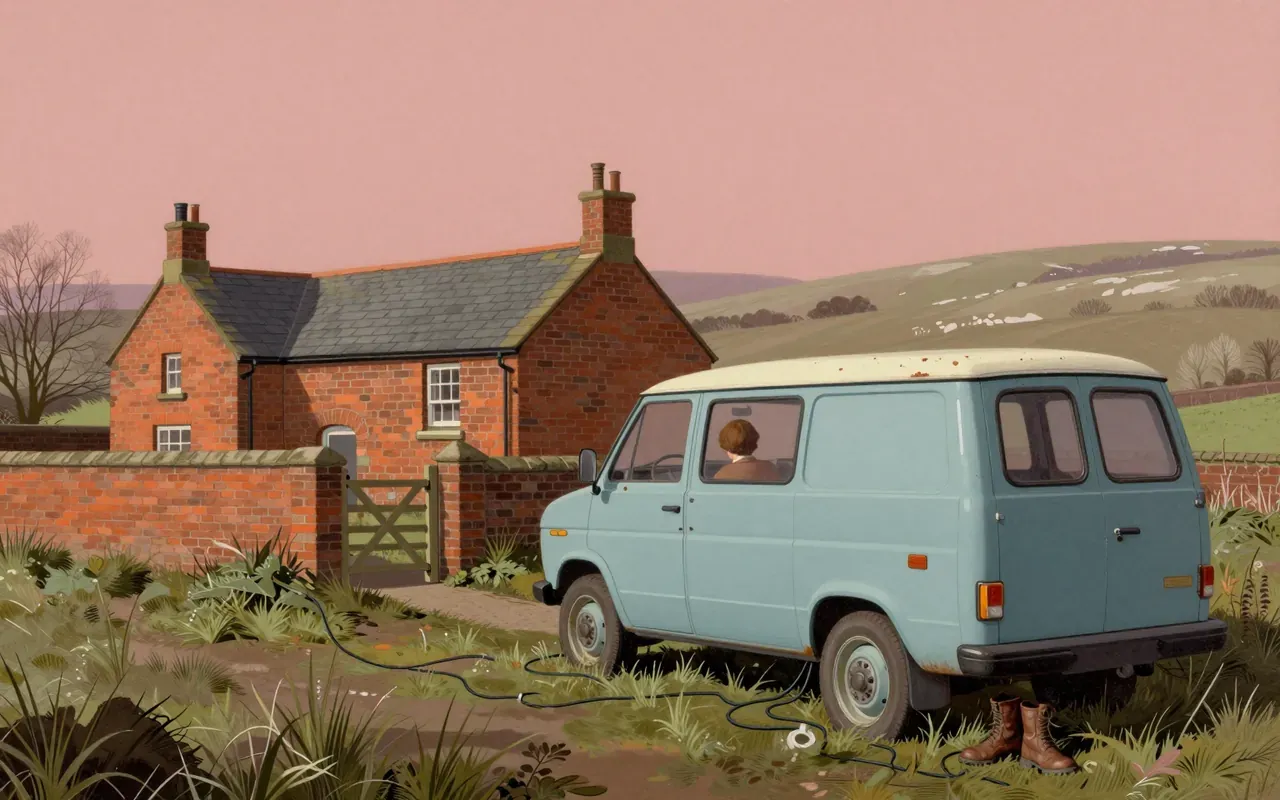
Rock Bottom is Robert Wyatt’s 1974 solo debut, produced by Nick Mason and recorded across three locations: a non-soundproofed van in a Wiltshire field, The Manor Studio, and CBS Studios in London. It combines jazz looseness, instrumentation, and improvisation with rock/folk song forms — an 'upside down' fusion designed to avoid the 'noodling' Wyatt associated with existing jazz-rock. Wyatt performed on vocals, keyboards, percussion, slide guitar, James’ drum, Delfina’s wineglass, Delfina’s tray, and a small battery. Much was composed pre-accident in Venice; arrangements and lyrics were reworked during convalescence. Collaborators included Mike Oldfield, Ivor Cutler, and Fred Frith. The album received mostly positive reviews.

10:19

Saxophone Colossus

Sonny Rollins · 1957

Saxophone Colossus is Sonny Rollins’s sixth studio album, recorded monophonically on June 22, 1956, at Rudy Van Gelder’s studio in Hackensack, New Jersey, with Tommy Flanagan, Doug Watkins, and Max Roach. It contains 'St. Thomas', his best-known composition — a Caribbean calypso based on a childhood tune — alongside 'Strode Rode' and 'Moritat'. It is widely acclaimed and often considered his breakthrough record.

11:48

Sketches of Spain

Miles Davis · 1960

Sketches of Spain is a studio album by Miles Davis and Gil Evans, recorded between November 1959 and March 1960 at Columbia’s 30th Street Studio in New York City. It features arrangements of Spanish classical and folk works—including the adagio from Rodrigo’s Concierto de Aranjuez and 'Will o’ the Wisp' from de Falla’s El amor brujo—as well as Evans originals inspired by Alan Lomax’s 1955 field recordings from Galicia and Andalusia. Davis performed on flugelhorn and trumpet. The album marks Davis’s first collaboration with producer Teo Macero. It was critically acclaimed despite recording challenges: classical musicians struggled with improvisation; jazz musicians with complex notation. It won the 1961 Grammy for Best Jazz Composition of More Than Five Minutes Duration.

9:22

Somethin’ Else

Cannonball Adderley · 1958

Somethin’ Else is a tightly focused, studio-crafted jazz document—not a spontaneous blowout, but a deliberate distillation of what worked in Miles Davis’ band at that moment. Its power lies in subtraction: no excess instrumentation, no harmonic detours, no lyrical indulgence. It sounds like a rehearsal made permanent.

10:13

Songs for Swingin’ Lovers!

Frank Sinatra · 1956

Songs for Swingin’ Lovers! is Frank Sinatra’s tenth studio album and fourth for Capitol Records, released in March 1956. Arranged by Nelson Riddle, it departs from the introspective tone of In the Wee Small Hours in favour of exuberant, jazz-inflected interpretations of pop standards. Recorded in February 1956 in the newly opened Capitol Records Building studios, it features a 56-piece symphonic orchestra. ‘I’ve Got You Under My Skin’ required 22 takes to perfect. A slow ballad, ‘Memories of You’, was recorded but omitted to preserve the album’s uptempo, swinging concept — ‘We’ll Be Together Again’ stands alone as the sole ballad. The album was the first to top the UK Albums Chart upon its July 1956 launch.

9:40

Spiritual Unity

Albert Ayler Trio · 1965

Spiritual Unity is a radical act of presence — three players, one room, one afternoon, no safety net.

9:26

The Hissing of Summer Lawns

Joni Mitchell · 1975

The Hissing of Summer Lawns is Joni Mitchell’s 1975 studio album that introduced Moog and ARP synthesizers to her work and featured the first commercially released sample—a looped field recording of The Drummers of Burundi on 'The Jungle Line'. Produced by Mitchell with Henry Lewy, it blends jazz, avant-pop, world music, and electronic elements, exploring women's experiences under patriarchy and the underbelly of Southern California suburbia. Backing comes from L.A. Express and The Crusaders, with guest appearances by James Taylor, David Crosby, and Graham Nash.

11:13

The Nightfly

Donald Fagen · 1982

The Nightfly is Donald Fagen’s 1982 debut solo album, released after Steely Dan’s 1981 breakup. It was inspired by his suburban adolescence in Kendall Park, New Jersey, and his teenage fascination with late-night radio. It was recorded in 1981–82 across studios in New York City and Los Angeles using 3M’s 32-track and four-track digital recorders—one of the earliest fully digital recordings in popular music. The core production team—Gary Katz, Roger Nichols, and Elliot Scheiner—reunited from Steely Dan’s prior sessions. Key session players such as Jeff Porcaro, Rick Derringer, and Larry Carlton were veterans of Steely Dan’s studio sessions. The album was certified platinum in the U.S., reached number 11 on the Billboard Top 200, spawned the Hot 100 top-30 single 'I.G.Y.', and earned a Grammy nomination for Album of the Year.

9:03

Ascension

John Coltrane · 1965

Ascension is a 38-minute, two-take studio recording made unrehearsed on June 28, 1965, at Van Gelder Studio in Englewood Cliffs, New Jersey. Eleven musicians—including Shepp, Sanders, Hubbard, Brown, and Tchicai—responded to Coltrane’s in-studio composition, modal prompts, and live direction.

9:04

Free Jazz

The Ornette Coleman Double Quartet · 1961

Free Jazz is the first full-length document of collective, non-idiomatic improvisation as compositional method. It uses stereo separation not for effect but for argument: two autonomous groups coexisting without hierarchy, negotiation, or synthesis.

11:27

Hejira

Joni Mitchell · 1976

Hejira is Joni Mitchell’s 1976 album of road-written songs, defined by her guitar and Jaco Pastorius’s fretless bass. It contains no piano. It was made after Mitchell abandoned rock session players for jazz instrumentalists — a shift she initiated on their own recommendation. Pastorius’s bass appears on four tracks, overdubbed after basic tracking. The album is more cohesive and accessible than her later jazz work, yet was considered her most experimental to date at release. It underperformed commercially versus her earlier radio-friendly records. Mitchell regarded its songs as uniquely hers — unrepeatable by anyone else.

12:14

Illadelph Halflife

The Roots · 1996

Illadelph Halflife is the Roots’ third studio album, released 24 September 1996 on DGC and Geffen Records. It features a tougher and broader sound than Do You Want More?!!!??! (1995), integrating programmed drums and guest contributions from R&B musicians including Amel Larrieux and D'Angelo, and jazz musicians including David Murray, Steve Coleman, Cassandra Wilson, and Graham Haynes. Its production is grimy and haunting, shaped by Wu-Tang Clan and RZA’s influence, and replete with samples from old jazz and classical music. The multi-track tapes used to mix the album were destroyed in a 2008 fire at the Universal Studios back lot, though the original 1996 master tape remains unaffected. It was the group’s first album to break the Top 40 on the Billboard 200 chart. ‘What They Do’ was their first single to reach the Top 40 (No. 34); ‘Clones’ was their first to reach the top five on the rap charts. Scott Storch left the band and was replaced by Kamal Gray. Collaborators included Common, D'Angelo, and Q-Tip — foundational to the Soulquarians and the neo-soul association.

10:22

Interstellar Space

John Coltrane · 1974

Interstellar Space is a 1967 duo album by John Coltrane and Rashied Ali, recorded at Van Gelder Studio on February 22, 1967, and released in September 1974. It consists of four tracks — 'Mars', 'Venus', 'Jupiter', and 'Saturn' — each bearing alternate titles in the session sheets. Two further tracks from the same session, 'Leo' and 'Jupiter Variation', appeared on the 1978 compilation Jupiter Variation. The session was minimally planned, cut in one take, and built around Coltrane’s desire for 'more time, more rhythm all around me'.

11:03

Journey in Satchidananda

Alice Coltrane · 1971

Journey in Satchidananda is a 1971 Impulse! release that reorients jazz around sustained tone, spiritual reference, and domestic acoustics — not performance convention.

8:51

Libertango

Astor Piazzolla · 1974

Libertango is a 1974 studio recording made in Milan. It declares tango nuevo through subtraction — no vocals, no ornament, no deference. Its sound is dry, linear, and precisely layered: bandoneón, Hammond organ C3, marimba, bass guitar, drums, guitar, timpani, strings, and flutes. It lands because every instrument has space and purpose. It does not land if you expect warmth, swing, or spectacle. It is worth your time if you value compositional rigour over emotional indulgence.

9:48

Like Water for Chocolate

Common · 2000

Like Water for Chocolate is a 2000 hip-hop album shaped by studio collaboration across Detroit and New York. Its sound is defined by space, incense-saturated atmosphere, and vocal interplay — not flash or density. It establishes Common as a thinker who works best in dialogue: with Jay Dee, with Slum Village, with Questlove, with DJ Premier. It falls short only in its length — the final third drifts without resetting the terms of engagement.

11:12

Science Fiction

Ornette Coleman · 1972

Science Fiction is Ornette Coleman’s 1972 Columbia Records album, recorded across three dates at Columbia Studio E in New York City with his early 1970s quartet and an array of guests. It is dense, conversational, and structurally restless — a record built on presence, not polish.

10:06

Standards, Vol. 1

Keith Jarrett, Gary Peacock, Jack DeJohnette · 1983

Standards, Vol. 1 is the first album by the Keith Jarrett–Gary Peacock–Jack DeJohnette trio. Recorded over 2½ days in January 1983 in a Manhattan studio. No rehearsal. No pre-planned repertoire. Produced by Manfred Eicher. A deliberate turn toward jazz standards in contrast to early-1980s conventions.

10:36

The Futuristic Sounds of Sun Ra

Sun Ra · 1962

Sun Ra’s 1962 album is a clean break: acoustic, lean, and club-ready. It marks his New York arrival — no electronics, no myth-making, just piano, percussion, and precision.

9:33

The Heliocentric Worlds of Sun Ra, Volume 1

Sun Ra · 1965

The Heliocentric Worlds of Sun Ra, Volume 1 is a 1965 album of compositions and arrangements by Sun Ra played by Sun Ra and his Solar Arkestra. It was recorded at Studio RLA in New York on April 20, 1965, engineered by Richard L Alderson. The music is heavily percussive but dispenses with a continuous beat, reconstructing itself around interweaving compositional and improvisatory creative principles with programmatic affects. It exemplifies a radical break from previous notions of melody or harmony. The interwoven lines of Ronnie Boykins' bass and Sun Ra's electronic keyboards provide cohesion. Sun Ra directed the session in real time—stopping takes, assigning rhythms, revising horn parts, and reassigning solos based on his understanding of each player's strengths. The album was originally released with a black-and-white sleeve designed by Sun Ra. It belongs to Sun Ra's New York phase, marked by experimentalism, tape delay, spatial sound, free improvisation, expanded instrumentation, and pioneering use of synthesizers and electronic keyboards.

9:49

The Shape of Jazz to Come

Ornette Coleman · 1959

The Shape of Jazz to Come is Ornette Coleman’s third studio album and Atlantic Records debut, recorded on May 22, 1959, at Radio Recorders in Hollywood. It features Coleman (plastic Grafton saxophone), Don Cherry (cornet or pocket trumpet), Charlie Haden (bass), and Billy Higgins (drums). There is no chordal instrument. Each composition follows a structure of brief thematic statement, free improvisation, then repetition of the main theme—resembling bebop’s head-solo-head form but abandoning chord structures entirely. The album dispenses with harmonic accompaniment and focuses solely on improvised melodies and variations on themes and motifs. Its sound is defined by Coleman’s harsh Grafton timbre and the quartet’s collective, non-hierarchical interplay.

10:01

The Sun’s Tirade

Isaiah Rashad · 2016

The Sun's Tirade is Isaiah Rashad's debut studio album, released on September 2, 2016. It was recorded during a period of personal struggle with depression and addiction. Its production draws from hip-hop, trap, trip hop, soul, and jazz. It is a loose concept album with reflective, conscious themes. It debuted at number 17 on the US Billboard 200, selling 19,000 copies in its first week.

11:08

To Pimp a Butterfly

Kendrick Lamar · 2015

To Pimp a Butterfly is a live-band hip-hop record rooted in jazz, funk, and soul. It was recorded across five US studios with producers including Sounwave, Pharrell Williams, Terrace Martin, Thundercat, and Taz Arnold. Only 'Wesley’s Theory' from Flying Lotus’s early contributions made the final cut. 'Mortal Man' was written on tour. 'Alright' was previewed live in 2014. The album sold 324,000 copies in its first week and topped the Billboard 200 and UK Albums Chart. It explores Black identity, contradiction, and resilience through dense, dynamic arrangements—not lyrical abstraction alone.

8:20

Wave

Antônio Carlos Jobim · 1967

Wave is Antônio Carlos Jobim’s fifth studio album, released in 1967 on A&M Records. It was recorded in the US with mostly American musicians. Claus Ogerman arranged and conducted. The album features trombonists Urbie Green and Jimmy Cleveland, flautist Jerome Richardson, bassist Ron Carter, and a string section. Jobim performed piano, guitar, harpsichord, and vocals.

9:23

What’s New?

Sonny Rollins · 1962

What’s New? is a 1962 RCA Victor album by Sonny Rollins built around Latin rhythms. It does not reinterpret the title song’s lyrical conceit or formal structure. It does not feature the trumpet solo for which the tune was originally written. It lands most clearly on ‘Jungoso’ and ‘Bluesongo’. It is worth hearing for its rhythmic focus — not for harmonic invention or narrative depth.

13:00

A Love Supreme

John Coltrane · 1965

Recorded in one day in December 1964 at Rudy Van Gelder's New Jersey studio, A Love Supreme is John Coltrane's four-movement statement of gratitude, made with the quartet of McCoy Tyner, Jimmy Garrison and Elvin Jones. Built around a four-note bass figure that becomes a chanted phrase and later a saxophone recitation of Coltrane's own written poem, it plays as a single sustained piece rather than a collection of tunes.

13:00

Astral Weeks

Van Morrison · 1968

Astral Weeks is Van Morrison's second solo album, recorded in three sessions at Century Sound Studios in New York in late 1968 with a group of jazz musicians assembled by producer Lewis Merenstein. A sharp break from his pop singles, it sold modestly on release and has since been treated as one of the defining records of its era.

13:00

Bitches Brew

Miles Davis · 1970

Recorded across three days in August 1969 at Columbia's Studio B, Bitches Brew pushed Miles Davis's turn toward electric instruments into a full, sprawling double album built from loose sketches, two bassists, up to three drummers and three electric pianists playing at once. Producer Teo Macero then spliced and looped the tapes into their final shape, a process as central to the record's identity as anything played live in the room.

13:00

Black Market

Weather Report · 1976

Weather Report's sixth album, recorded at Devonshire Studios in North Hollywood over the turn of 1975 into 1976, leans into African-derived percussion and Joe Zawinul's synthesizer textures rather than the soloistic fusion of earlier records. Wayne Shorter's Lyricon blurs horn and machine, Alex Acuña's congas anchor two drummers, and Jaco Pastorius makes his first, understated appearance on bass across two tracks.

13:00

Coffy

Roy Ayers · 1973

Composed, arranged and conducted by Roy Ayers for the 1973 film of the same name, Coffy pairs a full jazz-funk band with strings, horns and vocal cues sung by Dee Dee Bridgewater, Wayne Garfield and Ayers himself. Split between orchestral action cues and proper soul numbers, it holds up as music independent of the picture it was built to serve.

13:00

Giant Steps

John Coltrane · 1960

John Coltrane's first album as leader for Atlantic gathers sessions from three dates in 1959, built around a rapid, major-third chord movement that has since become a standard saxophone exercise. Alongside the title track's difficulty sit gentler pieces named for his family, including the ballad Naima, showing the same harmonic ideas turned toward tenderness.

13:00

Head Hunters

Herbie Hancock · 1973

Assembled after three increasingly abstract Mwandishi records, Head Hunters strips Hancock's sound down to bass, drums, reeds and Clavinet, turning a fifteen-minute groove into jazz's best-selling record of its era.

13:00

In a Silent Way

Miles Davis · 1969

Recorded in a single February 1969 session at Columbia's Studio B and shaped afterward by producer Teo Macero's editing, In a Silent Way marked Miles Davis's full turn toward electric instruments. Built from just two long pieces stitched from a handful of takes by an expanded band including three electric pianists and a guitarist new to New York, it plays as a hushed, largely beatless record that unsettled jazz and rock critics alike on release.

13:00

Kind of Blue

Miles Davis · 1959

Recorded in two sessions in March and April 1959 at Columbia's 30th Street Studio, Kind of Blue found Miles Davis trading bebop's dense chord changes for loose modal sketches, handed to his sextet with barely any rehearsal. The gamble produced five tracks, from So What to Flamenco Sketches, that have shaped how musicians well outside jazz think about improvisation ever since.

13:00

Mingus Ah Um

Charles Mingus · 1959

Charles Mingus's first album for Columbia, recorded in May 1959, gathers tributes to Lester Young, Duke Ellington and Jelly Roll Morton alongside Fables of Faubus, a satire of Arkansas's segregationist governor recorded without its banned lyrics. A tight sextet, led from the bass, turns gospel, blues and big-band writing into a single, coherent argument about jazz's own history.

13:00

Moondance

Van Morrison · 1970

Moondance is Van Morrison's third studio album, recorded at A&R Studios in New York in 1969 with Morrison producing for the first time in his career. Trading the loose, extended pieces of Astral Weeks for tighter songs built around a horn section, it became an immediate commercial and critical success and gave Morrison the sound he would be known for.

13:00

Time Out

The Dave Brubeck Quartet · 1959

Recorded in 1959 at Columbia's 30th Street Studio, Time Out grew out of Dave Brubeck's overseas tours for the State Department, where he heard rhythms outside the usual pulse of American jazz. The Dave Brubeck Quartet built seven tracks around metres like nine-eight and five-four, including Take Five, composed by saxophonist Paul Desmond almost as an afterthought, which went on to outsell every jazz single before it.

13:00

Timeless

John Abercrombie · 1975

John Abercrombie's 1975 debut as a leader pairs him with organist and synthesist Jan Hammer and drummer Jack DeJohnette for a quiet, conversational take on fusion, cut over two days for ECM. It is patient rather than showy, and its reputation has grown slowly on the strength of the interplay between three musicians clearly listening to each other.