What the record is and where it came from
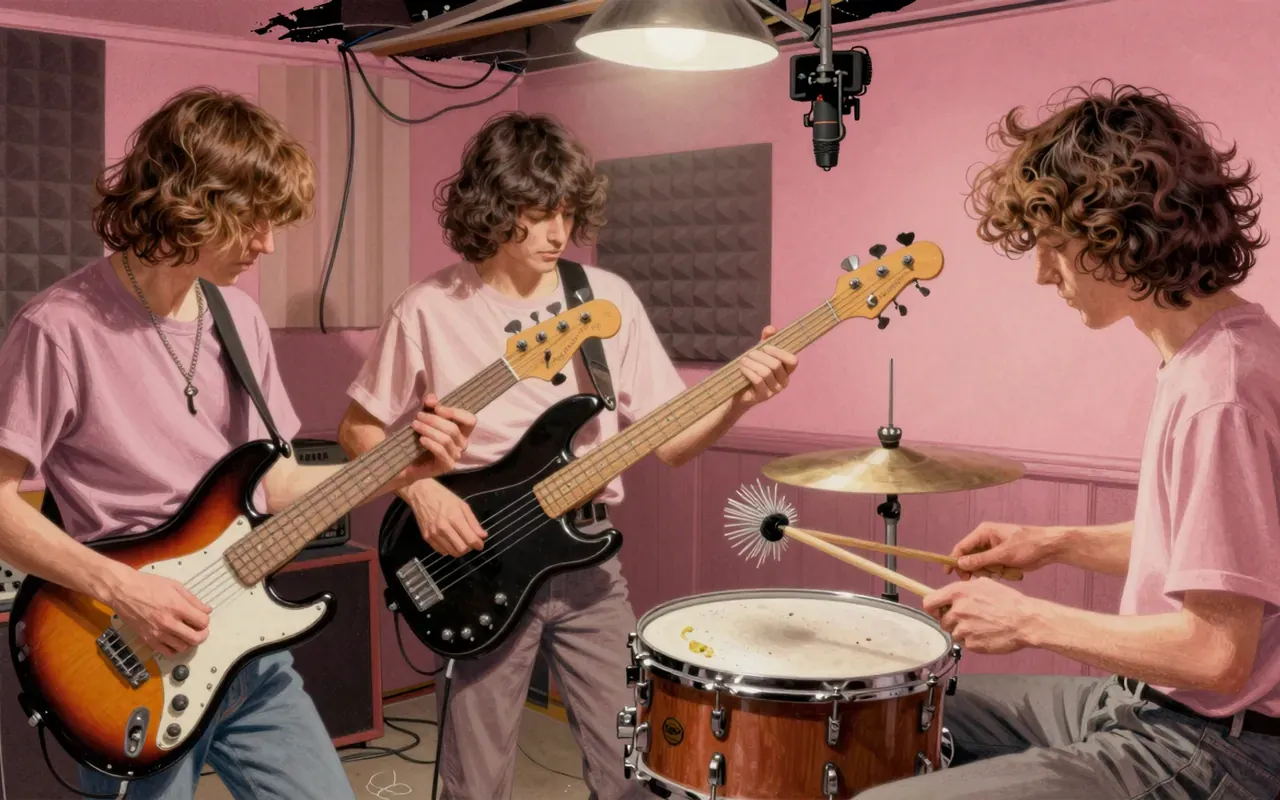
After the elaborate sampling of Paul’s Boutique, the Beastie Boys made a different kind of working space. Check Your Head, released in 1992, brought Adam Horovitz’s guitar, Adam Yauch’s bass and Mike Diamond’s drums into the foreground. Mario Caldato Jr. co-produced and engineered the record, made at G-Son Studios in Los Angeles. Keyboardist Money Mark became a central collaborator.
The useful question is what playing those instruments allowed them to do. They could build material together, return to their punk background and pursue funk and jazz ideas without making every musical decision depend on finding an existing recording.
How it sounds, and how it was made
The contrast between instrumental passages and rap songs is part of the album’s structure. Money Mark’s credited instruments include organ, clavinet, synthesizer and Wurlitzer; the percussion credits extend beyond the trio’s drum kit. That palette gives the group more ways to organise a track than a vocal over a sampled backing.
Sampling remains in the picture. Treating this as the moment the Beastie Boys became a real band misses the more interesting development: they added another method of making music. The record’s identity comes from allowing those methods to coexist.
What lands
The funk and jazz influences of “Lighten Up” and “Something’s Got to Give” make the expansion tangible. “Time for Livin’,” their Sly and the Family Stone cover, connects it to hardcore punk. These are useful listening landmarks because they reveal how much ground the album chooses to cover.
Its strongest idea is also practical: a group can develop by changing what its members do together. Guitar, bass, drums and keyboards give that proposition a concrete form.
What does not
The variety has a cost. A listener following the rap performances can reasonably find the instrumental excursions distracting; someone drawn to the playing may want those passages developed further. The album keeps changing the terms of attention. Its looseness is productive, but it does not make every transition necessary.
The ideas inside it
Check Your Head treats musical taste as material to work with. Punk, funk, jazz and hip-hop become activities rather than separate affiliations. The achievement is not simply eclecticism. It is finding a working arrangement in which those interests can keep generating songs.
Who should hear it, and who should not
Hear it if you are interested in the relationship between sampling and playing, or in bands that make a change of direction through collaboration. If you want one style sustained with maximum concentration, its restless sequencing may be a frustration.
Is it worth your time
Yes. Listen to the instrumental pieces as part of the argument, rather than waiting for the next rap track. They explain why this particular reinvention mattered.