musicbriefs
Genre

Hip-hop

114
briefs
9:44
average
1109 min
in total
74
artists
All briefs114
2:05

808s & Heartbreak

Kanye West · 2008

Released in 2008, 808s & Heartbreak followed the death of Kanye West's mother and the end of his engagement. His fourth studio album shifts much of its emphasis from rapping to singing. That change makes the handling of the voice the central question of the record.

2:06

All Eyez on Me

2Pac · 1996

Released in February 1996, All Eyez on Me was 2Pac's fourth studio album and his last released during his lifetime. The Death Row double album assembles numerous producers and guests around a performer concerned with both hard-won luxury and the threats surrounding it.

3:15

Check Your Head

Beastie Boys · 1992

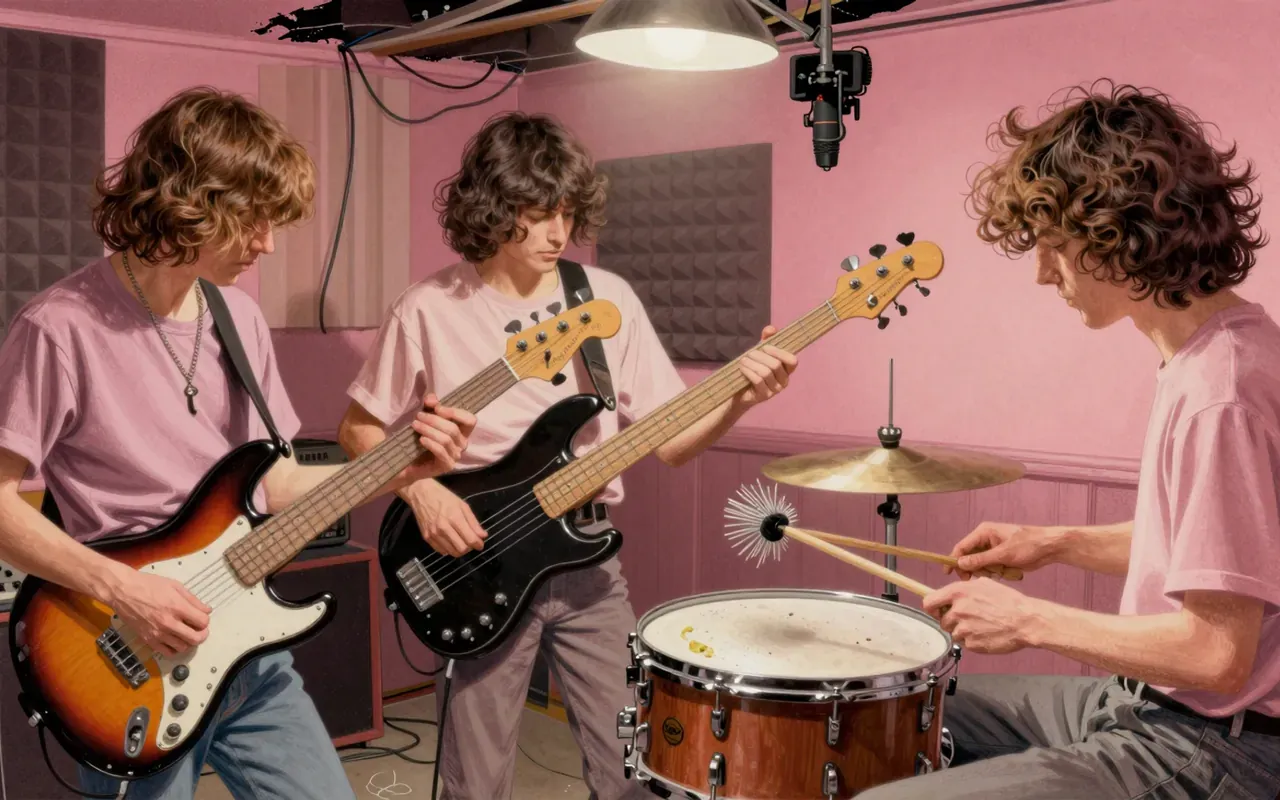
On their 1992 third album, the Beastie Boys put live bass, drums, guitar and Money Mark's keyboards alongside sampling and rap. Its musical detours can interrupt the momentum, but they also give the group a way to keep changing without leaving its earlier selves behind.

2:07

Doggystyle

Snoop Dogg · 1993

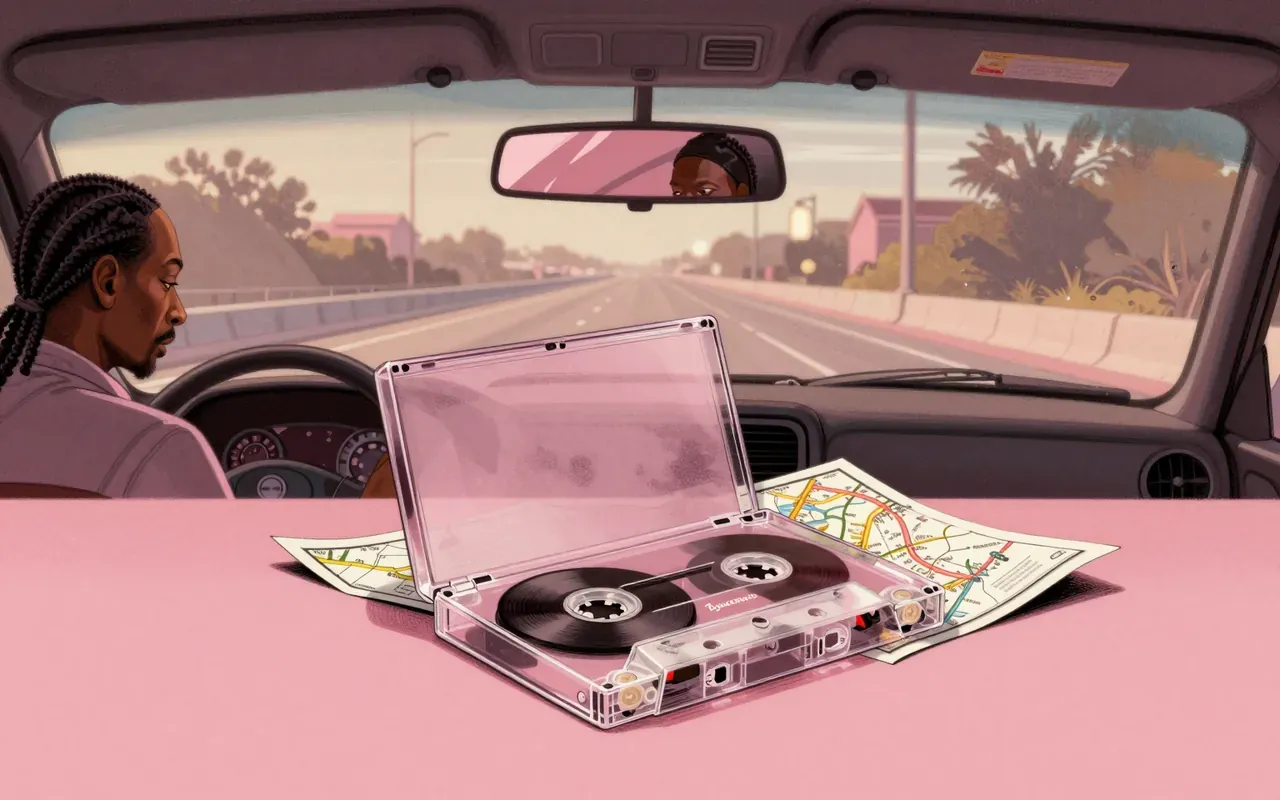
Snoop Doggy Dogg's 1993 debut followed his prominent contributions to Dr. Dre's The Chronic. Released by Death Row, it develops that partnership into an album built around Snoop's own vocal character. The setting is collective, with Tha Dogg Pound and other associates contributing to its social atmosphere.

2:07

Licensed to Ill

Beastie Boys · 1986

Licensed to Ill introduced the Beastie Boys on album in 1986, with Rick Rubin producing for Def Jam. Their debut brings rock's confrontational scale into a rap setting and makes the group itself the central attraction. It belongs to a different stage of their work than the denser sampling of Paul's Boutique.

2:03

Life After Death

The Notorious B.I.G. · 1997

Life After Death appeared in March 1997, sixteen days after the Notorious B.I.G.'s murder. The double album continues from Ready to Die's ending, but its musical ambitions spread outward through a much larger cast. Its posthumous release should not erase the deliberate breadth of the project.

2:40

Madvillainy

Madvillain · 2004

Released by Stones Throw in 2004, Madvillainy joins rapper MF DOOM and producer Madlib under the name Madvillain. Much of their collaboration took place at the Los Angeles house that also housed the label. DOOM could concentrate on writing and performing while Madlib supplied a shifting musical environment.

2:36

Piñata

Freddie Gibbs, Madlib · 2014

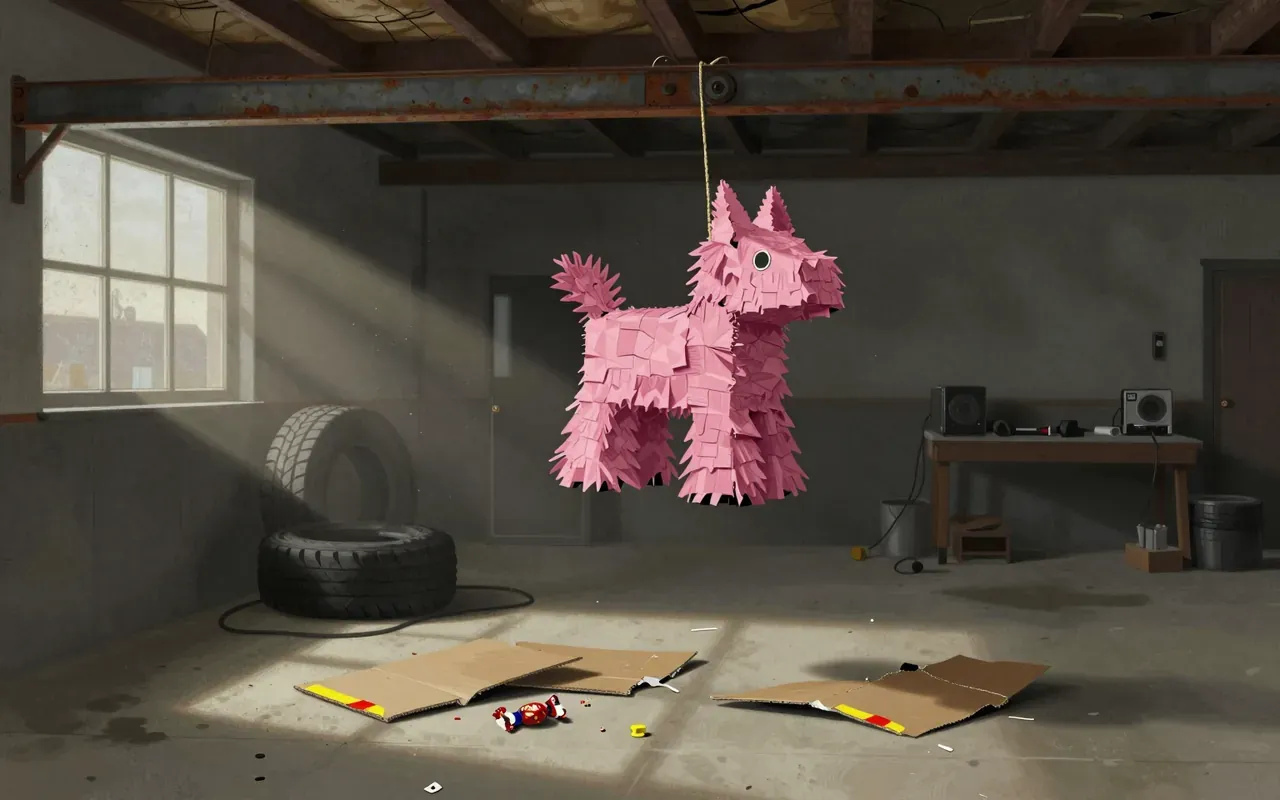
Piñata is Freddie Gibbs and Madlib's 2014 collaborative album, released through Madlib Invazion after the Thuggin’, Shame and Deeper EPs. Its seventeen tracks developed over several years. Gibbs brings the perspective of a rapper from Gary, Indiana, into a project produced throughout by Madlib.

2:02

Ready to Die

The Notorious B.I.G. · 1994

The Notorious B.I.G.'s 1994 debut is a partly autobiographical sequence about crime, ambition and emotional instability. Released by Bad Boy, it moves from an introduction sketching a life toward an ending that undermines any easy success story. It was the only album issued during his lifetime.

2:12

Return to the 36 Chambers: The Dirty Version

Ol' Dirty Bastard · 1995

Ol' Dirty Bastard's 1995 solo debut arrived after Wu-Tang Clan's first album and Method Man's Tical. RZA handles much of the production, with contributions from ODB, True Master and 4th Disciple. The wider Clan remains present through guest appearances, even as the lead performer claims his own unruly space.

1:56

Supreme Clientele

Ghostface Killah · 2000

Supreme Clientele, released in 2000, is Ghostface Killah's second solo album. RZA contributed production and also reworked material from other producers to give the record greater coherence. Wu-Tang associates and other guests remain part of the setting around the lead performer.

1:55

Take Care

Drake · 2011

Take Care, Drake's second album, appeared in 2011 after he sought a more coherent relationship with longtime collaborator Noah “40” Shebib. Numerous guests contribute, but the production establishes a recognisable environment around the lead performer. Singing becomes more prominent alongside rap.

8:43

400 Degreez

Juvenile · 1998

400 Degreez is a foundational New Orleans hip-hop record defined by its production method — lyrics first, live keyboards only, no sampling — and its regional coherence. It is not a crossover bid. It is a local document made with daily discipline and total instrumental control.

10:12

Black Sunday

Cypress Hill · 1993

Black Sunday is a landmark commercial and cultural achievement — not a document of its production process.

10:00

By All Means Necessary

Boogie Down Productions · 1988

By All Means Necessary is Boogie Down Productions’ 1988 second studio album, released April 12, 1988. KRS-One wrote, produced, and performed every track alone. It features minimalist production and hard-hitting drum beats. Sampling is central: 'My Philosophy' uses Stanley Turrentine’s 'Sister Sanctified'; 'Ya Slippin’' interpolates Deep Purple’s 'Smoke on the Water' and reuses the 'Poetry' beat; 'Stop the Violence' uses Courtney Melody’s 'This Sound a Dem Trouble' riddim; 'Illegal Business' samples Fat Albert’s 'Creativity' and Jefferson Starship’s 'Rock Music'; 'Nervous' samples Rhythm Heritage’s 'Sky’s the Limit' and War’s 'Galaxy'; 'I’m Still #1' samples All the People’s 'Cramp Your Style'. Themes include government and police corruption, safe sex, government involvement in the drug trade, and intra-community violence. It marks KRS-One’s adoption of the 'Teacha' identity and follows DJ Scott La Rock’s murder.

9:17

Hello Nasty

Beastie Boys · 1998

Hello Nasty is a studio-dug experiment — reclusive, unplanned, genre-fluid. It uses 808s, disco breaks, analogue synths, and samples to build a freer, looser Beastie Boys record than before. Mix Master Mike reshapes the group’s sound. Guest vocals from Miho Hatori and Lee 'Scratch' Perry add distinct textures. Its sprawl works in moments — ‘Intergalactic’, ‘Body Movin’’, ‘Dr. Lee, PhD’, ‘Three MC’s and One DJ’ — but not across all 22 tracks.

10:25

If You’re Reading This It’s Too Late

Drake · 2015

If You're Reading This It's Too Late is a production document disguised as a mixtape. Its strength is not mood, melody, or message — it is the granular, track-by-track assignment of bass, drums, and keys to specific Toronto-based musicians. Nothing here is left to chance, improvisation, or room acoustics. It is built to be parsed, not felt.

10:57

Man on the Moon: The End of Day

Kid Cudi · 2009

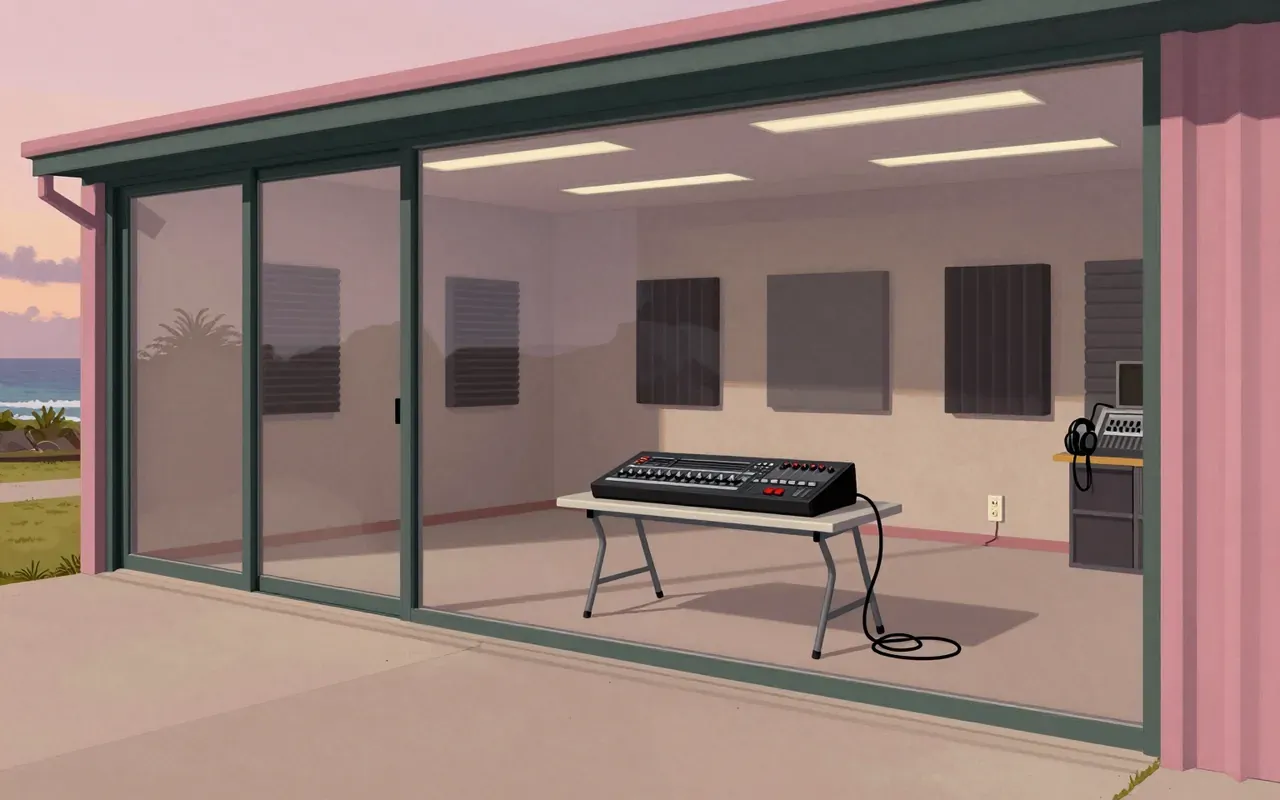
Man on the Moon: The End of Day is Kid Cudi’s debut studio album, recorded from 2007 to 2009 across Avex in Honolulu, The Broski Room and Chung King in NYC, and Jim Henson and Record Plant in Hollywood. Producers include Kanye West, Emile Haynie, Plain Pat, Jeff Bhasker, Dot da Genius, Free School, the Kickdrums, Ratatat, Ryan Leslie, 88-Keys, and The Alchemist. Session collaborators include Travis Barker and will.i.am. Guest appearances are by Kanye West, Common (who narrates throughout), Billy Cravens, Ratatat, MGMT, and Chip tha Ripper. Snoop Dogg and Clipse were announced but excluded. The album blends psychedelic, indie pop, R&B, electronica, and rock. Its themes are depression, anxiety, loneliness, and escapism. It is structured in five acts centred on 'Day ’n’ Nite', with recurring samples and motifs. It was released on Universal Motown Records on September 15, 2009. It sold 104,419 copies in its first week, debuted at number four on the Billboard 200, and achieved quadruple platinum certification by the RIAA. 'Pursuit of Happiness' is diamond-certified. 'Make Her Say' features a sample from Lady Gaga’s 'Poker Face'. 'My World' appears in Born Villain and Winnie the Pooh (2011). 'Sky Might Fall' appears in the extended trailer for Transformers: Revenge of the Fallen (2009).
10:12

Run‐D.M.C.

Run‐D.M.C. · 1984

Run-D.M.C. (1984) is a debut defined by subtraction: Oberheim DMX beats, Jam Master Jay’s scratches, Eddie Martinez’s guitar riffs. No basslines beyond the drum machine’s pulse. No melodic relief. No studio reverb. Just staccato vocals, rhythmic tension, and social framing — all assembled by Russell Simmons and Larry Smith. It landed as new school hip hop because it refused the old rules — not by adding, but by stripping away.

10:00

Tha Carter II

Lil Wayne · 2005

Tha Carter II is a pivot: Wayne sheds Mannie Fresh’s bounce and builds a lean, sample-chopped Southern rap record. It trades groove for grip — every bar snaps, every sample serves rhythm, every guest appearance tightens the frame. It is precise, impatient, and technically assertive. It is not warm. It is not expansive. It is not nostalgic. It is a workshop, not a monument.

9:47

The Grey Album

Danger Mouse · 2004

A 2004 experimental mashup by Danger Mouse, made from Jay-Z’s The Black Album a cappellas and samples solely from the Beatles’ 'White Album'. Released in a limited 3,000-copy run without Beatles permission. Framed as deconstructive labour — not remixing, but rebuilding using only those two sources.

8:54

The Writing’s on the Wall

Destiny’s Child · 1999

Destiny's Child's second album is a tightly wound, studio-crafted pivot—built on rewritten lyrics, Houston sessions, and a single track that redefined everything.

10:29

3 Feet High and Rising

De La Soul · 1989

3 Feet High and Rising is De La Soul’s 1989 debut — a sample-heavy, psychedelic-influenced hip-hop record built with the Casio RZ-1 and Eventide Harmonizer. It introduced the 'D.A.I.S.Y. Age' concept ('Da Inner Sound, Y'all'), used quiz show skits to structure its flow, and drew from funk, soul, doo-wop, psychedelic rock, and children’s music. It was certified platinum, added to the Library of Congress National Recording Registry in 2010, and remained unavailable digitally until 2023 due to sample clearance issues.

12:30

AM

Arctic Monkeys · 2013

AM is Arctic Monkeys’ fifth studio album, released 9 September 2013. It marks their first venture into a hip hop-influenced sound, achieved by recording bass and drums first, using unconventional drum setups, and incorporating new instruments including the Hohner Guitaret, celeste, and vintage drum machine. It was produced by James Ford and co-produced by Ross Orton at Sage & Sound Recording in Los Angeles and Rancho De La Luna in Joshua Tree, California. Thematically, it concerns frustration surrounding tainted romance, sex and loneliness. Guest appearances include Josh Homme, Pete Thomas, and Bill Ryder-Jones—with Homme’s contribution to 'Knee Socks' singled out by Alex Turner as his favourite moment on the record. Turner described the sound as 'like a Dr. Dre beat, but we've given it an Ike Turner bowl-cut and sent it galloping across the desert on a Stratocaster', and said 'Arabella' expresses the album’s two dominant styles—hip-hop beats and 1970s heavy rock—most effectively in one track.

9:46

AmeriKKKa’s Most Wanted

Ice Cube · 1990

AmeriKKKa's Most Wanted is Ice Cube's 1990 debut solo album, recorded in New York with Public Enemy's production team the Bomb Squad. It was released in May 1990 and became an instant hit that advanced rap's mainstream integration. The album was controversial, drawing accusations of misogyny and racism, while introducing Cube's affirmation of black nationalism and ideology of black struggle.

8:47

Arular

M.I.A. · 2005

Arular is a debut shaped by constraint: one machine, one room, one voice. Its power lies in what it excludes — space, polish, convention — not what it adds.

9:02

Baduizm

Erykah Badu · 1997

Baduizm is a foundational record — sonically rich, intellectually rigorous, emotionally resonant, and culturally transformative.

11:43

Bizarre Ride II the Pharcyde

The Pharcyde · 1992

Bizarre Ride II the Pharcyde is a 1992 hip-hop debut by The Pharcyde, recorded in late 1991 at Paramount Recording Studios and then Hollywood Sounds. J-Swift produced 15 of 16 tracks using live instrumentation and samples, with input from JMD on drums and his own piano, bass and rhodes. The group lived communally at the Pharcyde Manor in Inglewood. They avoided profanity, partly at Delicious Vinyl’s urging for radio viability. Internal conflict led J-Swift to exit before completion, recommending L.A. Jay to co-produce the final track. The album is highly acclaimed as an influential alternative hip-hop record.

9:14

Blonde

Frank Ocean · 2016

Blonde is Frank Ocean’s second studio album, released independently on August 20, 2016 — the day after the visual album Endless — fulfilling his contractual obligations with Def Jam. It arrived alongside the 'Nikes' music video and the Boys Don't Cry magazine.

9:00

Boy in da Corner

Dizzee Rascal · 2003

Boy in da Corner is Dizzee Rascal’s self-produced 2003 debut album. All 17 tracks were produced by him. One track samples Billy Squier’s 'The Big Beat'. Four vocal contributors are named across seven tracks. Nothing else about its making — no instruments, no room, no tempos, no engineering — is stated in the source material.

11:19

CALL ME IF YOU GET LOST

Tyler, The Creator · 2021

Call Me If You Get Lost is Tyler, The Creator’s seventh studio album, released 25 June 2021. It marks a stylistic pivot from the soulful intimacy of Igor and Flower Boy toward bolder, more eclectic production—drawing from Gangsta Grillz-era mixtapes—and incorporates hip-hop, pop, jazz, soul, and reggae. Tyler self-produced nearly all tracks, with Jamie xx, Jay Versace, and Madlib contributing to three songs. The album features dense, spatially inventive mixing, genre-fluid transitions, and a wide cast of collaborators, all framed within a narrative persona ('Tyler Baudelaire') and a concept rooted in travel, worldliness, and romantic vulnerability. Its production reflects the full arc of Tyler’s evolution—from early horrorcore sampling to refined, cinematic arrangements—while retaining raw lyrical energy and structural unpredictability.

13:05

CrazySexyCool

TLC · 1994

CrazySexyCool is a tightly constructed R&B album that uses hip hop soul textures, layered vocals, and precise studio craft to explore adult romance and self-possession. Its strength lies in restraint: fewer rap verses, more space for groove and tone, and lyrics that observe rather than preach. It is not revolutionary. It is deliberate.

12:14

Criminal Minded

Boogie Down Productions · 1987

Criminal Minded is a sonic and sociocultural threshold — not a polished statement, but a live wire pulled from the South Bronx.

9:19

Ctrl

SZA · 2017

Ctrl is SZA’s debut studio album, recorded between 2014 and 2017 at the TDE Red Room in Carson, California, and other locations including Chicago and Carter Lang’s Michigan home. It uses analog techniques—physically unplugging and re-plugging wires—to shape sound. Rick Rubin guided its minimalism, stripping reverb and background vocals to foreground SZA’s voice. Producers competed, exchanging beats; SZA studied Top 40 hits from the 1940s and 1980s for stylistic reference. The album features sampled voice recordings of her maternal grandmother, Norma Rowe. It was universally acclaimed, earned seven Grammy nominations, and debuted at number three on the Billboard 200.

11:38

De La Soul Is Dead

De La Soul · 1991

De La Soul Is Dead is a 1991 hip-hop album that rejects its predecessor's image through conceptual rupture, darker humour, and weighty themes—while holding onto playfulness in groove and skit. It is structured around format-specific sequencing, fictional radio framing, and a visual metaphor of death-as-metamorphosis. Its sound is defined by eclectic sampling and rhythmic experimentation—but no instrument, room, or technical detail beyond that is verified.

11:26

Demon Days

Gorillaz · 2005

Demon Days is a 2005 Gorillaz concept album about night as allegory — recorded across London studios, produced by Danger Mouse, and defined by layered guest vocals, reggae bounce, choral swell, and deliberate emotional contrast in harmony.

10:18

Donuts

J Dilla · 2006

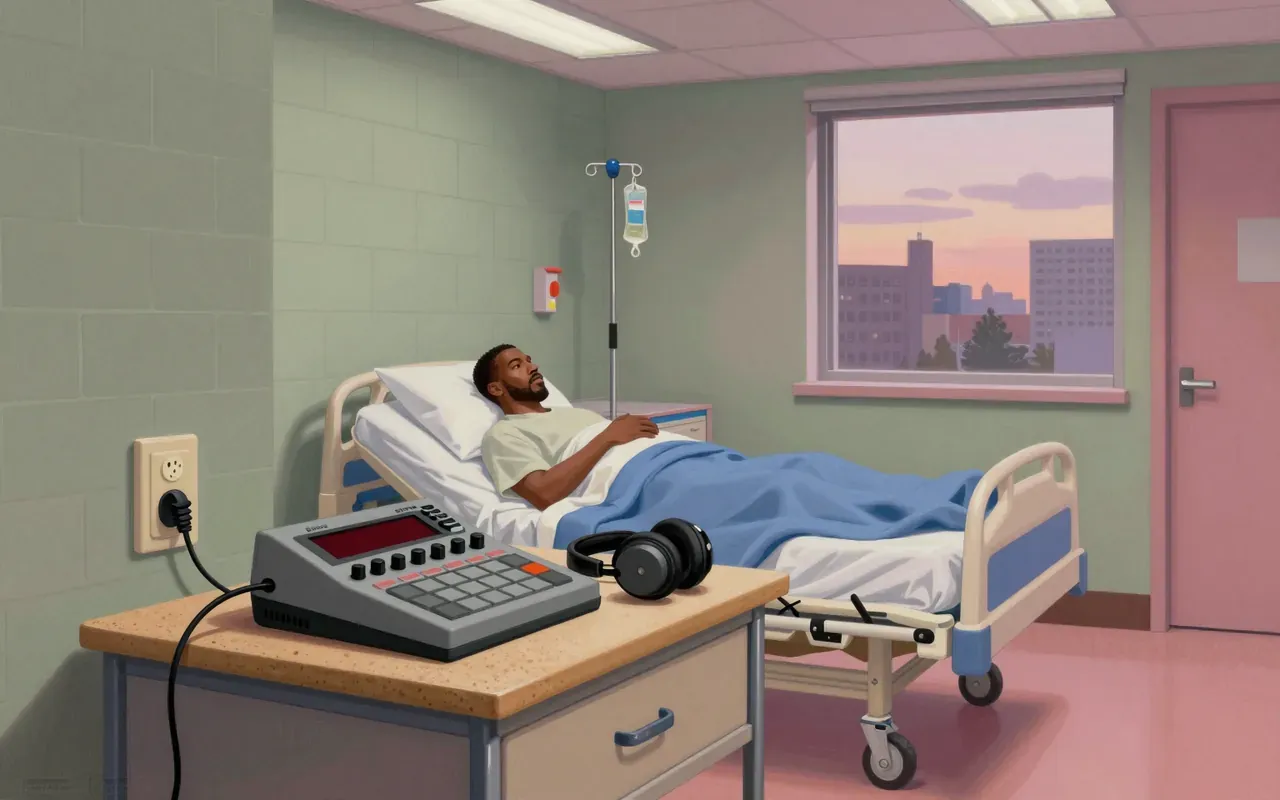
Donuts is an instrumental hip-hop album released on February 7, 2006 — three days before J Dilla’s death. It consists of 31 tracks built from 34 samples across rock, jazz, and soul. It was made in hospital and hotel rooms using portable gear including a Boss SP-303, MPC, Moog keyboard, turntable, laptop, audio interface, and crate of records. J Dilla forbade anyone from hearing the unfinished version. The album begins with an outro and ends with an intro, forming a structural loop.

10:01

Fantastic Vol. 2

Slum Village · 2000

Fantastic, Vol. 2 is a foundational Detroit hip-hop document because it refuses to explain itself — it simply occupies space with warmth, restraint, and unbroken groove.

9:59

Get Rich or Die Tryin’

50 Cent · 2003

Get Rich or Die Tryin’ is 50 Cent’s 2003 debut studio album, executive-produced by Eminem and Dr. Dre to fuse gangsta rap and R&B. It features production by Mike Elizondo, Sha Money XL, Mr. Porter, Rockwilder, Dirty Swift, and Megahertz. Guest appearances include Eminem, Young Buck, Nate Dogg, Lloyd Banks, and Tony Yayo. 'In da Club' was one of seven tracks recorded with Dr. Dre in five days. 'Back Down' repurposed an unused instrumental from Rakim’s unreleased Oh My God. The album debuted at #1 on the Billboard 200 with 872,000 copies sold in four days. It spawned two Billboard Hot 100 number-one singles: 'In da Club' and '21 Questions' (featuring Nate Dogg). Rolling Stone noted its 'dark synth grooves, buzzy keyboards and a persistently funky bounce'. The Source highlighted 'In da Club’s' 'blaring horns, funky organs, guitar riffs and sparse hand claps'. It received Multiple Platinum certification by the RIAA.
10:34

Ill Communication

Beastie Boys · 1994

Ill Communication is the Beastie Boys’ fourth studio album, co-produced by the band and Mario Caldato, Jr., recorded between 1993 and 1994 at Tin Pan Alley and G-Son Studios. It expands on their live-instrument approach begun with Check Your Head, incorporating hip-hop, punk rock, jazz, and funk, and reflects influences from Miles Davis’s On the Corner and Agharta. Contributions include live instrumentation from Money Mark, Eric Bobo, and Amery Smith, plus guest vocals from Q-Tip and Biz Markie. The 'Sabotage' backing track—built around MCA’s fuzzed and twangy bass—was laid down at Tin Pan Alley and sat unused for a year under the working title 'Chris Rock' before final vocals were added. The album was released on May 23, 1994, and received widespread critical acclaim for its stylistic range and synthesis of the group’s earlier impulses with matured musicianship and lyrical depth. Its artwork features a 1964 Bruce Davidson photograph and Alex Grey’s 'Gaia'.

10:53

Mama Said Knock You Out

L.L. Cool J · 1990

Mama Said Knock You Out is LL Cool J's fourth studio album, released in 1990 and produced primarily by Marley Marl. It was recorded at Marley Marl's 'House of Hits' home studio in Chestnut Ridge and at Chung King House of Metal in New York City. All tracks were co-written by James Todd Smith and Marlon Williams unless otherwise noted. The single version of 'Jingling Baby (Remixed but Still Jingling)' was remixed by Marley Marl. 'The Boomin' System' is censored on all album editions; the uncensored version appears only on the 12" single.

10:38

Mellow Gold

Beck · 1994

Mellow Gold is a lo-fi, genre-blending 1994 album recorded on a four-track in two LA homes. Beck performed most instruments and co-produced with Tom Rothrock, Rob Schnapf, and Carl Stephenson. Its sound is deliberately degraded, satirical, and texturally dense — built from home recordings, obscure samples, and sparse guest contributions. It launched Beck’s major-label career but resists cohesion, favouring collage over continuity. Its ideas orbit absurdism, sampling, and the myth of the corrupted artefact.

9:06

Midnight Marauders

A Tribe Called Quest · 1993

Midnight Marauders is A Tribe Called Quest’s third studio album, released 9 November 1993. It synthesises jazz, funk, soul and R&B sampling into a gritty, cohesive whole — built across nine months in three New York City studios, with foundational work in Phife Dawg’s grandmother’s basement. Q-Tip and Phife Dawg refine their lyrical interplay, supported by deliberate production choices: retained sample noise, SSL sheen, layered drums, and a recurring tour guide voice. Guests include Large Professor, Busta Rhymes and Raphael Saadiq (credited as Raphael Wiggins). The album was mixed at Battery Studios and mastered at The Hit Factory.
9:47

My Life

Mary J. Blige · 1994

My Life is a record built from the inside out: fourteen lyrics written by Blige during clinical depression, addiction, and an abusive relationship with K-Ci Hailey; Chucky Thompson hired last-minute after prior producers raised fees; Sean Combs shifting direction after hearing Thompson’s first track; Prince Charles Alexander joining late to engineer the cover of 'I'm Going Down'; The Notorious B.I.G.’s verse cut from 'K. Murray Interlude' over parental advisory concerns and replaced by Keith Murray. Its sound is rooted in soul sampling—Curtis Mayfield, Al Green, Marvin Gaye—and its structure reflects real-time negotiation over voice, visibility, and authorship. It is not a cultural artifact frozen in time. It is a living document of process.

10:25

Odelay

Beck · 1996

Odelay is a 1995 album recorded primarily in the Dust Brothers’ home studio in Silver Lake, Los Angeles, after Beck abandoned an earlier acoustic album of somber, orchestrated folk tunes made with Tom Rothrock and Rob Schnapf in 1994. Only 'Ramshackle' survived that session. The Dust Brothers’ hip-hop–influenced, layered production — informed by their work with Beastie Boys, Tone Lōc and Young MC — shaped the album’s sound. Their record-filled studio supplied many of the album’s samples. Musicians worked 16-hour days, starting from scratch each day. The album blends country, blues, rap, jazz and rock using cut-and-paste, sample-heavy techniques.

12:10

Original Pirate Material

The Streets · 2002

A solitary, resourceful act of creation in a Brixton bedroom — no studio, no band, no analogue gear — that redefined British hip-hop by grounding it in place, process, and vernacular truth.

9:34

Planet Rock: The Album

Afrika Bambaataa & Soulsonic Force · 1986

A foundational electro-funk record defined by its 1982 production: TR-808 rhythms, Kraftwerk synth hooks, and sample-based construction — not as collage, but as architectural logic.

9:38

Run the Jewels 2

Run the Jewels · 2014

Run the Jewels 2 is a hip-hop album defined by its credited instrumental and vocal additions — not its themes, sound design, or production philosophy. It names who played what, and where. Nothing more is established.

9:23

Run The Jewels 4

Run the Jewels · 2020

RTJ4 is Run the Jewels’ fourth studio album, released digitally on June 3, 2020 — two days ahead of its scheduled June 5 date — as a direct response to nationwide protests against racial injustice. All tracks were produced by El-P, with co-production by Little Shalimar and Wilder Zoby on most. Its cover art was conceived by El-P and realised by Tim Saccenti as a low-poly 3D-printed sculpture of the duo’s logo, photographed under multi-coloured lighting to reference past album palettes. The record is officially titled RTJ4 — the first in the series to use the abbreviated form — and features guest appearances from Greg Nice, DJ Premier, 2 Chainz, Pharrell Williams, Mavis Staples, Josh Homme, and Zack de la Rocha. Its lead singles were 'Yankee and the Brave (ep.4)' and 'Ooh LA LA', and it was performed in full during the voter-engagement YouTube stream Holy Calamavote on October 18, 2020.

12:22

Speakerboxxx / The Love Below

OutKast · 2003

A double album released 23 September 2003 after two years of work. It comprises Big Boi’s Speakerboxxx and André 3000’s The Love Below — two solo projects packaged as one OutKast release under pressure from Arista Records, which rejected separate releases.

8:39

Supa Dupa Fly

Missy Misdemeanor Elliott · 1997

Supa Dupa Fly is a foundational hip-hop record because it treats rhythm as architecture, voice as texture, and production as world-building — all in under two weeks.

11:29

The Infamous…

Mobb Deep · 1995

Mobb Deep’s The Infamous… (1995) is a tightly wound, sample-based document of life inside Queensbridge Houses. Havoc’s production is claustrophobic and precise. Q-Tip’s mixing adds weight without warmth. The record trades in arithmetic, not allegory — survival as calculation, not catharsis. ‘Shook Ones, Pt. II’ remains its most potent distillation: minimal, menacing, and unrelenting.

9:10

The Score

Fugees (Refugee Camp) · 1996

The Score is a 1996 hip-hop album recorded in a basement with live guitar, DJ scratches and heavy interpolation — structured like a radio play, not a collection of songs.

10:46

The Slim Shady LP

Eminem · 1999

The Slim Shady LP is a tightly controlled studio document: recorded in one room, built from one workflow, anchored by one persona. Its power lies in execution—not concept, not legacy, not controversy as spectacle, but controversy as deliberate sonic placement.

10:48

Under Construction

Missy Elliott · 2002

Under Construction is a deliberate act of sonic architecture — not revival, not pastiche, but reassembly. It uses old school samples as structural elements, not decoration. Its success is factual: 2.1 million US sales, Grammy wins, critical top billing. Its limits are factual too: one scrapped single, one withdrawn remix. It rewards attention to how sound is built — not how it feels.

10:47

What’s the 411?

Mary J. Blige · 1992

A foundational hip-hop soul record built on sampling, vocal intimacy, and declarative authenticity.

11:19

Aquemini

OutKast · 1998

Aquemini is OutKast’s third studio album, released 29 September 1998. It was recorded primarily at Bosstown and Doppler Studios in Atlanta using live instrumentation, rotating session musicians, and extended jam-based composition. Big Boi and André self-produced most tracks, drawing on soul, trip hop, and electro textures — and reggae, via André’s constant listening to Bob Marley. The title merges their zodiac signs. It was certified double platinum and reached number two on the Billboard 200.

10:42

ASTROWORLD

Travis Scott · 2018

ASTROWORLD is Travis Scott’s third studio album, named after the defunct Houston theme park. Recorded between 2016 and 2018, final sessions took place in Hawaii with Mike Dean, Nav, Frank Dukes, Sonny Digital, WondaGurl, Sheck Wes, Gunna, Wheezy, Don Toliver, Allen Ritter and Amir 'Cash' Esmailian. Mike Dean played keyboards on track 4, guitar on track 17, and synthesizer on track 17. Stevie Wonder played harmonica on track 5. John Mayer played guitar on tracks 8, 11 and 13. Sheldon Ferguson played guitar on track 12. Nineteen85 played bass on track 17. Isaiah Gage played cello on track 17. The album was released on August 3, 2018, debuted at number one on the Billboard 200 with 537,000 album-equivalent units in its first week, and was met with widespread critical acclaim.

11:02

Atrocity Exhibition

Danny Brown · 2016

Atrocity Exhibition is Danny Brown’s third studio album, released in 2016 after signing with Warp Records. It is named after a Joy Division song. Paul White produced all tracks except ‘Really Doe’ (Black Milk), ‘Pneumonia’ (Evian Christ), and unspecified contributions from The Alchemist. Guest appearances include Kendrick Lamar, Ab-Soul, Earl Sweatshirt, B-Real, Kelela, and Petite Noir. The album draws stylistic influence from Talking Heads and Joy Division — and, while writing it, Brown also drew inspiration from Björk. It received continued critical acclaim but reduced commercial sales.

9:25

Beats, Rhymes and Life

A Tribe Called Quest · 1996

Beats, Rhymes and Life is a tightly wound, sonically restrained document of a group at breaking point — not a triumph, but a testimony.

11:13

DAMN.

Kendrick Lamar · 2017

DAMN. is a precisely engineered hip-hop record. It uses trap rhythms, pop melodic framing, and R&B texture. Its production is collaborative, iterative, and spatial—built in studios, not studios imagined. It rewards attention to structure, not just lyric. It is neither a retreat nor a surrender. It is calibrated.

12:01

Deeper Than Rap

Rick Ross · 2009

Deeper Than Rap is a 2009 hip-hop album defined by its use of soul and jazz-funk samples, its assertions of status and authority, and its unresolved tension between autobiography and fabrication.

9:50

Deltron 3030

Deltron 3030 · 2000

Deltron 3030 is a 2000 hip-hop concept album set in the year 3030. It tells of Deltron-Zero and the Automator battling megalithic corporations in a thermodynamic universe. Its lyrics were written in under two weeks. Its samples come exclusively from William Sheller’s French classical compositions. It draws explicit lineage from Sun Ra and George Clinton’s Afrofuturism. It frames fatalism as a battle between 'righteousness' and 'malevolence'.

10:18

Diplomatic Immunity

The Diplomats · 2003

Diplomatic Immunity is a document of place, personnel, and posture — not a unified album, but a series of overlapping assertions made across five studios in early 2003. Its power lies in density, not depth.

11:05

Electric Circus

Common · 2002

Electric Circus is a studio document — not a manifesto, not a victory lap, but a working log of what happens when hip hop stops defending its borders and starts wiring them for feedback.

11:50

Fear of a Black Planet

Public Enemy · 1990

Fear of a Black Planet is Public Enemy’s third album. Recorded across three New York studios between June and October 1989, it was delayed from late 1989 to April 1990. Produced by The Bomb Squad — Chuck D, Eric 'Vietnam' Sadler, Keith Shocklee, and Hank Shocklee — it expands the dense, sample-layered 'wall of noise' of their prior album. The team used the E-mu SP-1200, Akai S900, and a Macintosh computer. They combed thousands of records for fragments, reconfiguring radio and other media into new contexts. Hank Shocklee described their process as a production assembly line: he approached it from a DJ’s perspective, Sadler from a musician’s. Singles include 'Welcome to the Terrordome', '911 Is a Joke', and 'Fight the Power' — the latter regarded as one of hip-hop’s most influential songs and the theme song of Spike Lee’s Do the Right Thing. The album continued Public Enemy’s politically charged themes and became their most successful release. It was selected for preservation in the National Recording Registry in 2005.

11:50

Finally Famous

Big Sean · 2011

Finally Famous is a technically polished, sample-driven debut that delivers on radio-ready craft but avoids risk or revelation.

10:46

Follow the Leader

Eric B. & Rakim · 1988

Follow the Leader is a foundational hip-hop record defined by its controlled studio execution, compositional rigour, and vocal precision. It rejects the open-space aesthetic of its predecessor in favour of dense, dry, architecturally tight arrangements. Its authority comes from what is present — not from what is implied, sampled, or mythologised.

8:10

good kid, m.A.A.d city

Kendrick Lamar · 2012

Good Kid, M.A.A.D City is a tightly wound, atmospheric West Coast hip-hop record built on restraint: low-key production, nonlinear storytelling, and vocal multiplicity. It subverts gangsta tropes by embedding moral ambiguity inside lived detail — skits, basslines, and pauses all serve the narrative. Its power lies in what it leaves out: no easy answers, no sonic spectacle, no mythmaking. Just Compton, rendered in real time and real consequence.

9:38

Graduation

Kanye West · 2007

Graduation is Kanye West’s third studio album, released in September 2007. It was recorded between 2005 and 2007 across studios in New York and Los Angeles, beginning immediately after Late Registration. West intended a twelve-track album by late September 2005; the final version contains 13 tracks (14 digitally), omitting two African-influenced interludes.

12:14

Illadelph Halflife

The Roots · 1996

Illadelph Halflife is the Roots’ third studio album, released 24 September 1996 on DGC and Geffen Records. It features a tougher and broader sound than Do You Want More?!!!??! (1995), integrating programmed drums and guest contributions from R&B musicians including Amel Larrieux and D'Angelo, and jazz musicians including David Murray, Steve Coleman, Cassandra Wilson, and Graham Haynes. Its production is grimy and haunting, shaped by Wu-Tang Clan and RZA’s influence, and replete with samples from old jazz and classical music. The multi-track tapes used to mix the album were destroyed in a 2008 fire at the Universal Studios back lot, though the original 1996 master tape remains unaffected. It was the group’s first album to break the Top 40 on the Billboard 200 chart. ‘What They Do’ was their first single to reach the Top 40 (No. 34); ‘Clones’ was their first to reach the top five on the rap charts. Scott Storch left the band and was replaced by Kamal Gray. Collaborators included Common, D'Angelo, and Q-Tip — foundational to the Soulquarians and the neo-soul association.

13:22

In My Lifetime, Vol. 1

Jay‐Z · 1997

In My Lifetime, Vol. 1 is Jay-Z’s 1997 sophomore album. It follows Reasonable Doubt. It was shaped by The Notorious B.I.G.’s death. It marks a stylistic shift toward the 'jiggy' era.

9:28

Ironman

Ghostface Killah · 1996

Ironman is Ghostface Killah’s 1996 solo debut, produced almost entirely by RZA using dark keyboard tones and early-1970s soul samples drawn from blaxploitation films. A flood destroyed the original studio, forcing vocals to be recorded elsewhere with different equipment — altering Ghostface’s voice and deepening his vulnerability. The album features substantial storytelling rap and Ghostface’s signature uptempo, stream-of-consciousness rhyming. Though billed as a solo record, Ghostface appears alone on only four tracks; Raekwon and Cappadonna feature heavily. Two songs originated in film soundtracks. Critics received it well.

11:10

It Takes a Nation of Millions to Hold Us Back

Public Enemy · 1988

It Takes a Nation of Millions to Hold Us Back (1988) is Public Enemy’s second studio album. It was recorded across three New York studios—Chung King Studios, Greene St. Recording, and Sabella Studios—between 1987 and 1988. The group began at Chung King but moved to Greene St. after engineer resistance to hip hop. Engineers there eventually respected their work ethic. The album was originally titled Countdown to Armageddon. It was recorded in 30 days for $25,000, thanks to extensive preproduction at the group’s Long Island studio. It was completed in six weeks. Chuck D described the process as aggressive, time-pressured teamwork involving sonic risk-taking. Eric Sadler and Hank Shocklee stayed behind in the studio during touring to develop material ahead of Chuck D and Flavor Flav’s return. The album performed better in the charts than their debut and included the hit singles 'Don’t Believe the Hype' and 'Bring the Noise'. It was the first hip-hop album to top The Village Voice’s Pazz & Jop critics’ poll. Its sonic architecture—crafted by the Bomb Squad—included free jazz, hard funk, and musique concrète. It formed part of Public Enemy’s revolutionary, politically charged output grounded in a pro-black stance.

9:53

Late Registration

Kanye West · 2005

Late Registration is Kanye West’s second studio album, released in 2005. It marks a deliberate departure from the chipmunk soul of his debut, embracing orchestral arrangements, genre-blending instrumentation, and collaborative experimentation with Jon Brion. Recorded over slightly more than a year across multiple studios in New York and Hollywood, it cost $2 million — enabling West to hire a 20-piece string ensemble and experiment with unconventional instruments like celesta, harpsichord, and Chinese bells. Jon Brion joined in March 2005 after West scrapped 75% of the near-finished album, radically altering its direction. The record is defined less by lyrical cohesion or narrative arc than by its architectural approach to sound: building, dismantling, and rebuilding hip-hop with live instrumentation as structural material.

9:48

Like Water for Chocolate

Common · 2000

Like Water for Chocolate is a 2000 hip-hop album shaped by studio collaboration across Detroit and New York. Its sound is defined by space, incense-saturated atmosphere, and vocal interplay — not flash or density. It establishes Common as a thinker who works best in dialogue: with Jay Dee, with Slum Village, with Questlove, with DJ Premier. It falls short only in its length — the final third drifts without resetting the terms of engagement.

7:52

Liquid Swords

Genius/GZA · 1995

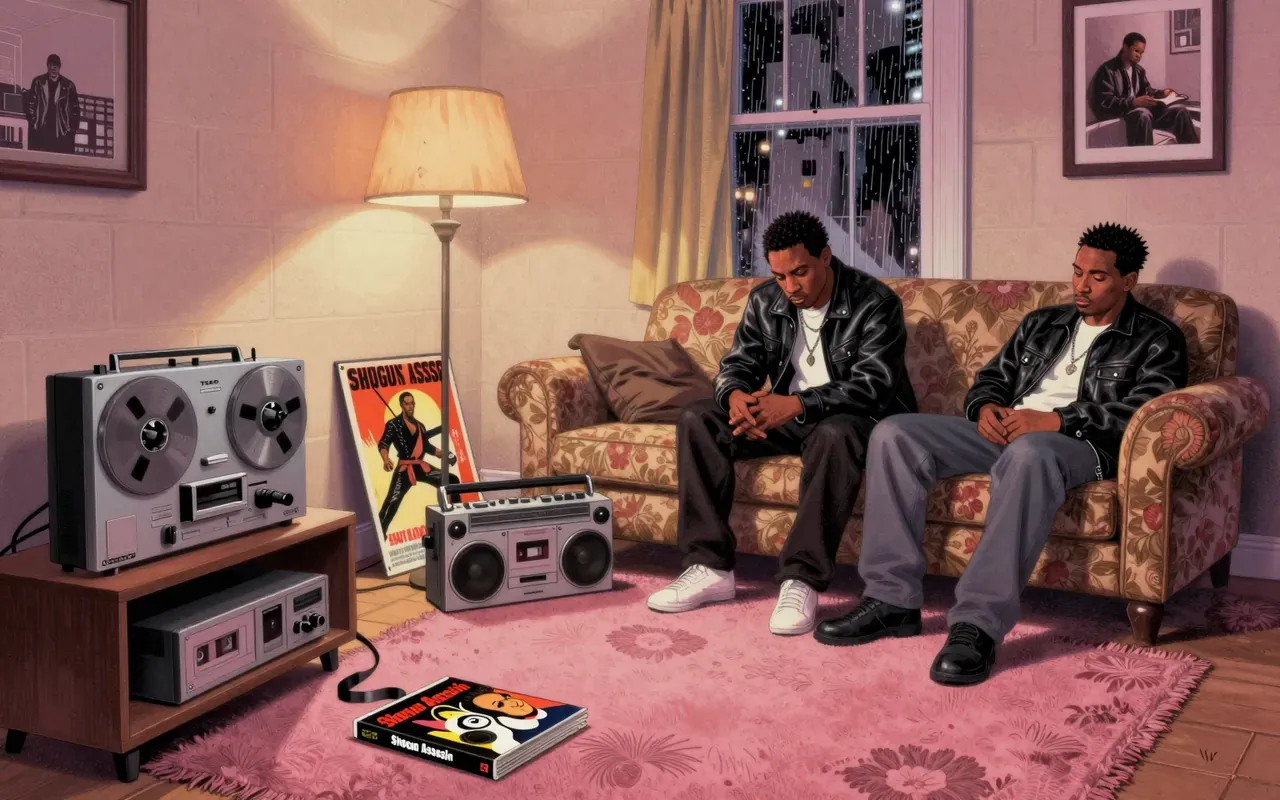
Liquid Swords is a 1995 hip-hop album made in RZA’s Staten Island basement. It uses Shogun Assassin dialogue samples, grimy rock-like beats, and GZA’s slow, assembled lyricism. All eight Wu-Tang members and Killah Priest appear. GZA considers it his best album for its chemistry and atmosphere — not lyrical prowess.

9:35

Lupe Fiasco’s Food & Liquor

Lupe Fiasco · 2006

Lupe Fiasco’s Food & Liquor is a thematically dense, string-saturated hip-hop debut rooted in Chicago storefront logic—not abstract ambition. It lands where sound and subject align: 'Kick, Push', 'Daydreamin'', and 'American Terrorist'. It falters where runtime swells without function—especially the 'Outro'. No filler. No myth. Just food, liquor, strings, and scrutiny.

9:58

My Beautiful Dark Twisted Fantasy

Kanye West · 2010

My Beautiful Dark Twisted Fantasy is a maximalist hip-hop record made in three simultaneous rooms at Avex Recording Studio in Honolulu, following Kanye West’s 2009 MTV VMA incident. It features contributions from Jay-Z, Kid Cudi, Pusha T, Justin Vernon of Bon Iver, and Gil Scott Heron. Released in November 2010, it received widespread critical acclaim and was accompanied by a 35-minute film. Its sound is dense, layered, and rigorously collaborative — built on discipline, not spontaneity.

10:26

Only Built 4 Cuban Linx…

Raekwon · 1995

Only Built 4 Cuban Linx… is a tightly wound, cinematic hip-hop record built in a basement, not a boardroom. It trades Wu-Tang’s raw immediacy for layered tension — strings, piano, film samples, and deliberate pacing. Its story is narrow: cocaine, code, and climb. Its appeal is specific: if you lean into its rhythm and language, it pulls you in. If you wait for explanation, it leaves you outside.

10:02

Paid in Full

Eric B. & Rakim · 1987

Paid in Full is not a statement—it is a switch flipped. It replaced schoolyard cadence with internal metronomes. It replaced shout-and-response with quiet command. It replaced sampling-as-tribute with sampling-as-rewriting. It is lean. It is dry. It is complete.

10:48

Port of Miami

Rick Ross · 2006

Port of Miami is a debut album that treats Miami as infrastructure — not atmosphere, not character, but a node in a supply chain. Its sound is monolithic: engineered for repetition, built on one unvarnished sample, and delivered with zero tonal deviation. It landed because it refused ambiguity.

9:53

Purple Haze

Cam’ron · 2004

Purple Haze is Cam’ron’s fourth studio album, released December 7, 2004, via Diplomat Records and Roc-A-Fella Records, distributed by The Island Def Jam Music Group. It features bombastic production and surreal lyricism, with Cam’ron delivering a unique brand of idiosyncratic gangsta rap through an absurd, poker-faced delivery. The production shifts between aggressively insane and pop-oriented, and Cam’ron matches it with wordplay described as 'Missy gibberish swathed in 50 Cent menace', writing pop hooks and avant-garde rhymes while staying street-rooted. Cam’ron tightened his signature flow, chose quality and risk-worthy beats, and delivered Harlem symbolism and non-sensical muttering throughout the album. Kanye West produced 'Down and Out', Pop & Versatile produced 'Soap Opera', and the Heatmakerz produced 'More Gangsta Music'. 'More Gangsta Music' samples 'Woman I Need You' by Sizzla. 'Get Down' samples 'Life's Opera' by Marvin Gaye. 'Girls' and 'Harlem Streets' are weak inclusions. The album features collaborations with Kanye West, Jaheim, Twista, Juelz Santana, and various other artists. It reached gold status and was critically acclaimed, appearing on two major decade-end lists.

12:19

Raising Hell

Run‐D.M.C. · 1986

Raising Hell is hip-hop’s first platinum album—and its first declaration of creative sovereignty. It sounds like command, not compromise.

10:33

Reasonable Doubt

Jay‐Z · 1996

Reasonable Doubt is a 1996 hip-hop album recorded across multiple studios — D&D, Giant, Progressive Music — with beats formed separately, including at Knobody’s mother’s home and during Ski’s sessions with Camp Lo. Its sound is defined by competitive beat submissions, improvisational lyricism (notably between Jay-Z and Biggie on 'Brooklyn’s Finest'), multi-location tracking over extended periods, and unfulfilled collaborations (e.g., Nas on two tracks).

10:03

Recovery

Eminem · 2010

Recovery is a 2010 hip-hop album recorded from 2009 to 2010. It replaced the abandoned Relapse 2 project after Eminem scrapped most of its material and started over with new producers. It was announced via Twitter on April 14, 2010, and released on June 18.

8:54

Slum Village

Slum Village · 2005

The editorial brief cannot be written for a record that does not exist in the source material. All claims point to documented Slum Village releases — none to a 2005 self-titled album.

11:44

Stankonia

OutKast · 2000

Stankonia is OutKast’s fourth album, recorded spring 1999–spring 2000 at their newly owned Stankonia Studios in Atlanta, released October 2000. It began life as Sandbox. It is a hip-hop record built on studio autonomy, guitar-led composition, and deliberate stylistic pivot from their earlier, darker work.

12:03

Straight Outta Compton

N.W.A · 1988

N.W.A’s Straight Outta Compton (1988) is a low-budget, high-impact declaration of intent — recorded in six weeks at Audio Achievements Studio in Torrance, California, for $12,000, using TR-808 beats, sampled horns and vocals, and razor-sharp writing by Ice Cube, MC Ren, and The D.O.C. Its sound is sparse, confrontational, and unvarnished. Its ideas are local, immediate, and uncompromising. Its legacy begins not with acclaim, but with backlash — and a warning label.

9:35

Tha Carter

Lil Wayne · 2004

Tha Carter is a hip-hop record built on Mannie Fresh’s New Orleans bounce production and Lil Wayne’s freestyled, instinctive delivery. It marks a stylistic pivot — not a debut, not a culmination, but a decisive turn toward voice-first, groove-led rap.

10:30

Tha Carter III

Lil Wayne · 2008

A producer-driven, leak-compromised hip-hop album released in 2008, built on high-impact beats and strategic replacements rather than thematic unity.

11:18

The Blueprint

Jay‐Z · 2001

The Blueprint is a 2001 New York hip-hop album built on soul samples, recorded in two weeks, anchored by four producers — Kanye West, Just Blaze, Bink, and Eminem — and defined by its refusal to waste a second.

9:27

The Chronic

Dr. Dre · 1992

The Chronic is Dr. Dre’s 1992 debut solo album, released under Death Row Records with Suge Knight as executive producer. Recorded at Death Row Studios in Los Angeles and Bernie Grundman Mastering in Hollywood, it established G-funk through fat, blunted Parliament-Funkadelic beats, live rolling basslines, whiny synths, and soulful backing vocals — using only one or few samples per song. Jon Pareles described its production as swampy synth bass, lone whistling or blipping keyboard lines, and wide-open spaces filled sparsely with rhythm guitar or keyboard chords. The Death Row Inmates — including Snoop Dogg, The D.O.C., Daz Dillinger, RBX, Kurupt, Lady of Rage, Warren G, Nate Dogg, Jewell, Colin Wolfe, and Chris 'The Glove' Taylor — convened at Dre’s Calabasas mansion and Solar Studios to write and record. Snoop contributed lyrics grounded in lived street experience and performed on nearly every track, often writing and developing melodies over partial beats during all-night sessions. Singles 'Nuthin' but a "G" Thang', 'Let Me Ride', and 'Fuck wit Dre Day' featured Snoop and defined the album’s cultural impact. 'Let Me Ride' won Best Rap Solo Performance at the 36th Annual Grammy Awards. The Chronic was certified triple platinum in 1993 and credited with launching G-funk into mainstream dominance.

9:34

The College Dropout

Kanye West · 2004

A self-produced hip-hop debut released in February 2004 after three postponements from its initial August 2003 date. It emerged from four years of beat-collecting, apartment-based production, LA studio sessions, and post-leak revision.

9:34

The Cool

Lupe Fiasco · 2007

The Cool is a narrative-concentrated hip-hop record, anchored in loss and executed with structural rigour—not sonic novelty.

10:22

The Eminem Show

Eminem · 2002

The Eminem Show is a 2002 hip-hop album released in May 2002. It was Eminem’s fourth studio album and his first self-produced major release, made while filming 8 Mile and certified Diamond by the RIAA.

11:06

The Low End Theory

A Tribe Called Quest · 1991

A minimalist hip-hop record built on bass, drums and jazz logic—recorded on John Lennon’s old console, cleared of vinyl noise, and defined by the push-and-pull between Q-Tip and Phife Dawg.

10:08

The Marshall Mathers LP

Eminem · 2000

The Marshall Mathers LP is a studio document, not a statement. It sounds urgent, unvarnished, and deliberately unstable — built from overheard riffs, midnight calls, and marital rupture. Its power lies in how little it holds back — and how much it leaves unresolved.

10:15

The Message

Grandmaster Flash & The Furious Five · 1982

The Message is a 1982 hip-hop record that reoriented the genre toward social realism. Its sound is stripped: drum machine, bass synth, piano, and Melle Mel’s unadorned voice. No group members rap lead. No turntablism. No resolution. It documents, not consoles. It is foundational — not because it sounds like what came after, but because it sounds like nothing that came before.

10:01

The Sun’s Tirade

Isaiah Rashad · 2016

The Sun's Tirade is Isaiah Rashad's debut studio album, released on September 2, 2016. It was recorded during a period of personal struggle with depression and addiction. Its production draws from hip-hop, trap, trip hop, soul, and jazz. It is a loose concept album with reflective, conscious themes. It debuted at number 17 on the US Billboard 200, selling 19,000 copies in its first week.

11:29

Things Fall Apart

The Roots · 1999

Things Fall Apart is The Roots’ 1999 breakthrough album, recorded at Electric Lady Studios between 1997 and 1998 alongside other Soulquarian projects. It contains 14 tracks selected from ~145 recorded songs. It features Mos Def on 'Double Trouble', Common on 'Act Too', and a multi-vocalist arrangement on 'You Got Me'. It won Best Rap Performance By a Duo or Group at the 42nd Grammy Awards.

11:08

To Pimp a Butterfly

Kendrick Lamar · 2015

To Pimp a Butterfly is a live-band hip-hop record rooted in jazz, funk, and soul. It was recorded across five US studios with producers including Sounwave, Pharrell Williams, Terrace Martin, Thundercat, and Taz Arnold. Only 'Wesley’s Theory' from Flying Lotus’s early contributions made the final cut. 'Mortal Man' was written on tour. 'Alright' was previewed live in 2014. The album sold 324,000 copies in its first week and topped the Billboard 200 and UK Albums Chart. It explores Black identity, contradiction, and resilience through dense, dynamic arrangements—not lyrical abstraction alone.

8:59

undun

The Roots · 2011

Undun is a reverse-chronological hip-hop concept album about Redford Stevens, a fictional man whose life ends before it begins. Recorded in Philadelphia and New York City, produced by Questlove, it uses neo soul and indie textures played live by The Roots’ full band—including sousaphone, guitar, and keyboards. Guest rappers and vocalists appear, but never as decoration: each voice marks a pivot in Redford’s narrowing path. It refuses catharsis. It refuses explanation. It insists the tragedy is structural—not personal.

11:01

Watch the Throne

Jay‐Z · 2011

Watch the Throne is a high-stakes, globally dispersed hip-hop record defined by its making — not its myth. Its sound is assembled, not born. Its ideas are architectural, not confessional. Its failures are instructive. Its successes are precise.

9:15

Yeezus

Kanye West · 2013

Yeezus is a record defined by constraint: made in a bad room, stripped under deadline, and built from industrial textures rather than melody.

13:00

Blue Lines

Massive Attack · 1991

Built across eight months and half a dozen London studios, Blue Lines slows hip hop's breakbeats down to a reggae and soul pace, with Shara Nelson and Horace Andy carrying the vocals. It is the record most often credited with starting trip hop, made by a group working from instinct rather than any stated genre plan.

13:00

Endtroducing.....

DJ Shadow · 1996

Assembled over two years from an Akai MPC60 sampler and crates of used vinyl, DJ Shadow's Endtroducing turns funk, jazz, psychedelia and film dialogue into an almost entirely instrumental debut, moving between moods largely without a rapped verse to anchor them.

13:00

Enter the Wu‐Tang (36 Chambers)

Wu‐Tang Clan · 1993

Produced almost entirely by RZA on a tight budget, Enter the Wu-Tang (36 Chambers) turns nine distinct voices and a stack of martial-arts film samples into a single, gritty debut that reintroduced New York to the top of hip-hop.

13:00

Illmatic

Nas · 1994

Recorded across Manhattan studios by a teenager from Queensbridge, Illmatic sets Nas's dense, internal-rhyme narration against beats built separately by DJ Premier, Pete Rock, Q-Tip, Large Professor and L.E.S, arriving as a compact, unhurried document of one New York housing project.

13:00

Maxinquaye

Tricky · 1995

Tricky's debut, made after leaving Massive Attack, pairs his low, rapped vocals with Martina Topley-Bird's softer delivery over samples reworked past recognition through dub-influenced production. Recorded largely at his own home studio in 1994, the album explores intimacy, drug culture and the private grief of his mother's death beneath its hazy, downbeat surface.

13:00

Paul’s Boutique

Beastie Boys · 1989

Recorded with the Dust Brothers in a Los Angeles apartment and mixed at the Record Plant, Paul's Boutique layers over a hundred samples from funk, soul, rock and jazz beneath the Beastie Boys' densest, most reference-packed writing, a commercial miss on release that became hip-hop's most studied sample record.

13:00

The Miseducation of Lauryn Hill

Lauryn Hill · 1998

Written and largely produced by Lauryn Hill after she left the Fugees and became pregnant, The Miseducation of Lauryn Hill mixes hip-hop, soul and reggae recorded partly at Tuff Gong in Kingston, built around live instrumentation and a set of collaborators later credited only after a lawsuit.