musicbriefs
2:31in production/ 2:31 · ceiling 15 min
Electronic

Computer World

Kraftwerk make the computer both a system of control and something to fall in love through.

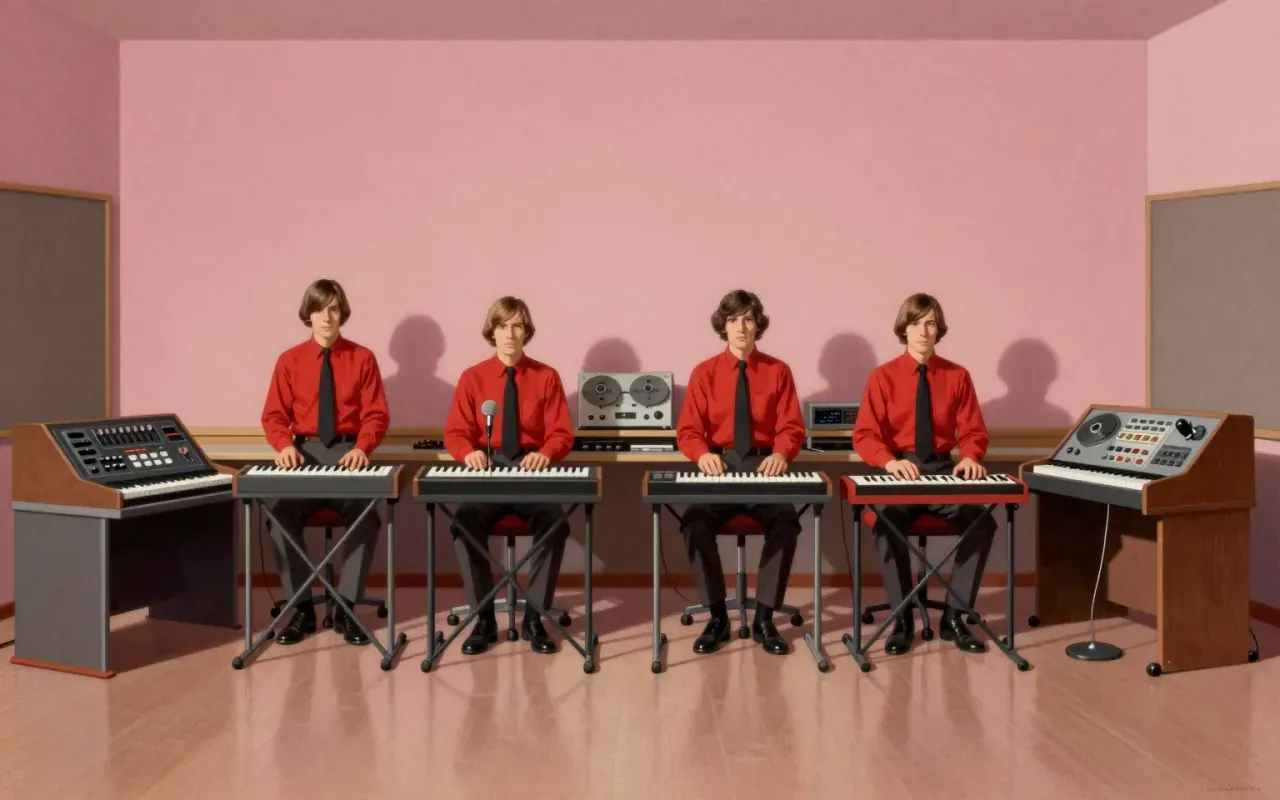
Kraftwerk's 1981 album puts computers into ordinary life: work, calculation, surveillance and the search for company. Its German counterpart is Computerwelt. The concept feels prescient because it connects technology to familiar human activities rather than treating it only as futuristic machinery.

Worth your time?

Yes. Hear the whole thing.

What works
    What does not
      Hear it if
      • Listeners interested in electronic pop and the everyday life of technology
      Skip it if
      • Listeners who need expressive lead singing and frequent instrumental changes
      The written brief2 min read

      What the record is and where it came from

      Kraftwerk’s 1981 album puts computers into ordinary life: work, calculation, surveillance and the search for company. Its German counterpart is Computerwelt. The concept feels prescient because it connects technology to familiar human activities rather than treating it only as futuristic machinery.

      How it sounds, and how it was made

      The electronic sounds are arranged around concise motifs and repeated rhythmic figures. “Pocket Calculator” includes a Stylophone; “Computer Love” gives the same technological world an explicitly emotional subject. The palette can suggest automated processes while the songs remain recognisably concerned with people.

      The distinction matters. A machine-like performance need not be indifferent. Repetition can express fascination, pleasure or loneliness, depending on what the song places around it.

      What lands

      The movement between “Numbers,” “Pocket Calculator” and “Computer Love” gives the album its range. Counting, manipulating a device and wanting a connection become related activities. “Home Computer” brings the wider system into a private room.

      These are economical choices. The record does not need a long fictional story to suggest how a technological environment might change the person living in it. A handful of objects and actions can describe a whole social arrangement.

      What does not

      The narrow vocabulary is also a limit. Repeated words and patterns may feel too slight if you expect a song to develop mainly through narrative lyrics or a visibly expressive singer. The charm of a calculator can wear thin when the musical presentation does not engage you.

      The ideas inside it

      Convenience and control can arrive through the same interface. Computer World makes room for enthusiasm about electronic life while keeping questions of monitoring and power nearby. Its most durable observation is that the personal and the institutional will inhabit the same network.

      Who should hear it, and who should not

      Hear it for a compact relationship between concept, sound and song. It is especially rewarding if electronic music’s repetitions interest you as expressive choices rather than obstacles to overcome.

      Is it worth your time

      Yes. “Computer Love” is the essential companion to the more playful tracks. Together they prevent the record from becoming either a simple celebration of machines or a simple warning against them.

      Same genre · Electronic4 of 117
      13:00
      AutobahnKraftwerk · 1974Kraftwerk's fourth album, cut partly at their own Kling Klang studio and mostly at Conny Plank's countryside facility outside Cologne, marks the point where the group traded free improvisation for synthesiser-and-drum-machine pop. The side-long title piece, built to mimic the sound and feeling of a motorway journey, became an unlikely American hit and set the template the band refined for the rest of the decade.
      13:00
      ComputerweltKraftwerk · 1981Kraftwerk's eighth album, built at the band's own Düsseldorf studio and released in 1981 in matching German and English editions, imagines home computers, pocket calculators and digital surveillance years before most listeners had encountered any of them. Made without a single piece of computer technology, it went on to shape early hip-hop, electro and dance production far beyond its own modest chart run.
      13:00
      Trans Europa ExpressKraftwerk · 1977Recorded at the band's own Kling Klang facility in Düsseldorf and finished with sessions in Hamburg and Los Angeles, this sixth Kraftwerk album refines the group's earlier improvised style into tight, sequenced songcraft. Built around a new custom sequencer and versions cut separately in German, English and French, it turns a train service into a symbol for a Europe the band wanted to claim as their own, apart from war-era associations attached to their earlier work.
      13:00
      Die Mensch·MaschineKraftwerk · 1978Recorded entirely at the band's own Kling Klang studio in Düsseldorf and released in 1978, this seventh Kraftwerk album pares the group's mechanical style down further and points it toward the dance floor. Six tracks address the Cold War, industrial manufacturing and the growing closeness between people and machines, wrapped in artwork built on Russian avant-garde design, and it left a direct mark on the synth-pop and new wave that followed.
      Up next in Music

      Control

      Janet Jackson · 1986 · 2:00

      Janet Jackson gives self-determination a rhythmic and vocal form that is easy to recognise.

      2:00