musicbriefs
Genre

Electronic

118
briefs
10:06
average
1191 min
in total
83
artists
All briefs118
2:31

Computer World

Kraftwerk · 1981

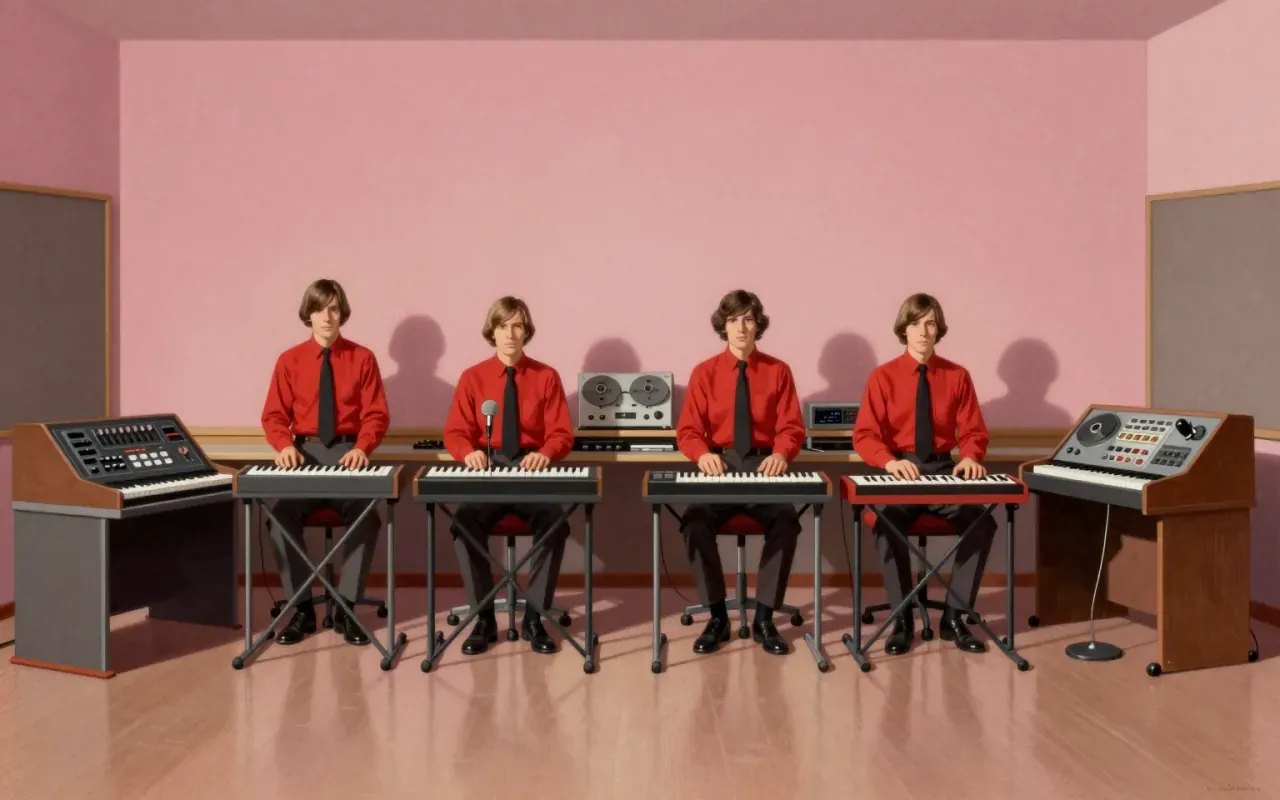
Kraftwerk's 1981 album puts computers into ordinary life: work, calculation, surveillance and the search for company. Its German counterpart is Computerwelt. The concept feels prescient because it connects technology to familiar human activities rather than treating it only as futuristic machinery.

2:32

Cross

Justice · 2007

Justice's 2007 debut is commonly called Cross after its sleeve symbol, although the duo regard it as untitled. Recorded in Paris, it was conceived around a combination of disco and theatrical scale. The record's force comes from treating sound design as something that can transform familiar musical structures.

1:58

Debut

Björk · 1993

Debut was Björk's first international solo album after the Sugarcubes, released in 1993. Produced with Nellee Hooper, it draws on electronic pop, house, jazz and other forms. The title announces a new public role rather than the literal beginning of her recording life.

1:56

James Blake

James Blake · 2011

James Blake's 2011 debut followed three stylistically varied EPs. Much of its material was new, and his own singing became more prominent than in the earlier sample-led work. He also sampled himself, complicating the distinction between a vocal performance and a production element.

2:00

Kala

M.I.A. · 2007

Kala, released in 2007, was recorded across several countries after M.I.A.'s original American working plans were obstructed by visa difficulties. She and Switch became the main creative partnership, with other collaborators contributing. The album takes its name from her mother.

2:02

LCD Soundsystem

LCD Soundsystem · 2005

LCD Soundsystem's debut was released in 2005 and produced by the DFA partnership of James Murphy and Tim Goldsworthy. Its new album material was accompanied by a second disc gathering earlier releases. The package therefore combines a first sustained album statement with an account of the project before it.

2:01

Moon Safari

Air · 1998

Moon Safari introduced the French duo Air on album in 1998. Its relaxed electronic-pop presentation helped make downtempo music accessible to a broad audience. The useful point of entry is the care given to melody, rather than the fashionable atmosphere that gathered around it.

2:38

Substance

New Order · 1987

Substance is New Order's 1987 singles compilation, originally issued by Factory Records. It gathers music that often lived outside the studio albums, including “Blue Monday,” and adds the then-new “True Faith.” It is a deliberate route through the band's work, with its own choices about which versions belong.

2:02

Technique

New Order · 1989

Technique was released in 1989 after sessions that began partly in Ibiza. Balearic and acid-house influences entered New Order's existing dance-rock language. The band described the process as a negotiation between electronic rhythms and its continuing interest in playing together.

11:30

Blackout

Britney Spears · 2007

Blackout is Britney Spears’ fifth studio album and the only one she executive-produced. Recording began earnestly in 2006. It was released in October 2007.

8:36

D.o.A. The Third and Final Report

Throbbing Gristle · 1978

D.o.A. The Third and Final Report is Throbbing Gristle’s 1978 studio album, released on their own Industrial Records label as the follow-up to The Second Annual Report (1977) and the single 'United / Zyklon B Zombie'. It employs pre-recorded tape samples and self-modified effects units to produce a highly distorted sound, usually accompanied by spoken-word or lyrical delivery by Tutti or P-Orridge. The album builds on their transgressive and confrontational aesthetic.

11:07

Dare

The Human League · 1981

Dare is a methodically engineered synth-pop record, built from Linn LM-1 patterns and charted arrangements at Genetic Sound Studios in Berkshire. It uses a defined suite of early-1980s instruments and rejects avant-garde electronics in favour of emotional calibration. Its success rests on procedural discipline — not inspiration, myth, or unverified context.

11:04

FutureSex/LoveSounds

Justin Timberlake · 2006

FutureSex/LoveSounds is a studio document—not a concept album, not a narrative arc, but a set of rapid, vivid, off-the-cuff moments captured in Virginia Beach with Prince on repeat and no safety net.

9:17

Hello Nasty

Beastie Boys · 1998

Hello Nasty is a studio-dug experiment — reclusive, unplanned, genre-fluid. It uses 808s, disco breaks, analogue synths, and samples to build a freer, looser Beastie Boys record than before. Mix Master Mike reshapes the group’s sound. Guest vocals from Miho Hatori and Lee 'Scratch' Perry add distinct textures. Its sprawl works in moments — ‘Intergalactic’, ‘Body Movin’’, ‘Dr. Lee, PhD’, ‘Three MC’s and One DJ’ — but not across all 22 tracks.

10:42

Kaleidoscope

Kelis · 1999

Kaleidoscope is Kelis’s 1999 debut studio album, produced entirely by the Neptunes and released by Virgin Records. It draws from 1970s jazz, disco, soul, R&B, hip hop, urban and rock, and features club-oriented electro beats. Several tracks were designed for dancing. The Neptunes performed instruments and created arrangements. Dave Hummel and Andrew Coleman engineered it. Şerban Ghenea mixed thirteen tracks; Ken 'Duro' Ifill mixed track 10. Kelis cited Sarah Vaughan, Ella Fitzgerald and Dinah Washington as major vocal influences. The album was recorded between mid-1998 and mid-1999.

10:10

Kontakte

Karlheinz Stockhausen · 1960

Kontakte is a 4-channel electronic work realized 1958–60 at the WDR studio in Cologne with Gottfried Michael Koenig. It exists in two versions: electronic-only (Nr. 12) and electroacoustic with piano and percussion (Nr. 12+1⁄2). Its title refers to contacts between sound domains, between self-sufficient moments, and between forms of spatial movement. It realises total serialism by bringing timbre, pitch, intensity, and duration under single control—and is the last of Stockhausen’s tape pieces where serial proportions shape more than broad form. Its central passage traces a structural descent: pitch becomes pulse, pulse becomes beat, beat becomes tone. Spatial design advances beyond Gesang der Jünglinge using four-channel diffusion, loudspeakers at square corners, and a rotation table. The score is highly sectionalized, reflecting its moment-based architecture.

9:00

Merriweather Post Pavilion

Animal Collective · 2009

Merriweather Post Pavilion is Animal Collective’s eighth studio album, recorded in February 2008 by Panda Bear, Avey Tare, and Geologist — without guitarist Josh Dibb — and co-produced by Ben H. Allen. It was made at Sweet Tea Recording Studio in Oxford, Mississippi, and mixed at Chase Park Transduction in Athens, Georgia. Drawing from Panda Bear’s 2007 solo album Person Pitch, the band worked largely without guitars, using samplers and synthesizers as primary instruments alongside prominent reverb. They installed PA systems in the studio to replicate the energy of their live shows. The album is titled after the Merriweather Post Pavilion outdoor concert venue in Maryland, where Portner and Weitz attended concerts in their youth.

11:18

Music

Madonna · 2000

Madonna’s 'Music' is a studio document — not a concept, not a persona shift, but a sequence of hardware choices, personnel swaps, and tempo decisions made in one London room over five months. It lands where the gear speaks loudest: clipped vocals, dry acoustics, converter-coloured transfers. It fails where the logic breaks: the 6:34 sprawl of 'Paradise', the inert cover of 'American Pie'. It is pop as process, not product.

11:31

One in a Million

Aaliyah · 1996

One in a Million is a studio-built pivot — not a coming-of-age story, but a contract renegotiation in sound. It replaces continuity with curation, and replaces precedent with permission: to drop producers, to co-write, to define the room’s role, and to treat rhythm as architecture, not backdrop.

10:00

Person Pitch

Panda Bear · 2007

Person Pitch is a landmark of sample-based composition — not as collage art, but as lived practice. It trades authorship for absorption, structure for suspension, and clarity for glow.

9:55

Pure Heroine

Lorde · 2013

Pure Heroine is a tightly controlled, ten-track electropop record made in under a year at Golden Age Studios in Auckland. It uses deep bass, programmed beats, and Lorde’s voice as its only melodic and rhythmic anchors. Its themes—suburban teenage disillusionment, consumer culture, social status—are delivered without resolution or ornament. It landed four singles, won the 2014 Taite Music Prize, and helped define ‘whisperpop’ as a production ethos. It is not experimental in form, nor indulgent in texture—it is precise, economical, and unsentimental.

9:20

Random Access Memories

Daft Punk · 2013

Random Access Memories is Daft Punk’s fourth and final studio album, released 17 May 2013 on Columbia Records. It abandons sampling (except on 'Contact') and minimal electronics in favour of live instrumentation—drums, horns, strings, woodwinds—recorded across Henson, Conway, Capitol, Electric Lady, and Gang Studios between 2008 and 2012. Session musicians including Omar Hakim, Nile Rodgers, Pharrell Williams, and Giorgio Moroder were directed via sheet music and humming—not MIDI or grids. Most vocals were tracked in Paris; rhythm sections in the US. Orchestral parts were recorded for nearly every track but used selectively. The album reflects a shift from futurism to presence and pursues a 'west coast vibe' rooted in Fleetwood Mac, the Doobie Brothers, the Eagles, and Jean-Michel Jarre—not as reference, but as method.

10:24

Return to Cookie Mountain

TV on the Radio · 2006

Return to Cookie Mountain is TV on the Radio's second studio album, released in 2006. It leaked in early 2006. Its official release was in July. It was released in the US and Canada in September by Interscope. Spin magazine named it its Album of the Year for 2006. It features guest appearances by David Bowie, Omega Moon, Celebration, Dragons of Zynth, Martin Perna and Stuart D. Bogie of Antibalas, Blonde Redhead, and Yeah Yeah Yeahs' Nick Zinner. David Bowie contributed back-up vocals on the song "Province". The album features layered, genre-blending arrangements with extensive multi-instrumental work by core members and guests across all tracks, including unconventional elements like 'magic' on track 10 and untitled silent tracks from 12 to 25, followed by ambient audio on track 26. Critical reception was overwhelmingly positive, with widespread year-end and decade-end accolades. The personnel credits reveal dense, track-specific instrumental and vocal roles, underscoring a highly orchestrated and collaborative recording process.

7:57

Silent Shout

The Knife · 2006

Silent Shout is The Knife’s third studio album, released 17 February 2006. It is darker than Deep Cuts. It is synth-pop and techno. Karin Dreijer’s vocals are pitch-shifted and multi-tracked. The Knife handled recording, programming, production, vocals, and mixing. Christoffer Berg mixed tracks 1–7, 9, and 11. Pelle Gunnerfeldt mixed tracks 8 and 10. Henrik Jonsson mastered the album. Pitchfork named it the best album of 2006. A companion DVD, Silent Shout: An Audio Visual Experience, was released 8 November 2006. 'We Share Our Mothers’ Health' was iTunes’ Single of the Week in late 2006.

8:47

Suicide

Suicide · 1977

Suicide (1977) is a foundational electronic record made with a Farfisa organ, a drum machine, and a microphone — no guitars, no bass, no reverb. Its sound is dry, repetitive, and physically confrontational. ‘Frankie Teardrop’ and ‘Ghost Rider’ define its impact. It establishes electronic minimalism as a vehicle for psychological tension, not dance or futurism. It falls short as a record of melodic development, harmonic movement, or vocal nuance — by design. Its ideas are architectural: repetition as pressure, silence as weight, monotony as threat. It is worth your time if you treat rhythm and space as primary materials.

9:47

The Grey Album

Danger Mouse · 2004

A 2004 experimental mashup by Danger Mouse, made from Jay-Z’s The Black Album a cappellas and samples solely from the Beatles’ 'White Album'. Released in a limited 3,000-copy run without Beatles permission. Framed as deconstructive labour — not remixing, but rebuilding using only those two sources.

9:27

The Soft Bulletin

The Flaming Lips · 1999

The Soft Bulletin is a studio-built symphony of rock and synthesis — no strings, no hedging, no filler. It trades psychedelic chaos for meticulous, emotionally charged construction.

11:14

WHEN WE ALL FALL ASLEEP, WHERE DO WE GO?

Billie Eilish · 2019

When We All Fall Asleep, Where Do We Go? is Billie Eilish’s debut studio album, released March 29, 2019. Written and produced with her brother Finneas O'Connell in his bedroom studio in Highland Park, Los Angeles, it uses Logic Pro X, a Universal Audio Apollo 8 interface, and Yamaha HS5 monitors with an H8S subwoofer. Its sound centres on amplified bass, minimalist percussion, foley, and acoustic textures — layered with dissonance and distortion to create a rock ’n’ roll feel without rock instrumentation. Eilish later said she 'hated every second' of its creation. It debuted at number one on both the US Billboard 200 and the UK Albums Chart, and 14 of its 14 tracks (excluding 'Goodbye') charted simultaneously on the US Billboard Hot 100 — a record for a female artist.

9:16

1989

Taylor Swift · 2014

1989 is Taylor Swift’s fifth studio album, released October 27, 2014. It marks her deliberate transition from country to pop. She relocated from Nashville to New York City in March 2014 and titled the album after her birth year to signal artistic rebirth. Songwriting began in mid-2013 on the Red Tour and concluded after the tour ended in mid-2014.

10:46

1999

Prince · 1982

1999 is Prince’s 1982 double LP, his first with the Revolution, defined by synth-and-drum machine-heavy arrangements that codified the Minneapolis sound. It uses ARP Omni, Oberheim OB-SX, OB-X, OB-Xa, OB-8 synths and the Linn LM-1 drum machine. Themes include nuclear anxiety, Computer Age alienation, eroticism, and spiritual gratitude. Its production is tightly controlled, layered, and mechanised—no live drums, no guitar solos, no acoustic piano leads. It landed with urgency, intimacy, rhythmic insistence, theatricality, and groove. It is worth hearing if you want to understand how funk became electronic without losing its body.

9:59

Achtung Baby

U2 · 1991

Achtung Baby is U2’s seventh studio album, produced by Daniel Lanois and Brian Eno, recorded in Berlin and Dublin between late 1990 and mid-1991. It marked a deliberate departure from their earlier sound—incorporating alternative, industrial, and electronic dance influences—and reflected personal, introspective lyrical themes inspired by marital breakdowns, German reunification, and spiritual questioning. The Berlin sessions at Hansa Studios were fraught with tension and creative uncertainty, nearly leading to the band’s dissolution, until the improvised creation of 'One' provided a breakthrough. Subsequent Dublin sessions at Elsinore and Windmill Lane Studios yielded the completed album, characterised by distorted guitar textures, pronounced rhythm section, electronic beats, altered vocal techniques, and a self-conscious embrace of irony and artifice in both music and presentation. The album’s title and packaging were conceived to confound expectations and erect a 'mask' over its emotional weight. Its release inaugurated U2’s 1990s reinvention, culminating in the Zoo TV Tour and sustained musical experimentation throughout the decade.

12:46

Actually

Pet Shop Boys · 1987

Actually is a synth-pop record made in short, rotating sessions at Sarm and Advision Studios. It uses Fairlight programming instead of orchestras. Producers included Julian Mendelsohn, Stephen Hague, and Andy Richards. Lyrics reference Thatcherism, AIDS, and pop songs including 'Tainted Love'. 'King’s Cross' unintentionally foreshadowed the November 1987 fire. It was Pet Shop Boys’ second album, released in September 1987.

8:47

Arular

M.I.A. · 2005

Arular is a debut shaped by constraint: one machine, one room, one voice. Its power lies in what it excludes — space, polish, convention — not what it adds.

10:25

Avalon

Roxy Music · 1982

Avalon is Roxy Music’s final studio album, recorded between 1981 and 1982 across three studios. It marks a decisive turn toward atmospheric, synth-laden minimalism—built on Linn LM-1 drum machine foundations, shaped at Compass Point, and polished at Power Station. Its success was commercial and critical: UK No. 1, Platinum in the US and Canada, and widely praised for its production. Yanick Étienne’s improvised vocal coda on the title track remains its most haunting sonic signature.

11:28

Before and After Science

Brian Eno · 1977

Before and After Science is Brian Eno’s fifth solo studio album, recorded over two years while he worked concurrently on Music for Films, Discreet Music, and David Bowie’s Low and 'Heroes'. Released in December 1977, it concludes his pop and rock phase and was inspired by Oblique Strategies. It features electronic and artistic rock compositions with vocals, built via 'deconstruction and elimination'. Only two tracks are instrumental: 'Energy Fools The Magician' and 'Through Hollow Lands' (dedicated to Harold Budd). Guest musicians include Fred Frith, Jaki Liebezeit, Cluster, Dave Mattacks, Andy Fraser, Percy Jones, and Phil Collins. It received equalised acclaim upon release.

10:08

Body Talk

Robyn · 2010

Body Talk is Robyn’s seventh studio album, released 22 November 2010 as the culminating full-length replacement for a planned third mini-album in the Body Talk trilogy. It functions both as a standalone record and as a curated compilation — drawing select tracks from Body Talk Pt. 1 (June 2010) and Pt. 2 (September 2010), plus five new songs. Its centrepiece collaboration is ‘Time Machine’ with Max Martin, described by Robyn as a nostalgic, full-circle return to songcraft. The album produced three top-10 singles — ‘Dancing On My Own’, ‘Hang with Me’, and ‘Indestructible’ — and received unanimous critical acclaim and three Grammy nominations. It reflects Robyn’s 2010 strategy of rapid, self-motivated release: she prioritised immediacy and inspiration over traditional album cycles, rejecting commercial calculation in favour of sustained creative flow.

9:00

Boy in da Corner

Dizzee Rascal · 2003

Boy in da Corner is Dizzee Rascal’s self-produced 2003 debut album. All 17 tracks were produced by him. One track samples Billy Squier’s 'The Big Beat'. Four vocal contributors are named across seven tracks. Nothing else about its making — no instruments, no room, no tempos, no engineering — is stated in the source material.

8:35

Broken beat

Broken beat didn’t reinvent rhythm—it fractured it on purpose, then left the pieces in West London.
9:09

Currents

Tame Impala · 2015

Currents is a tightly controlled, emotionally exposed electronic pop record made alone in a beach house. It replaces guitar-layered psychedelia with vintage synths, drum machines, and clear vocals. Its strength is precision — its weakness is airlessness. It rewards attention to texture, not spectacle.

9:25

Dig Your Own Hole

The Chemical Brothers · 1997

Dig Your Own Hole is the Chemical Brothers’ second studio album, recorded between 1996 and 1997 at their own south London studio and released 7 April 1997. It features guest vocalists Noel Gallagher and Beth Orton. Key tracks originated as DJ promos ('Electronic Battle Weapon 1' and '2'). Its sound is built from verified samples: Schoolly D’s 'Gucci Again', Lothar and the Hand People’s 'It Comes On Anyhow', and John Schroeder’s 'Money Runner'. The title comes from graffiti outside the studio. It was critically acclaimed, earning a 10/10 from Mixmag.

9:34

Drum and bass

Drum and bass didn’t slow down rave—it sharpened it into something that demanded precision, not just energy.
10:35

Ege Bamyasi

Can · 1972

Ege Bamyasi is Can’s third studio album, recorded in early 1972 at their newly established Inner Space Studio in Weilerswist — their first album made there — under intense time pressure to meet a June deadline. The band began with 'Spoon', then scrambled to complete material: 'Sing Swan Song', 'One More Night', and 'Pinch' were finished and edited by the day before the deadline, while 'Soup' emerged from an unedited, improvised ten-minute session that same afternoon. Karoli recorded acoustic guitar for 'Sing Swan Song' outdoors to escape drum bleed, and Schmidt and Suzuki’s daily chess games reportedly disrupted workflow. Czukay and Karoli handled editing, and the album incorporated previously released singles to fill out the tracklist. The new studio environment softened the drums and sharpened instrumental separation, and Suzuki’s pidgin English vocals contributed a distinctive textural element. Critics later praised its tight, danceable fusion of experimental music, avant-funk, and electronic sound — calling it one of Can’s most focused and tense records.

11:26

Future Nostalgia

Dua Lipa · 2020

Future Nostalgia is a tightly wound, rhythm-first pop record built for motion. Its sound is defined by live-sounding funk bass, crisp synth stabs, and lush strings—all arranged with surgical consistency. It draws from 1970s–2000s pop textures but never fractures them. It lands where it aims: in the hips, not the head.

11:34

Homogenic

Björk · 1997

Homogenic is Björk’s third studio album, recorded in Spain in 1996 after halting London sessions due to media attention following a stalker’s murder attempt. Produced with Mark Bell, Guy Sigsworth, Howie B, and Markus Dravs, it fuses chilly strings from the Icelandic String Octet, stuttering abstract beats, and unconventional instruments like accordion and glass harmonica. It is conceptually rooted in Iceland — embodying volcanic rawness and technological modernity — and intended as a simple, one-flavoured departure from her earlier eclecticism. It retains electronic dance-music and techno-futurism but abandons the sweet melodies and peppy dance collages of Debut and Post. 'Unravel' incorporates a traditional Icelandic choral technique blending speech and song. Björk composed melodies on a Casio keyboard and involved non-professionals like babysitter Rebecca Storey in production. The album was delayed due to vocal dissatisfaction and cover reshoots, and released in September 1997.

11:40

In Colour

Jamie xx · 2015

In Colour is a meticulously assembled electronic record that treats sampling as archival practice and editing as emotional architecture. Its strength lies in restraint: space, decay, and human imperfection are compositional tools — not accidents to be polished out.

10:43

In Rainbows

Radiohead · 2007

In Rainbows is Radiohead’s seventh studio album, self-released in 2007. It was recorded between March 2005 and June 2007 across four locations: their Oxfordshire studio, Halswell House, Tottenham House, and the Hospital Club in London. After initial unproductive sessions without Nigel Godrich and a failed collaboration with Spike Stent, the band re-enlisted Godrich in 2006. The lyrics are less political and more personal than previous albums, exploring mortality, embodiment, and transience. Production techniques include merging rhythm tracks, phasing guitars inspired by Steve Reich, and capturing white noise via full-scale string clusters. The album runs 45 minutes. Its release used a 'pay what you want' digital download model. It won the 2009 Grammy Award for Best Alternative Music Album.

8:56

Inspiration Information

Shuggie Otis · 1974

Inspiration Information is Shuggie Otis’s third and final album for Epic Records, released in 1974 after nearly three years of solo writing, arranging, and recording. Otis produced it and performed most of its instrumental parts — including guitar, bass, drums, organ, piano, electric piano, vibraphone, percussion, and analog drum machines. Horns and some strings were played by session musicians. The album was dropped by Epic due to commercial underperformance despite critical admiration and stylistic innovation.

9:00

Kid A

Radiohead · 2000

Kid A is Radiohead’s 2000 studio-as-instrument pivot: abstract lyrics, modular synths, ondes Martenot, jazz horns, and no guitar dominance. Recorded across Paris, Copenhagen, Gloucestershire and Oxfordshire with Nigel Godrich and no deadline. It replaces rock grammar with texture, silence, and editing—making it essential for listeners who hear arrangement as meaning.

11:09

Leftism

Leftfield · 1995

Leftism is a 1995 electronic album that reworks earlier singles with non-dance vocalists and live instrumentation, anchored by dub, breakbeat, and house textures. Its cohesion was achieved through revision, not design. It lands through contrast — Lydon’s bark, Halliday’s haze, Red’s toasting — all framed by cavernous, tactile production. It does not flatter the ear. It recalibrates it.

9:05

Lonerism

Tame Impala · 2012

Lonerism is a studio-built world where pop melody meets ambient alienation. It uses synthesizers, dictaphone field recordings, and spatial production to evoke isolation — not as absence, but as a deliberate, textured condition.

10:06

LP1

FKA twigs · 2014

LP1 is FKA Twigs’s debut studio album, released on 6 August 2014 via Young Turks. It features collaborative production with Emile Haynie, Arca, Cy An, Devonté Hynes, Clams Casino, Paul Epworth, Sampha and Tic. Critically acclaimed, it was ranked No. 1 of 2014 by Time and Clash, and shortlisted for the 2014 Mercury Prize. Lyrically, it centres on sex, sexual relations and intimacy. Twigs began writing it during a period she described as 'self-hatred', which she considers 'quite normal' for a young person. Musically, it is characterised as avant-pop with a large electronic component and a 'glitchy futuristic' take on R&B.

10:47

MAGDALENE

FKA twigs · 2019

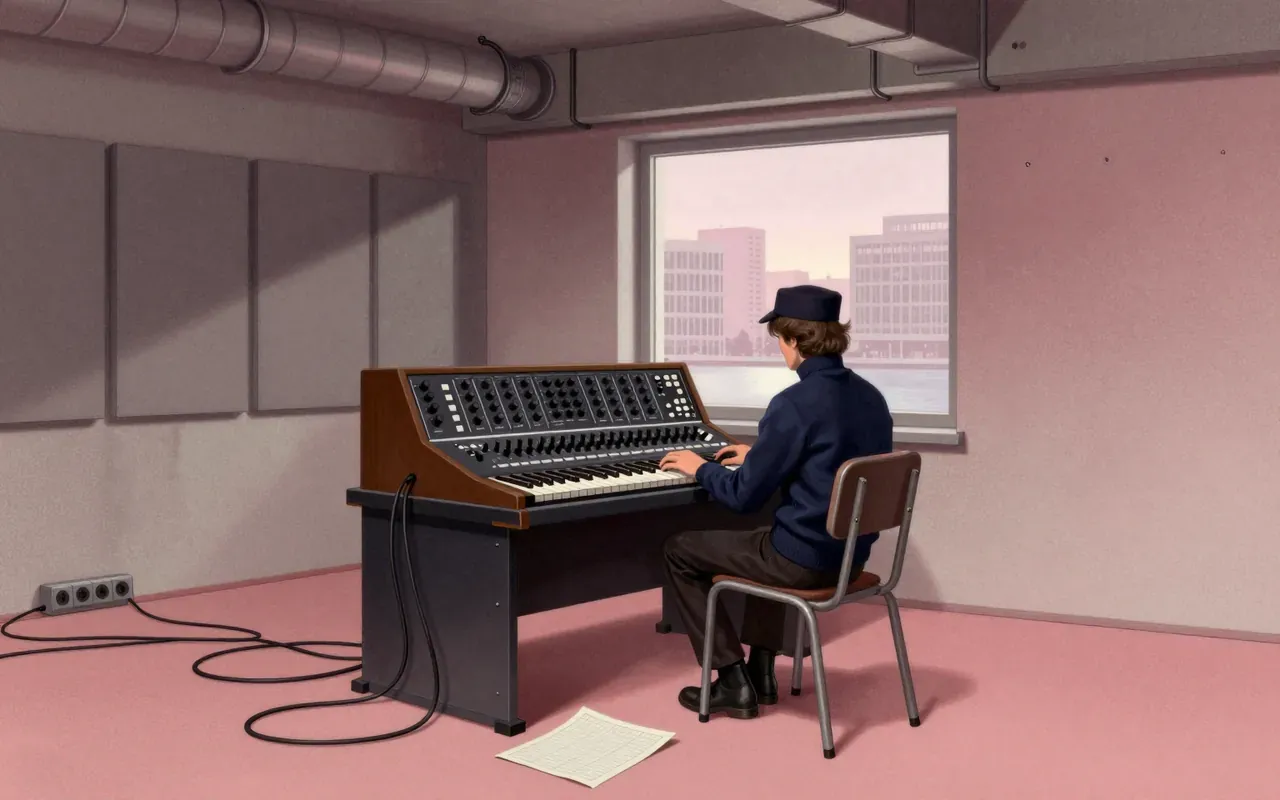
Magdalene is FKA Twigs’s second studio album, released on 8 November 2019 after a four-year hiatus. It features self-production alongside Nicolas Jaar, Koreless, Daniel Lopatin, Skrillex, Benny Blanco, Michael Uzowuru, and Noah Goldstein. Its sound blends electronic art pop with 'lurid' modern dance and 'carnal' soul, defying genre classification while incorporating elements of avant-garde, R&B, trap, hip hop, trip hop, alt-pop, punk rock, industrial, opera, chamber pop, and Bulgarian folk. It samples 'Moma Hubava' by Le Mystère des Voix Bulgares in 'Holy Terrain' and 'Storm Clouds Rising' by the Florida Mass Choir in 'Fallen Alien'. Inspired by Twigs’s 2017 breakup with Robert Pattinson, it explores heartbreak, physical collapse, self-compassion, and emotional reassembly. Critical reception was universal, with the album ranking No. 1 on year-end lists from The A.V. Club, Clash, Now, and Time.
11:02

Melodrama

Lorde · 2017

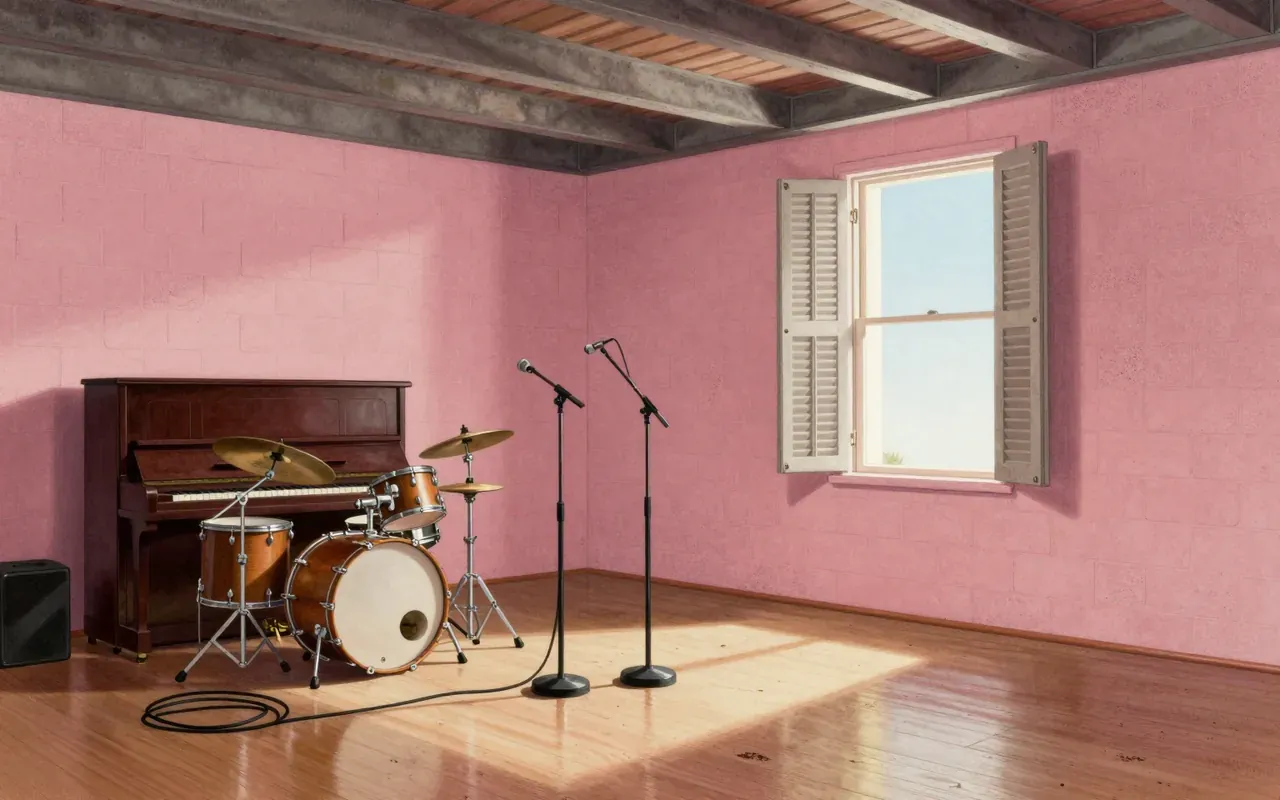
Melodrama is a synth-pop, art pop, and electropop record co-created by Lorde and Jack Antonoff over 18 months across four studios. It abandons an early alien sci-fi concept for direct writing about heartbreak and late adolescence. Its sound centres on piano-based melodies, pulsing synthesizers, and dense electronic beats — structured as a loose concept album tracing emotions across a single house party. It was released on 16 June 2017 through Universal, Lava, and Republic Records. It was nominated for Album of the Year at the 60th Annual Grammy Awards and later ranked in Rolling Stone’s 500 Greatest Albums of All Time.
13:02

Music for the Jilted Generation

The Prodigy · 1994

Music for the Jilted Generation is a breakbeat techno record defined by its political stance, sampling rigour, and studio discipline. It rejects commercial rave tropes while expanding the form’s emotional and structural range. It is not nostalgic. It is not ambient. It is not collaborative beyond Howlett and Reality. It is urgent, specific, and sonically uncompromising.

9:57

Music of My Mind

Stevie Wonder · 1972

Music of My Mind is the pivot point: the moment Stevie Wonder swapped Motown’s assembly line for a one-man synth lab. It is not warm. It is not nostalgic. It is precise, integrated, and politically aware — and it changed how soul records could be made.

12:10

Original Pirate Material

The Streets · 2002

A solitary, resourceful act of creation in a Brixton bedroom — no studio, no band, no analogue gear — that redefined British hip-hop by grounding it in place, process, and vernacular truth.

10:16

Oxygène

Jean Michel Jarre · 1976

Oxygène is a six-part electronic suite recorded in a Paris kitchen between August and November 1976. Jarre used EMS VCS 3 and Synthi AKS synthesizers, a Scully 8-track, Revox tape delay, AKG stereo reverb, EMT plate reverb, and eight stereo echoes. A partially functional Mellotron appears in Part II. The album evokes environmental themes through sound design rooted in musique concrète techniques. It made Jarre famous internationally after initial rejection by record companies.

10:14

Pills ’n’ Thrills and Bellyaches

Happy Mondays · 1990

Pills ’n’ Thrills and Bellyaches is the 1990 Happy Mondays album recorded at Capitol Studios in Los Angeles after their US tour. Produced by Paul Oakenfold and Steve Osborne, it fused house, funk, Krautrock, and northern soul into a propulsive, loop-driven sound defined by Gary Whelan’s layered drum work and Rowetta’s soulful vocals on 'Kinky Afro', 'Step On', and 'Bob’s Yer Uncle'. It went platinum in the UK, sold over 350,000 copies, and remains the band’s commercial and artistic zenith — a document of Madchester’s peak, not its myth.

9:34

Planet Rock: The Album

Afrika Bambaataa & Soulsonic Force · 1986

A foundational electro-funk record defined by its 1982 production: TR-808 rhythms, Kraftwerk synth hooks, and sample-based construction — not as collage, but as architectural logic.

12:12

Post

Björk · 1995

Post is Björk’s 1995 second studio album, conceived after her move to London and reflecting the city’s multicultural, club-driven energy. It features an eclectic fusion of electronic and organic elements, achieved through collaboration with co-producers Nellee Hooper, Graham Massey, Tricky, and Howie B. Recording began at Compass Point Studios in Nassau, where Björk integrated the natural environment — recording vocals in the ocean at sunset and inside a cave — and continued in London with intensive post-production. Tracks like 'Army of Me' and 'The Modern Things' were written earlier with Massey but withheld from Debut for their raw, brutal energy. The album balances synthetic textures with acoustic instrumentation — strings, brass, saxophone, trumpet, percussion — to achieve a dynamic, genre-defying cohesion rooted in lived experience and collaborative ethos.

10:55

Pretty Hate Machine

Nine Inch Nails · 1989

Pretty Hate Machine is Trent Reznor’s first full statement — made alone, with machines, in a state of withdrawal — aiming for claustrophobia, achieving intimacy, and changing the sound of rock by wiring noise to speak his name.

9:42

Q: Are We Not Men? A: We Are Devo!

DEVO · 1978

Q: Are We Not Men? A: We Are Devo! is a controlled demolition of rock vocabulary. It replaces swing with syncopated rigidity. It replaces vocal expression with monotone delivery. It replaces room sound with dead air. It establishes post-punk as architecture, not attitude. It falls short only where it tries to be funny — the jokes land flat because the music refuses to wink.

10:35

Ray of Light

Madonna · 1998

Ray of Light is a singer-songwriter record disguised by synths.

9:14

Roxy Music

Roxy Music · 1972

Roxy Music’s self-titled debut was recorded in March–April 1972 in one week after months of rehearsal. It was self-financed by EG Management at £5,000 and produced by Peter Sinfield. Phil Manzanera joined on 14 February 1972, replacing David O'List. The album and its Karl Stoecker cover were completed before the band signed with Island Records. Released in June 1972, it received good reviews and reached No. 10 on the UK Albums Chart in September 1972.

10:44

Since I Left You

The Avalanches · 2000

A sample-based daydream that trades coherence for texture—and wins.

9:06

Skeleton Tree

Nick Cave & the Bad Seeds · 2016

Skeleton Tree is a record shaped by absence — not just in subject, but in arrangement, timbre and space. Its electronic palette is functional, not decorative. Its lyrics avoid direct address. Its production leaves room tone intact. It assumes the listener will sit with unresolved feeling.

10:24

Sound of Silver

LCD Soundsystem · 2007

Sound of Silver is LCD Soundsystem’s third studio album, released on March 20, 2007. It was produced by the DFA and recorded in 2006 at Long View Farm in North Brookfield, Massachusetts and DFA Studios in New York City. James Murphy covered the entire studio in silver fabric and tin foil during recording. He found recording his own vocals uncomfortable, describing it as 'horrifying'. Several songs incorporate elements from the band's 2006 composition '45:33', especially 'Someone Great', which appears there as an instrumental. The album was dedicated to the memory of Dr. George Kamen (1942–2006). It was preceded by the single 'North American Scum' (February 2007), followed by 'All My Friends' — which spawned an EP featuring covers by Franz Ferdinand, John Cale, and Joy Division — and later 'Someone Great' (late 2007). In September 2007, the band released the A Bunch of Stuff EP and toured with Arcade Fire. In December 2007, Sound of Silver received a Grammy nomination for Best Electronic/Dance Album.

8:39

Supa Dupa Fly

Missy Misdemeanor Elliott · 1997

Supa Dupa Fly is a foundational hip-hop record because it treats rhythm as architecture, voice as texture, and production as world-building — all in under two weeks.

12:19

Talking Book

Stevie Wonder · 1972

A keyboard-led pivot from Motown’s strings to synthesised soul—tight, live, and decisive.

11:26

The Downward Spiral

Nine Inch Nails · 1994

The Downward Spiral is Nine Inch Nails’ second studio album, recorded at 10050 Cielo Drive — the Tate House — between July 4, 1992 and mid-1994. Reznor converted the house into ‘Le Pig’, named after the blood-written phrase on the door from the 1969 Manson murders. He lived and worked there for 18 months while struggling with depression and drug addiction. It is a loose concept album tracing a protagonist’s psychological descent into self-destruction, influenced by Pink Floyd and David Bowie’s 1970s output. Reznor used Pro Tools, TurboSynth, Zoom 9030, Akai and Kurzweil samplers to process guitars and vocals into abstract textures, pursuing a 'full-range' sound that eschews conventional verse-chorus structures and embraces dissonance, industrial noise, and unusual time signature changes. Flood co-produced several tracks, Alan Moulder mixed most of the album, and contributors included Adrian Belew, Stephen Perkins, and Chris Vrenna. The album debuted at number two on the Billboard 200 and became the band’s highest-selling US album, with over four million copies sold domestically and five million worldwide.

8:12

The Fat of the Land

Prodigy · 1997

The Fat of the Land is Prodigy’s 1997 third album — their first with Keith Flint’s vocals, titled from an old English phrase, and defined by its Costa Rican crab cover and ant logo.

9:26

The Hissing of Summer Lawns

Joni Mitchell · 1975

The Hissing of Summer Lawns is Joni Mitchell’s 1975 studio album that introduced Moog and ARP synthesizers to her work and featured the first commercially released sample—a looped field recording of The Drummers of Burundi on 'The Jungle Line'. Produced by Mitchell with Henry Lewy, it blends jazz, avant-pop, world music, and electronic elements, exploring women's experiences under patriarchy and the underbelly of Southern California suburbia. Backing comes from L.A. Express and The Crusaders, with guest appearances by James Taylor, David Crosby, and Graham Nash.

10:27

The Idiot

Iggy Pop · 1977

The Idiot is Iggy Pop’s 1977 debut solo album, produced by David Bowie and recorded at Château d'Hérouville in France and Musicland Studios in Munich. Bowie composed most music and played keyboards, guitar, saxophone and drum machine; Pop wrote lyrics in real time and recorded vocals in Munich. French session musicians Laurent Thibault and Michel Santangeli contributed bass and drums, with Santangeli’s parts retained despite his early dismissal. The album’s sound is mechanical, sparse and emotionally detached—a fusion of James Brown’s funk and Kraftwerk’s electronics. It has influenced post-punk, electronic and industrial artists.

8:37

The Modern Dance

Pere Ubu · 1978

The Modern Dance is Pere Ubu’s 1978 debut. It is avant-garage: abrasive, intentional, rusted. Its sound is defined by close miking, stripped drum resonance, and Allen Ravenstine’s EML synthesizer treated as a physical instrument—not an effect. Executives mistook the synth for a mistake. The breaking-glass overdub on 'Sentimental Journey' was recorded live in the studio’s stone fireplace. Most tracks were written before recording began. It was financed by Cliff Burnstein. It sold poorly but influenced alternative rock.

11:17

The Notorious Byrd Brothers

The Byrds · 1968

The Notorious Byrd Brothers is the Byrds’ fifth studio album, recorded between June and December 1967 and released in January 1968. It features phasing, flanging, spatial panning, rotary speaker effects, pedal steel guitar, and the Moog modular synthesizer — one of the first LP appearances of the Moog. It explores peace, ecology, alienation, and cosmic consciousness. Despite internal conflict — Crosby’s firing, Clarke’s departure and dismissal, and Clark’s three-week return — it is described as the band’s most cohesive and ethereal-sounding album. Critically acclaimed upon release, it peaked at number 47 in the US and is now widely regarded as one of their finest.

8:49

The Suburbs

Arcade Fire · 2010

The Suburbs is Arcade Fire’s third studio album, released in 2010. It was produced by Markus Dravs and engineered by Marcus Paquin. Recording took place across three locations: Win Butler and Régine Chassagne’s Montreal residence, the band’s Quebec studio, and New York City. Win Butler described the album’s sound as a mix of Depeche Mode and Neil Young—intended to evoke the mysterious, formative noises of his youth. Each song was pressed to a 12-inch lacquer and re-recorded for the digital master. The album was released with eight different covers. A pre-release review by The Quietus compared its progression to William Blake’s Songs of Innocence and of Experience.

11:59

This Is Happening

LCD Soundsystem · 2010

This Is Happening is documented solely as a chronologically situated artifact — not as a musical work with internal qualities.

8:47

Visions

Grimes · 2012

Visions is a record defined by its making: solitary, chemically augmented, deadline-driven, and physically extreme. Its sound is synthetic, compact, and unrelenting — built from four tools in one room. It landed because it fused pop immediacy with experimental discipline. It does not expand outward. It compresses inward.

11:57

White Light/White Heat

The Velvet Underground · 1968

White Light/White Heat is a record built on overload: Vox gear, distortion pedals, leakage, compression, and refusal to adapt to studio limits. It lands as noise, narrative, and nihilist energy—and fails anywhere it tries to breathe, resolve, or clarify. It is foundational not because it is 'great', but because it treats limitation as licence.

9:16

xx

The xx · 2009

The xx’s 'xx' is a document of constraint: recorded in a converted garage, at night, with two voices, a bass, a drum machine, and one shared microphone. Nothing is added. Nothing is smoothed. It is what fits in the room.

16:02

Yoshimi Battles the Pink Robots

The Flaming Lips · 2002

Yoshimi Battles the Pink Robots is a 2002 electronic pop record that foregrounds texture over narrative, borrowing melody while avoiding resolution. Its ideas land where its sound does — in the space between acoustic warmth and digital precision.

11:00

You’ve Come a Long Way, Baby

Fatboy Slim · 1998

You've Come a Long Way, Baby is a 1998 Fatboy Slim album built from crate-digging, floppy-disc archiving, and hands-on sampling using an Akai S900 and Atari ST. Cook added basslines and assembled collages in the Big Beat style at his Brighton home studio, collaborating with engineer Simon Thornton and using time-stretching. The album distils big beat’s ideas into a coherent, rhythm-first pop statement — with its three defining singles created in one week.

9:24

A Rainbow in Curved Air

Terry Riley · 1969

A Rainbow in Curved Air is a solo studio construction: keyboard and percussion overdubs on the A-side, saxophone drone and tape manipulation on the B-side. Made in 1968 on one of CBS’s first eight-track recorders. It established repetition, delay, and modal layering as core tools for electronic composition — not as texture, but as architecture.

10:51

Black Celebration

Depeche Mode · 1986

Black Celebration is a tightly wound, claustrophobic electronic record built on tension, not release.

14:22

Drukqs

Aphex Twin · 2001

Drukqs is a double album released in 2001 by Aphex Twin. It contains tracks dating back seven or eight years, though most were relatively new. James rushed its release after accidentally leaving an MP3 player with new tracks on a plane, aiming to preempt an internet leak.

11:05

Electric Circus

Common · 2002

Electric Circus is a studio document — not a manifesto, not a victory lap, but a working log of what happens when hip hop stops defending its borders and starts wiring them for feedback.

9:42

Fresh

Sly & the Family Stone · 1973

Fresh is Sly & the Family Stone’s 1973 album, made amid personnel losses and Sly’s escalating cocaine use. It follows There’s a Riot Goin’ On. It contains a track purportedly sourced from a 1968 outtake.

10:23

Funkentelechy vs. the Placebo Syndrome

Parliament · 1977

Funkentelechy vs. the Placebo Syndrome is Parliament’s sixth studio album, released November 28, 1977, on Casablanca Records. It is a loose concept album set within the P-Funk mythology warning of the 'Placebo Syndrome' — consumerism and disco music, which George Clinton viewed as a crass commercialized variant of funk. The album features layered vocal performances, synthesizer-heavy arrangements (especially on 'Flash Light'), and collaborative guitar work across multiple tracks. 'Flash Light' became an R&B number one single, built around a prominent Minimoog bass line played by Bernie Worrell. The original vinyl release included a 22″×33″ poster of Sir Nose D'Voidoffunk and an 8-page comic book explaining the concept — both illustrated by Overton Loyd. Vocalists include George Clinton, Ray Davis, Glenn Goins, Garry Shider, Debbie Wright, Jeanette Washington, Lynn Mabry, Dawn Silva, Cordell Mosson, and Mallia Franklin (though Franklin is not listed on the liner notes). Guitarists include Michael Hampton, Glenn Goins, Garry Shider, and Phelps Collins (on 'Flash Light'). 'Sir Nose d'Voidoffunk (Pay Attention – B3M)' quotes 'Baa, Baa, Black Sheep' and 'Three Blind Mice', with altered lyrics referring to drug use.

8:49

Gabber

Gabber didn’t rebel against rave—it replaced it with something faster, louder, and less negotiable.
9:38

Graduation

Kanye West · 2007

Graduation is Kanye West’s third studio album, released in September 2007. It was recorded between 2005 and 2007 across studios in New York and Los Angeles, beginning immediately after Late Registration. West intended a twelve-track album by late September 2005; the final version contains 13 tracks (14 digitally), omitting two African-influenced interludes.

8:56

Midnight Star

Midnight Star · 1988

Midnight Star (1988) is a post-breakout album with no documented commercial performance, stylistic departure, or critical repositioning. It relies on the same R&B/funk/vocoder foundation established by No Parking on the Dance Floor (1983), but none of its tracks charted, none received significant airplay, and none are cited as defining the band’s identity.

9:40

Power, Corruption & Lies

New Order · 1983

New Order’s Power, Corruption & Lies is their second studio album, released 2 May 1983 by Factory Records. It features more electronic tracks and heavier synthesiser use than Movement. It combines post-punk roots with electronic influences into synth-pop, electropop, new wave, synth-rock, dance-rock, post-punk and dance-punk. At the time, it was the heaviest the band had ever flirted with electronica. Its sound has been characterised as a gentle portrait of ambient, post-industrial tenderness. '5-8-6' has been called a literal interpretation of early house music, with noted influences from Kraftwerk and Giorgio Moroder. Darker songs such as 'We All Stand' and 'Your Silent Face' are contrasted with brighter, more optimistic songs such as 'The Village'. 'Blue Monday' was recorded in the same sessions and released separately as a non-album twelve-inch single.

9:50

Rhythm & Sound

Rhythm & Sound · 2001

Rhythm & Sound’s 2001 self-titled album is a focused, collaborative re-engagement with Jamaican dub — defined by vocal partnerships, spatial production, and structural restraint.

9:42

Saturnz Return

Goldie · 1998

Saturnz Return is Goldie’s 1998 follow-up to Timeless. Its opening track 'Mother' is an hour-long orchestral drum and bass piece featuring a 30-piece string section and classically trained child singers. It was conceived as a sonic representation of Goldie’s adoption at age three, foster care, fame, and addiction. He described its arc as beginning with an unborn-child voice before descending into abandonment and rhythmic ferocity. He made it for one private moment: listening on headphones while seeing his mother’s body before her funeral. The album features David Bowie, Noel Gallagher and KRS-One, and received mixed reviews—including 'ambitious but monotonous and overlong—Pink Floyd with a gold tooth'.

10:20

Speak & Spell

Depeche Mode · 1981

Speak & Spell is Depeche Mode’s 1981 debut: ten tracks recorded live on 8-track with an ARP 2600, built from songs played live for a year, written mostly by Vince Clarke, co-produced by Daniel Miller. It reached UK #10. Critics split: Melody Maker praised it; Rolling Stone dismissed it as ‘PG-rated fluff’. It established synth-pop as functional pop—not experimental, not atmospheric, not ironic—just direct, repeatable, and built for broadcast.

11:44

Stankonia

OutKast · 2000

Stankonia is OutKast’s fourth album, recorded spring 1999–spring 2000 at their newly owned Stankonia Studios in Atlanta, released October 2000. It began life as Sandbox. It is a hip-hop record built on studio autonomy, guitar-led composition, and deliberate stylistic pivot from their earlier, darker work.

10:47

Violator

Depeche Mode · 1990

Violator is Depeche Mode’s 1990 album, co-produced by the band and Flood, recorded in mid-1989 across Milan, Gjerlev, and London, and mixed in London by François Kevorkian.

9:39

Windowlicker. Come To Daddy

Aphex Twin · 2000

A compilation bundling Aphex Twin’s two most provocative late-90s singles — 'Come to Daddy' (1997) and 'Windowlicker' (1999) — plus remixes and instrumentals. Released in 2000. All tracks built electronically. Videos by Chris Cunningham. Charted in the UK Top 40. Satirical intent confirmed by artist statement.

9:15

Yeezus

Kanye West · 2013

Yeezus is a record defined by constraint: made in a bad room, stripped under deadline, and built from industrial textures rather than melody.

10:17

Laurie Anderson

She didn’t use tech to sound futuristic—she used it to make listening feel like labour.
13:00

Ambient 1: Music for Airports

Brian Eno · 1978

Brian Eno's 1978 EMI release grew out of a bad afternoon at Cologne's airport and a conviction that background music could be more than wallpaper. Made from looped tape rather than a band, it named ambient music as a genre in the act of making it.

13:00

Autobahn

Kraftwerk · 1974

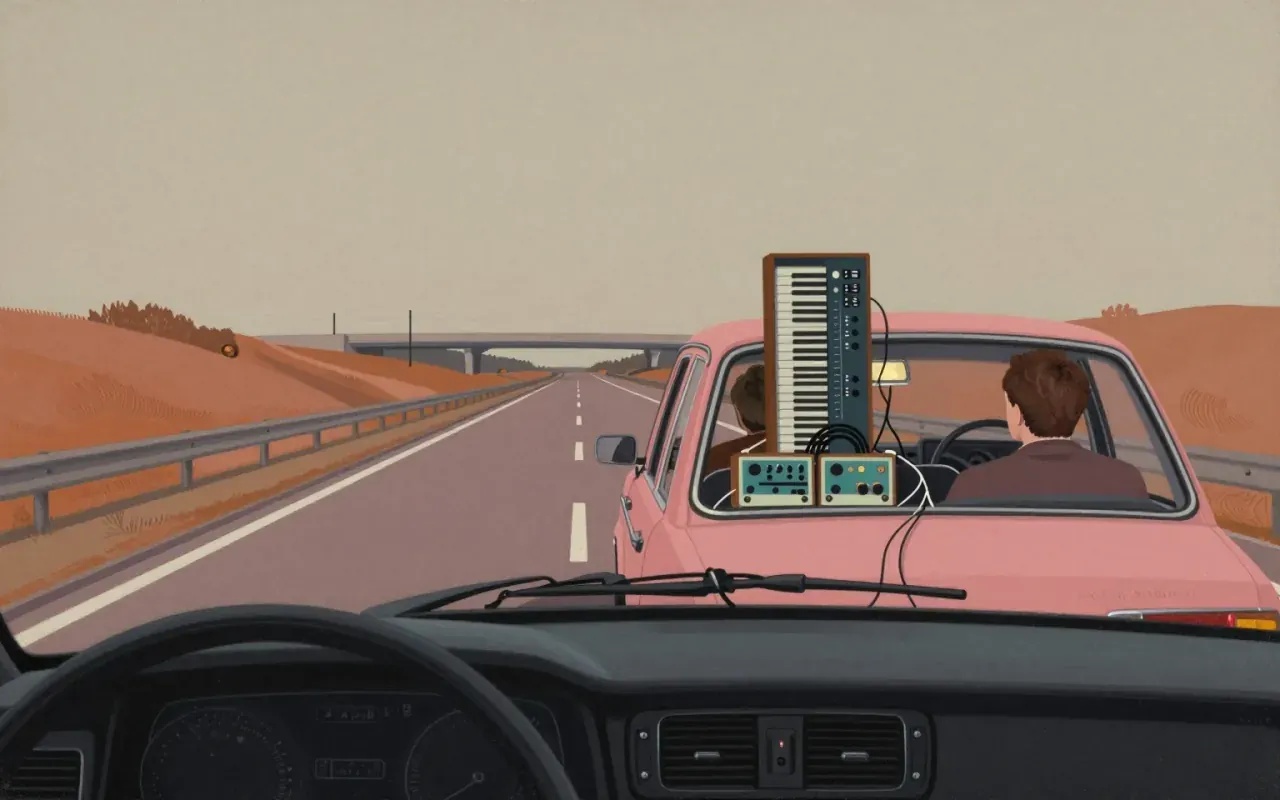
Kraftwerk's fourth album, cut partly at their own Kling Klang studio and mostly at Conny Plank's countryside facility outside Cologne, marks the point where the group traded free improvisation for synthesiser-and-drum-machine pop. The side-long title piece, built to mimic the sound and feeling of a motorway journey, became an unlikely American hit and set the template the band refined for the rest of the decade.

13:00

Blue Lines

Massive Attack · 1991

Built across eight months and half a dozen London studios, Blue Lines slows hip hop's breakbeats down to a reggae and soul pace, with Shara Nelson and Horace Andy carrying the vocals. It is the record most often credited with starting trip hop, made by a group working from instinct rather than any stated genre plan.

13:00

Computerwelt

Kraftwerk · 1981

Kraftwerk's eighth album, built at the band's own Düsseldorf studio and released in 1981 in matching German and English editions, imagines home computers, pocket calculators and digital surveillance years before most listeners had encountered any of them. Made without a single piece of computer technology, it went on to shape early hip-hop, electro and dance production far beyond its own modest chart run.

13:00

Die Mensch·Maschine

Kraftwerk · 1978

Recorded entirely at the band's own Kling Klang studio in Düsseldorf and released in 1978, this seventh Kraftwerk album pares the group's mechanical style down further and points it toward the dance floor. Six tracks address the Cold War, industrial manufacturing and the growing closeness between people and machines, wrapped in artwork built on Russian avant-garde design, and it left a direct mark on the synth-pop and new wave that followed.

13:00

Discovery

Daft Punk · 2001

Built at Thomas Bangalter's home studio in Paris over two years, Discovery pairs vintage drum machines and keyboards with heavily processed vocals to turn childhood memory into pop songwriting. It moved the duo from raw club tracks toward a more song-based sound and remains a high point for vocoder-driven dance music.

13:00

Dummy

Portishead · 1994

Recorded without digital equipment in Bristol, Portishead's Dummy layers Beth Gibbons's vocals over sampled soul, spy-soundtrack strings and deliberately worn vinyl, a debut that helped define trip hop while staying stranger and colder than the genre it is credited with starting.

13:00

Homework

Daft Punk · 1997

Made in their own Paris studio without label input, Homework turns disco, funk and soul samples into house and techno tracks built around a single insistent hook apiece. Some of that repetition wears thin over sixteen tracks, but the record helped push French house to an audience dance music rarely reached before.

13:00

Maxinquaye

Tricky · 1995

Tricky's debut, made after leaving Massive Attack, pairs his low, rapped vocals with Martina Topley-Bird's softer delivery over samples reworked past recognition through dub-influenced production. Recorded largely at his own home studio in 1994, the album explores intimacy, drug culture and the private grief of his mother's death beneath its hazy, downbeat surface.

13:00

Mezzanine

Massive Attack · 1998

Built around post-punk and industrial reference points that unsettled at least one founding member, Mezzanine pushes Massive Attack's sample-based sound into darker, bass-heavy territory, pairing guest vocalists Elizabeth Fraser and Horace Andy with a production process tense enough to end Andrew Vowles's time in the group.

13:00

Music Has the Right to Children

Boards of Canada · 1998

Recorded at their own studio in the Pentland Hills on tape and vintage synthesisers left deliberately out of tune, this debut folds samples of children's television into a haze that sits somewhere between comfort and unease. At seventeen tracks it asks patience of a listener, but its sustained atmosphere remains close to unmatched.

13:00

Play

Moby · 1999

Made at Moby's own Manhattan studio after a career-threatening previous album, Play folds vocal hooks lifted from Alan Lomax's field recordings into electronic production, letting decades-old voices carry new songs. Slow to catch on, it eventually sold over twelve million copies largely through film and advertising licensing.

13:00

Selected Ambient Works 85–92

Aphex Twin · 1992

Selected from years of cassette recordings Richard D. James made from age thirteen on equipment he built himself, this debut curated by label head Renaat Vandepapeliere reads as a fully formed statement rather than a curiosity. Its melodic, sometimes industrial tracks pair beauty with unease and remain a founding document of ambient techno.

13:00

Selected Ambient Works, Volume II

Aphex Twin · 1994

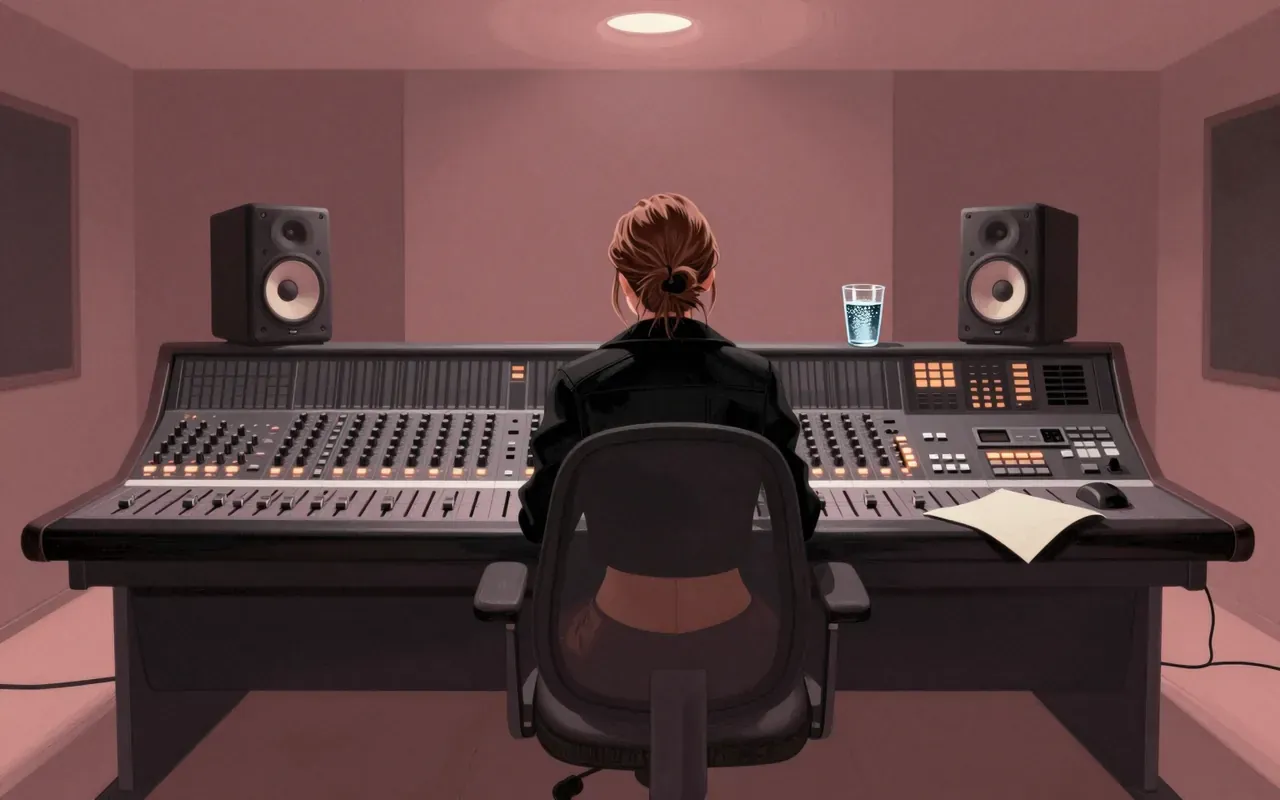
Aphex Twin's second album moves almost entirely into slow, largely beatless ambient composition, built from old analogue synthesizers and, by Richard D. James's own account, half-remembered fragments of dream. Nearly all twenty-four tracks went out untitled, leaving fans to name pieces that reward patient, undistracted listening across a two-and-a-half-hour running time.
13:00

Solid State Survivor

Yellow Magic Orchestra · 1979

Yellow Magic Orchestra's second album turns Hideki Matsutake's Microcomposer sequencing and Chris Mosdell's English lyrics into fully electronic pop songs, repurposing a watch-commercial jingle into Behind the Mask and naming a coming genre outright in Technopolis, years before Detroit techno existed to claim the word.

13:00

Trans Europa Express

Kraftwerk · 1977

Recorded at the band's own Kling Klang facility in Düsseldorf and finished with sessions in Hamburg and Los Angeles, this sixth Kraftwerk album refines the group's earlier improvised style into tight, sequenced songcraft. Built around a new custom sequencer and versions cut separately in German, English and French, it turns a train service into a symbol for a Europe the band wanted to claim as their own, apart from war-era associations attached to their earlier work.

13:00

Untrue

Burial · 2007

Made alone with the software Sound Forge rather than a studio, Untrue pulls apart vocal samples and phone recordings into androgynous, half-familiar fragments set over skipping garage-inflected beats. It turned a London producer's private, late-night working method into one of the more significant electronic records of its decade.

13:00

Yellow Magic Orchestra

Yellow Magic Orchestra · 1978

Yellow Magic Orchestra's 1978 debut turned a mocking cover of a 1959 exotica tune into a synth-pop landmark, built almost entirely on a Roland Microcomposer and a rack of early synthesizers. Playful, cool and stranger than its chart success suggests, it is now heard less as a novelty than as an ancestor of electro, techno and much of the sampling culture that followed.