musicbriefs
2:32in production/ 2:32 · ceiling 15 min
Electronic

Cross

Justice push disco patterns through distortion until dance music acquires the scale of rock spectacle.

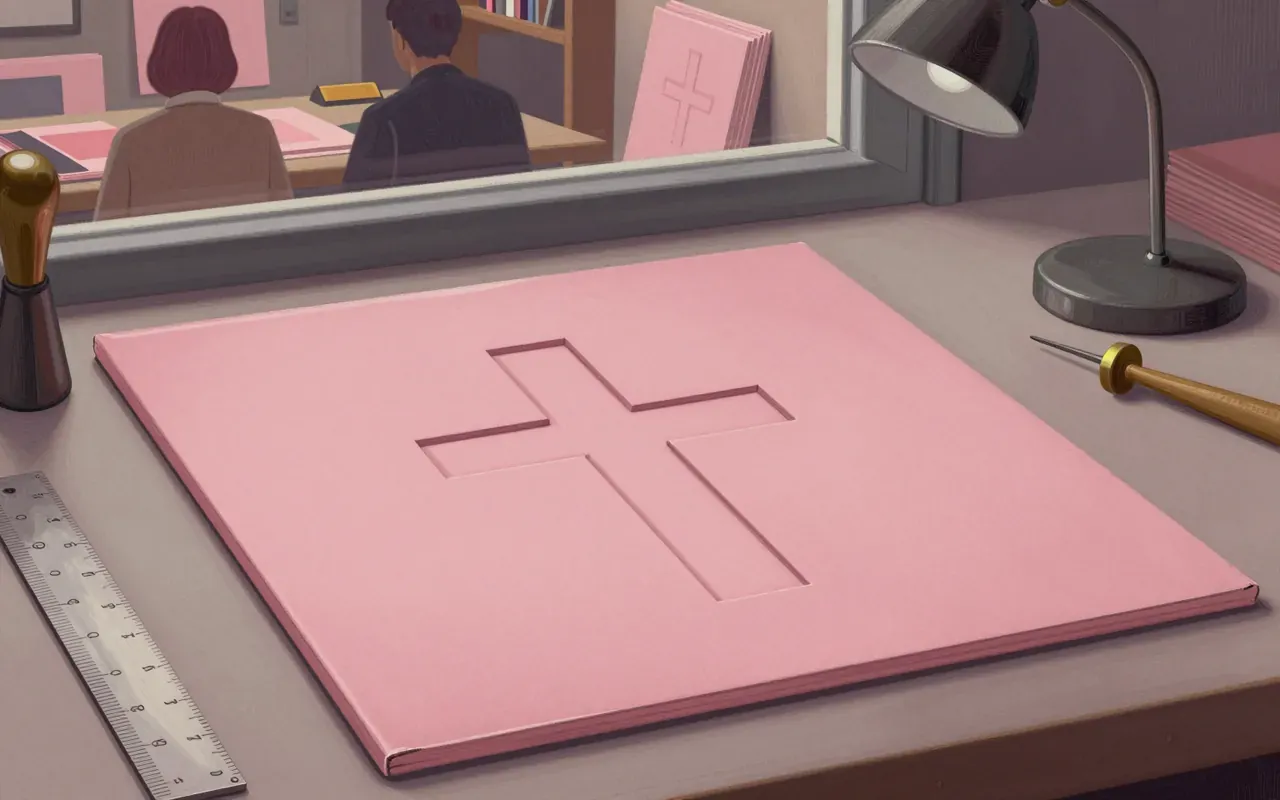
Justice's 2007 debut is commonly called Cross after its sleeve symbol, although the duo regard it as untitled. Recorded in Paris, it was conceived around a combination of disco and theatrical scale. The record's force comes from treating sound design as something that can transform familiar musical structures.

Worth your time?

Yes. Hear the whole thing.

What works
    What does not
      Hear it if
      • Listeners who enjoy abrasive electronic production and pop hooks
      Skip it if
      • Listeners seeking subtle or spacious dance music
      The written brief2 min read

      What the record is and where it came from

      Justice’s 2007 debut is commonly called Cross after its sleeve symbol, although the duo regard it as untitled. Recorded in Paris, it was conceived around a combination of disco and theatrical scale. The record’s force comes from treating sound design as something that can transform familiar musical structures.

      How it sounds, and how it was made

      The distortion is central. Xavier de Rosnay has explained that the underlying bass patterns of “Waters of Nazareth” remain straightforwardly disco despite their abrasive treatment. Samples are another building material, including tiny fragments intended to lose their original identity within the new track.

      That is a different use of sampling from displaying a recognisable reference. The borrowed sound can become a surface, an impact or a component of an apparently new instrument.

      What lands

      “D.A.N.C.E.,” a tribute to Michael Jackson, gives the record a conspicuous pop opening. “Phantom” and its second part develop material drawn from the film score Tenebre, while “Stress” uses David Shire’s “Night on Disco Mountain.” These examples show the duo moving between an accessible song idea and more confrontational constructions.

      The best way into the album is to hear the rhythmic organisation underneath the treatment. The noise has somewhere to go.

      What does not

      The pressure can become tiring. A listener looking for space within a groove may find the production continually demanding attention. The contrast with the more approachable songs is effective, but it does not make the harsher passages welcoming to everyone.

      The ideas inside it

      Musical identity can live in the way material is processed. Cross turns fragments and familiar patterns into a recognisable production language. Its borrowing is less interesting as a hunt for sources than as a demonstration of how a sound can be made to perform a different role.

      Who should hear it, and who should not

      Hear it if you like dance music that borrows the size and confrontation of rock. It is a poor choice when you want a discreet pulse beneath another activity.

      Is it worth your time

      Yes. Try “D.A.N.C.E.” beside “Waters of Nazareth.” The distance between them, and the shared commitment to immediate impact, explain the album better than its imposing cover alone.

      Same genre · Electronic4 of 117
      10:44
      Since I Left YouThe Avalanches · 2000A sample-based daydream that trades coherence for texture—and wins.
      11:14
      WHEN WE ALL FALL ASLEEP, WHERE DO WE GO?Billie Eilish · 2019When We All Fall Asleep, Where Do We Go? is Billie Eilish’s debut studio album, released March 29, 2019. Written and produced with her brother Finneas O'Connell in his bedroom studio in Highland Park, Los Angeles, it uses Logic Pro X, a Universal Audio Apollo 8 interface, and Yamaha HS5 monitors with an H8S subwoofer. Its sound centres on amplified bass, minimalist percussion, foley, and acoustic textures — layered with dissonance and distortion to create a rock ’n’ roll feel without rock instrumentation. Eilish later said she 'hated every second' of its creation. It debuted at number one on both the US Billboard 200 and the UK Albums Chart, and 14 of its 14 tracks (excluding 'Goodbye') charted simultaneously on the US Billboard Hot 100 — a record for a female artist.
      13:00
      PlayMoby · 1999Made at Moby's own Manhattan studio after a career-threatening previous album, Play folds vocal hooks lifted from Alan Lomax's field recordings into electronic production, letting decades-old voices carry new songs. Slow to catch on, it eventually sold over twelve million copies largely through film and advertising licensing.
      11:30
      BlackoutBritney Spears · 2007Blackout is Britney Spears’ fifth studio album and the only one she executive-produced. Recording began earnestly in 2006. It was released in October 2007.
      Up next in Music

      Crossing the Red Sea with the Adverts

      The Adverts · 1978 · 1:58

      The Adverts put a clearly defined four-piece band behind an urgent debut statement.

      1:58