What the record is and where it came from
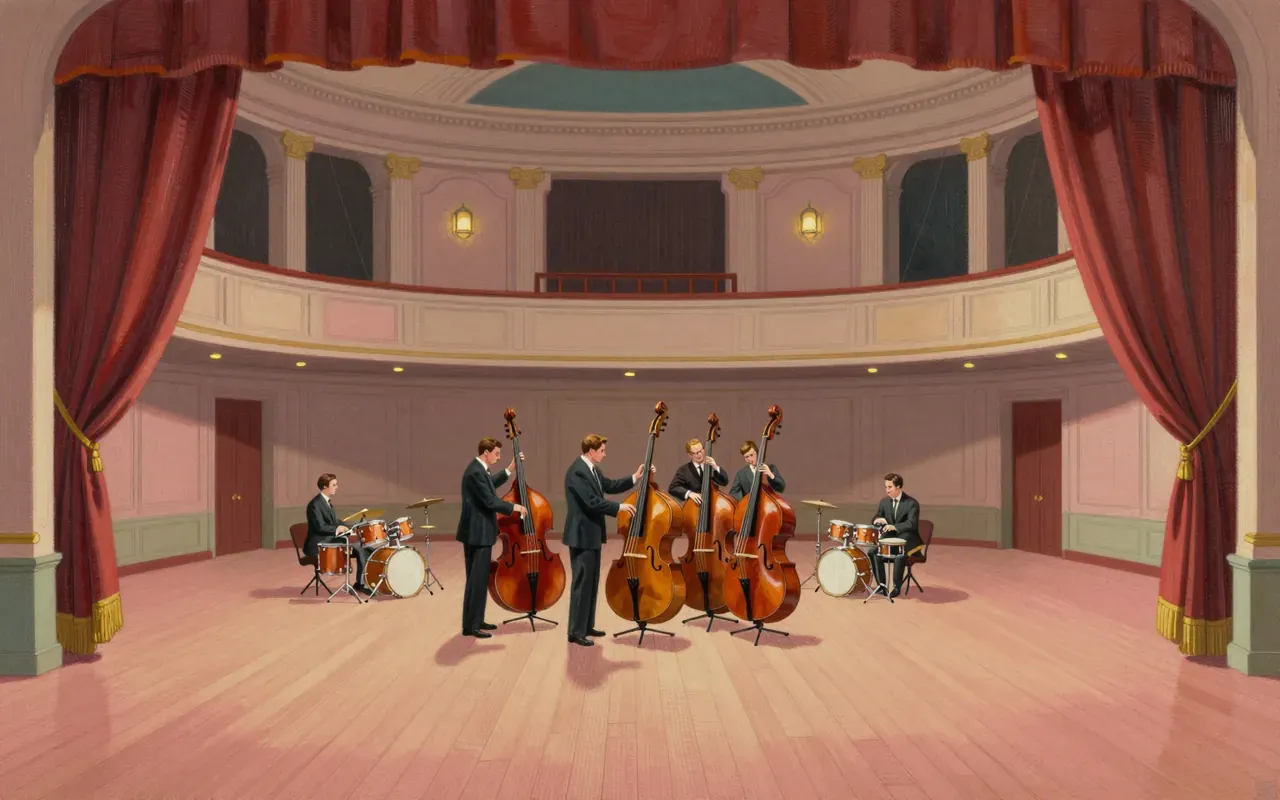
Benny Goodman’s January 1938 Carnegie Hall concert first appeared as an album in 1950. The delay matters: this is a later release of a particular historical performance. The programme includes his orchestra, smaller groups and guests associated with the Basie and Ellington bands.
How it sounds, and how it was made
Clarinet, brass, saxophones and rhythm section give the orchestra its scale, while trio and quartet passages change the available space. Teddy Wilson’s piano and Lionel Hampton’s vibraphone appear in the smaller settings. The recording makes those shifts part of the concert’s musical argument.
What lands
“Honeysuckle Rose” opens the event to a jam-session cast, while “Sing, Sing, Sing” gives the orchestra a substantial climax. The variety keeps the occasion from being only a formal presentation of one band’s usual repertoire. Several forms of jazz performance occupy the same stage.
What does not
The historical recording quality and long programme can make sustained attention demanding. Reissue sources and restoration choices differ, so fidelity is not identical across editions. The occasion’s reputation can also overshadow the particular performances it was intended to preserve.
The ideas inside it
A prestigious setting can change how an existing musical practice is received without creating its value from nothing. The strongest reason to hear the record remains the musicians’ work across the programme’s different scales.
Who should hear it, and who should not
Hear it if live swing and ensemble variety justify archival sound. It is less suited to a quick introduction requiring polished modern fidelity.
Is it worth your time
Yes. Allow the small-group passages as much importance as the famous finale; they reveal the breadth of the occasion.