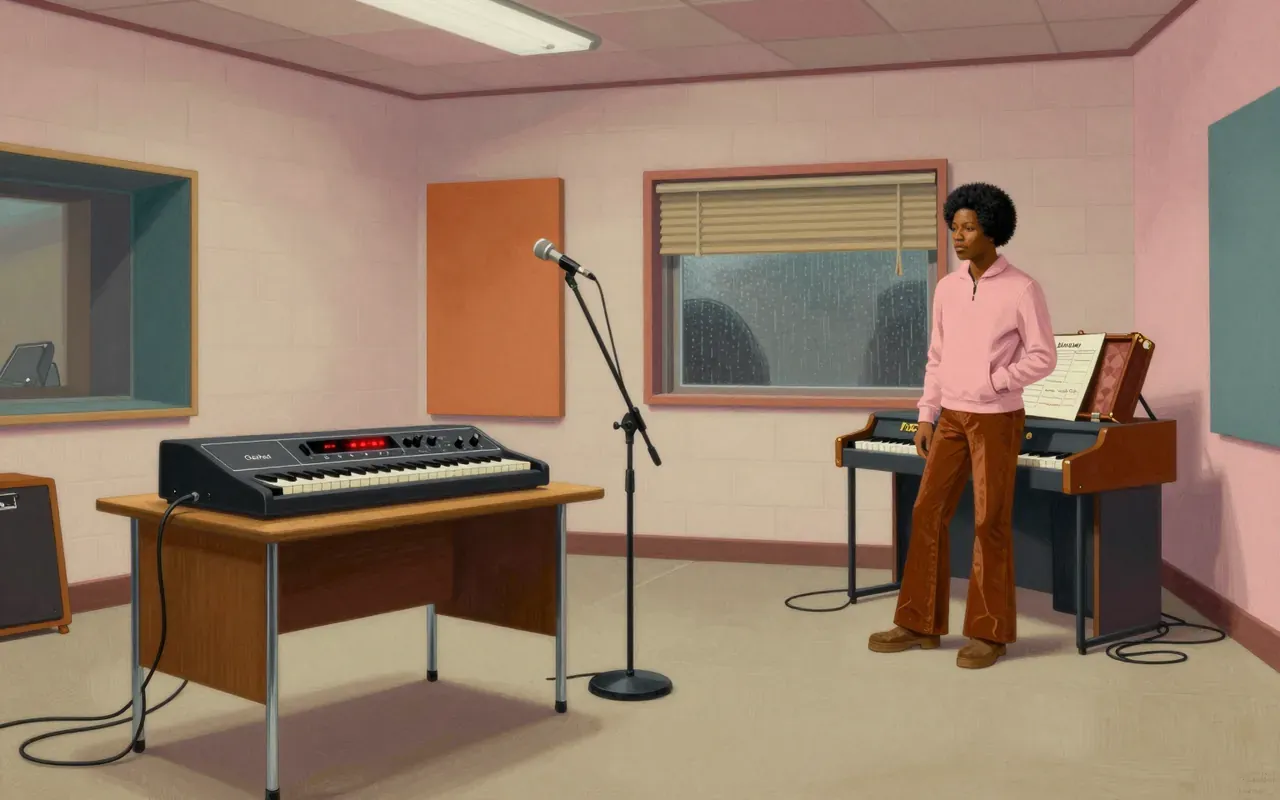
What the record is and where it came from
Fulfillingness’ First Finale was released in 1974, following Innervisions. Much of the programme turns toward a more personal and reflective mood, without abandoning public concerns. Its value lies partly in that adjustment of scale rather than in repeating the previous album’s breadth.
How it sounds, and how it was made
Several arrangements are comparatively sparse, notably “Creepin’” and “They Won’t Go When I Go.” “You Haven’t Done Nothin’” brings clavinet, drum machine and the Jackson 5 into a more forceful setting. The contrast is built into the sound, not just the subjects.
What lands
The political single prevents reflection from becoming complete withdrawal. Elsewhere, the restrained arrangements leave more responsibility with the melody and voice. Wonder can make different kinds of attention feel compatible within the same programme.
What does not
Listeners wanting the constant sense of expansion associated with some of his neighbouring albums may find this one quieter or less immediately imposing. Its reflective passages also ask for more patience than the best-known rhythmic tracks prepare a casual listener to give.
The ideas inside it
Private reflection and public criticism are not mutually exclusive states. The album’s changes of scale suggest that attention can turn inward without losing the capacity to address the surrounding world. The sharper moments gain contrast from the quieter company.
Who should hear it, and who should not
Hear it if you enjoy a soul album that lets restraint carry real expressive weight. It is less suitable when you want every song to deliver a large physical lift.
Is it worth your time
Yes. Hear “Creepin’” beside “You Haven’t Done Nothin’”; their different demands make the album’s balance clearer than either alone.