musicbriefs
Genre

Disco, funk & soul

143
briefs
9:26
average
1350 min
in total
97
artists
All briefs143
1:59

Bad Girls

Donna Summer · 1979

Bad Girls was released as a double album in 1979, with Donna Summer continuing her work with Giorgio Moroder and Pete Bellotte. Additional collaborators and a broader stylistic range extend the project beyond a single version of disco. The album gives her several kinds of stage to occupy.

2:10

Beyoncé

Beyoncé · 2013

Beyoncé's self-titled fifth album arrived without a conventional advance campaign in December 2013. Conceived as a visual album, it joined songs and videos in a single release. The surprise matters historically, but its lasting musical question is how much room a major pop performer can claim for a more personal presentation.

2:04

Black Messiah

D’Angelo, The Vanguard · 2014

Black Messiah was released in 2014 under the credit D'Angelo and the Vanguard, following the long interval after Voodoo. Collaborators include Questlove, Pino Palladino, Isaiah Sharkey, Roy Hargrove and Kendra Foster. The ensemble credit matters to a record built from many interdependent contributions.

1:54

Bongo Rock

Incredible Bongo Band · 1973

Bongo Rock was released in 1973 after Michael Viner's soundtrack work with Perry Botkin Jr. developed into a full album project. The Incredible Bongo Band name describes an assembled studio undertaking. Its later use by DJs gives the recordings another history without replacing the original one.

2:00

Control

Janet Jackson · 1986

Control was released in 1986 after Janet Jackson changed important personal and professional relationships. Jimmy Jam and Terry Lewis became her central songwriting and production collaborators. The album presents independence as a practical claim about who gets to make decisions.

2:39

D Train

D Train · 1982

D Train's 1982 debut, also known as You're the One for Me, pairs singer James Williams with producer and keyboardist Hubert Eaves III. Released by Prelude in the United States, it is an original album rather than a later hits collection. Its programme gives the duo's best-known song a surrounding musical world.

2:11

Diana

Diana Ross · 1980

Diana was released in 1980 after Ross approached Nile Rodgers and Bernard Edwards for a new musical direction. Conversations with her informed much of their songwriting. The finished album also reflects Ross' own intervention: she worked with engineer Russ Terrana on a remix that the producers initially opposed.

1:58

Reach Out

Four Tops · 1967

Reach Out was released in 1967, the Four Tops' last album with Holland–Dozier–Holland. It includes six successful singles alongside contemporary pop covers selected by Berry Gordy. The programme therefore combines a concentrated creative partnership with a broader commercial repertoire.

1:58

Fulfillingness' First Finale

Stevie Wonder · 1974

Fulfillingness' First Finale was released in 1974, following Innervisions. Much of the programme turns toward a more personal and reflective mood, without abandoning public concerns. Its value lies partly in that adjustment of scale rather than in repeating the previous album's breadth.

2:09

Lady Soul

Aretha Franklin · 1968

Lady Soul was released by Atlantic in January 1968, during a prolific period in Aretha Franklin's recording career. Jerry Wexler produced, with Tom Dowd engineering. Its best-known songs belong to a programme in which lead singing, accompaniment and backing voices continually define one another.

2:08

Look-Ka Py Py

The Meters · 1969

Look-Ka Py Py is the Meters' second studio album, released in 1969 and produced by Allen Toussaint. The instrumental quartet offers a particularly clear view of its working parts. With no lead singer to organise attention, the relationships inside the band become the main event.

2:01

Mama's Gun

Erykah Badu · 2000

Mama's Gun was released in 2000 after Erykah Badu worked with the Soulquarians circle at Electric Lady in New York. Collaborators included Questlove, Pino Palladino, James Poyser, Roy Hargrove and Jay Dee. The setting supported writing about self-worth, relationships and social inequality.

1:56

Night Beat

Sam Cooke · 1963

Night Beat was recorded over three nights in February 1963 and released that August. Sam Cooke worked with a small studio ensemble at RCA in Hollywood. The setting offers a different perspective from the larger arrangements associated with some of his crossover recordings.

2:08

Complete & Unbelievable: The Otis Redding Dictionary of Soul

Otis Redding · 1966

Dictionary of Soul appeared in 1966 as Otis Redding's fifth solo studio album and the last released during his lifetime. The original first side draws largely on covers, while the second concentrates on Redding's writing. The arrangement of the programme makes interpretation and authorship neighbouring activities.

2:38

Sign o' the Times

Prince · 1987

Released in 1987 after the Revolution's breakup, Sign o' the Times gathers material from several abandoned or reshaped projects. The double album's sixteen tracks retain that sense of abundant possibilities. Its unity comes from a musician moving confidently among them, rather than from a single band sound or subject.

2:01

Star Time

James Brown · 1991

Star Time was released in 1991, selected by Cliff White and Harry Weinger. Its four discs run from “Please, Please, Please” in 1956 to the 1984 Afrika Bambaataa collaboration “Unity.” The collection is an extended career argument, not a recording of one event.

2:28

Super Fly

Curtis Mayfield · 1972

Curtis Mayfield's 1972 soundtrack accompanies Gordon Parks Jr.'s film about a cocaine dealer attempting to leave the business. It was also Mayfield's third solo studio album. The songs have their own moral perspective, allowing the music to stand independently while complicating the film's attraction to its protagonist's world.

1:58

Whitney Houston

Whitney Houston · 1985

Whitney Houston's debut appeared in 1985 after years of experience as a backing and session singer. Several producers helped prepare a programme that could introduce different aspects of her voice. The album's success followed gradually rather than arriving fully formed on release day.

1:58

Winter in America

Gil Scott-Heron, Brian Jackson · 1974

Winter in America was recorded in Maryland in 1973 and released by Strata-East in 1974. The joint billing matters: Gil Scott-Heron and Brian Jackson produced a record whose writing and musical settings depend on their partnership. It was their only album for the label.

9:47

A Sailor’s Guide to Earth

Sturgill Simpson · 2016

A Sailor’s Guide to Earth is a live-recorded, self-produced orchestral-soul detour from country orthodoxy — anchored by real strings, real horns, real steel guitar, and real ensemble interplay.

9:56

Arepa 3000: A Venezuelan Journey Into Space

Los Amigos Invisibles · 2000

Los Amigos Invisibles’ Arepa 3000: A Venezuelan Journey Into Space is a 2000 studio album produced by Philip Steir. It won a Latin Grammy for Best Rock Album and received a Grammy nomination for Best Latin Alternative Album. Its sound is tightly arranged, groove-first, and sonically frictionless — built for repeat listening and film placement, not deep excavation.

10:35

“Awaken, My Love!”

Childish Gambino · 2016

‘Awaken, My Love!’ is a committed, cohesive plunge into psychedelic soul—no hedging, no genre tourism, no rap. It works because it trusts the weight of groove, the heat of analogue texture, and the authority of Glover’s voice as instrument first, storyteller second.

10:59

Beauty Behind the Madness

The Weeknd · 2015

Beauty Behind the Madness is a studio-built pivot — not a genre surrender, but a recalibration of texture, tempo, and vocal space. Its sound is defined by what was left out (pre-written material, mixtape-era reverb saturation, unfiltered vocal takes) and what was brought in (disco basslines, string arrangements, gate-processed drums). It lands where its architecture is clearest: three platinum-certified singles built for repetition, contrast, and radio. It falters where collaboration blurs authorship — guest vocals that sit beside rather than within the Weeknd’s tonal world, and cinematic flourishes that mute his earlier rhythmic tension. It is worth your time if you listen for process, not polish.

11:44

BLACKsummers’night

Maxwell · 2009

BLACKsummers'night is Maxwell’s fourth studio album and first in eight years. It was recorded between 2007 and 2009 at Chung King Studios, Bowery Digital, and Platinum Sound Recording Studios in New York City. Maxwell and Hod David produced the entire album. It is the first part of a scheduled trilogy. Its music is rooted in soul and features a more straightforward structure than Embrya. The lyrics reflect Maxwell’s romantic experiences during his sabbatical — inspired by a real-life relationship that surprised him.

11:13

Cloud Nine

The Temptations · 1969

‘Cloud Nine’ is the first Temptations album with Dennis Edwards and the first fully realised psychedelic soul record from Motown — made after Otis Williams told Norman Whitfield to copy Sly & the Family Stone’s ‘Dance to the Music’. It replaces balladry with traded vocals, hard-hitting drums, and droning organ lines. ‘Runaway Child, Running Wild’ stretches to nine minutes of rhythmic escalation. The record won Motown its first Grammy for Best R&B Vocal Group Performance.

9:10

Eternally Yours

The Saints · 1978

Eternally Yours is The Saints’ 1978 second album, produced by Chris Bailey and Ed Kuepper, featuring an R&B-influenced sound with horn arrangements and new bassist Algy Ward. Recorded at Wessex Studios under the original title International Robots, the sessions yielded stripped-down versions later issued as bonus tracks. Bailey regarded it as the band’s first proper release—distinct from the demo character of their debut—though its horn-heavy approach reportedly alienated some listeners at the time. Retrospective assessments have elevated it as a punk classic, praised for consistency, variety, and influence, with endorsements from major musicians including Kurt Cobain and Mark Lanegan.

9:05

Gold: Greatest Hits

ABBA · 1992

ABBA Gold: Greatest Hits is a 1992 compilation album compiled by Chris Griffin, Jackie Stansfield, George McManus, Ingemar Bergman, and John Tobler, with sequencing designed as a radio show—opening with 'Dancing Queen' and closing with 'Waterloo'—and featuring representative tracks from nearly all ABBA studio albums up to that point. It draws on performances by Agnetha Fältskog, Anni-Frid Lyngstad, Björn Ulvaeus, and Benny Andersson, and was produced by Andersson and Ulvaeus, with engineering and remastering by Michael B. Tretow (1992), Jon Astley (1999–2004), and Henrik Jonsson (2008).

10:35

Greatest Hits

Al Green · 1975

A definitive, no-frills distillation of Al Green’s Memphis soul peak — precise, warm, and deeply rhythmic.

9:42

Groovin’

The Young Rascals · 1967

A soul record that swaps sweat for sway — and wins on rhythm alone.

9:57

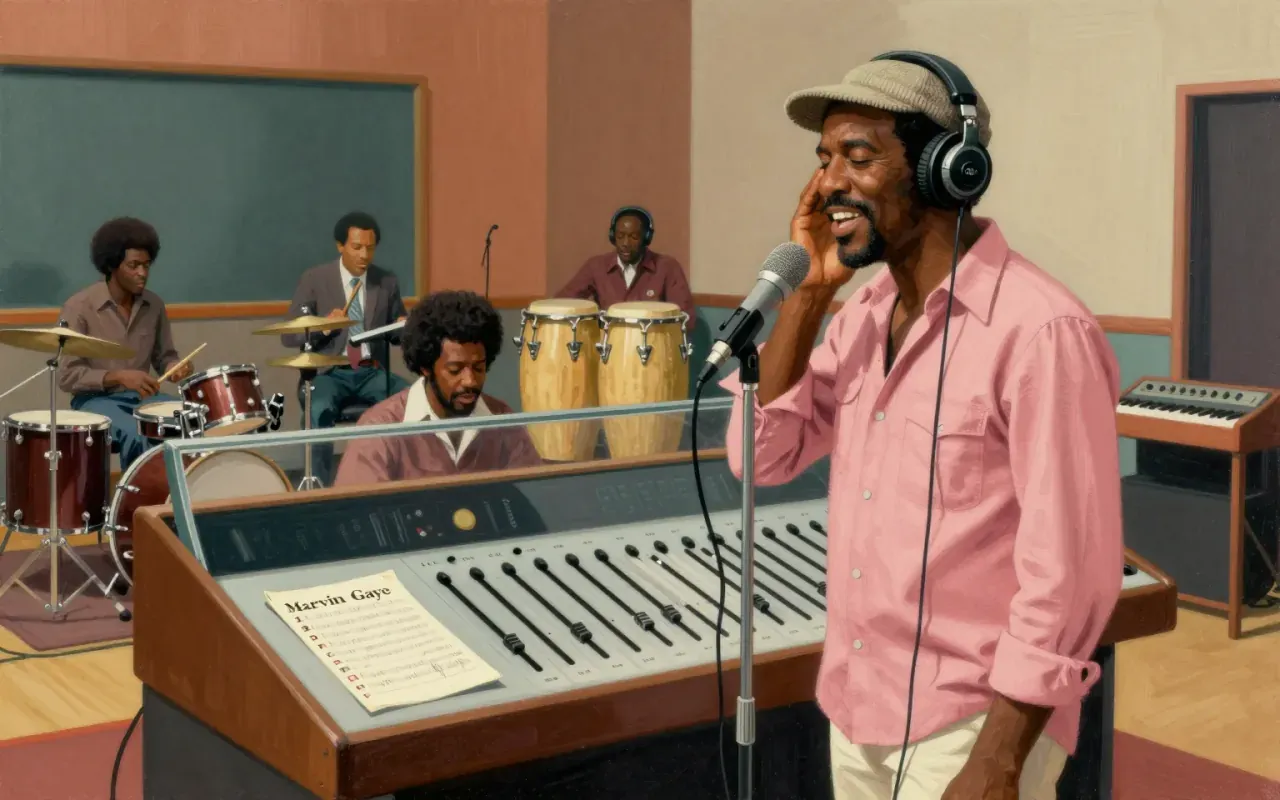
Here, My Dear

Marvin Gaye · 1978

Here, My Dear is a 1978 double album recorded at Marvin Gaye Studios in Los Angeles between 1977 and 1978. It was inspired by the fallout from Gaye’s marriage to Anna Gordy. It was recorded with the intention of remitting a portion of its royalties to her as alimony payments. It performed poorly on the charts and was poorly received. Gaye played all keyboard parts himself. He composed lyrics spontaneously during sessions with only engineer Art Stewart present, developing embryonic melodies into finished lyrics over multiple takes. The album's music is largely midtempo funk, incorporating traditional soul, gospel, doo-wop, and a slight hint of disco. The title track opens the album, and Gaye's tone in the song is described as self-serving, self-justifying, and self-pitying. 'I Met a Little Girl' includes doo-wop-drenched harmonies with its lyrics and music producing a thick mixture of sincerity and sarcasm. 'When Did You Stop Loving Me, When Did I Stop Loving You' abandoned traditional song structure with a discursive mode, without a chorus, with its lyrics expressing different feelings—tenderness, fear, anger, regret.

8:21

Histoire de Melody Nelson

Serge Gainsbourg · 1971

Histoire de Melody Nelson is a 1971 concept album by Serge Gainsbourg, co-written and arranged by Jean-Claude Vannier and produced by Jean-Claude Desmarty. It features funk-style electric guitar and bass guitar, Gainsbourg’s spoken word and Sprechgesang vocals, and lush string and choral arrangements. Personnel include Vic Flick, Big Jim Sullivan, Dave Richmond, Dougie Wright, Jean-Luc Ponty, and Jane Birkin. At just under twenty-eight minutes, its short running time and stylistic consistency give it qualities more in line with an extended play or a single continuous suite.

11:24

Hot Buttered Soul

Isaac Hayes · 1969

Hot Buttered Soul is a landmark Southern soul album that redefined structure, scale, and authorial control in Black popular music. Recorded across Memphis and Detroit in 1969, it features four extended tracks—including a 12-minute 'Walk On By' and an almost 19-minute 'By the Time I Get to Phoenix'—built on live Hammond organ and vocals, conducted by Hayes while performing, and augmented by Detroit-arranged strings and horns. Its production deployed pre-delay reverb to unify geographically split sessions. It established Hayes as a visionary auteur, not just a performer, and remains foundational to soul, R&B, and film scoring.

9:12

II

Boyz II Men · 1994

II is a 1994 Motown album by Boyz II Men. It sold over 12 million copies in the US and won the 1995 Grammy for Best R&B Album. Its sound is defined by high-profile producers — Tim & Bob (five tracks), Babyface (two), Jimmy Jam and Terry Lewis (two) — and Boyz II Men’s songwriting and production on several tracks. More than 20 songs were recorded; most were omitted. The interlude 'Khalil' honours road manager Roderick 'Khalil' Rountree, killed in Chicago in May 1992. No technical or sonic detail beyond these facts is established in the sources.

12:10

Justified

Justin Timberlake · 2002

Justified is a focused, rhythm-first R&B record built in six weeks across four US studios. Its sound is defined by Neptunes’ clavichord-emulating synths, propulsive drum vamps, and live-in-the-moment arrangements inspired by Earth, Wind & Fire and Michael Jackson. It avoids contemporary clichés, foregrounds groove over gloss, and treats R&B as lineage—not trend. It lands where it commits: to feel, to reference, to physicality. It does not reach for conceptual scale or lyrical abstraction. It is worth your time if you listen to records as rooms, not résumés.

10:42

Kaleidoscope

Kelis · 1999

Kaleidoscope is Kelis’s 1999 debut studio album, produced entirely by the Neptunes and released by Virgin Records. It draws from 1970s jazz, disco, soul, R&B, hip hop, urban and rock, and features club-oriented electro beats. Several tracks were designed for dancing. The Neptunes performed instruments and created arrangements. Dave Hummel and Andrew Coleman engineered it. Şerban Ghenea mixed thirteen tracks; Ken 'Duro' Ifill mixed track 10. Kelis cited Sarah Vaughan, Ella Fitzgerald and Dinah Washington as major vocal influences. The album was recorded between mid-1998 and mid-1999.

9:24

Love Deluxe

Sade · 1992

Love Deluxe is a controlled, atmospheric R&B record built on restraint and texture rather than groove or spontaneity.

9:01

Mad Dogs & Englishmen

Joe Cocker · 1970

Mad Dogs & Englishmen is a live double-album recorded during a hastily assembled 1970 US tour. The band — over 20 musicians — was named Mad Dogs & Englishmen by Denny Cordell after the Noël Coward song. Leon Russell recruited most players, many from Delaney & Bonnie. It includes material not from Cocker’s first two studio albums.

12:11

More Songs About Buildings and Food

Talking Heads · 1978

More Songs About Buildings and Food is a record built on restraint: eleven songs, no wasted syllables, no unearned textures. It treats funk as geometry, soul as syntax, and rhythm as architecture. It does not ask to be loved — it asks to be inhabited.

9:34

Never Too Much

Luther Vandross · 1981

Never Too Much is Luther Vandross’s 1981 debut solo studio album on Epic Records, released after he left the group Change. It is mostly composed by Vandross himself. The title track is a self-penned, self-produced post-disco single that topped the Hot Soul Singles chart for two weeks and crossed over to the Billboard Hot 100. Vandross’s rendition of 'A House Is Not a Home' is extended to seven minutes — a deliberate, radical re-arrangement that became a live showstopper. Bassist Marcus Miller plays on many tracks. The album topped the Billboard R&B Albums chart and was certified double-platinum. It earned Vandross his first Grammy nomination for Best New Artist in 1982.

8:36

On How Life Is

Macy Gray · 1999

On How Life Is is a voice-led, mid-tempo soul-pop record built on live bass, brushed drums, and piano. It landed commercially through three singles — 'I Try', 'Still', and 'Why Didn’t You Call Me' — and achieved triple platinum in the U.S., quadruple in the UK. It does not innovate sonically or structurally. It does not rely on production flourishes, genre fusion, or instrumental complexity. Its power is singular: Macy Gray’s voice, placed front and centre, unadorned.

9:30

People Get Ready

The Impressions · 1965

A gospel-influenced 1965 single by The Impressions, composed by Curtis Mayfield, featuring his first guitar break on an Impressions hit and drawing its language and structure from Black American freedom-song tradition and church teaching.

8:14

Portrait of a Legend 1951–1964

Sam Cooke · 2003

The source material contains no verifiable information about the record 'Portrait of a Legend 1951–1964'. It is not listed, described, contextualised, or referenced in any form. Therefore, no factual statement about it can be made.

9:20

Random Access Memories

Daft Punk · 2013

Random Access Memories is Daft Punk’s fourth and final studio album, released 17 May 2013 on Columbia Records. It abandons sampling (except on 'Contact') and minimal electronics in favour of live instrumentation—drums, horns, strings, woodwinds—recorded across Henson, Conway, Capitol, Electric Lady, and Gang Studios between 2008 and 2012. Session musicians including Omar Hakim, Nile Rodgers, Pharrell Williams, and Giorgio Moroder were directed via sheet music and humming—not MIDI or grids. Most vocals were tracked in Paris; rhythm sections in the US. Orchestral parts were recorded for nearly every track but used selectively. The album reflects a shift from futurism to presence and pursues a 'west coast vibe' rooted in Fleetwood Mac, the Doobie Brothers, the Eagles, and Jean-Michel Jarre—not as reference, but as method.

8:12

Rock ’n Soul

Solomon Burke · 1964

A foundational soul record defined by vocal command, rhythmic tension, and theological gravity — not studio craft.

10:50

Songs in A Minor

Alicia Keys · 2001

Songs in A Minor is a piano-led neo soul record rooted in classical technique, recorded across multiple New York-area studios—including Keys’ Harlem bedroom and the Queens basement she converted into KrucialKeys Studios—with minimal production, warm close-miked vocals, and structural clarity. It establishes Keys as a composer who treats piano not as colour but as architecture—and falls short where groove or rhythmic surprise is expected.

9:14

St. Elsewhere

Gnarls Barkley · 2006

St. Elsewhere is a tightly edited, sample-built record that uses vocal immediacy and psychedelic-soul juxtaposition to create impact without overstaying its welcome. Its strength is precision, not sprawl.

11:09

The Diary of Alicia Keys

Alicia Keys · 2003

Alicia Keys’ second album is a tightly controlled pivot into traditional soul — piano-forward, lyrically interior, and commercially unassailable. It lands its strongest ideas early and often, but offers no structural surprises. Its power lies in consistency, not rupture.

9:40

The Dock of the Bay

Otis Redding · 1968

“(Sittin’ on) The Dock of the Bay” is Otis Redding’s final recording — an intentionally atypical, non-R&B song co-written with Steve Cropper, recorded in two sessions at Stax in November and December 1967, and mixed posthumously with seagull and wave sounds per Redding’s request. It features restrained vocals, succinct guitar, no backing vocals, and ends with Redding’s whistle — a deliberate substitution for a fadeout rap. Redding considered it unfinished and planned to re-record it, but died three days after the final session. Released in January 1968, it became his first number-one hit on both the Billboard Hot 100 and R&B charts.

11:04

The Emancipation of Mimi

Mariah Carey · 2005

The Emancipation of Mimi is Mariah Carey’s 2005 pop-soul recalibration — minimal, roomy, Atlanta-made, and deliberately unadorned.

8:58

Wild Honey

The Beach Boys · 1967

Wild Honey is a soul record blending pop and R&B. Recorded mostly at Brian Wilson’s home studio. A deliberate departure from Pet Sounds and Smile. A self-conscious return to rock-band fundamentals.

10:20

You Got My Mind Messed Up

James Carr · 1967

A 1967 soul record defined by vocal immediacy, structural economy, and emotional precision — not myth, not legacy, but sound made in a specific room, with specific tools, at a specific time.

10:46

1999

Prince · 1982

1999 is Prince’s 1982 double LP, his first with the Revolution, defined by synth-and-drum machine-heavy arrangements that codified the Minneapolis sound. It uses ARP Omni, Oberheim OB-SX, OB-X, OB-Xa, OB-8 synths and the Linn LM-1 drum machine. Themes include nuclear anxiety, Computer Age alienation, eroticism, and spiritual gratitude. Its production is tightly controlled, layered, and mechanised—no live drums, no guitar solos, no acoustic piano leads. It landed with urgency, intimacy, rhythmic insistence, theatricality, and groove. It is worth hearing if you want to understand how funk became electronic without losing its body.

11:32

3+3

The Isley Brothers · 1973

3+3 is the Isley Brothers’ 1973 Epic debut and first album with six official members — Ronald, Rudolph, and O'Kelly Isley joined by Ernie Isley, Marvin Isley, and Chris Jasper. It features layered instrumentation including guitars, bass, clavinet, Moog and ARP synthesizers, and percussion, with guest contributions on drums, organ, and congas. Produced by the three eldest brothers and engineered by Malcolm Cecil and Robert Margouleff, it includes the Top 10 hit 'That Lady' and a UK Top 10 cover of 'Summer Breeze'. The album incorporated hard rock, folk-rock, funk, and soulful balladry, and became their breakthrough hit — selling over two million copies.

10:34

A Seat at the Table

Solange · 2016

A Seat at the Table is Solange’s third studio album. Writing began in 2008. Recording spanned 2013 to June 2016 across Long Island, New Orleans, New Iberia and Los Angeles. It was released 30 September 2016. Its sound comes from hour-long improvised tracks built around bass and synth lines, later structured in Louisiana and finished in LA with Raphael Saadiq and Troy Johnson. 'Cranes in the Sky' originated from a 2008 Saadiq instrumental — drums, strings and bass only. Master P narrated interludes drawn from real conversations. Themes include identity, empowerment, grief, healing, rage and self-care. All lyrics were paired with images in a digital art book.

8:57

Acid jazz

A genre named after acid house that refused to sound like it.
10:20

África Brasil

Jorge Ben · 1976

África Brasil is a 1976 album by Jorge Ben, recorded over ten days at Phonogram Studios in Rio de Janeiro with a large ensemble including Admiral Jorge V, fourteen additional instrumentalists and five backing vocalists. Ben replaced his acoustic guitar with an electric guitar during these sessions, influenced by Dadi Carvalho, after swapping instruments following Carvalho’s acquisition of an Ibanez guitar in London. José Roberto Bertrami arranged orchestral parts; Marco Mazzola mixed the album before Philips withdrew him mid-session. The album is described as one of Ben’s most popular, a fusion of funk and samba relying more on electric guitar than previous efforts, and features a remake of 'Taj Mahal'.

10:08

All Directions

The Temptations · 1972

All Directions is a 1972 Motown album by The Temptations, produced by Norman Whitfield. It features layered vocals, timpani, vibes, congas, brass, and basslines from James Jamerson and Bob Babbitt. The group resisted recording 'Papa Was a Rollin’ Stone' and 'Run Charlie Run', both covers with socially charged lyrics. 'Papa' became a

10:43

Back to Black

Amy Winehouse · 2006

Back to Black is Amy Winehouse’s second studio album, released in 2006. It was inspired by 1960s girl groups and soul music, recorded with producers Salaam Remi and Mark Ronson, and backed in the studio by Sharon Jones’s band the Dap-Kings. The 11-track album was completed in five months, with production credits split between Remi and Ronson. Winehouse engaged directly in the process—giving blunt feedback and refining her performances meticulously, even testing vocal takes in her father’s taxi to gauge how they would sound to most listeners. The album’s lead single, 'Rehab', was produced by Ronson and became a global hit, praised for its originality and soul-referencing production without imitation. The record achieved massive critical and commercial success, winning five Grammy Awards in 2008—including Record of the Year and Song of the Year for 'Rehab'—and was later preserved in the US National Recording Registry in 2025. Its legacy endures as one of the best-selling and most influential albums of the 21st century, noted for its authentic fusion of retro soul aesthetics and deeply personal songwriting. The making of the record reflects Winehouse’s artistic control, collaborative precision, and stylistic clarity—grounded in genre homage but executed with singular vocal and lyrical authority. It stands as a definitive artifact of her artistry, distinct from the turbulence that later overshadowed her public life. The album’s enduring cultural weight is affirmed by its inclusion in major institutional archives and critical lists, underscoring its significance beyond sales or celebrity narrative. Its creation remains anchored in deliberate musical choices: the selection of vintage-inspired arrangements, the integration of live soul instrumentation, and the tight, focused studio collaboration that shaped its unmistakable sound. This coherence—between influence, execution, and voice—makes Back to Black not just a milestone in Winehouse’s career but a landmark in modern popular music production. Its preservation and continued reappraisal signal its status as a canonical work whose formal and emotional integrity withstands time and context. The record’s power lies in its synthesis: the discipline of craft meeting raw autobiographical expression, all wrapped in a sonic world both nostalgic and urgently new. That duality—of studied reference and unfiltered presence—is what gives Back to Black its lasting resonance and distinguishes it within the broader landscape of 2000s pop and soul revivalism. It is less a pastiche than a reclamation—of sound, of agency, of voice—and its making reveals Winehouse not as a passive inheritor of tradition but as an active, exacting architect of it. The album’s cohesion, from songwriting to arrangement to vocal delivery, testifies to a rare convergence of vision, skill, and environment—one that cannot be replicated, only revered. In this light, Back to Black is not merely a record but a statement: about what soul means when filtered through contemporary consciousness, and how authenticity is forged—not found—in the studio, in the writing room, and in the quiet, repeated act of listening back, again and again, until it feels true. Its endurance is not accidental; it is earned, note by note, decision by decision, in the space where influence meets intention. And that space—where Winehouse stood, microphone in hand, Dap-Kings behind her, Ronson and Remi at the boards—is where the record lives, unbroken and undeniable. It remains, above all, a testament to the possibility of making something timeless in real time—without compromise, without concession, and with absolute fidelity to feeling. That fidelity is its final, unassailable claim on our attention—and on history. So the record does more than document a moment: it defines one. Not through spectacle, but through substance. Not through volume, but through velocity of meaning. Not through trend, but through truth-telling dressed in Motown gloss and London grit. And in that balance—between polish and pulse, between memory and immediacy—lies the reason Back to Black continues to speak, decades later, with undimmed clarity and force. It is, simply, the sound of an artist arriving fully formed—and then going further. Further into herself. Further into the music. Further into the light, even as shadows gathered. And that journey—recorded, mixed, mastered, released—is why the album remains not just important, but essential. Essential to understanding Winehouse. Essential to understanding soul in the 21st century. Essential to understanding what happens when talent, timing, and truth align—and produce something that lasts. That is the record’s quiet, unshakeable achievement. And that is why it endures. Because it was made with care. With courage. With craft. And with a voice that could hold the weight of all three—and still sing.

11:22

Bad

Michael Jackson · 1987

Bad is Michael Jackson’s seventh studio album, released 31 August 1987. It was his final collaboration with Quincy Jones. Jackson composed and co-produced all but two tracks. The album used digital synthesizers—including FM synthesis, the Fairlight CMI, and the Synclavier PSMT—layered to create new sounds. It incorporated guitars, organs, drums, bass, percussion, saxophones, washboards, and digital guitars. Recording occurred across two workflows: Jackson’s 'B team' developed demos at his Hayvenhurst home studio from 1985–1986; the 'A team' (Jones and engineer Bruce Swedien) completed tracks at Westlake Studios. Sessions were extremely intense, with the team often working for days without rest. Bad was the first album to produce five US Billboard Hot 100 number-one singles: 'I Just Can't Stop Loving You', 'Bad', 'The Way You Make Me Feel', 'Man in the Mirror', and 'Dirty Diana'. 'Smooth Criminal' reached number seven. The album debuted at number one on the Billboard 200 and remained there for six weeks.

9:02

Baduizm

Erykah Badu · 1997

Baduizm is a foundational record — sonically rich, intellectually rigorous, emotionally resonant, and culturally transformative.

8:35

Broken beat

Broken beat didn’t reinvent rhythm—it fractured it on purpose, then left the pieces in West London.
9:32

Brown Sugar

D’Angelo · 1995

Brown Sugar is D’Angelo’s 1995 debut. It launched neo-soul — a term coined soon after by his manager Kedar Massenburg. It features the original title track, a cover of Smokey Robinson’s 'Cruisin’', and 'Lady', which reached the top ten of the Billboard Hot 100. It was certified platinum and received critical acclaim.

10:16

C’est Chic

Chic · 1978

C’est Chic is Chic’s second studio album, released in 1978 on Atlantic Records. It contains 'Le Freak', which topped US Hot 100, R&B, and Club Play in October 1978, and 'I Want Your Love', which reached number 5 on US R&B, number 7 on US Pop, and number 4 in the UK. The European version was originally titled Très Chic, featured a more risqué cover, and had a different track listing before being withdrawn. The Globe and Mail described it as 'a sleekly elegant variation' of disco; the Los Angeles Times judged that, aside from 'Le Freak', the album consists of pedestrian disco pieces and plodding R&B ballads. All songs were written by Bernard Edwards and Nile Rodgers unless noted otherwise.

9:14

channel ORANGE

Frank Ocean · 2012

Channel Orange is Frank Ocean’s 2012 debut studio album, written in two weeks with producer Malay and recorded at EastWest Studios in Hollywood. It abandons sampling in favour of live instrumentation — keyboards, guitars, layered vocals, ambient noise and film dialogue — and draws on soul, funk, jazz and electronic music. Its songs tell specific stories about unrequited love, class, drugs and identity, anchored by precise sonic choices: falsetto, room tone, abrupt silences, and unconventional structures. It won Best Urban Contemporary Album at the 55th Grammys and was named best album of 2012 in HMV’s Poll of Polls.

13:05

CrazySexyCool

TLC · 1994

CrazySexyCool is a tightly constructed R&B album that uses hip hop soul textures, layered vocals, and precise studio craft to explore adult romance and self-possession. Its strength lies in restraint: fewer rap verses, more space for groove and tone, and lyrics that observe rather than preach. It is not revolutionary. It is deliberate.

9:54

Curtis

Curtis Mayfield · 1970

Curtis is Curtis Mayfield’s 1970 solo debut, produced by Mayfield and released on Curtom Records. It departs from The Impressions’ pop-soul sound toward funk and psychedelic-influenced arrangements, with a harder-edged sonic character. It features politically charged lyrics and stylistic duality — hard funk versus soft soul — realised through Mayfield’s self-directed vision and collaborative studio execution with a large ensemble. It was a top-20 commercial and critical success, won the 1972 Prix Otis Redding, and ranks No. 275 on Rolling Stone’s 500 Greatest Albums. It precedes and is compared to Marvin Gaye’s What’s Going On for its engagement with social change. No source provides details about instruments, tempos, rooms, mics, or specific production techniques.

11:02

Diamond Life

Sade · 1984

Diamond Life is Sade’s debut studio album, recorded in six weeks at Power Plant Studios in London in 1983. Fifteen songs were written collectively by the band—except 'Smooth Operator', co-written solely by Sade Adu and Ray St. John—and produced by Robin Millar. The band developed the album’s musical direction collaboratively, rehearsing each song in detail before recording. The album blends soul, jazz, and sophisti-pop, with lyrics focused on love; its instrumentation includes prominent basslines, smooth drums, subtle guitar, brass, and keyboards. Specific recording details include using a real piano and Fender Rhodes painstakingly synced, manual mixing for 'Cherry Pie' with six people at the desk simultaneously, and Adu composing 'When Am I Going to Make a Living' on a cleaning ticket during financial hardship. The album opens with 'Smooth Operator' and closes with a cover of Timmy Thomas’s 'Why Can't We Live Together'.
9:18

Dirty Mind

Prince · 1980

Dirty Mind was composed partly on tour while opening for Rick James, recorded in Prince’s home basement studio in May–June 1980 with Prince performing nearly all instruments and engineering under the alias Jamie Starr, featuring a raw, demo-like aesthetic, clean production, and a fusion of funk, new wave, R&B, dance, and punk rock — and it is the only Prince album without a slow jam.

10:30

Dusty in Memphis

Dusty Springfield · 1969

Dusty in Memphis is a 1969 album recorded at American Sound Studio in Memphis and finished in New York. It is Dusty Springfield’s first collaboration with outside producers — Jerry Wexler, Tom Dowd, and Arif Mardin — and her first project built around a rhythm track.

9:49

Faith

George Michael · 1987

Faith is a studio-built pop record that replaces live-band dynamics with drum-machine precision, overdubbed textures, and total authorial control. It landed as a commercial and critical phenomenon — but its sound is deliberate, isolated, and repeatable, not spontaneous or communal.

11:48

Fear of Music

Talking Heads · 1979

Fear of Music was recorded live in two days in Chris Frantz and Tina Weymouth’s Long Island City loft. Brian Eno co-produced and applied electronic treatments after the fact. David Byrne’s lyrics fixate on urban isolation and unnamed dread. The sound merges post-punk rock and funk. The recording environment — raw, wired, untreated — defines the album more than any instrument or melody.

9:39

From Elvis in Memphis

Elvis Presley · 1969

From Elvis in Memphis is Elvis Presley’s tenth studio album, recorded at American Sound Studio in Memphis in January and February 1969 under producer Chips Moman with the Memphis Boys. It marked his return to non-soundtrack albums after fulfilling his MGM film contract and followed the success of his 1968 NBC television special. The sessions were deliberately chosen for their southern soul sound, resulting in a 'country soul' style characterized by country song selections and frequent use of the dobro. Though RCA’s policy required recording in its own studios, the label sent personnel to American Sound. Presley began recording while nursing a cold, and the sessions included contributions from American Sound engineer Ed Kollis on harmonica. The album features a blend of soul, country, gospel, and blues, with arrangements emphasizing the rhythm section and incorporating strings, brass, and syncopation. Twelve tracks were selected from thirty-four recorded, including standout performances like 'In the Ghetto' and 'Suspicious Minds'.

11:26

Future Nostalgia

Dua Lipa · 2020

Future Nostalgia is a tightly wound, rhythm-first pop record built for motion. Its sound is defined by live-sounding funk bass, crisp synth stabs, and lush strings—all arranged with surgical consistency. It draws from 1970s–2000s pop textures but never fractures them. It lands where it aims: in the hips, not the head.

10:20

Going to a Go‐Go

Smokey Robinson and The Miracles · 1965

A 1965 Tamla album assembled across 1963–1965 at Hitsville USA in Detroit. Six tracks predate the album’s release. Smokey Robinson produced and sang lead; Pete Moore arranged vocals and co-wrote seven songs; Marv Tarplin played guitar on three tracks; The Funk Brothers and Detroit Symphony Orchestra provided instrumentation. Four singles charted Top 20 on Billboard Hot 100 and Top 10 on R&B. Released under the name Smokey Robinson and the Miracles. Listed in Rolling Stone’s 500 Greatest Albums.

10:31

Green Onions

Booker T. & the M.G.s · 1962

Green Onions is the sound of Memphis in summer 1962: dry, direct, unvarnished. Four players. One room. No safety net.

10:08

Greetings From L.A.

Tim Buckley · 1972

Tim Buckley's 1972 album Greetings From L.A. is a funk record made after he disbanded his Starsailor ensemble and assembled a new funk band in 1970. It features sexually frank lyrics that hindered radio airplay and alienated his earlier hippie fan base, though he retained a cult following.
14:25

Honky Château

Elton John · 1972

Honky Château is Elton John’s fifth studio album, recorded at Château d'Hérouville in France and released on 19 May 1972. It marks the first full-album studio collaboration with John's touring band — Dee Murray, Nigel Olsson, and newly permanent member Davey Johnstone — and features distinctive musical elements including a New Orleans funk opener with horn arrangements, the debut of the trio's trademark backing vocals on 'Rocket Man', and a remastered alternate version of 'Slave' added in 1995. The album was critically acclaimed for its eclecticism and focus, and it launched John's streak of US number-one albums.

11:28

I Never Loved a Man the Way I Love You

Aretha Franklin · 1967

The album was recorded partly at FAME Studios in Muscle Shoals, Alabama, and partly at Atlantic Studios in New York after an on-site altercation. The title track and 'Do Right Woman' began in Muscle Shoals with the Muscle Shoals Rhythm Section; both were completed in New York with those same musicians flown in. A tape-speed discrepancy between studios caused audible tuning inconsistencies, notably a faintly sharp piano against the Muscle Shoals rhythm bed.

8:56

Inspiration Information

Shuggie Otis · 1974

Inspiration Information is Shuggie Otis’s third and final album for Epic Records, released in 1974 after nearly three years of solo writing, arranging, and recording. Otis produced it and performed most of its instrumental parts — including guitar, bass, drums, organ, piano, electric piano, vibraphone, percussion, and analog drum machines. Horns and some strings were played by session musicians. The album was dropped by Epic due to commercial underperformance despite critical admiration and stylistic innovation.
9:56

Just As I Am

Bill Withers · 1971

Just As I Am is a 1971 soul debut defined by acoustic guitar, vocal clarity, and disciplined arrangement. It was recorded in three sessions due to funding constraints, produced by Booker T. Jones, and features Stephen Stills on lead guitar, Al Jackson Jr. and Jim Keltner on drums, and Bobbye Hall on percussion. Its sound is dry, warm, and immediate — no reverb, no overdubs beyond live takes, no embellishment. It establishes Withers as a writer of quiet emotional precision, not grand gesture. It falls short only if you expect fireworks — there are none. This is music built to last because it refuses to shout.

11:16

Let’s Stay Together

Al Green · 1972

Al Green’s Let’s Stay Together (1972) is his fourth studio album, recorded at Royal Recording Studio in Memphis, Tennessee, and produced by Willie Mitchell. It launched his classic period, yielded his first number-one pop and R&B hit, and became his first gold-certified album. The Hi Rhythm Section, horn ensemble, and tightly arranged background vocals define its sound — precise, warm, and unhurried. It is soul music as craft, not spectacle.

11:04

Live at the Harlem Square Club, 1963

Sam Cooke · 1985

Live at the Harlem Square Club, 1963 is a live album recorded on January 12, 1963, at the Harlem Square Club in Miami — a small, historically Black venue in Overtown — and released by RCA Records in June 1985 after being shelved for over two decades. RCA found the recordings too loud, raw and raucous — inconsistent with the international pop star image they were cultivating for Cooke — and shelved them. Executive Gregg Geller rediscovered the tapes in 1985 and issued the album that year. Three mixes exist: the 1985 issue, a version included on the 2000 box set The Man Who Invented Soul, and a 2005 remaster from RCA.

10:12

Modern Sounds in Country and Western Music

Ray Charles · 1962

Modern Sounds in Country and Western Music is a studio album by Ray Charles, recorded in February 1962 at Capitol Studios in New York City and United Studio B at United Western Recorders in Hollywood. It was released in March 1962 by ABC-Paramount Records. The album features covers of country standards selected by A&R man Sid Feller from approximately 250 tapes sourced from Acuff-Rose and Hill & Range Songs. Arrangements were handled by Gerald Wilson, Gil Fuller, and Marty Paich, with Hank Crawford on alto saxophone. Charles directed arrangements via voice-and-piano demos and rewrote at least one himself. The album’s sound is defined by piano-led ballads, cushioned countrypolitan strings, and West Coast jazz-inflected big-band charts. It helped bring country music into the musical mainstream and became Charles’s first album to top the Billboard 200. His version of ‘I Can’t Stop Loving You’ topped the Pop chart for five weeks and reached No. 1 on the R&B chart for ten weeks.

9:57

Music of My Mind

Stevie Wonder · 1972

Music of My Mind is the pivot point: the moment Stevie Wonder swapped Motown’s assembly line for a one-man synth lab. It is not warm. It is not nostalgic. It is precise, integrated, and politically aware — and it changed how soul records could be made.

12:50

New Boots and Panties!!

Ian Dury · 1977

New Boots and Panties!! is Ian Dury’s 1977 debut solo album on Stiff Records. It was written nearly a year earlier at Oval Mansions in Kennington, in partnership with Chas Jankel, and co-written on some tracks with Steve Nugent. It followed Dury’s August 1977 Stiff debut single ‘Sex & Drugs & Rock & Roll’. It was recorded in mid-1977: demo tapes in April at Alvic Studios in Wimbledon, final tracking one week later at the Workhouse Studio. Blackhill Management funded the £4,000 budget.

13:08

No Other

Gene Clark · 1974

No Other is Gene Clark’s 1974 Asylum Records album, produced by Thomas Jefferson Kaye in Los Angeles. Thirteen or fourteen songs were demoed acoustically; nine were recorded with a large ensemble of elite session musicians — including members of The Section and the Allman Brothers Band — and backing singers. Kaye’s production features intricate vocal harmonies and heavily overdubbed, vertiginous arrangements intended as his 'answer to Brian Wilson and Phil Spector'. The title track has a pronounced R&B/funk feel, often attributed to Sly Stone’s presence. Clark composed much of the album while gazing at the Pacific Ocean from his home’s picture window. Though critics praised its ambition and unconventional arrangements — which anticipated later innovations by Fleetwood Mac members — the album stalled at No. 144 on the Billboard chart due to high production costs (over $100,000), minimal promotion, and its demanding sonic density. Its legacy grew over time, culminating in a 2013 tribute performance and a 2019 remastered/remixed reissue.

10:02

Off the Wall

Michael Jackson · 1979

Off the Wall is Michael Jackson’s fifth solo album, first as an adult, first with Epic Records, and first collaboration with Quincy Jones. Recorded between December 4, 1978, and June 3, 1979, it was conceived as a deliberate departure from his Jacksons output and Motown-era constraints. Rhythm tracks and vocals were recorded at Allen Zentz Recording, horns at Westlake Audio, and strings at Cherokee Studios in West Hollywood. Bruce Swedien mixed the album at Westlake Audio; A&M Recording Studio in Los Angeles mastered it. Jackson co-produced the songs he wrote. He insisted on including all three Rod Temperton compositions and secured Tom Bahler’s 'She’s Out of My Life' after hearing it years earlier. The album established Jackson as a solo performer and marked his transition from bubblegum pop to more complex sounds. It produced four top-10 US singles — 'Don’t Stop ’til You Get Enough', 'Rock With You', 'Off the Wall', and 'She’s Out of My Life' — with the first two reaching number one. It reached number three on the Billboard 200 and sold over 20 million copies worldwide. Jackson won the 1979 Grammy Award for Best Male R&B Vocal Performance for 'Don’t Stop ’til You Get Enough'.

11:09

Otis Blue / Otis Redding Sings Soul

Otis Redding · 1965

Otis Blue / Otis Redding Sings Soul is Redding’s third studio album, recorded mostly in a single 24-hour session on July 9–10, 1965, in Memphis. Released in September 1965, it includes Redding’s 1965 cover of 'A Change Is Gonna Come'. Christgau called it 'the first great album by one of soul's few reliable long-form artists'.

9:22

Rapture

Anita Baker · 1986

Rapture is Anita Baker’s second studio album, released in March 1986 on Elektra Records after she secured creative control and production authority under her new contract. It followed initial slow sales of the debut single 'Watch Your Step' but gained momentum with the mid-tempo ballad 'Sweet Love', ultimately yielding four hit singles and two Grammy Awards in 1987. The album was promoted through The Rapture Tour and later released on home video as A Night of Rapture. It sold over eight million copies worldwide by 1988, five million in the United States alone. Baker's involvement in production and song selection reflects her expanded artistic autonomy at Elektra following her legal departure from Beverly Glen. No details about recording sessions, musicians, studios, or technical decisions are provided in the source text. The document emphasizes commercial performance, chart positions, and award outcomes rather than musical craft or studio process.

10:48

Searching for the Young Soul Rebels

Dexys Midnight Runners · 1980

Searching for the Young Soul Rebels is Dexys Midnight Runners’ debut studio album, recorded over 12 days at Chipping Norton Recording Studios in April 1980 and released in July 1980. Produced by Pete Wingfield, it features the UK No. 1 single 'Geno' and bears the band’s 'Late Night Feelings' imprint. Its sleeve uses a photograph of a Belfast Catholic boy carrying his belongings after moving from his home during the Troubles. The album’s sound is an energetic mix of pop, Northern soul and punkish attitude—brassy, urgent, and deliberately unpolished.

9:58

Sex Machine Today

James Brown · 1975

Sex Machine Today is James Brown’s first conscious engagement with disco — a functional, dry, rhythm-locked record made as his chart presence collapsed. It lands where repetition meets precision. It fails where spontaneity and space once ruled.

9:34

Some Girls

The Rolling Stones · 1978

Some Girls is a tightly wound, reactive rock record — bright, aggressive, and uncluttered. It trades myth for muscle, and legacy for immediacy.

12:03

Stand!

Sly and the Family Stone · 1969

Stand! is a live-wire document of funk’s emergence—not a polished statement, but a working argument made in real time, in one room, with shifting roles and urgent ideas.

11:28

Still Bill

Bill Withers · 1972

Still Bill is Bill Withers’ second studio album, recorded during a hiatus from touring at Record Plant in Los Angeles with musicians from the Watts 103rd Street Rhythm Band. It features soul, funk, and blues rhythms supporting lyrically mature explorations of human nature, emotion, and sex, and showcases Withers’ self-production alongside key instrumental contributions from Ray Jackson, Benorce Blackmon, Melvin Dunlap, James Gadson, and Bobbye Hall. The album includes iconic tracks like 'Lean on Me' and 'Use Me', and its restrained, rhythmically driven aesthetic has been widely acclaimed as a defining work of 1970s R&B. It was released on May 1, 1972, through Sussex Records, and certified gold by the RIAA on September 7, 1972.

12:19

Talking Book

Stevie Wonder · 1972

A keyboard-led pivot from Motown’s strings to synthesised soul—tight, live, and decisive.

11:22

That’s the Way of the World

Earth, Wind & Fire · 1975

That’s the Way of the World is Earth, Wind & Fire’s 1975 studio album, co-produced by Maurice White and Charles Stepney, recorded and mixed over nine months at Hollywood Sound Recorders, and mastered at Kendun Recorders. It began as a commissioned soundtrack for Sig Shore’s film of the same name; the band disliked the film and released the album ahead of its premiere. Musical arrangements were jointly created by the band and Stepney. George Massenburg engineered all eight tracks. The record establishes a model of collaborative authorship—not mythmaking—through documented roles, timelines, and locations.

10:23

The Genius of Ray Charles

Ray Charles · 1959

A 1959 Atlantic big band album. First Top 40 for Ray Charles. Two sides: big band swing (Side one) and string ballads (Side two). Arranged by Quincy Jones, Ernie Wilkins, Ralph Burns and others. Features tributes to Louis Jordan. Vocal focus — especially on 'Come Rain or Come Shine'. Peaked at No. 17 on Billboard.

8:33

The James Brown Show: Live At The Apollo

James Brown · 1963

The record is 'Live at the Apollo', recorded live at the Apollo Theater on October 24, 1962, and released in June 1963. James Brown financed it himself after label head Syd Nathan refused, believing live albums would not sell. It became a massive hit: number two on the Top LPs chart, over a million copies sold, 14 months on the charts. Brown, the Famous Flames, and his band had first appeared at the Apollo on April 24, 1959, opening for Little Willie John. No details about sound, instrumentation, arrangement, or production are provided in the source material.

10:53

The Lexicon of Love

ABC · 1982

A studio-crafted pop record that merges disco rhythm, post-punk economy, and Broadway lyricism — built on orchestral arrangement and early digital texture, not personality or grit.

8:02

The World Is a Ghetto

War · 1972

The World Is a Ghetto is War’s fifth studio album, released in late 1972 on United Artists Records. It synthesises soul, funk, blues, and psychedelia with production likened to Curtis Mayfield’s Curtis and Marvin Gaye’s What’s Going On. Its cover—a flat-tyred Rolls-Royce in a ghetto—uses a blue-and-black palette to reflect its melancholy character. Critics noted its conceptual ambition but divided on pacing: Gordon Fletcher praised its mastery in communicating ghetto life; Robert Christgau dismissed it as 'blackstrap-rock'. It was originally issued in quadraphonic 8-track and reissued in Dolby Atmos for its 50th anniversary.

8:58

There’s No Place Like America Today

Curtis Mayfield · 1975

There’s No Place Like America Today is a 1975 Curtis Mayfield album that trades the thematic rigour of Back to the World for a series of grounded, mid-tempo soul statements about fatigue, faith, and economic strain. Its sound is clean, Chicago-rooted, and instrumentally specific—bass, wah guitar, horns, strings—but lacks a unifying production idea or narrative arc. It appears in film contexts far removed from its origin: 'Billy Jack' in Daft Punk’s Electroma, 'So in Love' across four adaptations spanning 56 years. It rewards attention to lyric and groove, not myth or momentum.

10:32

Voodoo

D’Angelo · 2000

Voodoo is D'Angelo’s second studio album, released in 2000 on Virgin Records after EMI’s absorption. Critics called it a 'masterpiece' and his greatest work. It debuted at number one on the Billboard 200 with 320,000 first-week US sales, remained on the chart for thirty-three weeks, and sold over 1.7 million copies in the US by 2005. It won the 2001 Grammy Award for Best R&B Album, shared with engineer Russell Elevado. Executive producer was Dominique Trenier. Singles 'Devil's Pie' and 'Left & Right' peaked at

10:47

What’s the 411?

Mary J. Blige · 1992

A foundational hip-hop soul record built on sampling, vocal intimacy, and declarative authenticity.

8:21

Young Americans

David Bowie · 1975

Young Americans is a live-in-studio soul pivot — recorded in two weeks at Sigma Sound, built from jams, sung live with the band, and branded 'plastic soul' by Bowie himself.

10:59

Amazing Grace

Aretha Franklin · 1972

A live gospel album recorded over two nights in a Los Angeles Baptist church in January 1972, featuring Aretha Franklin, Rev. James Cleveland, and the Southern California Community Choir. Piano, choir, claps, stomps, and Franklin’s voice — unvarnished, unrehearsed, unseparated from the room. No studio polish. No overdubs except one track moved for vinyl length. Reinterprets gospel standards — including Mahalia Jackson’s 'How I Got Over' — as living tradition, not museum piece. Filmed for a concert film released 46 years later.

11:19

Aquemini

OutKast · 1998

Aquemini is OutKast’s third studio album, released 29 September 1998. It was recorded primarily at Bosstown and Doppler Studios in Atlanta using live instrumentation, rotating session musicians, and extended jam-based composition. Big Boi and André self-produced most tracks, drawing on soul, trip hop, and electro textures — and reggae, via André’s constant listening to Bob Marley. The title merges their zodiac signs. It was certified double platinum and reached number two on the Billboard 200.

10:23

Arrival

ABBA · 1976

Arrival is ABBA’s fourth studio album, recorded between August 1975 and September 1976 at Metronome and Glen studios in Stockholm. It produced three major international singles — 'Dancing Queen', 'Money, Money, Money', and 'Knowing Me, Knowing You' — each defined by precise studio execution and clear emotional framing. The album reached number one in the UK, Australia, and parts of Europe, and number three in Canada and Japan.
10:28

Call Me

Al Green · 1973

Call Me is Al Green’s sixth album, released in April 1973 — though one source says July 18 — and produced by Green and Willie Mitchell. It emerged from Green’s long partnership with Mitchell and the Hi Rhythm Section. Charles Hodges plays Hammond organ and piano. Jack Hale Sr. plays trombone. Charles Chalmers arranges horns and sings background vocals. Howard Grimes drums. Leroy Hodges plays bass. The room is tight, dry, and close-miked — no reverb tail, no bleed between instruments. The three top-10 singles land: 'Call Me (Come Back Home)', 'Here I Am (Come and Take Me)', and 'You Ought to Be with Me'. Each uses the same tight rhythm bed, layered background vocals, and Green’s clipped, urgent phrasing — all anchored by Hodges’ Hammond organ stabs and Grimes’ drum pocket. It does not break from the Green-Mitchell template. There are no new textures, no structural risks, no instrumental solos, no lyrical abstraction. The groove stays locked. The vocal delivery stays contained. Devotion as discipline. Longing as ritual. Love as a vow repeated until it sticks. The lyrics circle return, apology, and presence — never confession, never explanation. People who want to hear how a signature sound is maintained, not reinvented. Not for those seeking rupture, expansion, or rawness — this is polished, rehearsed, repeatable. Yes. It holds up as a precise, controlled exercise in Memphis soul craft — not a leap forward, but a refinement of what Green and Mitchell had already built.

10:37

Can’t Get Enough

Barry White · 1974

Can’t Get Enough (1974) is Barry White’s breakthrough album — defined by two signature hits: “Can’t Get Enough of Your Love, Babe”, his first US number one on the Billboard Hot 100, and “You’re the First, the Last, My Everything”, which topped the UK charts.

9:26

Disco Inferno

The Trammps · 1976

Disco Inferno is a 1976 Philadelphia soul-disco record by The Trammps, produced by MFSB mainstays Ronnie Baker, Norman Harris and Earl Young, and co-written by MFSB arranger Ron Kersey. Its title track was inspired by the 1974 film The Towering Inferno. A Dolby noise reduction error during mixdown — later corrected by engineer Jay Mark — gave it an unusually wide dynamic range, making its kick drum and staccato strings hit with uncommon physical force. It landed on the Grammy-winning Saturday Night Fever soundtrack in 1977. The record is not subtle, not ambient, not ironic. It is urgent, rhythmic, and built for motion.

10:38

Exodus

Bob Marley & The Wailers · 1977

Exodus is a reggae album recorded in London in early 1977 by Bob Marley & The Wailers, following their relocation after an assassination attempt in Kingston. Its production is laid-back, featuring pulsating bass beats, piano, trumpet and guitar. It departs from cryptic storytelling in favour of clear themes: religious politics in the first half, making love and keeping faith in the second. Musically, it fuses blues, soul and British rock beneath a reggae façade — sounding unlike contemporaneous Jamaican reggae. The title and title track respond to Michael Manley’s campaign slogan ‘We Know Where We’re Going’.

9:42

Fresh

Sly & the Family Stone · 1973

Fresh is Sly & the Family Stone’s 1973 album, made amid personnel losses and Sly’s escalating cocaine use. It follows There’s a Riot Goin’ On. It contains a track purportedly sourced from a 1968 outtake.

10:23

Funkentelechy vs. the Placebo Syndrome

Parliament · 1977

Funkentelechy vs. the Placebo Syndrome is Parliament’s sixth studio album, released November 28, 1977, on Casablanca Records. It is a loose concept album set within the P-Funk mythology warning of the 'Placebo Syndrome' — consumerism and disco music, which George Clinton viewed as a crass commercialized variant of funk. The album features layered vocal performances, synthesizer-heavy arrangements (especially on 'Flash Light'), and collaborative guitar work across multiple tracks. 'Flash Light' became an R&B number one single, built around a prominent Minimoog bass line played by Bernie Worrell. The original vinyl release included a 22″×33″ poster of Sir Nose D'Voidoffunk and an 8-page comic book explaining the concept — both illustrated by Overton Loyd. Vocalists include George Clinton, Ray Davis, Glenn Goins, Garry Shider, Debbie Wright, Jeanette Washington, Lynn Mabry, Dawn Silva, Cordell Mosson, and Mallia Franklin (though Franklin is not listed on the liner notes). Guitarists include Michael Hampton, Glenn Goins, Garry Shider, and Phelps Collins (on 'Flash Light'). 'Sir Nose d'Voidoffunk (Pay Attention – B3M)' quotes 'Baa, Baa, Black Sheep' and 'Three Blind Mice', with altered lyrics referring to drug use.

9:00

Get Up Offa That Thing

James Brown · 1976

A live-in-studio funk single that lands like a command. Recorded in two takes. No overdubs. No pause. No mercy. It is urgent, lean, and tax-avoidant.

10:13

Let’s Take It to the Stage

Funkadelic · 1975

Funkadelic’s 1975 album Let’s Take It to the Stage is a funk rock record defined by its porous studio ethos, uncredited guitar fire, and deliberate tonal whiplash — from blunt sexual monologue to baroque organ quotation. It landed commercially like no prior Funkadelic release, but its power lies in instability, not polish.

9:08

Love to Love You Baby

Donna Summer · 1975

A foundational disco record built on repetition, restraint, and vocal embodiment — not songwriting.
8:56

Midnight Star

Midnight Star · 1988

Midnight Star (1988) is a post-breakout album with no documented commercial performance, stylistic departure, or critical repositioning. It relies on the same R&B/funk/vocoder foundation established by No Parking on the Dance Floor (1983), but none of its tracks charted, none received significant airplay, and none are cited as defining the band’s identity.
10:00

Mothership Connection

Parliament · 1975

Mothership Connection is a 1975 Parliament concept album unified by an outer-space theme. It is the first Parliament album to feature Maceo Parker and Fred Wesley. It was conceived by George Clinton.

10:29

One Nation Under a Groove

Funkadelic · 1978

A functional, tightly wound funk record that trades psychedelic sprawl for groove discipline — built on fuzz, banjo, and Junie Morrison’s keys.

11:08

Risqué

Chic · 1979

Risqué is a studio-built rhythm document — not a song cycle, not a concept, not a statement. It is a demonstration of how much can be done with three instruments, four microphones, and one room.

11:02

Shaft

Isaac Hayes · 1971

A double-album soundtrack composed by Isaac Hayes for the 1971 film Shaft. Mostly instrumental, written in early 1971 in response to raw footage, recorded over three days, then re-recorded at Stax Studios for richer sound.

11:06

Standing on the Verge of Getting It On

Funkadelic · 1974

Standing on the Verge of Getting It On is Funkadelic’s sixth studio album, released on Westbound Records in July 1974. It features the return of guitarist Eddie Hazel after a year in jail. Hazel co-wrote all songs, but most credits went to his mother, Grace Cook, to avoid publishing contract issues. Lyrics take a backseat to jamming. Hazel and Ron Bykowski trade lead guitars on 'Red Hot Mama', where Hazel also shares lead vocals with George Clinton. Their jam was extended in the studio into the B-side 'Vital Juices'. This was among Hazel’s last major contributions to P-Funk.

8:59

undun

The Roots · 2011

Undun is a reverse-chronological hip-hop concept album about Redford Stevens, a fictional man whose life ends before it begins. Recorded in Philadelphia and New York City, produced by Questlove, it uses neo soul and indie textures played live by The Roots’ full band—including sousaphone, guitar, and keyboards. Guest rappers and vocalists appear, but never as decoration: each voice marks a pivot in Redford’s narrowing path. It refuses catharsis. It refuses explanation. It insists the tragedy is structural—not personal.

12:10

Young, Gifted and Black

Aretha Franklin · 1972

A tightly constructed studio statement from Franklin’s commercial and creative peak — rooted in Miami, built by Wexler/Dowd/Mardin, anchored by originals and reframed covers.

10:00

Larry Levan

Larry Levan didn’t spin records—he conducted space, time, and feeling.
13:00

Head Hunters

Herbie Hancock · 1973

Assembled after three increasingly abstract Mwandishi records, Head Hunters strips Hancock's sound down to bass, drums, reeds and Clavinet, turning a fifteen-minute groove into jazz's best-selling record of its era.

13:00

Innervisions

Stevie Wonder · 1973

Recorded largely single-handed with the TONTO synthesizer rig and released three days before the car crash that nearly ended his career, Innervisions finds Stevie Wonder swapping love songs for reportage, from drug addiction and urban decay to a coded jab at the White House.

13:00

Let’s Get It On

Marvin Gaye · 1973

Built across three years and two coasts, Let's Get It On finds Marvin Gaye multi-tracking his own voice into a private choir, treating physical desire as material as weighty as anything on his more overtly political previous record.

13:00

Maggot Brain

Funkadelic · 1971

Recorded just before its original lineup scattered, Maggot Brain pairs Eddie Hazel's ten-minute unscripted guitar solo with tighter songs about unity and dread, closing out Funkadelic's founding chapter on its own terms.

13:00

Purple Rain

Prince, The Revolution · 1984

Purple Rain is the sixth studio album by Prince and his band the Revolution, released in June 1984 as the soundtrack to the film of the same name. Recorded mostly between May 1983 and March 1984 at several Minneapolis and Los Angeles studios, with the closing three tracks captured live at Minneapolis's First Avenue club, the record layers synthesisers, drum machines and guitar around songs Prince wrote almost entirely himself. It spent twenty-four weeks at number one on the American album chart and remains one of the best-selling records ever made.

13:00

Sign “☮︎” the Times

Prince · 1987

Stripped from an abandoned triple album down to a still-vast double, Sign o' the Times finds Prince alone in the studio job-lot of genres — funk, gospel, electro, rock — sung partly through a pitched-up alter ego and driven by a house-bound cluster of drum machines and samplers.

13:00

Songs in the Key of Life

Stevie Wonder · 1976

Made after Stevie Wonder seriously considered leaving music to work with disabled children abroad, and released only once he had signed one of the largest recording contracts in history, this double album plus bonus EP moves through faith, parenthood, injustice and romance while Wonder plays the overwhelming majority of the instruments himself.

13:00

Soul Makossa

Manu Dibango · 1973

Built around the crossover single already circulating a year earlier, Manu Dibango's Soul Makossa sets Cameroonian makossa rhythm against jazz and funk phrasing across seven tracks. The title track's hook became the most sampled fragment in African popular music, a legacy the album now carries alongside the record's own, less-discussed range.

13:00

Superfly

Curtis Mayfield · 1972

Curtis Mayfield's soundtrack to the 1972 blaxploitation film built a concept album around drug culture and poverty, written partly as a corrective to the picture's own ambivalence about its subject. Recorded with a large Chicago ensemble after early sessions in New York, it outsold the film itself and earned Mayfield a Grammy nomination for the score.

13:00

The Miseducation of Lauryn Hill

Lauryn Hill · 1998

Written and largely produced by Lauryn Hill after she left the Fugees and became pregnant, The Miseducation of Lauryn Hill mixes hip-hop, soul and reggae recorded partly at Tuff Gong in Kingston, built around live instrumentation and a set of collaborators later credited only after a lawsuit.

13:00

There’s a Riot Goin’ On

Sly & the Family Stone · 1971

Recorded largely alone by an increasingly isolated Sly Stone, There's a Riot Goin' On trades the Family Stone's earlier warmth for a murky, overdubbed sound that turns disillusionment into its own kind of groove.

13:00

What’s Going On

Marvin Gaye · 1971

Released in 1971 on Motown's Tamla imprint, What's Going On was the first Marvin Gaye album he produced himself, built from grief, a stalled football tryout and a label boss who initially wanted nothing to do with the title track. The result plays as one continuous piece rather than a run of singles, moving from a returning soldier's disillusionment to ecological unease without ever raising its voice.