What the record is and where it came from
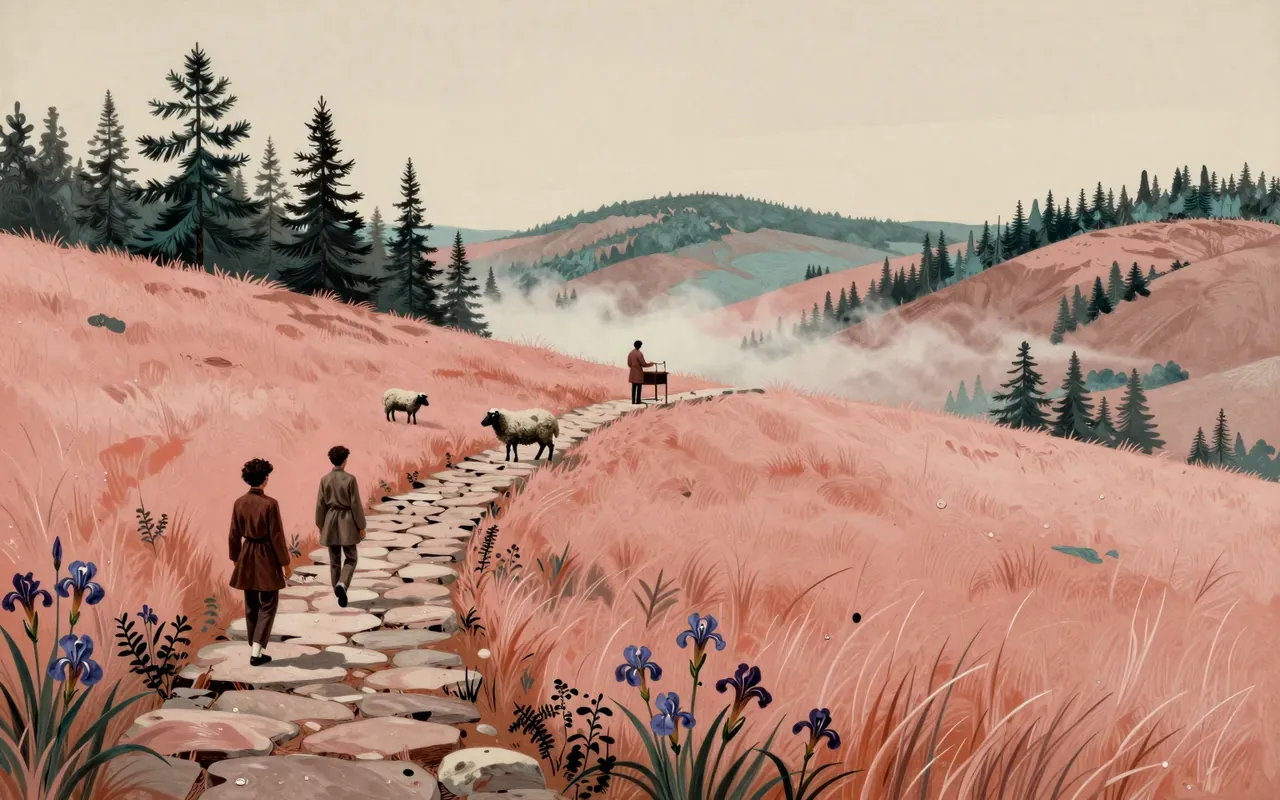
Call of the Valley brings Hariprasad Chaurasia, Brij Bhushan Kabra and Shivkumar Sharma together in a suite following a Kashmiri shepherd’s day. This record uses the 1968 release dating found in the album reference and label-linked digital catalogue; some discographies date it 1967.
How it sounds, and how it was made
Chaurasia’s flute, Kabra’s slide guitar and Sharma’s santoor provide distinct melodic colours, with tabla from Manikrao Popatkar. Ragas associated with different times of day organise the sequence. Instrumental contrast makes the narrative progression available without a singer explaining it.
What lands
The shared premise gives a newcomer a way to follow changes without first mastering every formal term. The santoor, flute and guitar remain separate voices within that framework. The concept helps organise attention while leaving the musical exchanges to carry the experience.
What does not
The narrative packaging can encourage hearing atmosphere alone and missing the underlying musical forms. It also cannot substitute for the scale of a complete single-raga performance. Later editions add tracks that change the proportions of the original suite.
The ideas inside it
A programme can provide an entrance into a tradition without exhausting it. The day-long frame gives relationships between pieces a clear imaginative purpose, while the performers supply the detailed musical substance.
Who should hear it, and who should not
Hear it if contrasting acoustic instruments and a guided sequence appeal to you. It is less suitable when you specifically want one extended raga performance.
Is it worth your time
Yes. Follow the original suite before the bonus tracks, keeping all three melodic instruments in attention.