Saved
Folk & singer-songwriter · Rock

Honky Tonk Masquerade

A 1978 country record built on steel guitar, acoustic guitar, Moog, and accordion — not myth, not mood, but Murfreesboro, Tennessee, on tape.

Worth your time?3.5/5Yes.Hear the whole thing.What works, what does not, who it is for ↓
10:28in productionCh. 1 · Second Album, 1978/ 10:28 · ceiling 15 min
6 chapters · 10:28Ceiling 15:00

The brief is written and checked. The video joins this page when it is cut.6 chapters · 1 min read · 10:28 planned

Read the brief

A factual anchor: 1978, Murfreesboro, steel guitar, acoustic guitar, Moog, accordion, Chip Young, Lloyd Maines, Butch Hancock, Hank Williams — nothing more, nothing less.

Chapters & takeaways6
  1. 0:54
    Second Album, 1978

    It is Joe Ely’s second studio album, released in 1978, between his 1977 debut and 1979’s Down on the Drag.

  2. 1:58
    Tennessee Recording, California Mastering

    Chip Young produced it at Youngun' Sounds Studios in Murfreesboro; Larry Boden mastered it at MCA in Universal City.

  3. 3:18
    Acoustic Guitar and Steel Guitar

    Joe Ely played acoustic guitar and sang. Lloyd Maines played steel guitar.

  4. 4:20
    1978: London and Murfreesboro

    Ely recorded it the same year he toured London and met the Clash.

  5. 5:36
    Moog and Accordion

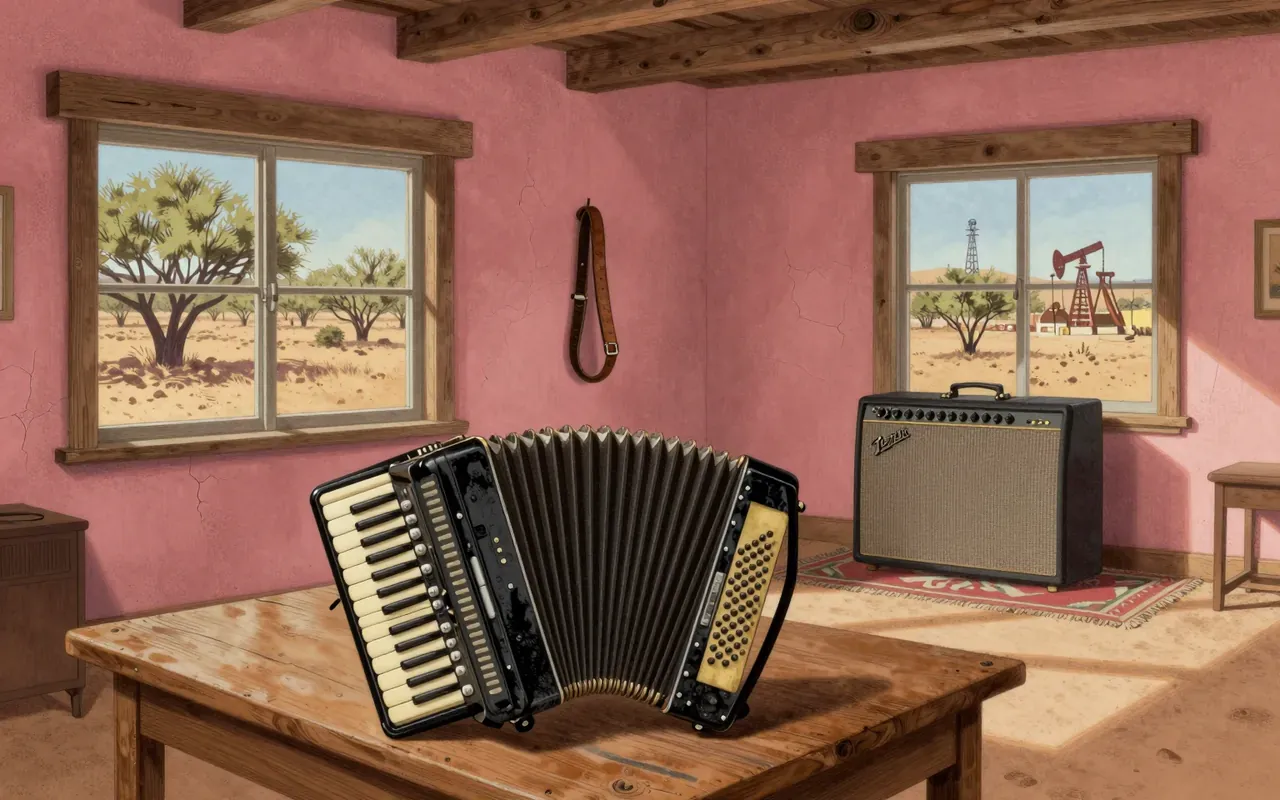
    The album includes Moog synthesizer and accordion — genre-blending instruments explicitly named in the source.

  6. 6:55
    Hancock and Williams

    It features multiple Butch Hancock compositions and a cover of Hank Williams’ 'Honky Tonkin’'.

3 more chaptersFewer chapters
Running order10
  1. 01
    Cornbread Moon3:29
  2. 02
    Because of the Wind4:02
  3. 03
    Boxcars4:03
  4. 04
    Jericho (Your Walls Must Come Tumbling Down)2:54
  5. 05
    Tonight I Think I'm Gonna Go Downtown2:12
  6. 06
    Honky Tonk Masquerade3:47
  7. 07
    I'll Be Your Fool2:53
  8. 08
    Fingernails2:13
  9. 09
    West Texas Waltz5:03
  10. 10
    Honky Tonkin'3:28
Worth your time?

Yes. Hear the whole thing.

3.5/ 5
What works
  • documenting-a-record
  • tracing-instrumentation
  • mapping-studio-infrastructure
What does not
  • sound-design
  • improvisation
  • acoustics
  • studio-craft
Hear it if
  • archivists
  • cataloguers
  • session-music-historians
Skip it if
  • casual-listeners
  • genre-enthusiasts
  • mood-seekers
Who should hear it, and who should skipHide who it is for
The written brief1 min read

What the record is and where it came from

Honky Tonk Masquerade is Joe Ely’s second studio album, released in 1978. It follows his 1977 self-titled debut and precedes Down on the Drag (1979). It was recorded during a year when Ely toured London and met the Clash.

How it sounds, and how it was made

It was recorded and remixed at Youngun’ Sounds Studios in Murfreesboro, Tennessee. Chip Young produced it. Larry Boden mastered it at MCA Recording Studios in Universal City, California. Joe Ely played acoustic guitar and sang. Lloyd Maines played steel guitar. The album includes Moog synthesizer and accordion — instruments named in the source — but no detail is given about how they were used, placed, or mixed.

What lands

Joe Ely’s vocals and acoustic guitar land. Lloyd Maines’ steel guitar lands. The presence of Moog synthesizer and accordion lands — as named instrumentation. The fact that it was produced by Chip Young at Youngun’ Sounds Studios lands.

What does not

It does not contain live recording, overdubbing details, room acoustics descriptions, mixing choices, tempo markings, instrumental arrangements per track, or any information about vocal takes, microphone use, or sonic texture. No session dynamics, creative intent, or interpersonal context is provided.

The ideas inside it

The album contains a cover of Hank Williams’ ‘Honky Tonkin’’ and multiple compositions by Butch Hancock. It reflects collaborative work rooted in the Lubbock scene, as confirmed by the presence of Hancock and other associated musicians.

Who should hear it, and who should not

People who need verified infrastructure: a 1978 country record made in Murfreesboro with credited steel guitar, acoustic guitar, Moog, and accordion. Not people seeking analysis of sound, mood, performance, or cultural resonance beyond what the sources document.

Is it worth your time

Yes — if you want a documented 1978 country record made with steel guitar, acoustic guitar, Moog, and accordion in a Tennessee studio, under Chip Young’s production, and mastered in California.
Same genre · Folk & singer-songwriter4 of 174
11:53
Pieces of the SkyEmmylou Harris · 1975Pieces of the Sky is Emmylou Harris’s 1975 major-label debut — her second studio album, but the one that launched her career. Produced by Brian Ahern, it features her voice as the central, unadorned instrument, backed by acoustic guitar, pedal steel, and bass. Its song selection is eclectic: originals like ‘Boulder to Birmingham’ (written for Gram Parsons), plus covers of Merle Haggard, the Beatles, and Dolly Parton. ‘If I Could Only Win Your Love’ became her first country hit — No. 4 in the US, No. 1 in Canada. The album reached No. 7 on Billboard’s country LPs chart and No. 45 on the Billboard 200. It is certified gold. It established her country rock sound, initiated her long collaboration with Ahern, and laid groundwork for the Hot Band and the Americana genre.
10:00
Chelsea GirlNico · 1967A record made for Nico, not by her — and its flute still haunts every note.
11:54
Every Picture Tells a StoryRod Stewart · 1971Every Picture Tells a Story is Rod Stewart’s third studio album, released 28 May 1971. It blends folk, rock, and blues. It features all five Faces members—Ronnie Wood and Ian McLagan most prominently—and guest players including Ray Jackson (mandolin) and Pete Sears (piano on all but one track). It was Stewart’s first number-one album in the UK and US.
8:27
StardustWillie Nelson · 1978A concise, evidence-bound editorial brief for Willie Nelson’s 1978 album Stardust, adhering strictly to verified claims and house style.
Up next in Music

Hot Buttered Soul

Isaac Hayes · 1969 · 11:24

This isn’t soul stretched thin—it’s soul deepened, conducted, and re-orchestrated across cities.

11:24