musicbriefs
2:37in production/ 2:37 · ceiling 15 min
Folk & singer-songwriter

Joan Baez

Thirteen traditional songs, a young voice, and very little to hide behind.

Joan Baez recorded her first solo album for Vanguard in 1960, when she was nineteen. The original release contains thirteen traditional songs. Her appearance at Newport the previous year had brought attention, but the record's task was more intimate: to make inherited material persuasive through an individual performance.

Worth your time?

Yes. Hear the whole thing.

What works
    What does not
      Hear it if
      • Listeners interested in traditional ballads and vocal interpretation
      Skip it if
      • Listeners expecting a collection of topical protest songs
      The written brief2 min read

      What the record is and where it came from

      Joan Baez recorded her first solo album for Vanguard in 1960, when she was nineteen. The original release contains thirteen traditional songs. Her appearance at Newport the previous year had brought attention, but the record’s task was more intimate: to make inherited material persuasive through an individual performance.

      How it sounds, and how it was made

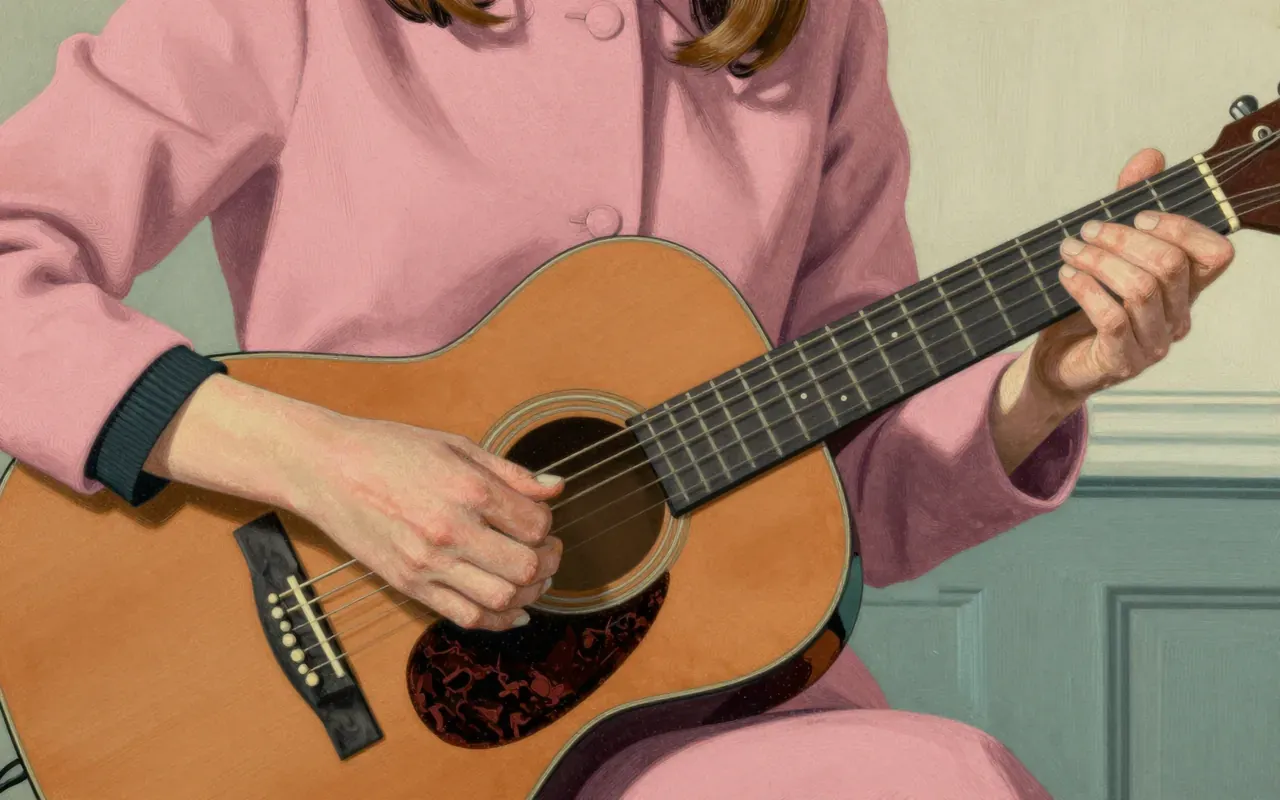
      Most tracks use only Baez’s voice and guitar; Fred Hellerman adds a second guitar on some songs. That limited accompaniment puts phrasing and the unfolding story under close scrutiny. There are few changes of instrumentation to redirect a listener’s attention.

      Baez later recalled recording her set over four nights with separate microphones for voice and guitar. The spare setup fits the central proposition: the performance itself has to establish the song’s importance.

      What lands

      “East Virginia” and “Mary Hamilton” are useful starting points for hearing the album as interpretation. These are songs with lives before this recording. Baez’s responsibility is to make their events and emotions present without needing to claim them as autobiography.

      The clarity of her soprano is part of the attraction, but the artistic question is what that clarity permits: a listener can stay with a story and the decisions made in telling it.

      What does not

      The consistency can become a limitation. If the vocal manner does not engage you, the restrained arrangements offer little alternative focus. The album also differs from the public image of Baez as an explicitly political performer; approaching it primarily for topical songwriting means asking it for a different repertoire.

      The ideas inside it

      Interpretation is a form of authorship even when the singer did not write the song. Choice of material, pace, emphasis and accompaniment determine what an older narrative can mean to a new audience. This debut makes those decisions the substance of a record.

      Who should hear it, and who should not

      Hear it for traditional ballads and the concentration of voice with guitar. It is less suited to a listener looking for a survey of Baez’s activism or the variety of a larger ensemble.

      Is it worth your time

      Yes. Begin with the original thirteen-song programme. Its economy makes it a useful test of how much a singer can communicate when almost everything depends on delivery.
      Same genre · Folk & singer-songwriter4 of 174
      8:46
      Wanted! The OutlawsVarious Artists · 1976Wanted! The Outlaws is a 1976 RCA compilation by Waylon Jennings, Willie Nelson, Jessi Colter, and Tompall Glaser. Jerry Bradley assembled it from existing RCA masters, adding four new performances. Jennings approved it only with Glaser’s inclusion. Cohesion comes from theme, not sound — new vocals added to old tapes, no shared room or rhythm section. Two previously unreleased tracks open and anchor the set — one by Jennings, one by Colter.
      9:57
      Five Leaves LeftNick Drake · 1969Five Leaves Left is Nick Drake’s 1968 debut, recorded live at Sound Techniques in London between May 1968 and April 1969. Drake sang and played acoustic guitar simultaneously with a string section—no overdubbing. Producer Joe Boyd pursued an intimate vocal sound with no shiny pop reverb, inspired by John Simon’s work on Leonard Cohen’s Songs of Leonard Cohen. String arrangements were by Robert Kirby (most tracks) and Harry Robinson ('River Man'). Backing musicians included Richard Thompson and Danny Thompson. Sessions were irregular and rushed, occurring during downtime from Fairport Convention’s Unhalfbricking production. Tension emerged between Boyd’s studio-centric methodology and Drake’s preference for organic sound. Bootleg recordings reveal Drake’s anxiety and Boyd’s unsuccessful instrumentation attempts.
      2:32
      At Folsom PrisonJohnny Cash · 1968At Folsom Prison was recorded at California's Folsom State Prison on January 13, 1968, and released that year. Producer Bob Johnston supported Cash's plan to record a prison concert. The resulting album draws on two performances rather than presenting one show from beginning to end.
      10:08
      Saint Dominic’s PreviewVan Morrison · 1972Saint Dominic's Preview is Van Morrison’s sixth studio album, recorded between late 1971 and early 1972 across multiple San Francisco studios, featuring evolving personnel, co-production with Ted Templeman, and material drawn from both new sessions and earlier recordings — notably 'Listen to the Lion' (from the Tupelo Honey sessions) and 'Almost Independence Day' (recorded first, in autumn 1971). The album reflects stylistic diversity and ambitious vocal and instrumental experimentation, with key tracks shaped by spontaneous decisions, live takes, and layered overdubs involving a rotating cast of musicians including Gary Mallaber, Connie Kay, Mark Jordan, Ronnie Montrose, Bill Church, Bernie Krause, and others. Its composition draws on stream-of-consciousness writing, nature imagery, and personal reflection, marking a departure from love-centric themes and signaling expanded musical scope and ambition.
      Up next in Music

      John Coltrane and Johnny Hartman

      John Coltrane, Johnny Hartman · 1963 · 1:56

      Hartman’s singing and Coltrane’s tenor find a shared scale inside six ballads.

      1:56