musicbriefs
10:18in productionCh. 1 · How it was made/ 10:18 · ceiling 15 min
Folk & singer-songwriter

John Wesley Harding

Dylan cut this record in under twelve hours — and every second of silence was deliberate.

John Wesley Harding is a folk record made with folk means: voice, bass, drums, harmonica, piano, guitar, and two pedal steel parts. It was recorded fast, dry, and direct in Nashville in autumn 1967. Its power lies in what it leaves out.

Chapters & takeaways4
  1. 1:10
    How it was made

    Three sessions in autumn 1967. Less than twelve hours total. Master takes on the first pass.

  2. 2:59
    What’s in the room

    Dylan, Buttrey, and McCoy — plus two pedal steel parts. Nothing else.

  3. 4:34
    Why it sounds like this

    No overdubs. No embellishment. An austere sound chosen to match biblical and frontier themes.

  4. 6:54
    What it’s about

    Short songs. Sparse structure. Lyrics that take the Judeo-Christian tradition seriously — no irony, no wink.

Running order12
  1. 01
    John Wesley Harding2:58

    Heard in High Fidelity (2000)Masked and Anonymous (2003)

  2. 02
    As I Went Out One Morning2:49
  3. 03
    I Dreamed I Saw St. Augustine3:53
  4. 04
    All Along the Watchtower2:32

    Heard in Flashback (1990)Rush (1991)Masked and Anonymous (2003)Watchmen (2009)

  5. 05
    The Ballad of Frankie Lee and Judas Priest5:36
  6. 06
    Drifter’s Escape2:52

    Heard in Masked and Anonymous (2003)

  7. 07
    Dear Landlord3:16

    Heard in Fested: A Journey to Fest 7 (2008)

  8. 08
    I Am a Lonesome Hobo3:20
  9. 09
    I Pity the Poor Immigrant4:13
  10. 10
    The Wicked Messenger2:03
  11. 11
    Down Along the Cove2:24
  12. 12
    I’ll Be Your Baby Tonight2:36

    Heard in Slaves of New York (1989)

Film placements are the ones described in each film's own entry, so the list is partial rather than complete.

Worth your time?

Yes. Hear the whole thing.

4.5/ 5
What works
  • the austerity
  • the silence between phrases
  • the drum hits
  • the pedal steel parts
What does not
  • build
  • swell
  • repeat choruses for emphasis
  • use electric instruments, strings, horns, backing vocals, or studio effects
Hear it if
  • people who listen for space, not density
  • people who hear rhythm as architecture, not propulsion
  • people who trust lyrics that withhold more than they give
Skip it if
  • people who need momentum, ornament, or resolution
The written brief2 min read

What the record is and where it came from

A twelve-track album recorded in less than twelve hours across three sessions in autumn 1967 in Nashville. Dylan brought songs similar to those from The Basement Tapes. He and producer Bob Johnston chose an austere sound to match their content.

How it sounds, and how it was made

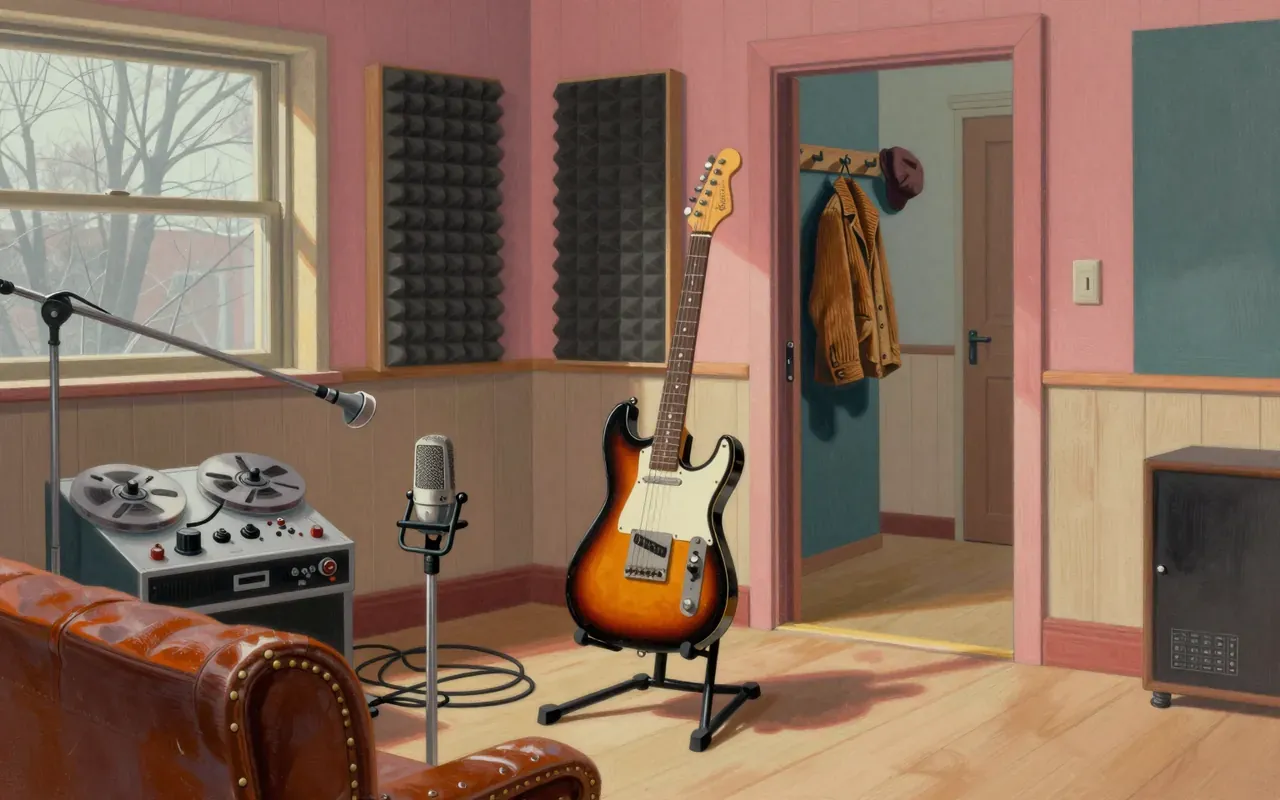
It sounds like three acoustic musicians in a Nashville studio: Dylan on guitar, harmonica, piano and voice; Kenneth A. Buttrey on drums; Charlie McCoy on bass. Two pedal steel guitar parts were added in the final session. No overdubs beyond that. The room is dry. The takes are first or second. The tempos are steady but unmarked. The arrangements are stripped to rhythm, melody and voice — no countermelodies, no fills, no reverb, no doubling.

What lands

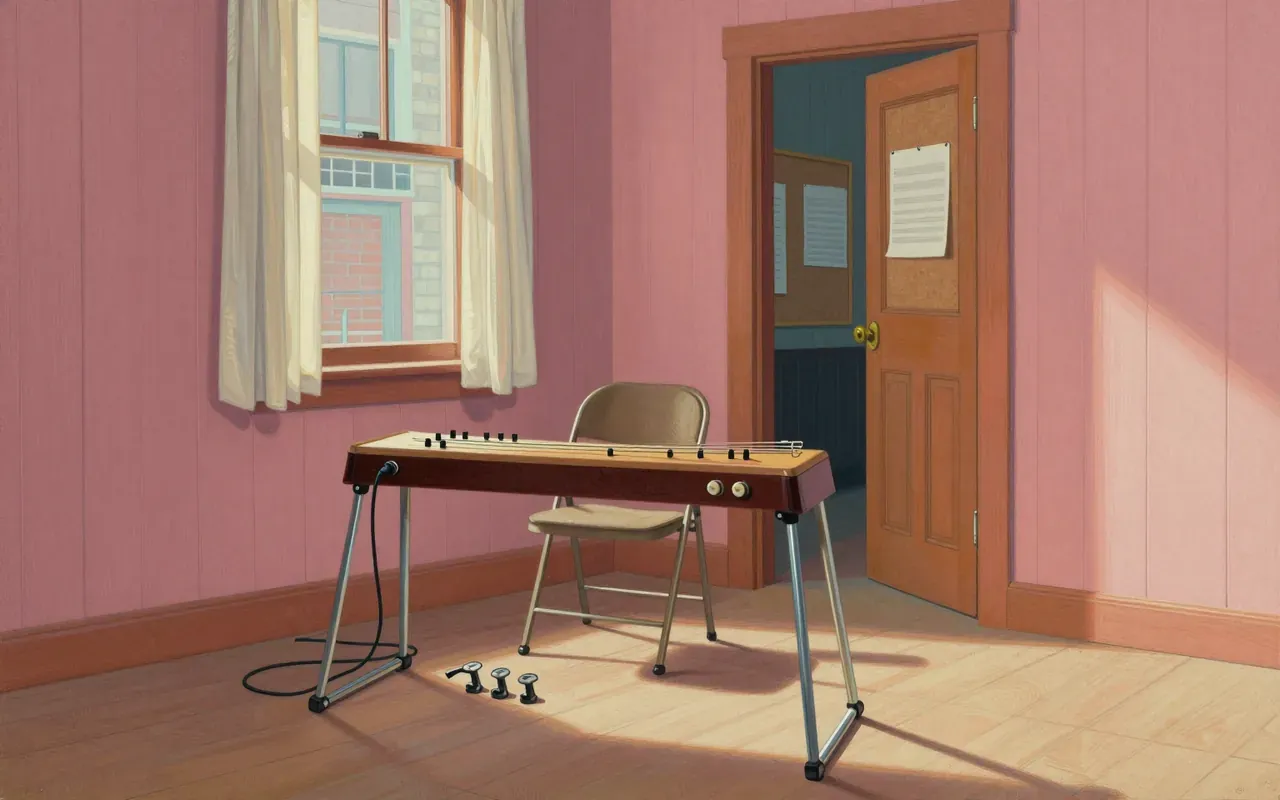
The austerity lands. The silence between phrases lands. The drum hits land like stones dropped into shallow water. The pedal steel lands only twice — on ‘Down Along the Cove’ and ‘I’ll Be Your Baby Tonight’ — and each time it sounds like a door opening just enough to let light in.

What does not

It does not build. It does not swell. It does not repeat choruses for emphasis. It does not use electric instruments, strings, horns, backing vocals, or studio effects. It does not explain its references. It does not resolve its tensions.

The ideas inside it

The songs draw on the American West and the Bible. They treat the Judeo-Christian tradition seriously. They are short, pithy, and feverish, like fragments from The Basement Tapes — parables with no explanation, warnings without context, characters who vanish mid-sentence.

Who should hear it, and who should not

People who listen for space, not density. People who hear rhythm as architecture, not propulsion. People who trust lyrics that withhold more than they give.

Is it worth your time

Yes — if you want to hear how little a record can hold and still carry weight. No — if you need momentum, ornament, or resolution.
Same genre · Folk & singer-songwriter4 of 20
Up next in Music

Journey in Satchidananda

Alice Coltrane · 1971 · 11:03

This record replaces swing with stillness, soloists with sustains, and jazz tradition with devotional architecture.

11:03