musicbriefs
1:58in production/ 1:58 · ceiling 15 min
Rock

The Moon & Antarctica

Modest Mouse use a larger recording budget to make their strange musical spaces more detailed.

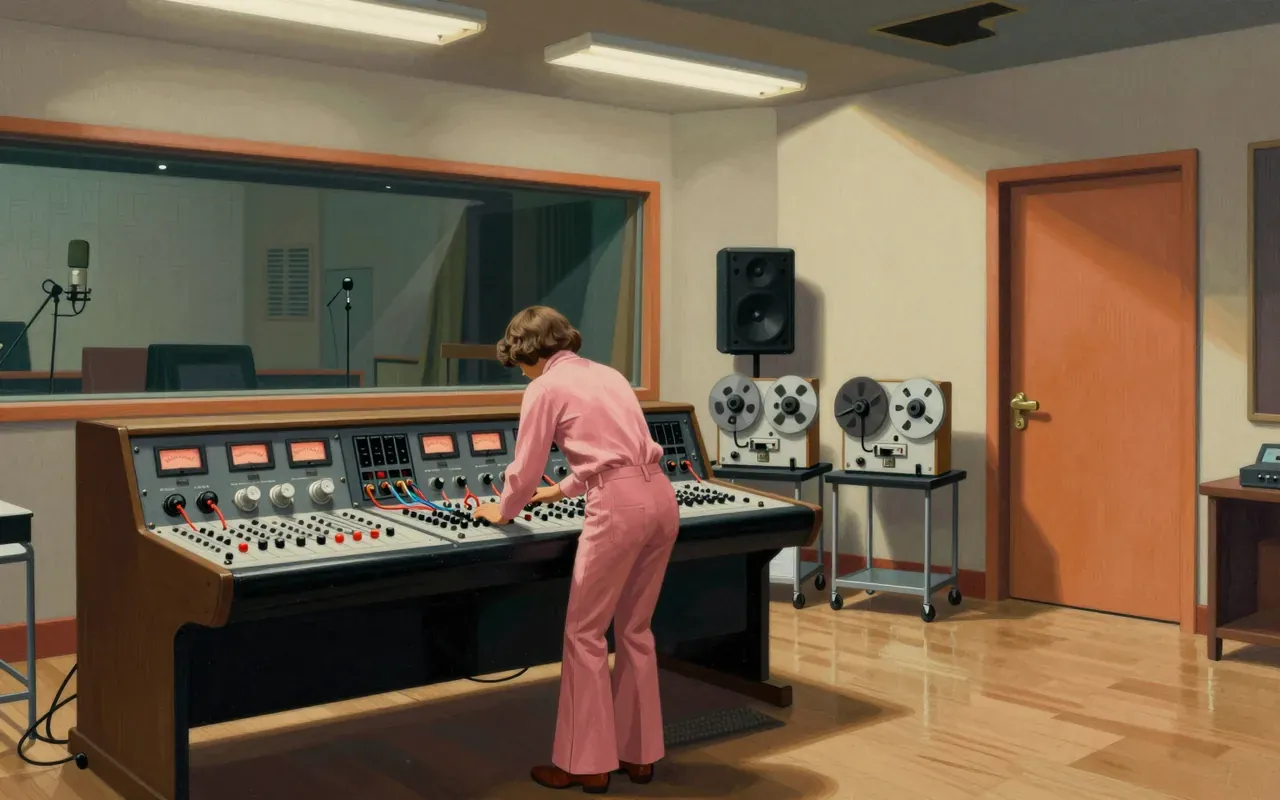
The Moon & Antarctica was Modest Mouse's first major-label album, released in 2000. Brian Deck produced the sessions at Chicago's newly built Clava Studios. The expanded resources became an opportunity to develop unusual sounds rather than simply smooth the band's existing edges.

Worth your time?

Yes. Hear the whole thing.

What works
    What does not
      Hear it if
      • Listeners drawn to angular textures and existential songwriting
      Skip it if
      • Listeners seeking a bright or easily resolved emotional atmosphere
      The written brief1 min read

      What the record is and where it came from

      The Moon & Antarctica was Modest Mouse’s first major-label album, released in 2000. Brian Deck produced the sessions at Chicago’s newly built Clava Studios. The expanded resources became an opportunity to develop unusual sounds rather than simply smooth the band’s existing edges.

      How it sounds, and how it was made

      The record combines angular textures with a subdued, atmospheric presentation. Isaac Brock took an active interest in digital editing and effects during mixing, learning to describe the musical events he wanted. Production becomes a means of shaping space around the performances.

      What lands

      The larger setting suits writing concerned with death and the afterlife. The record can make uncertainty feel like a property of its musical environment, rather than a subject only carried by the words. Its studio ambition gives the band’s existing strangeness additional dimensions.

      What does not

      That atmosphere can become oppressive, especially when the introspection offers little relief. Listeners who favour the earlier band’s immediate roughness may find the expanded setting less direct. More production detail does not necessarily make a difficult emotional world easier to enter.

      The ideas inside it

      Greater resources do not determine the direction of artistic change. Here they support a deeper investment in uncertainty and distance. The record treats a larger platform as permission to elaborate an idiosyncratic perspective.

      Who should hear it, and who should not

      Hear it if atmosphere and uneasy questions can sustain your interest across an album. It is a weaker fit for casual uplift or sharply resolved lyrical narratives.

      Is it worth your time

      Yes. Give the spaces and production changes time to register; they are part of the writing’s effect, not merely its packaging.
      Same genre · Rock4 of 319
      10:21
      Twelve Dreams of Dr. SardonicusSpirit · 1970Twelve Dreams of Dr. Sardonicus is Spirit’s fourth studio album, produced by David Briggs in 1970. It features Jay Ferguson (vocals, percussion, keyboards), Randy California (guitars, vocals, bass), John Locke (keyboards, art direction), Mark Andes (bass, vocals), Ed Cassidy (drums, percussion), and Matt Andes (Dobro on 'Nothin’ to Hide'). The record avoids psychedelia-as-noise and prog-as-epic. Instead, it delivers concise, well-arranged songs built on piano, organ, Dobro, and tight rhythm-section interplay. 'Nature’s Way', 'Space Child', 'When I Touch You', and 'Life Has Just Begun' stand out for their clarity and craft. 'Why Can’t I Be Free?' feels abrupt. 'Soldier' is not about war. No synthesizers. No strings. No concept beyond the title's dream motif. It rewards listeners who value arrangement over abstraction.
      10:52
      Highway 61 RevisitedBob Dylan · 1965Highway 61 Revisited is a 1965 rock record made in two sessions at Columbia's Studio A in Midtown Manhattan. It features Mike Bloomfield’s blues guitar and Al Kooper’s improvised organ riffs. 'Desolation Row' departs from the electric template, using acoustic guitar and understated bass. The album is named after the actual highway from Dylan’s Minnesota birthplace to New Orleans.
      9:00
      ParklifeBlur · 1994Parklife is Blur’s third studio album, recorded quickly at Maison Rouge studio in August 1993—except for 'This Is a Low'. Damon Albarn described it as a loosely linked concept album about the travels of a 'mystical lager-eater' who observes and comments on the world. Martin Amis’s novel London Fields was a major influence. The songs span multiple genres including synthpop, instrumental waltz, punk rock, spacey Syd Barrett-esque, and new wave. Some songs—including 'To the End' and 'Badhead'—lie in a more personal space than the album’s broader bittersweet portrayal of the UK's human patchwork. Stephen Street produced all tracks except 'To the End', which was produced by Stephen Hague with additional engineering.
      14:25
      Honky ChâteauElton John · 1972Honky Château is Elton John’s fifth studio album, recorded at Château d'Hérouville in France and released on 19 May 1972. It marks the first full-album studio collaboration with John's touring band — Dee Murray, Nigel Olsson, and newly permanent member Davey Johnstone — and features distinctive musical elements including a New Orleans funk opener with horn arrangements, the debut of the trio's trademark backing vocals on 'Rocket Man', and a remastered alternate version of 'Slave' added in 1995. The album was critically acclaimed for its eclecticism and focus, and it launched John's streak of US number-one albums.
      Up next in Music

      Moon Safari

      Air · 1998 · 2:01

      Air make electronic pop inviting through melody, vocal treatment and a deliberately relaxed pace.

      2:01