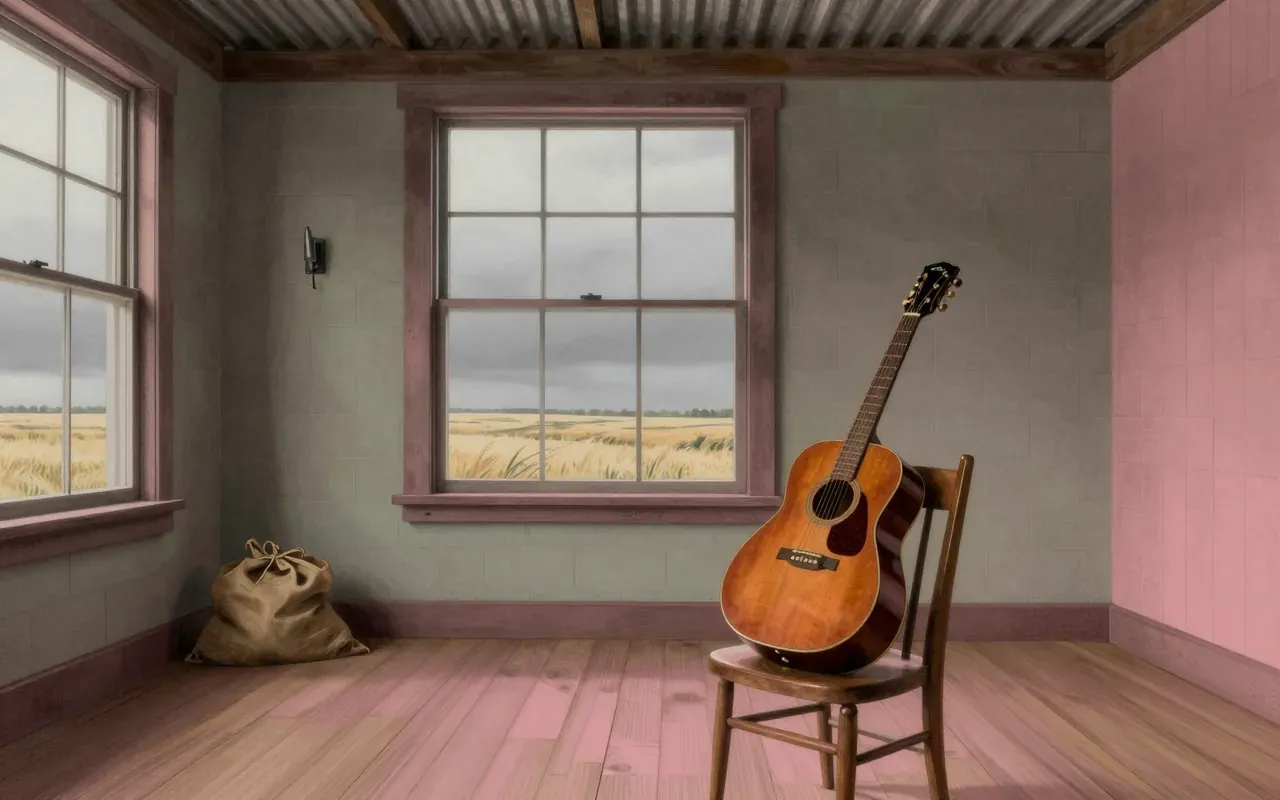
What the record is and where it came from
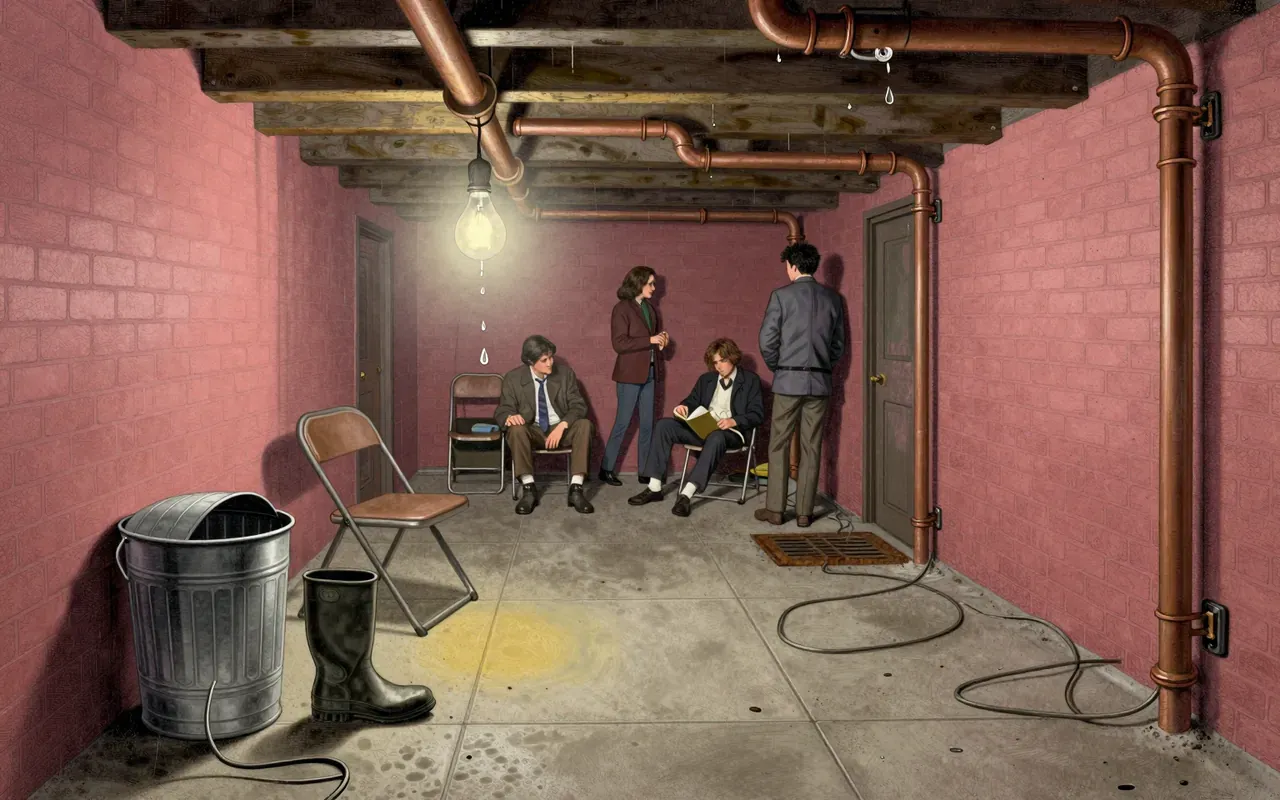
A set of solo demo recordings made in December 1981–January 1982 in Springsteen’s Colts Neck bedroom. Intended as sketches for full-band re-recording with the E Street Band, they were released as-is after test sessions failed.
How it sounds, and how it was made
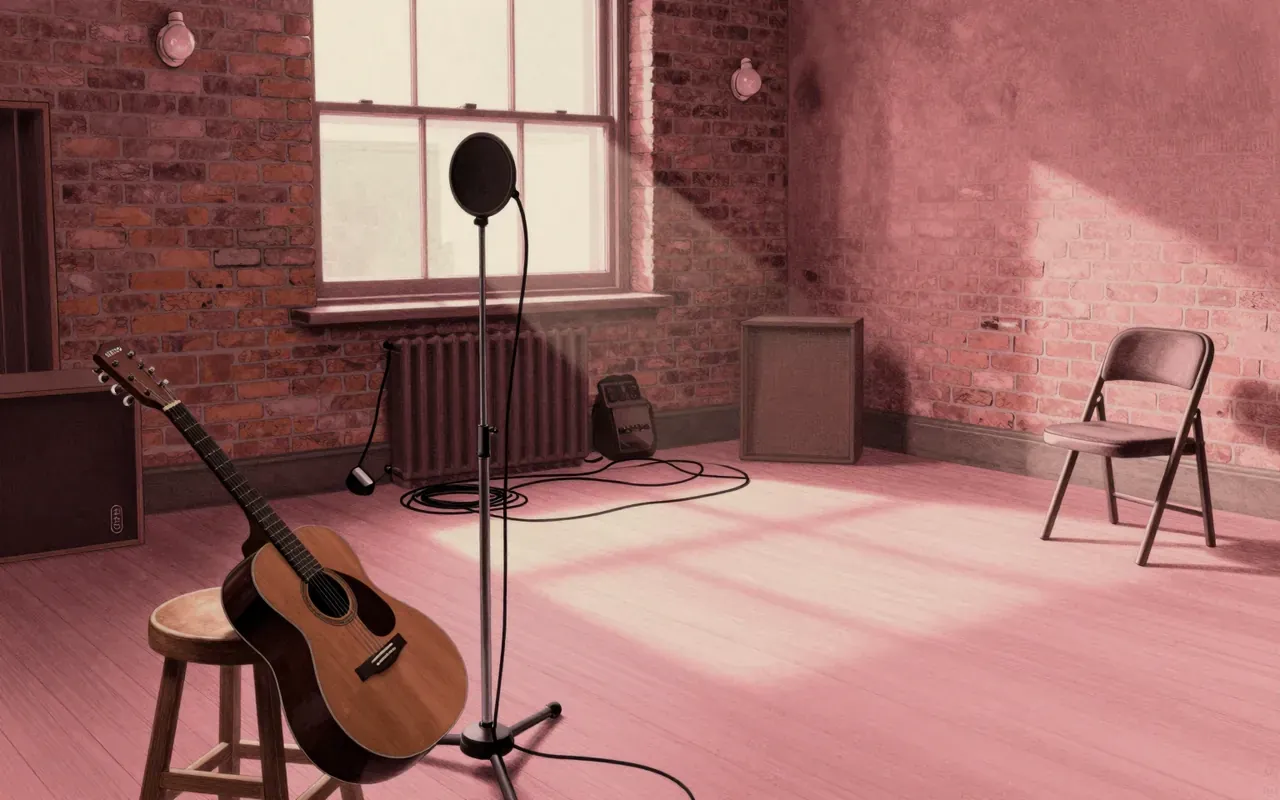
It sounds like a single room, two SM57 microphones, a Gibson J-200 acoustic guitar, and Springsteen’s voice — dry, close, unvarnished. Harmonica, mandolin, glockenspiel, and percussion appear as sparse overdubs. The mix runs through an Echoplex for tape delay and a water-damaged Panasonic boombox. No reverb, no studio bleed, no separation — just bedroom acoustics, four-track limitation, and the quiet weight of a cassette deck failing mid-transfer.
What lands
The voice lands. The guitar’s fingerpicked rhythm lands. The silence between lines lands. The lack of escape lands. The finality of each closing line lands — especially on ‘Nebraska’, ‘State Trooper’, and ‘Reason to Believe’.
What does not
It does not build. It does not swing. It does not release tension. It does not offer catharsis, chorus, or counterpoint. There are no band arrangements, no studio polish, no vocal doubling, no bass, no drums beyond hand percussion.
The ideas inside it
It holds stories of men who fail quietly: criminals without glamour, cops without authority, fathers without answers. It treats blue-collar hardship not as backdrop but as atmosphere — thick, unrelieved, and internalised.
Who should hear it, and who should not
People who listen to records as documents of intent — not performance. People who care how sound carries moral weight. People who want to hear what happens when a songwriter refuses to dress up despair.
Is it worth your time
Yes — if you want to hear how narrative gravity changes when music is stripped of all mediation. No — if you expect momentum, resolution, or instrumental interplay.