What the record is and where it came from
A 20-track double album released in October 1980. Springsteen’s fifth album. Conceived as a band record to capture the E Street Band’s live sound. Built from over 50 recorded songs. Originally planned as a single LP titled The Ties That Bind, scrapped in late 1979.
How it sounds, and how it was made
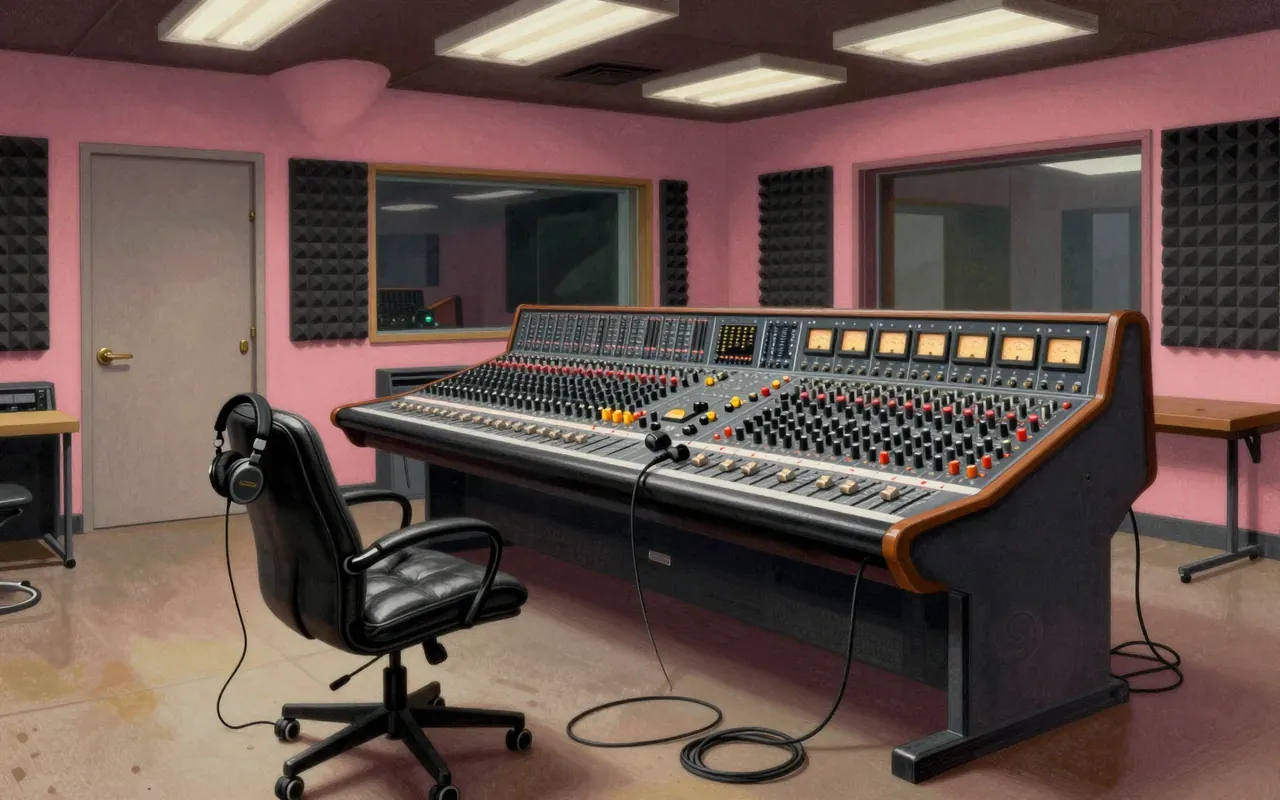
It sounds like a live garage-band record. The E Street Band’s energy is captured in the room at the Power Station in New York City. Sessions ran 18 months from March 1979 to August 1980. Co-produced by Springsteen, Jon Landau, and Steven Van Zandt. No studio trickery is named — only the live feel, the blend of party songs and ballads, and the heartland rock and rock and roll textures.
What lands
‘Hungry Heart’ lands as a pop hook with urgent bass and clipped guitar. ‘The River’ lands as a slow, unadorned narrative with acoustic guitar and restrained piano. ‘Drive All Night’ lands as a seven-minute slow burn with layered vocals and swelling arrangement. ‘Independence Day’ lands as a quiet, guitar-and-vocal confrontation — no drums, no embellishment.
What does not
It does not resolve its contradictions. It does not choose between the barroom and the bedroom. It does not offer catharsis or redemption. It leaves ‘The River’ and ‘Stolen Car’ hanging in the same silence as ‘Hungry Heart’ and ‘Out in the Street’. There is no pivot, no synthesis — only juxtaposition.
The ideas inside it
Love, marriage, and family. These are not abstract ideals but lived conditions — binding, breaking, sustaining. The lyrics extend themes from Born to Run and Darkness on the Edge of Town. Characterisation draws from Flannery O’Connor: flawed, grounded, morally ambiguous people making choices with irreversible weight.
Who should hear it, and who should not
People who want to hear how rock and roll holds joy and grief in the same breath. People who listen for space between instruments, for the weight of a pause, for the difference between a shouted line and a swallowed one. Not for those seeking polish, clarity of message, or sonic consistency.
Is it worth your time
Yes. It rewards attention to contrast: shout-along choruses next to whispered confessions. It is not a unified statement but a double album built on tension — between release and restraint, celebration and consequence. Its value lies in that friction, not in cohesion.