musicbriefs
10:56in productionCh. 1 · What it is/ 10:56 · ceiling 15 min
Blues

The Real Folk Blues

A compilation that proves the blues wasn’t born electric — it was wired in stages.

The Real Folk Blues is a 1966 Chess Records compilation drawing from Muddy Waters’ career-spanning recordings — beginning with his 1947 Aristocrat debut alongside Big Crawford and extending through early-1960s sessions — and featuring an array of Chicago blues musicians across guitar, piano, harmonica, bass, and drums. It notes the stylistic range of the material, bridging rural folk-blues roots and urban electric developments.

Chapters & takeaways4
  1. 1:10
    What it is

    This is not an album but a Chess Records compilation, released in January 1966.

  2. 3:12
    Where it starts

    It begins with Muddy’s 1947 Aristocrat debut ‘Gypsy Woman’, recorded with Big Crawford.

  3. 4:17
    How it’s built

    Later tracks feature Little Walter on harmonica and multiple guitarists — Pat Hare, Jimmy Rogers, Sammy Lawhorn — playing in shifting combinations.

  4. 6:57
    What the title means

    The ‘folk’ in the title refers to rural roots; the ‘blues’ to Chicago’s wired evolution — not a fusion, but a timeline.

Running order12
  1. 01
  2. 02
    Screamin' and Cryin'3:08
  3. 03
    Just to Be With You3:17
  4. 04
    Walking in the Park2:44
  5. 05
    Walking Blues2:59
  6. 06
    Canary Bird2:45
  7. 07
    Same Thing2:43

    Heard in Inception (2010)

  8. 08
    Gypsy Woman2:36
  9. 09
    Rollin' & Tumblin'3:02
  10. 10
    40 Days and Forty Nights2:55
  11. 11
    Little Geneva2:50
  12. 12
    You Can't Lose What You Never Had2:56

Film placements are the ones described in each film's own entry, so the list is partial rather than complete.

Worth your time?

Yes. Hear the whole thing.

4/ 5
What works
  • ‘Mannish Boy’ lands with Junior Wells’ harmonica pushing hard against Muddy’s vocal call-and-response.
  • ‘Gypsy Woman’ lands as raw first-take energy — sparse, unvarnished, guitar and voice only.
  • ‘Same Thing’ lands with Otis Spann’s piano locking into a rolling left-hand figure while Muddy’s guitar answers each phrase.
What does not
  • It does not sound cohesive as an album.
  • There is no consistent lineup.
  • No unified production aesthetic.
  • No thematic arc.
Hear it if
  • Blues players should hear it to study how arrangements shift with personnel.
  • Crate-diggers should hear it for its uncurated flow.
  • Anyone expecting a ‘best of’ or stylistic unity should not.
Skip it if
  • Anyone expecting a ‘best of’ or stylistic unity should not.
The written brief2 min read

What the record is and where it came from

It is a 1966 Chess Records compilation, released in January 1966. It draws from Muddy Waters’ recordings between 1947 and the early 1960s — beginning with his debut for Aristocrat Records alongside Ernest ‘Big’ Crawford, and extending through sessions with Little Walter, Willie Dixon, and others after Leonard and Phil Chess took over.

How it sounds, and how it was made

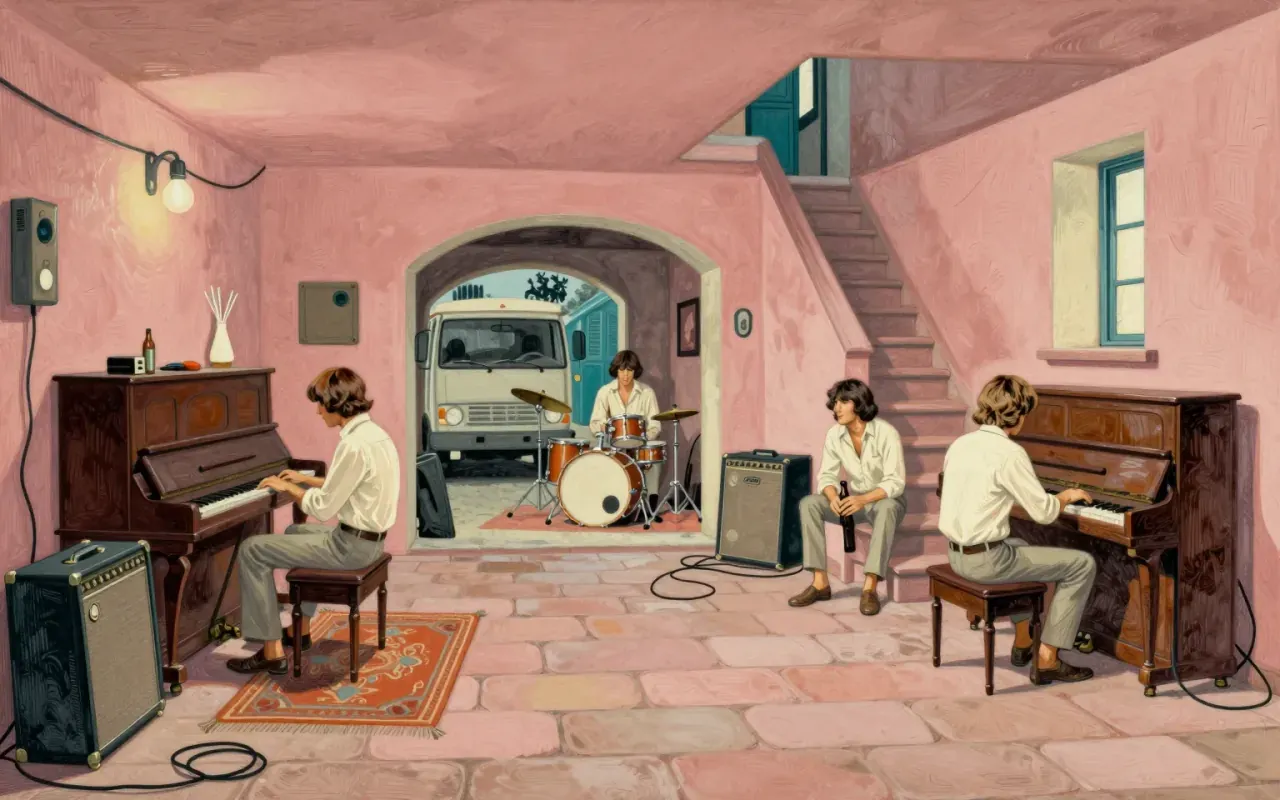
The record sounds like a room with wood floors and plaster walls, where guitar strings ring sharp and bass notes thud low without reverb. Piano is dry and percussive. Harmonica cuts through with no echo. Drums are close-miked, snare tight, cymbals muted. No studio effects are used — just direct signal paths and natural room bleed. The personnel shift across tracks: sometimes one guitarist, sometimes five; sometimes two pianos, sometimes none; harmonica appears on some songs, absent on others.

What lands

‘Mannish Boy’ lands with Junior Wells’ harmonica pushing hard against Muddy’s vocal call-and-response. ‘Gypsy Woman’ lands as raw first-take energy — sparse, unvarnished, guitar and voice only. ‘Same Thing’ lands with Otis Spann’s piano locking into a rolling left-hand figure while Muddy’s guitar answers each phrase.

What does not

It does not sound cohesive as an album. There is no consistent lineup, no unified production aesthetic, no thematic arc. The early Aristocrat sides lack the drive of the mid-50s Chess sessions. The early-60s tracks feel more rehearsed but less urgent.

The ideas inside it

The idea is that ‘folk’ and ‘electric’ are not opposites but phases of the same migration — from rural Mississippi to urban Chicago, from acoustic guitar to amplified ensemble, from solo voice to collective rhythm.

Who should hear it, and who should not

Blues players should hear it to study how arrangements shift with personnel. Crate-diggers should hear it for its uncurated flow. Anyone expecting a ‘best of’ or stylistic unity should not.

Is it worth your time

Yes — if you want to hear how Chicago blues was built, not mythologised. It is worth your time because it documents a working band’s range across twelve years, not a polished narrative.
Same genre · Blues3 of 3
Up next in Music

The Rite of Spring

Igor Stravinsky · 1960 · 10:37

It doesn’t depict spring—it dismantles time.

10:37