What the record is and where it came from
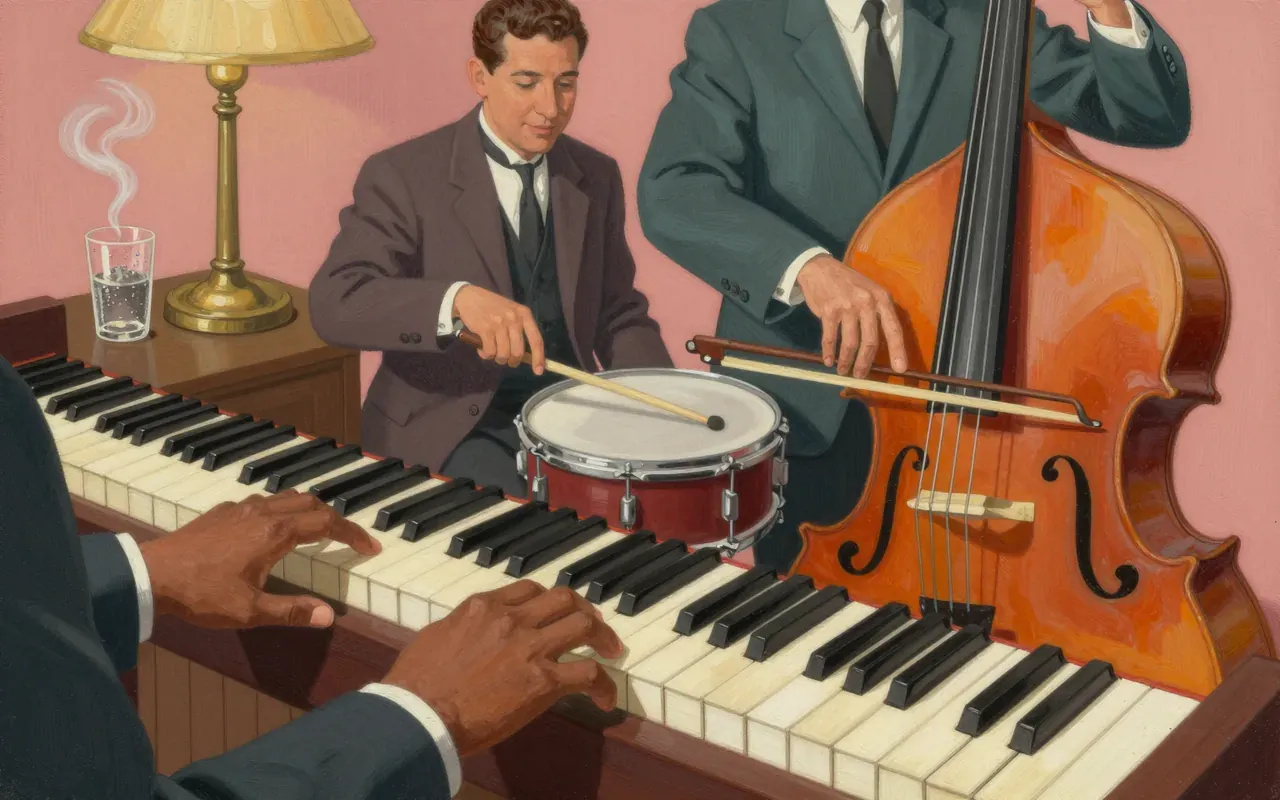
At the Pershing was recorded in Chicago in January 1958 and released that year. Ahmad Jamal selected eight performances from a much larger recorded evening. Israel Crosby and Vernel Fournier join him, making the trio’s working relationship the centre of the album.
How it sounds, and how it was made
Piano, bass and drums operate with unusually economical piano statements and extended repeated accompaniment patterns. On “Poinciana,” the bass and drums establish the rhythmic setting while Jamal places spare embellishments above it. The accompaniment has a clear identity of its own.
What lands
“Poinciana” is the obvious entrance, but the shorter standards show the same attention to proportion. The pleasure comes from hearing how little the piano needs to add when the trio’s framework is strong. Space becomes part of the arrangement rather than an absence of activity.
What does not
The easy surface can sound merely decorative if the internal choices do not register. Repetition may feel static to listeners who want continuous melodic development. The album’s popularity should not be taken as evidence that every kind of jazz listener will find its restraint compelling.
The ideas inside it
Leaving something out can increase the importance of what remains. The trio shows how leadership may involve making the rhythm section more audible, with the piano’s economy allowing the whole performance to retain its shape.
Who should hear it, and who should not
Hear it if small decisions and a strong rhythmic framework hold your attention. It is less suited to a demand for unbroken virtuoso display.
Is it worth your time
Yes. Listen to Crosby and Fournier first on “Poinciana,” then notice how Jamal works within what they establish.