musicbriefs
9:04in productionCh. 1 · Where it was cut/ 9:04 · ceiling 15 min
Jazz

Free Jazz

Free Jazz isn’t free — it’s a controlled demolition of jazz’s architecture.

Free Jazz is the first full-length document of collective, non-idiomatic improvisation as compositional method. It uses stereo separation not for effect but for argument: two autonomous groups coexisting without hierarchy, negotiation, or synthesis.

Chapters & takeaways4
  1. 0:55
    Where it was cut

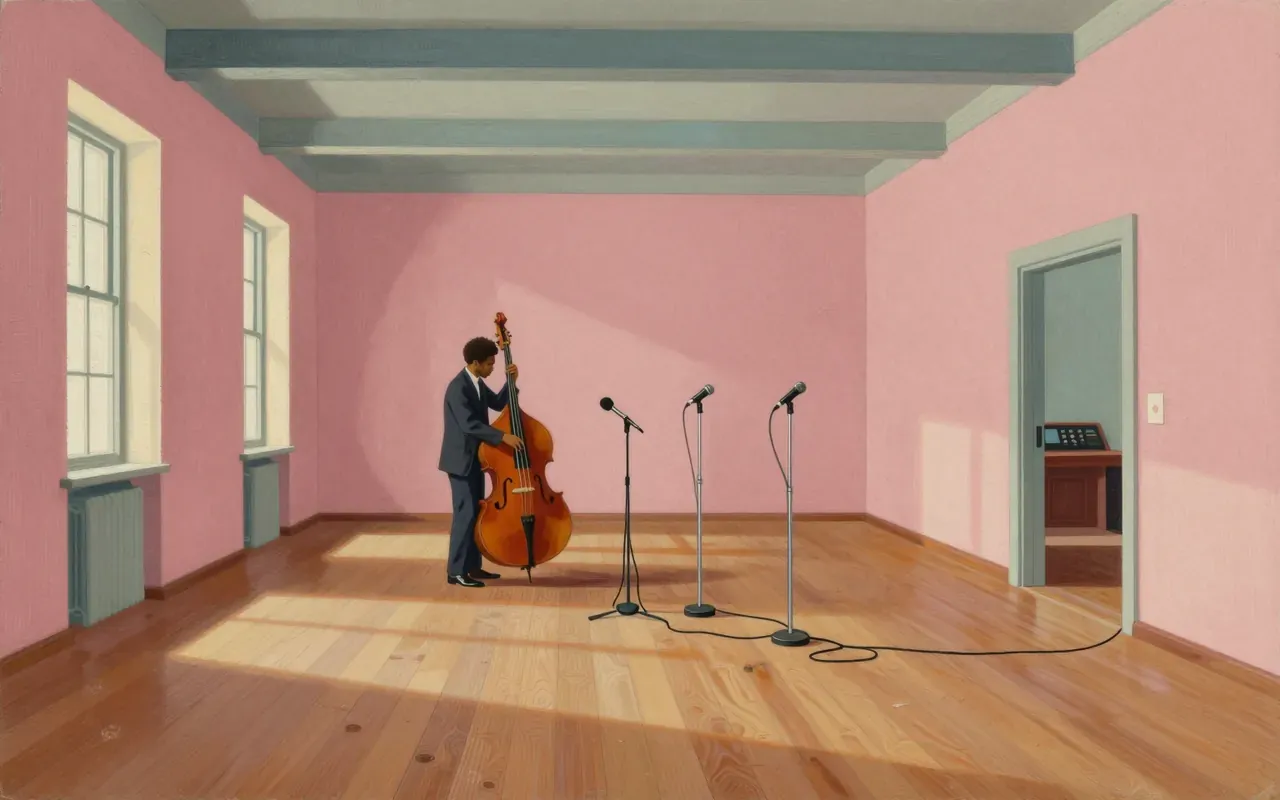
    Recorded in A&R Studios in New York in 1960 — no studio polish, no post-production sleight of hand.

  2. 2:30
    How it was split

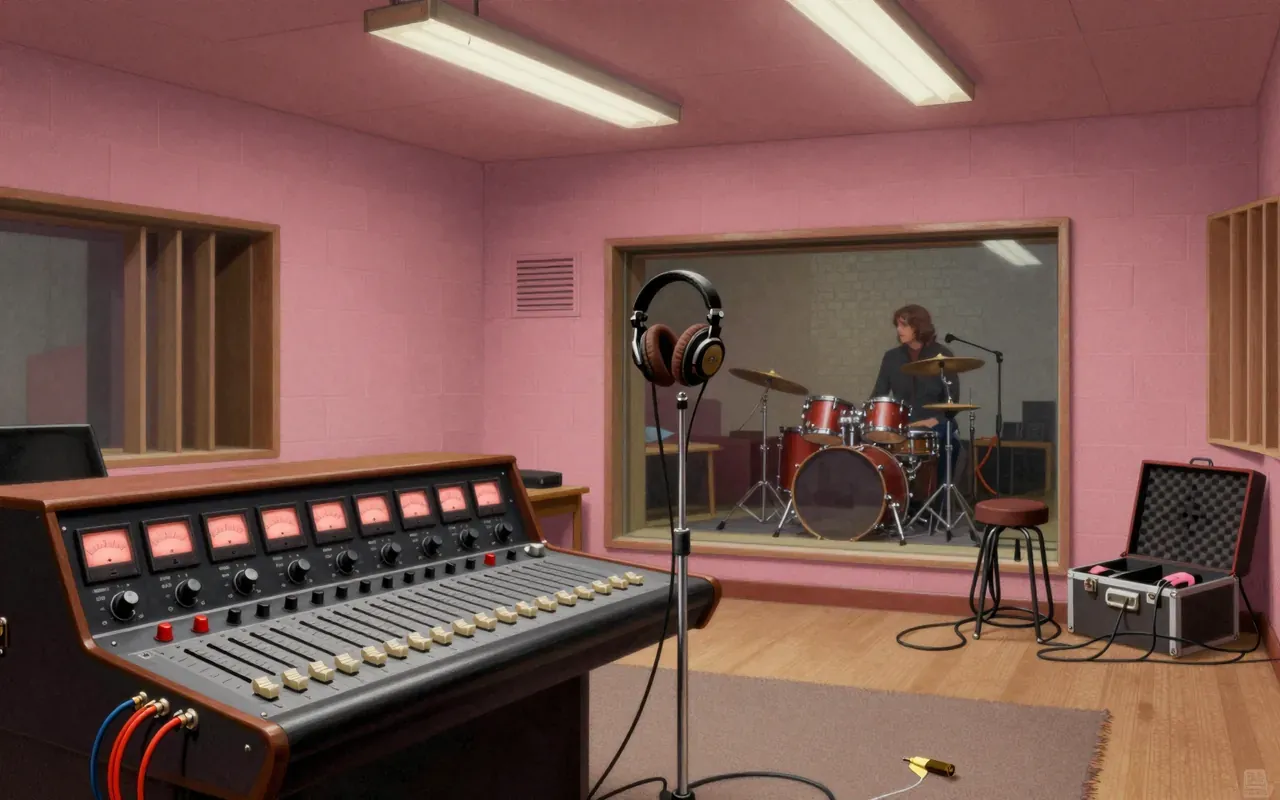
    Two quartets, split left and right, generate a deliberate, unblended cacophony.

  3. 4:11
    What it broke

    It abandons structure entirely — no chord changes, no head-solo-head, no predetermined roles.

  4. 5:26
    What it named

    Its title didn’t describe a style — it named one, before the style had settled into language.

Running order2
  1. 01
    Free Jazz, Part 119:35
  2. 02
    Free Jazz, Part 217:30
Worth your time?

Yes. Hear the whole thing.

4.5/ 5
What works
  • as a rupture
  • as a provocation
  • as a document of spatial intent
What does not
  • resolve
  • repeat
  • anchor
Hear it if
  • historians of sound
  • listeners who treat stereo as architecture
Skip it if
  • those who rely on pulse or pitch for orientation
The written brief1 min read

What the record is and where it came from

Free Jazz is a 1960 double-quartet studio recording by The Ornette Coleman Double Quartet. It was made in A&R Studios in New York.

How it sounds, and how it was made

It sounds aggressive and cacophonous. Two quartets were recorded in separation — left and right channels — in A&R Studios in New York in 1960.

What lands

The sheer physicality of two quartets clashing across stereo space lands. The title lands as both description and declaration.

What does not

It does not develop motifs. It does not resolve tension. It does not privilege solo over ensemble, or one instrument over another.

The ideas inside it

The idea that composition can be replaced by collective improvisation across spatially divided ensembles. The idea that ‘free’ means abandoning pre-set harmony, rhythm, and form — not just loosening them.

Who should hear it, and who should not

People who want to hear the origin point of a movement should hear it. People who need tonal anchors or rhythmic repetition should not.

Is it worth your time

Yes, if you want to hear how a radical structural break sounds on tape. No, if you expect continuity, melody, or resolution.

Same genre · Jazz4 of 29
9:03
AscensionJohn Coltrane · 1965Ascension is a 38-minute, two-take studio recording made unrehearsed on June 28, 1965, at Van Gelder Studio in Englewood Cliffs, New Jersey. Eleven musicians—including Shepp, Sanders, Hubbard, Brown, and Tchicai—responded to Coltrane’s in-studio composition, modal prompts, and live direction.
11:27
HejiraJoni Mitchell · 1976Hejira is Joni Mitchell’s 1976 album of road-written songs, defined by her guitar and Jaco Pastorius’s fretless bass. It contains no piano. It was made after Mitchell abandoned rock session players for jazz instrumentalists — a shift she initiated on their own recommendation. Pastorius’s bass appears on four tracks, overdubbed after basic tracking. The album is more cohesive and accessible than her later jazz work, yet was considered her most experimental to date at release. It underperformed commercially versus her earlier radio-friendly records. Mitchell regarded its songs as uniquely hers — unrepeatable by anyone else.
12:14
Illadelph HalflifeThe Roots · 1996Illadelph Halflife is the Roots’ third studio album, released 24 September 1996 on DGC and Geffen Records. It features a tougher and broader sound than Do You Want More?!!!??! (1995), integrating programmed drums and guest contributions from R&B musicians including Amel Larrieux and D'Angelo, and jazz musicians including David Murray, Steve Coleman, Cassandra Wilson, and Graham Haynes. Its production is grimy and haunting, shaped by Wu-Tang Clan and RZA’s influence, and replete with samples from old jazz and classical music. The multi-track tapes used to mix the album were destroyed in a 2008 fire at the Universal Studios back lot, though the original 1996 master tape remains unaffected. It was the group’s first album to break the Top 40 on the Billboard 200 chart. ‘What They Do’ was their first single to reach the Top 40 (No. 34); ‘Clones’ was their first to reach the top five on the rap charts. Scott Storch left the band and was replaced by Kamal Gray. Collaborators included Common, D'Angelo, and Q-Tip — foundational to the Soulquarians and the neo-soul association.
10:22
Interstellar SpaceJohn Coltrane · 1974Interstellar Space is a 1967 duo album by John Coltrane and Rashied Ali, recorded at Van Gelder Studio on February 22, 1967, and released in September 1974. It consists of four tracks — 'Mars', 'Venus', 'Jupiter', and 'Saturn' — each bearing alternate titles in the session sheets. Two further tracks from the same session, 'Leo' and 'Jupiter Variation', appeared on the 1978 compilation Jupiter Variation. The session was minimally planned, cut in one take, and built around Coltrane’s desire for 'more time, more rhythm all around me'.
Up next in Music

Fresh

Sly & the Family Stone · 1973 · 9:42

Funk stripped to its metronomic bones — no band, just Sly, a drum machine, and time bent to his will.

9:42