What the record is and where it came from
A 1977 Sire Records LP, delayed until September due to distributor changes. It expands a 1976 Ork Records 7” EP that contained ‘Blank Generation’, ‘Another World’, and ‘You Gotta Lose’. The LP adds seven new songs, including ‘Walking on the Water’, recorded during Plaza Sound sessions.
How it sounds, and how it was made
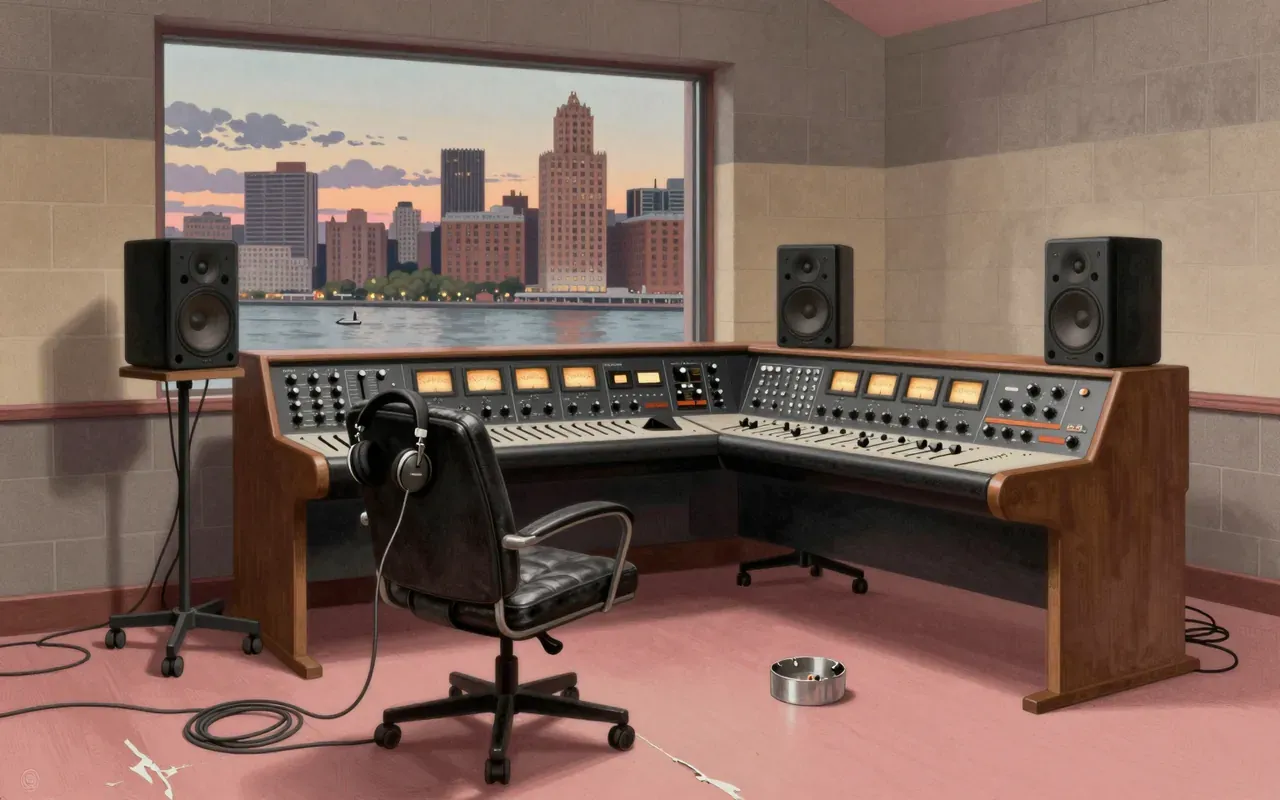
Fender Stratocasters through Fender Champ amplifiers. Quine panned right, Julian left—except on ‘New Pleasure’ and ‘Down at the Rock and Roll Club’, where they swap. The album is split across two studios: Electric Lady (March 1977) for ‘Liars Beware’, ‘New Pleasure’, and ‘Another World’; Plaza Sound (late June–early July 1977) for everything else—including ‘Walking on the Water’, added live after its CBGB debut on April 14, 1977. Final mixing ran July 13–18 at Plaza Sound, interrupted by the 1977 blackout.
What lands
‘Blank Generation’ lands as a rhythmic and textural pivot: staccato chords, clipped decay, dry amp tone, tight stereo separation. ‘Who Says?’ and ‘Betrayal Takes Two’ lock into a tense, stop-start pulse. ‘Another World’—retained from Electric Lady—feels denser, less edited, more immediate.
What does not
It does not sound like a document of CBGB’s early chaos. No reverb-drenched room tone. No bleed between instruments. No improvisation. No bass solos, no drum fills, no vocal harmonies.
The ideas inside it
A generation defined by refusal—not nihilism, but the act of withholding assent. The title phrase predates the album: Hell wrote it in Television, performed it live since 1975. It names a stance, not a condition.
Who should hear it, and who should not
Guitar players who care about panning as compositional logic. Listeners who notice when a snare hits dead centre versus hard left. Anyone tired of punk being framed as attitude over arrangement.
Is it worth your time
Yes—if you want to hear how punk’s guitar language was rebuilt mid-stride, not as raw impulse but as deliberate, spatial, stereo-conscious architecture.