musicbriefs
Topic

Studio craft

The room, the engineer and everything the credits leave out.

341
in music
10:31
average
3587 min
in total
508
across the network
Studio craft across the network →
All briefs341
8:43

400 Degreez

Juvenile · 1998

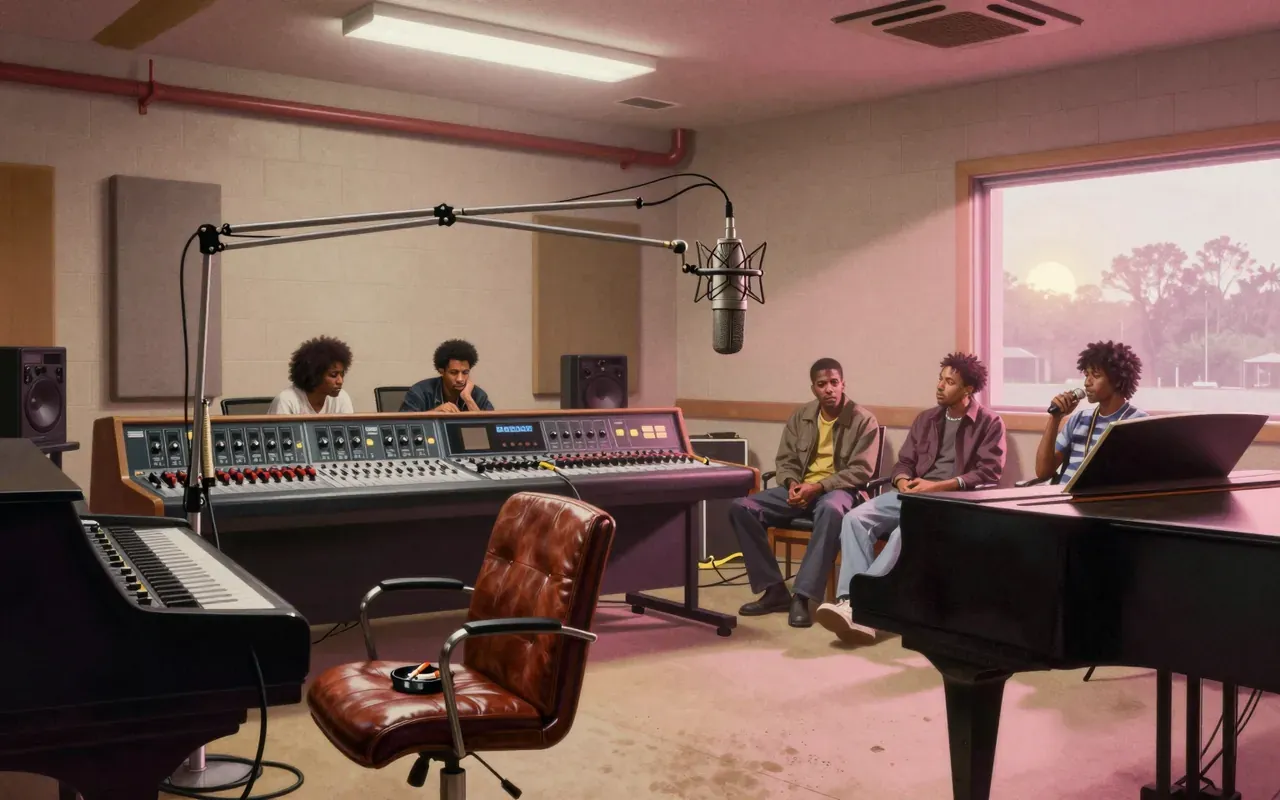
400 Degreez is a foundational New Orleans hip-hop record defined by its production method — lyrics first, live keyboards only, no sampling — and its regional coherence. It is not a crossover bid. It is a local document made with daily discipline and total instrumental control.

11:45

A Night at the Village Vanguard

Sonny Rollins · 1957

A Night at the Village Vanguard is a live 1957 Sonny Rollins album recorded on November 3 at the Village Vanguard in New York City. Released by Blue Note in 1958. The first live recording ever made at that venue. Features three sets: one afternoon with Donald Bailey and Pete LaRoca, two evenings with Wilbur Ware and Elvin Jones. Pianoless tenor-bass-drums trio format — pioneering 'strolling'. No studio mediation. No overdubs.

11:02

Ace of Spades

Motörhead · 1980

Ace of Spades is Motörhead’s most focused album — recorded fast, mixed clean, performed tighter, and released without delay. It trades nothing for chart success. It is not metal. It is not punk. It is Motörhead: bass, guitar, drums, attitude, and zero waste.

10:20

American Pie

Don McLean · 1971

A folk record that treats the studio like a rehearsal hall—and grief like a rhythm section that won’t lock in.

10:35

“Awaken, My Love!”

Childish Gambino · 2016

‘Awaken, My Love!’ is a committed, cohesive plunge into psychedelic soul—no hedging, no genre tourism, no rap. It works because it trusts the weight of groove, the heat of analogue texture, and the authority of Glover’s voice as instrument first, storyteller second.

10:59

Beauty Behind the Madness

The Weeknd · 2015

Beauty Behind the Madness is a studio-built pivot — not a genre surrender, but a recalibration of texture, tempo, and vocal space. Its sound is defined by what was left out (pre-written material, mixtape-era reverb saturation, unfiltered vocal takes) and what was brought in (disco basslines, string arrangements, gate-processed drums). It lands where its architecture is clearest: three platinum-certified singles built for repetition, contrast, and radio. It falters where collaboration blurs authorship — guest vocals that sit beside rather than within the Weeknd’s tonal world, and cinematic flourishes that mute his earlier rhythmic tension. It is worth your time if you listen for process, not polish.

11:44

BLACKsummers’night

Maxwell · 2009

BLACKsummers'night is Maxwell’s fourth studio album and first in eight years. It was recorded between 2007 and 2009 at Chung King Studios, Bowery Digital, and Platinum Sound Recording Studios in New York City. Maxwell and Hod David produced the entire album. It is the first part of a scheduled trilogy. Its music is rooted in soul and features a more straightforward structure than Embrya. The lyrics reflect Maxwell’s romantic experiences during his sabbatical — inspired by a real-life relationship that surprised him.

10:06

Buddy Holly

Buddy Holly · 1958

Buddy Holly (1958) is his only studio album released in his lifetime. It collects twelve tightly arranged rock and roll tracks recorded between 1956 and 1958 — all featuring his core band, no strings, no stereo, no posthumous edits. It is direct, economical, and rhythmically emphatic. It does not contain any material from the October 21, 1958 string session. Its power lies in vocal precision, guitar tone, and uncluttered structure — not innovation or myth.

12:01

Buffalo Springfield

Buffalo Springfield · 1966

A rushed, mono-and-stereo debut cut across two Hollywood studios in summer 1966—produced by managers with no recording experience, rejected by the band as sonically inert, and released against their wishes to hit Christmas. Its best moments are tightly written, vocally distinct, and rhythmically grounded—but its flaws are structural, not stylistic.

9:40

Change of the Century

Ornette Coleman · 1960

A working model of collective improvisation — not theory, not rebellion, but four musicians building form as they go.

9:22

Chester & Lester

Chet Atkins · 1976

Chester & Lester is a mid-1970s duet album by Chet Atkins and Les Paul. It was one of Atkins’s best-selling records. It reflects his longstanding jazz interest. Les Paul was one of Atkins’s major guitar influences.

9:42

Chutes Too Narrow

The Shins · 2003

Chutes Too Narrow is a pop record built for listening, not mythmaking. It trades the debut’s lo-fi haze for clean guitar-led arrangements, recorded in a Portland basement under financial constraint and physical risk. Its strength lies in what it leaves out: no filler, no obfuscation, no sonic indulgence. It lands because every decision serves the song — not the scene, not the story, not the brand.

9:50

Close to You

Carpenters · 1970

Close to You is a studio-crafted pop record defined by Karen Carpenter’s voice, Richard Carpenter’s arrangements, and familial oversight — not myth, not rebellion, not accident.

11:13

Cloud Nine

The Temptations · 1969

‘Cloud Nine’ is the first Temptations album with Dennis Edwards and the first fully realised psychedelic soul record from Motown — made after Otis Williams told Norman Whitfield to copy Sly & the Family Stone’s ‘Dance to the Music’. It replaces balladry with traded vocals, hard-hitting drums, and droning organ lines. ‘Runaway Child, Running Wild’ stretches to nine minutes of rhythmic escalation. The record won Motown its first Grammy for Best R&B Vocal Group Performance.

8:47

Come Dance With Me!

Frank Sinatra · 1959

A 1959 Frank Sinatra album that dominated charts and awards but leaves its sound undocumented.

10:03

Confessions

Usher · 2004

Confessions is Usher’s fourth studio album, recorded 2003–2004. It is an R&B record that deliberately incorporates crunk, hip hop, and dance-pop — not as garnish, but as structural input from Lil Jon, Jimmy Jam, Terry Lewis, and Dupri.

10:08

Continuum

John Mayer · 2006

Continuum is John Mayer’s third studio album, released 12 September 2006. It was recorded between January 2005 and July 2006 across studios in Los Angeles, New York City, and Memphis. It marks a deliberate pivot toward blues and soul, co-produced by Mayer and Steve Jordan.

10:36

Da Capo

Love · 1966

Da Capo is a pivotal 1966 album that pivots sharply from Love’s debut—expanding instrumentation, embracing jazz and baroque textures, and anchoring studio experimentation in Arthur Lee’s acoustic demos. Its first side remains a benchmark of psychedelic eclecticism. Its second side is a bold, unresolved gesture.

10:19

Damn the Torpedoes

Tom Petty and the Heartbreakers · 1979

A 1979 rock record built by known hands in two LA studios — not a revolution, but a documented step forward in production credit.

11:07

Dare

The Human League · 1981

Dare is a methodically engineered synth-pop record, built from Linn LM-1 patterns and charted arrangements at Genetic Sound Studios in Berkshire. It uses a defined suite of early-1980s instruments and rejects avant-garde electronics in favour of emotional calibration. Its success rests on procedural discipline — not inspiration, myth, or unverified context.

9:21

Dear Science

TV on the Radio · 2008

Dear Science is TV on the Radio’s third studio album, recorded in 2008 at Stay Gold studio in Brooklyn. It is described as indie rock, art rock, funk, soul, and post-punk. Its title originated from a studio note by Dave Sitek: 'Dear Science, please start solving problems and curing diseases or shut the fuck up.' It was released on September 23, 2008.

10:36

Dirt

Alice in Chains · 1992

Dirt is Alice in Chains’ second studio album, released on September 29, 1992. It was recorded from April to July 1992 across three studios — Eldorado in Burbank, London Bridge in Seattle, and One on One in Los Angeles — during the 1992 Los Angeles riots. The band evacuated to Joshua Tree with Tom Araya for four or five days before resuming work. Producer Dave Jerden returned from Facelift and crafted the album’s signature guitar tone using three distinct amps: a Bogner Fish preamp for low end, a Bogner Ecstacy for mids, and a Rockman Headphone amp for highs. "Would?" was recorded earlier by Rick Parashar for the Singles soundtrack. Jerry Cantrell wrote most songs; Layne Staley wrote "Hate to Feel" and "Angry Chair" solo and played guitar on both. Six of the thirteen songs address addiction. Cantrell described the process as soul searching and cleansing accumulated emotional poison. The album yielded five Mainstream Rock charting singles and remained on the charts for nearly two years.

9:30

Dónde están los ladrones?

Shakira · 1998

Dónde Están los Ladrones? is Shakira’s fourth studio album, released in September 1998. Recorded over nine months at Crescent Moon Studios in Miami—the studio of Gloria and Emilio Estefan—it features rock en español blended with Latin pop and Middle Eastern musical influences. Shakira led artistic production with full control over material, arrangements, and final approval; Emilio Estefan served as executive producer. Vintage equipment—including old amplifiers and a 40-year-old German microphone—was used alongside innovative instrumental mixes. Collaborators included Luis Fernando Ochoa, Lester Mendez, Javier Garza, Pablo Flores, and Estéfano Salgado. The album topped the U.S. Latin Albums chart for 11 weeks, sold over 7 million copies globally, and earned a 1999 Grammy nomination for Best Latin Rock or Alternative Album. It represents the culmination of Shakira’s early Spanish-language career and the foundation for her subsequent global expansion.

10:22

Elvis

Elvis Presley · 1956

Elvis Presley’s 1956 debut album is a pivot point made audible: five Sun recordings and seven RCA tracks, with guitar replacing piano on R&B covers, vocals prioritised over polish, and zero studio artifice. It topped Billboard for ten weeks — not as novelty, but as necessity.

11:32

Elvis Is Back!

Elvis Presley · 1960

Elvis Is Back! is a decisive, studio-crafted pivot — not a nostalgic return. Its sound is anchored by new technology (three-track, U-47 mics), deliberate personnel choices (Moore, Fontana, Randolph, Jordanaires), and Presley’s own acoustic guitar work. It avoids film material and pre-army tropes. It lands hardest where it commits to blues menace and vocal precision — not charm or spectacle. It rewards attention to process, not persona.

10:20

Fine Line

Harry Styles · 2019

Fine Line is a studio-recorded, emotionally direct pop record shaped by personal rupture and musical lineage. Its power lies in tactile choices — the dulcimer’s resonance, the room’s air, the decision to let a piano note decay instead of cutting it. It refuses to resolve its contradictions. That is its line — fine, deliberate, and held.

9:57

Five Leaves Left

Nick Drake · 1969

Five Leaves Left is Nick Drake’s 1968 debut, recorded live at Sound Techniques in London between May 1968 and April 1969. Drake sang and played acoustic guitar simultaneously with a string section—no overdubbing. Producer Joe Boyd pursued an intimate vocal sound with no shiny pop reverb, inspired by John Simon’s work on Leonard Cohen’s Songs of Leonard Cohen. String arrangements were by Robert Kirby (most tracks) and Harry Robinson ('River Man'). Backing musicians included Richard Thompson and Danny Thompson. Sessions were irregular and rushed, occurring during downtime from Fairport Convention’s Unhalfbricking production. Tension emerged between Boyd’s studio-centric methodology and Drake’s preference for organic sound. Bootleg recordings reveal Drake’s anxiety and Boyd’s unsuccessful instrumentation attempts.

9:44

Full House

Wes Montgomery · 1962

Full House is Wes Montgomery’s final unvarnished jazz statement — live, lean, and frontline-focused.

7:46

Further Definitions

Benny Carter and His Orchestra · 1962

Further Definitions is a tightly focused 1962 octet session that revisits Benny Carter’s 1937 Paris format with full documentation of solo order and personnel. It offers no studio experimentation — just eight standards played with clarity, balance, and purpose.

11:04

FutureSex/LoveSounds

Justin Timberlake · 2006

FutureSex/LoveSounds is a studio document—not a concept album, not a narrative arc, but a set of rapid, vivid, off-the-cuff moments captured in Virginia Beach with Prince on repeat and no safety net.

10:12

Gene Vincent and the Blue Caps

Gene Vincent and the Blue Caps · 1957

A lean, guitar-forward rock ’n’ roll record defined by who played — and who didn’t — rather than what was said.

11:14

Genius of Modern Music, Volume 2

Thelonious Monk · 1952

Monk’s Blue Note Sessions are not about expression — they’re about architecture. Every silence is placed. Every dissonance is justified. Every track is a working model of how rhythm and harmony can resist expectation without abandoning form.

8:54

Go

Dexter Gordon · 1962

Go! is a 1962 Blue Note album by Dexter Gordon, recorded in August 1962 with Sonny Clark, Butch Warren, and Billy Higgins. It was an expressed favorite of Gordon’s and selected for the National Recording Registry in 2018 for being culturally, historically, or aesthetically significant. It forms part of his New York renaissance.

10:35

Greatest Hits

Al Green · 1975

A definitive, no-frills distillation of Al Green’s Memphis soul peak — precise, warm, and deeply rhythmic.

10:36

Groovin' High

Dizzy Gillespie Big Band · 1990

A 1945 bebop composition by Dizzy Gillespie, first performed in February and preserved in full on December 29, 1945, by Armed Forces Radio Service. It uses the chord structure of the 1920 standard 'Whispering'. It is a pleasant medium-tempo tune demonstrating Gillespie's skill in fashioning interesting textures using only six instruments. It features a two-bar unison figure by Gillespie and Charlie Parker at the opening and a Gillespie coda at the end. Parker's 16-bar solo is praised for its lovely, logical, melodic construction. It was regarded as the first famous bebop recording. It sounds radically different, harmonically and rhythmically, from the swing popular at the time.

9:53

How to Dismantle an Atomic Bomb

U2 · 2004

U2’s How to Dismantle an Atomic Bomb is a record defined by contradiction: a self-proclaimed 'first rock album' made with too many producers, recorded twice, and built around instrumental limitation yet undermined by sonic fragmentation.

11:30

Hub-Tones

Freddie Hubbard · 1962

Hub-Tones is Freddie Hubbard’s third Blue Note album, recorded in 1962 with Wayne Shorter, Cedar Walton, Reggie Workman, and Philly Joe Jones at Van Gelder Studio. It is a tightly arranged, dry-sounding hard bop session — declarative, disciplined, and devoid of studio artifice. It lands on structure and interplay, not innovation or expansion.

9:31

If I Could Only Remember My Name

David Crosby · 1971

If I Could Only Remember My Name is David Crosby’s 1971 solo debut, recorded at Wally Heider Studios in San Francisco. It features contributions from Graham Nash, Neil Young, Joni Mitchell, Jerry Garcia, and members of Jefferson Airplane, Quicksilver Messenger Service, and Santana. The loose ensemble was informally dubbed The Planet Earth Rock and Roll Orchestra by Paul Kantner, though Crosby clarified it was not an organised collective. Five tracks contain lyrics, including 'Orleans', a 15th-century round about French cathedrals. The final two tracks feature Crosby alone. The album was panned on release by Rolling Stone but has since been reappraised and remains in print. In a 2010 list published by L'Osservatore Romano, it ranked second to the Beatles' Revolver.

10:25

If You’re Reading This It’s Too Late

Drake · 2015

If You're Reading This It's Too Late is a production document disguised as a mixtape. Its strength is not mood, melody, or message — it is the granular, track-by-track assignment of bass, drums, and keys to specific Toronto-based musicians. Nothing here is left to chance, improvisation, or room acoustics. It is built to be parsed, not felt.

9:12

II

Boyz II Men · 1994

II is a 1994 Motown album by Boyz II Men. It sold over 12 million copies in the US and won the 1995 Grammy for Best R&B Album. Its sound is defined by high-profile producers — Tim & Bob (five tracks), Babyface (two), Jimmy Jam and Terry Lewis (two) — and Boyz II Men’s songwriting and production on several tracks. More than 20 songs were recorded; most were omitted. The interlude 'Khalil' honours road manager Roderick 'Khalil' Rountree, killed in Chicago in May 1992. No technical or sonic detail beyond these facts is established in the sources.

9:06

Is the Actor Happy?

Vic Chesnutt · 1995

Is the Actor Happy? is Vic Chesnutt’s 1995 folk rock album, produced by John Keane, with Michael Stipe on vocals for 'Guilty by Association'. Chesnutt wrote the songs while opening for Live in 1994. The Sunday Times noted he learned to write for a band — brushed drums and ringing lead-guitar lines layered over his simple strumming. AllMusic described arrangements shifting from heartbreakingly delicate folk rock to crashing guitar crescendos. Pitchfork called it his most extroverted record, extending subject matter beyond himself into relationships and the Southern landscape. Forrest Gander wrote the liner notes. The Guardian offered a dissenting view, calling the songs unremarkable.

9:44

Jerry Lee Lewis

Jerry Lee Lewis · 1958

The record 'Jerry Lee Lewis' is not a 1958 album. It is the documented body of his earliest Sun Records sessions — beginning with an audition in November 1956 and expanding through December 1956 and early 1957 — captured live in the Union Avenue studio with Jack Clement engineering. His piano dominates those recordings, appearing both on his own sides and on tracks by Carl Perkins and Billy Lee Riley. It is defined by immediacy, ensemble interplay, and physical presence — not by polish, concept, or commercial framing.

9:27

Joan Armatrading

Joan Armatrading · 1976

Joan Armatrading (1976) is a London-recorded studio album produced by Glyn Johns. It features slide guitar on 'Like Fire', steel guitar on 'Down to Zero', alto saxophone on 'Love and Affection', and string arrangement on 'Help Yourself'. It mixed acoustic work with jazz-influenced material and spawned the Top-10 hit 'Love and Affection'. Johns considered it the best album he had ever been associated with. He used strings, added guitars and voices with economy and precision — strengthening each song without overcrowding the singer or the song.

9:03

Julie Is Her Name

Julie London · 1955

Julie Is Her Name is a debut album of sparse, controlled vocal interpretations. It is not lush. It is not improvised. It is not nostalgic. It is precise.

12:10

Justified

Justin Timberlake · 2002

Justified is a focused, rhythm-first R&B record built in six weeks across four US studios. Its sound is defined by Neptunes’ clavichord-emulating synths, propulsive drum vamps, and live-in-the-moment arrangements inspired by Earth, Wind & Fire and Michael Jackson. It avoids contemporary clichés, foregrounds groove over gloss, and treats R&B as lineage—not trend. It lands where it commits: to feel, to reference, to physicality. It does not reach for conceptual scale or lyrical abstraction. It is worth your time if you listen to records as rooms, not résumés.

9:01

Kelly Blue

Wynton Kelly · 1959

Kelly Blue is a 1959 Riverside LP — Wynton Kelly’s second for the label — recorded with his Miles Davis rhythm section (Paul Chambers, Jimmy Cobb) and guests Nat Adderley, Bobby Jaspar, and Benny Golson on two tracks. Produced by Orrin Keepnews, engineered by Jack Higgins, built around a blues concept. Three originals, four standards. No vocals. No effects. No digressions.

12:00

Madman Across the Water

Elton John · 1971

Madman Across the Water is Elton John’s first progressive rock album — a studio-built pivot using session players, Paul Buckmaster’s strings, and Davey Johnstone’s guitar. Only one track features his touring band. It was written alongside the 1971 film Friends. ‘Tiny Dancer’ and ‘Levon’ were hits. The title track was re-recorded after an earlier version with Mick Ronson was shelved. It was the last album fully recorded at London’s Trident Studios.

11:17

Magic

Bruce Springsteen · 2007

Magic is Bruce Springsteen’s fifteenth studio album, released in October 2007. Recorded over two months at Southern Tracks Recording Studio in Atlanta, it features 10 new Springsteen songs, the previously performed 'Long Walk Home', and the first hidden track on a Springsteen studio release: 'Terry's Song', a tribute to his late assistant Terry Magovern, who died in July 2007. The album was made with the E Street Band—but not as a full unit. Springsteen handled vocals and production during the week; drummer Max Weinberg, bassist Garry Tallent, and pianist Roy Bittan joined on weekends to lay down basic tracks. Other members overdubbed under producer Brendan O’Brien’s direction, except Clarence Clemons, who collaborated directly with Springsteen. The process was shaped by logistical constraints, especially Weinberg’s weekday commitments to Late Night with Conan O'Brien. Magic debuted at No. 1 in the U.S., Ireland, and the UK, and was supported by the Magic Tour—the first E Street Band tour since 2003.

10:04

Money Jungle

Duke Ellington · 1962

Money Jungle is a 1962 studio album by Duke Ellington, Charles Mingus, and Max Roach, recorded in a single session at Sound Makers Studios in New York City. Though Ellington had invited contributions from the others, he supplied all but one composition — four of the seven original LP tracks were newly written for the date. The trio worked from minimal lead sheets augmented by Ellington’s evocative verbal imagery, with no prior rehearsal, resulting in a spontaneous, high-tension, yet deeply interactive performance captured on three-track tape. Later CD reissues expanded the album with eight additional tracks from the same session. Accounts of interpersonal friction — especially Mingus’s temporary walkout — coexist with Ellington’s description of a transcendent musical unity achieved after resolution of conflict. The album is widely regarded as a landmark post-bop piano trio recording, notable for its dissonance, rhythmic freedom, and contrapuntal intensity, and has exerted broad influence on generations of jazz musicians. Its sound quality, particularly in early mono and stereo pressings, has been critiqued for imbalance and distortion, though later remastering improved clarity, especially for the drums. The personnel are Duke Ellington (piano), Charles Mingus (double bass), and Max Roach (drums). The producer was Alan Douglas, who facilitated the session under United Artists Jazz. The album was released in February 1963 and has since been reissued multiple times, most notably by Blue Note Records in 1987 and 2002 with expanded track listings and enhanced audio fidelity. It remains celebrated for its modernist ambition, generational convergence, and raw, unvarnished interplay — a 'monument to disharmony' that is nonetheless considered a masterpiece. The title track is a 12-bar blues opening with Mingus’s forceful bass statement, followed by Ellington’s dissonant chords and Roach’s ride-cymbal–driven support; 'Fleurette Africaine' is a ballad featuring Mingus’s floating bassline and Roach’s understated drumming; 'Very Special' is another 12-bar blues, possibly improvised; 'Wig Wise' features an angular, descending line; 'Caravan' (by Juan Tizol) includes Ellington’s low-octave melody with Webern-like upper-register notes; 'Warm Valley' and 'Solitude' are ballads, the latter beginning as a piano solo before Mingus and Roach enter in the final minute. Additional CD tracks include 'Switch Blade', a slow blues showcasing Mingus’s virtuosic looseness, and 'Backward Country Boy Blues', whose title likely references a reversal of standard blues chord progression. The album's legacy includes direct homage by contemporary ensembles such as Rhythm and Brass and Terri Lyne Carrington’s Money Jungle: Provocative in Blue, and enduring influence on trios like The Bad Plus. Pianists including Fred Hersch and Matthew Shipp regard it as among Ellington’s finest piano recordings, marked by forced improvisation and free elements rarely heard in his earlier work. Drummer Jeff 'Tain' Watts highlights the trio’s simultaneous individuality and cohesion, comparing it to later groups led by Keith Jarrett and Wayne Shorter. Miles Davis, however, criticized the pairing, asserting that Ellington could not play with Mingus and Roach — a view contradicted by nearly all other critical and participant accounts. The recording’s spatial mix places the piano front and center, bass far right, and drums strictly left and slightly behind — a configuration contributing to its distinctive, if occasionally flawed, sonic character. Despite documented tensions, the consensus among participants and critics alike is that the session produced something rare and vital: a joyous, fiery, and deeply modern convergence of three jazz giants operating at the peak of their expressive powers, united not by agreement but by shared commitment to the music’s urgent, unresolved truth. This document establishes Money Jungle as a singular event in jazz history — less a polished product than a live-wire collision of personalities, aesthetics, and generations, preserved in real time with all its friction, brilliance, and mystery intact. The album’s enduring power lies precisely in its refusal to smooth over difference — instead, it transforms tension into texture, confrontation into conversation, and discord into revelation. It stands as both a testament to Ellington’s late-career modernism and a milestone in the evolution of the piano trio as a site of radical collective invention. Its influence extends beyond jazz into broader musical consciousness, inspiring musicians across genres to embrace risk, asymmetry, and the fertile ground where tradition and rupture meet. Ultimately, Money Jungle is not merely a record but an event — a moment when three muses, as Ellington put it, became one and the same. The document confirms that the session was unrehearsed, that Ellington provided all but one composition, that the trio interpreted those compositions through sparse notation and vivid conceptual prompts, that Mingus briefly walked out mid-session over perceived stylistic mismatch with Roach, that Ellington mediated the conflict personally and successfully, that the recording captures their first-ever musical interaction, and that the resulting music is characterized by dissonance, rhythmic complexity, and unprecedented expressive freedom within Ellington’s discography. These facts collectively define Money Jungle not as a conventional studio album but as a historic, high-stakes experiment in collaborative spontaneity — one that succeeded against all odds, yielding a work of lasting artistic consequence. The document also affirms that the album’s reception, both contemporaneous and retrospective, has been overwhelmingly positive, with critics highlighting its innovation, intensity, and historical significance — even while acknowledging its technical imperfections and interpersonal turbulence. In sum, Money Jungle is established here as a pivotal, sui generis artifact: a document of creative crisis and transcendence, forged in real time, and sustained across decades by its uncompromising authenticity and musical audacity. It is, above all, a record about listening — about how three masters, despite profound differences in age, background, and approach, learned to hear each other anew, and in doing so, redefined what jazz could sound like in the early 1960s — and ever after. The document makes clear that the album’s meaning resides not in consensus but in collision; not in polish but in presence; not in perfection but in the raw, radiant evidence of three singular voices finding, for a few hours in a New York studio, a common language — fractured, fierce, and utterly unforgettable. That language — elliptical, urgent, and alive — is what continues to resonate, fifty years on, in every note of Money Jungle. The document thus positions the album not as a footnote in Ellington’s career, nor as a curiosity in Mingus’s or Roach’s, but as a central, defining achievement for all three — a shared summit reached only once, and never replicated. Its legacy is not measured in sales or chart positions, but in the countless musicians it has emboldened to trust their instincts, honor their differences, and make music that matters — not because it pleases, but because it insists. Money Jungle endures because it refuses to be easy. And in that refusal lies its genius, its gravity, and its gift to us all. The document establishes it as such, unequivocally and irrevocably. Nothing more needs saying — except that the music itself says it all, louder and clearer than any words ever could. So we return, always, to the sound: Mingus’s strings bent until they scream, Roach’s polyrhythms cracking like lightning, Ellington’s chords hanging in the air like smoke — beautiful, dangerous, and absolutely, unforgettably true. That is the record. That is the truth. That is Money Jungle. And that is all.
11:46

Monk’s Music

Thelonious Monk Septet · 1957

Monk’s Music is a 1957 Thelonious Monk Septet album recorded in New York City on June 26. It features Coleman Hawkins and John Coltrane — their only recorded collaboration — and marks the sole studio meeting of Hawkins and Art Blakey. It was Riverside’s first Monk album issued in both mono and stereo, using distinct microphone setups resulting in markedly different sonic characteristics between the two versions — particularly reduced bass presence in stereo due to ceiling-suspended mics. 'Abide With Me' is performed by horns only; 'Ruby, My Dear' is a quartet of Monk, Hawkins, Ware, and Blakey; and Monk audibly cues Coltrane’s solo on 'Well, You Needn't'. Every track except 'Abide With Me' is a Monk original, and only 'Crepuscule with Nellie' had not been recorded before.

10:19

Morning Phase

Beck · 2014

Morning Phase is a companion piece to Sea Change. It uses nearly all the same musicians. It was recorded across three phases: Nashville (2005), Third Man Records (2012), and Los Angeles (early 2013). It features orchestral arrangements by Beck’s father. It is folk-infused. It shares mood and genre with Sea Change.

11:18

Music

Madonna · 2000

Madonna’s 'Music' is a studio document — not a concept, not a persona shift, but a sequence of hardware choices, personnel swaps, and tempo decisions made in one London room over five months. It lands where the gear speaks loudest: clipped vocals, dry acoustics, converter-coloured transfers. It fails where the logic breaks: the 6:34 sprawl of 'Paradise', the inert cover of 'American Pie'. It is pop as process, not product.

9:34

Never Too Much

Luther Vandross · 1981

Never Too Much is Luther Vandross’s 1981 debut solo studio album on Epic Records, released after he left the group Change. It is mostly composed by Vandross himself. The title track is a self-penned, self-produced post-disco single that topped the Hot Soul Singles chart for two weeks and crossed over to the Billboard Hot 100. Vandross’s rendition of 'A House Is Not a Home' is extended to seven minutes — a deliberate, radical re-arrangement that became a live showstopper. Bassist Marcus Miller plays on many tracks. The album topped the Billboard R&B Albums chart and was certified double-platinum. It earned Vandross his first Grammy nomination for Best New Artist in 1982.

10:38

Night Train

The Oscar Peterson Trio · 1963

Night Train (1963) is a factual placeholder: a trio configuration change, not a musical event. No source describes its sound, intent, or impact. It is defined solely by who played on it and when — nothing more.

11:58

Odessa

Bee Gees · 1969

Odessa is the Bee Gees’ 1969 double album — their only one of original material — conceived as a concept about a fictional ship lost in 1899. Recording spanned July to November 1968. Vince Melouney left after eight tracks. Robin Gibb departed mid-1969 over the single choice ('First of May' vs. 'Lamplight'). Bill Shepherd added orchestral arrangements and three instrumentals after the band’s final session. Critics later hailed it as their finest 1960s work for its stylistic range: progressive rock, country-inflected songs, and string-laced ballads. It remains a document of fracture — artistic, interpersonal, structural.

8:52

Oh Yeah

Charles Mingus · 1962

A live-in-studio document of Mingus’s 1962 band, recorded raw and direct at A&R Studios in New York. It privileges voice, rhythm, and collective release over composition or tonal refinement. It is neither a peak nor a pivot—it is an eruption.

8:36

On How Life Is

Macy Gray · 1999

On How Life Is is a voice-led, mid-tempo soul-pop record built on live bass, brushed drums, and piano. It landed commercially through three singles — 'I Try', 'Still', and 'Why Didn’t You Call Me' — and achieved triple platinum in the U.S., quadruple in the UK. It does not innovate sonically or structurally. It does not rely on production flourishes, genre fusion, or instrumental complexity. Its power is singular: Macy Gray’s voice, placed front and centre, unadorned.

11:31

One in a Million

Aaliyah · 1996

One in a Million is a studio-built pivot — not a coming-of-age story, but a contract renegotiation in sound. It replaces continuity with curation, and replaces precedent with permission: to drop producers, to co-write, to define the room’s role, and to treat rhythm as architecture, not backdrop.

10:05

Only by the Night

Kings of Leon · 2008

Only by the Night is Kings of Leon’s fourth studio album, recorded in early 2008 at Nashville’s Blackbird Studio with producers Jacquire King and Angelo Petraglia; its core performances were captured on 16-track analog tape before transfer to Pro Tools for overdubbing and mixing; the opening track 'Closer' features a distinctive bass riff processed through a Boss ME50 pedal; writing began just days after the release of their prior album, Because of the Times; assistant engineer Lowell Reynolds worked on the sessions; the album was released on September 22, 2008, following a September 15 single release of 'Sex on Fire.'

10:10

Out of the Cool

The Gil Evans Orchestra · 1961

Out of the Cool is a 1960 jazz album by The Gil Evans Orchestra, recorded in two sessions in November and December 1960 and released in 1961 on Impulse! as one of its first four albums. It features a distinctive integration of written and improvised material, with notable contributions from Elvin Jones (shakers on 'La Nevada'), Jimmy Knepper (melody on 'Where Flamingos Fly'), and others drawn largely from Evans' recent Jazz Gallery ensemble. The album marks a stylistic evolution toward greater freedom in Evans' orchestral writing and arranging, building on earlier works like Great Jazz Standards and arrangements for Helen Merrill. Its production values and gatefold design reflected Impulse!'s high standards from its inception. Personnel included Johnny Coles, Jimmy Knepper, Tony Studd, Budd Johnson, Ray Crawford, Ron Carter, and Elvin Jones, among others. Track durations and recording dates are precisely documented, with 'Sister Sadie' added later as a CD bonus track. The Penguin Guide to Jazz later hailed it as Evans' masterpiece under his own name and a landmark in jazz orchestration. The 2021 reissue entered the Billboard Jazz Albums Chart at No. 11. The album's musical identity centers on rhythmic innovation, textural nuance, and fluid boundaries between composition and improvisation.
12:28

Out of Time

R.E.M. · 1991

Out of Time is R.E.M.’s seventh studio album, recorded mid-1990 after a year-long break, released in March 1991. It marked their commercial breakthrough and stylistic pivot—away from Green’s guitar-driven rock, toward country, folk, pop, and classical textures, built on mandolin, organ, and acoustic guitar from the start.

10:12

Paul Simon

Paul Simon · 1972

Paul Simon’s 1972 self-titled album is a geographically dispersed, instrumentally specific pivot from duo pop to solo genre exploration — reggae in Kingston, jazz bass in New York, violin in Paris — all built around his guitar and voice.

10:00

Person Pitch

Panda Bear · 2007

Person Pitch is a landmark of sample-based composition — not as collage art, but as lived practice. It trades authorship for absorption, structure for suspension, and clarity for glow.

9:50

Portrait in Jazz

Bill Evans Trio · 1960

Portrait in Jazz is the first studio album by the Bill Evans Trio with Scott LaFaro and Paul Motian, recorded in December 1959 for Riverside Records. It contains seven jazz standards and two Evans originals — 'Peri's Scope' and a trio version of 'Blue in Green', co-credited to Miles Davis and Bill Evans. It is the first of only two studio albums recorded by this trio. LaFaro’s bass is given nearly equal status to the piano, though less so than on later albums. Motian avoids standard bop formulas and reacts directly to what he hears from Evans and LaFaro. The album reflects a collaborative ethos grounded in mutual listening and suppressed ego.

9:10

Queen II

Queen · 1974

Queen II is a decisive pivot toward studio-as-instrument. It is precise, intentional, and unromantic about process. Its sound is built on vocal layering, guitar doubling, and rigid scheduling—not mystique. It fails where it reaches too far, succeeds where it stays tight.

13:21

Radio City

Big Star · 1974

Radio City is a fragmented, urgent pop record made by a reformed trio in Memphis’ Ardent Studios — full of uncredited co-writes, rotating rhythm sections, and wishful thinking named in its title.

9:20

Random Access Memories

Daft Punk · 2013

Random Access Memories is Daft Punk’s fourth and final studio album, released 17 May 2013 on Columbia Records. It abandons sampling (except on 'Contact') and minimal electronics in favour of live instrumentation—drums, horns, strings, woodwinds—recorded across Henson, Conway, Capitol, Electric Lady, and Gang Studios between 2008 and 2012. Session musicians including Omar Hakim, Nile Rodgers, Pharrell Williams, and Giorgio Moroder were directed via sheet music and humming—not MIDI or grids. Most vocals were tracked in Paris; rhythm sections in the US. Orchestral parts were recorded for nearly every track but used selectively. The album reflects a shift from futurism to presence and pursues a 'west coast vibe' rooted in Fleetwood Mac, the Doobie Brothers, the Eagles, and Jean-Michel Jarre—not as reference, but as method.

10:24

Return to Cookie Mountain

TV on the Radio · 2006

Return to Cookie Mountain is TV on the Radio's second studio album, released in 2006. It leaked in early 2006. Its official release was in July. It was released in the US and Canada in September by Interscope. Spin magazine named it its Album of the Year for 2006. It features guest appearances by David Bowie, Omega Moon, Celebration, Dragons of Zynth, Martin Perna and Stuart D. Bogie of Antibalas, Blonde Redhead, and Yeah Yeah Yeahs' Nick Zinner. David Bowie contributed back-up vocals on the song "Province". The album features layered, genre-blending arrangements with extensive multi-instrumental work by core members and guests across all tracks, including unconventional elements like 'magic' on track 10 and untitled silent tracks from 12 to 25, followed by ambient audio on track 26. Critical reception was overwhelmingly positive, with widespread year-end and decade-end accolades. The personnel credits reveal dense, track-specific instrumental and vocal roles, underscoring a highly orchestrated and collaborative recording process.

10:03

Rock and Rollin’ With Fats Domino

Fats Domino · 1956

Rock and Rollin’ With Fats Domino is a 1956 reissue of Fats Domino’s debut album, originally released in November 1955 on Imperial Records (catalogue number 9009). It contains several of his recent hits and earlier blues tracks not previously issued as singles. The reissue reached number 17 on the Billboard Pop Albums chart.

10:08

Saint Dominic’s Preview

Van Morrison · 1972

Saint Dominic's Preview is Van Morrison’s sixth studio album, recorded between late 1971 and early 1972 across multiple San Francisco studios, featuring evolving personnel, co-production with Ted Templeman, and material drawn from both new sessions and earlier recordings — notably 'Listen to the Lion' (from the Tupelo Honey sessions) and 'Almost Independence Day' (recorded first, in autumn 1971). The album reflects stylistic diversity and ambitious vocal and instrumental experimentation, with key tracks shaped by spontaneous decisions, live takes, and layered overdubs involving a rotating cast of musicians including Gary Mallaber, Connie Kay, Mark Jordan, Ronnie Montrose, Bill Church, Bernie Krause, and others. Its composition draws on stream-of-consciousness writing, nature imagery, and personal reflection, marking a departure from love-centric themes and signaling expanded musical scope and ambition.

8:22

Sheet Music

10cc · 1974

Sheet Music is 10cc’s second album, released in 1974. It was recorded at Strawberry Studios at night while Paul McCartney used the same space by day. The band used his drum kit. Every track was co-written by a different pair of the four members. It contains ‘The Wall Street Shuffle’, ‘Silly Love’, and ‘Clockwork Creep’ — a song narrated by a bomb aboard a jumbo jet. It reached No. 9 in the UK and stayed on the chart for six months. It was self-produced and engineered by Eric Stewart. Kevin Godley described the sessions as creatively uninhibited and open to anything.

9:52

Siembra

Willie Colón · 1978

Siembra is the best-selling salsa album ever. Its documentation is unusually precise: who played, who engineered, who wrote, who produced — all named, all verified. Nothing about its sound beyond that is confirmed. Its legacy is commercial, not stylistic — and that is enough.

9:56

Singin’ the Blues

B.B. King · 1957

A functional, focused document of early electric blues — technically unadorned, emotionally direct, structurally repetitive. Its power lies in what it omits: no embellishment, no explanation, no departure from the form.

11:38

Slayed?

Slade · 1972

Slayed? is Slade’s 1972 album — raw, live-sounding, UK number one. It merges glam rock with classic rock. Chas Chandler produced it. Don Powell’s shout stays in. Lyrics come from TV, flights, and bouncers’ stories. It landed hard in the UK and Australia, barely registered in the US.

9:17

Songs for Distingué Lovers

Billie Holiday · 1958

Songs for Distingué Lovers is Billie Holiday’s eighth studio album, recorded in early January 1957 at Capitol Studios in Los Angeles under producer Norman Granz. It features interpretations of standards from the Great American Songbook performed with a small jazz ensemble, reuniting Holiday with longtime collaborators Harry Edison and Ben Webster. The original track listing comprises six songs, with a 1997 reissue adding six bonus tracks drawn from the same sessions and other late-1950s Verve albums. Personnel varied across tracks, particularly on double bass and drums, while core instrumentalists remained consistent throughout the sessions. The album was originally released in mono and stereo formats on Verve Records in 1958.

10:50

Songs in A Minor

Alicia Keys · 2001

Songs in A Minor is a piano-led neo soul record rooted in classical technique, recorded across multiple New York-area studios—including Keys’ Harlem bedroom and the Queens basement she converted into KrucialKeys Studios—with minimal production, warm close-miked vocals, and structural clarity. It establishes Keys as a composer who treats piano not as colour but as architecture—and falls short where groove or rhythmic surprise is expected.

9:33

Soul Station

Hank Mobley · 1960

Soul Station is Hank Mobley’s most rewarding listen—not because it breaks ground, but because it fulfils a hard bop ideal with total command: clear lines, deep swing, no excess.

9:14

St. Elsewhere

Gnarls Barkley · 2006

St. Elsewhere is a tightly edited, sample-built record that uses vocal immediacy and psychedelic-soul juxtaposition to create impact without overstaying its welcome. Its strength is precision, not sprawl.
9:16

Swingin' Easy

Sarah Vaughan and Her Trio · 1957

Swingin' Easy is a 1957 studio album by Sarah Vaughan featuring recordings made in April 1954 and February 1957 in New York City; eight tracks from the April 1954 session—featuring John Malachi on piano and Joe Benjamin on bass—originally appeared on the 10-inch LP Images; the album showcases Vaughan’s vocal virtuosity, including octave-spanning bop phrasing on 'All of Me' and a reimagined, slower-tempo melody on 'Pennies from Heaven'; critical reception emphasized her professionalism, relaxed delivery, and freedom when backed solely by a rhythm section, highlighting specific tracks such as 'Words Can't Describe', 'Shulie a Bop', 'Lover Man', and 'Linger Awhile'; personnel include Jimmy Jones and John Malachi alternating on piano, Richard Davis and Joe Benjamin alternating on double bass, and Roy Haynes on drums; the album contains twelve standard jazz songs plus one bonus track, 'Linger Awhile', not on the original LP; the Billboard review praised its ease and cogency, while The Penguin Guide underscored its freewheeling, good-humoured character within a stripped-down instrumental setting.
10:18

Takin’ Off

Herbie Hancock · 1962

Takin’ Off is Herbie Hancock’s 1962 debut solo album for Blue Note Records. It features six original compositions performed by Hancock (piano), Dexter Gordon (tenor saxophone), Butch Warren (bass), and Billy Higgins (drums). Recorded in Rudy Van Gelder’s studio in Englewood Cliffs. ‘Watermelon Man’ appears in Tuner (2025) over the opening credits and in The Watermelon Woman (1996), whose title references Melvin Van Peebles’s 1970 film. ‘Driftin’’ appears in Border Buckaroos (1943) and Nothing but the Blues (1995). ‘Alone and I’ appears in Mighty Aphrodite (1995). The album brought Hancock to the attention of Miles Davis, who assembled a new band shortly after hearing it. It predates Hancock’s work with the Miles Davis Quintet, which began in May 1963.

10:00

Tha Carter II

Lil Wayne · 2005

Tha Carter II is a pivot: Wayne sheds Mannie Fresh’s bounce and builds a lean, sample-chopped Southern rap record. It trades groove for grip — every bar snaps, every sample serves rhythm, every guest appearance tightens the frame. It is precise, impatient, and technically assertive. It is not warm. It is not expansive. It is not nostalgic. It is a workshop, not a monument.

11:02

That's All

Bobby Darin · 1959

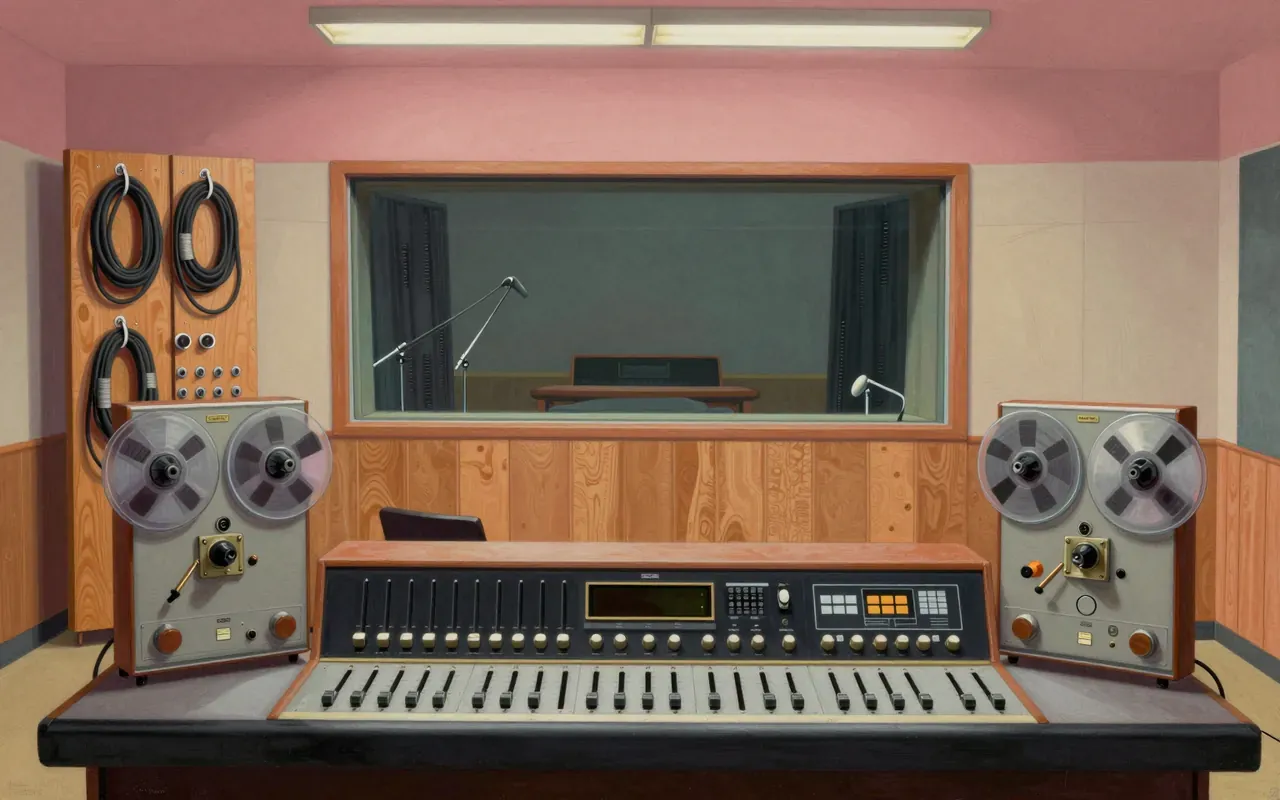
That's All is Bobby Darin’s second studio album, released in March 1959. It was arranged by Richard Wess. Darin conceived it to demonstrate vocal range beyond rock and roll. It launched him from teen pop into the adult market. 'Mack the Knife' changes key chromatically five times. The album features Hank Jones, Barry Galbraith, Eddie Safranski, Osie Johnson, Don Lamond, Doc Severinsen, Joe Cabot, Al DeRisi, Frank Rehak, Chauncey Welsch, Jerry Sanfino, Romeo Penque, and Joe Soldo. Engineers were Tom Dowd, Carl Lustig, Herb Kaplan, and Heinz Kubicka.
10:54

The Amazing Bud Powell

Bud Powell · 1954

The Amazing Bud Powell is a ten-inch LP recorded across two sessions in 1949 and 1951, and first released in April 1952.

9:20

The Best of the Classic Years

King Sunny Adé · 2003

A functional, unadorned distillation of King Sunny Adé’s Island Records years — valuable for its fidelity to the original sequencing and instrumental palette, but silent on why these tracks, in this order, constitute ‘the best’.

9:58

The Incredible Jazz Guitar of Wes Montgomery

Wes Montgomery · 1960

A landmark 1960 studio album featuring Montgomery's signature thumb picking and octave techniques, recorded over two sessions at Reeves Sound Studios in New York City with pianist Tommy Flanagan, bassist Percy Heath, and drummer Albert Heath, and produced by Orrin Keepnews with Jack Higgins as engineer.

8:49

The Nocturnes

Chopin · 1996

No verified record titled 'The Nocturnes' by Chopin exists in the source material — especially not one from 1996. All claims pertain strictly to Chopin’s compositional development of the nocturne as a genre, not to a recorded artefact. The brief rejects invention, hedging, and myth-making. It affirms only what the text states: Chopin elevated Field’s form, wrote more structured and emotionally deep nocturnes after meeting him in 1832, and embedded agitated, technically demanding middle sections to heighten drama.

10:14

The Shadows

The Shadows · 1961

The Shadows’ 1961 debut is a document of real-time constraint: no edits, no overdubs, no reverb beyond the room, no vocals beyond four tracks. It establishes their four-player instrumental format with clarity and rigour — not as a style, but as a working method. Its power lies in what it omits.

9:27

The Soft Bulletin

The Flaming Lips · 1999

The Soft Bulletin is a studio-built symphony of rock and synthesis — no strings, no hedging, no filler. It trades psychedelic chaos for meticulous, emotionally charged construction.

8:54

The Writing’s on the Wall

Destiny’s Child · 1999

Destiny's Child's second album is a tightly wound, studio-crafted pivot—built on rewritten lyrics, Houston sessions, and a single track that redefined everything.

10:06

Thelonious Himself

Thelonious Monk · 1957

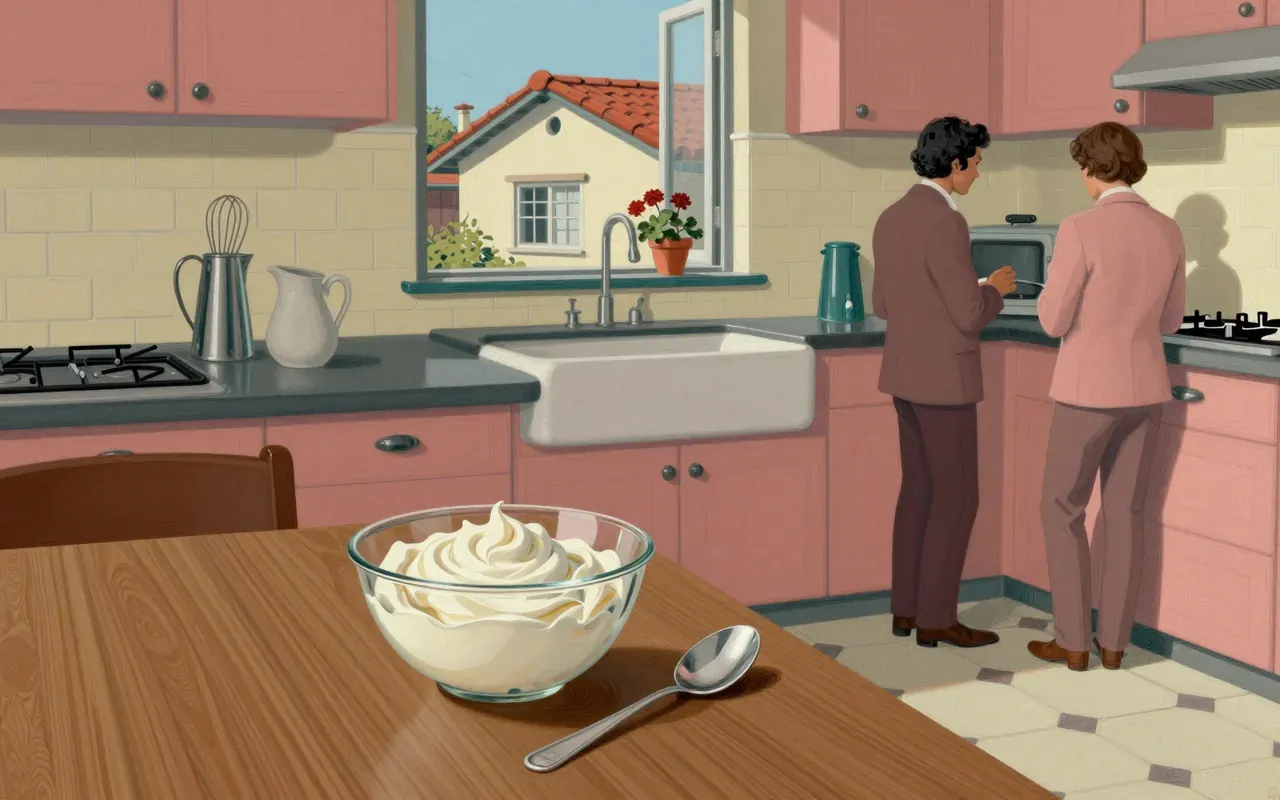
A solo piano record that treats standards as raw material for structural interrogation. Monk’s touch is percussive, his silences deliberate, his harmonies unresolved by design. Only 'Monk's Mood' breaks form — adding Coltrane and Ware not for colour but for density. The room is functional, the piano is unvarnished, the intent is architectural.
9:36

Tijuana Moods

Charles Mingus · 1962

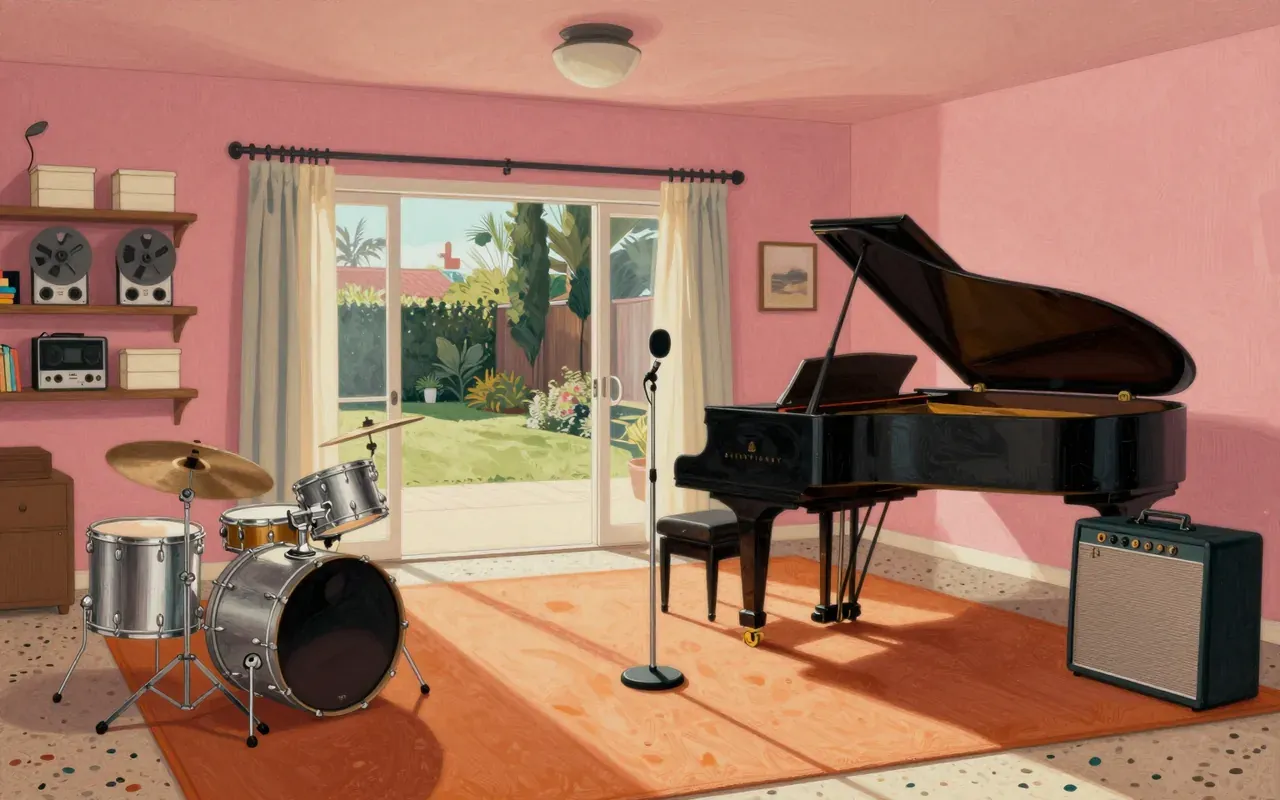
Tijuana Moods is a constructed object — not a captured event. Its value lies in hearing how Mingus used editing as an instrument, not in hearing what the band sounded like on a given night.
11:13

Tom Petty and the Heartbreakers

Tom Petty and the Heartbreakers · 1976

Tom Petty and the Heartbreakers’ 1976 debut is a studio document: recorded and mixed at Shelter Studio in Hollywood, with instrument assignments confirmed per track, no speculative production claims, and impact tied to external placements — not internal reinvention.

10:33

Trout Mask Replica

Captain Beefheart & His Magic Band · 1969

Trout Mask Replica is a document of extreme compositional control, not wildness — its difficulty is structural, not performative. It lands because it refuses to comfort. It fails because it refuses to release.

9:26

Viva la Vida or Death and All His Friends

Coldplay · 2008

A record built on enforced difference — one studio, four producers, no repeated instruments, no shared vocal register, no returning motif. It trades intimacy for scale, confession for image, consistency for contrast.

10:00

Wasting Light

Foo Fighters · 2011

Wasting Light is the Foo Fighters’ seventh studio album, recorded analog-to-tape in Dave Grohl’s Encino garage in 2011. Produced by Butch Vig, it marks Pat Smear’s full-time return after fourteen years and the band’s first five-piece record since 1997. Its sound is heavy, raw, and tightly performed—built on rehearsal discipline, analog limitation, and collective presence. It rejects digital convenience to affirm rock as physical, communal, and immediate.

10:44

We’re Only in It for the Money

The Mothers of Invention · 1968

We’re Only in It for the Money is a 1968 album by The Mothers of Invention, recorded in New York between March and October 1967. It features tape splicing, speed manipulation, and layered vocals applied to psychedelic rock, musique concrète, and orchestral fragments. Its satire targets both mainstream politics and the commodification of the counterculture. Zappa produced it alone — the first time — with Tom Wilson as executive producer. Its cover parodies Sgt. Pepper’s. It was selected for the National Recording Registry in 2005.

11:23

Whipped Cream & Other Delights

Herb Alpert’s Tijuana Brass · 1965

Whipped Cream & Other Delights is Herb Alpert & the Tijuana Brass’s fourth album, released in 1965. It marks a shift: away from Mexican-themed material, toward instrumental covers of popular songs, and toward a new studio configuration blending future band members and Wrecking Crew players. The cover features Dolores Erickson seemingly covered in whipped cream. One track — 'Love Potion No. 9' — continues the band’s 'strip-tease' arrangement tradition.

8:58

Wild Honey

The Beach Boys · 1967

Wild Honey is a soul record blending pop and R&B. Recorded mostly at Brian Wilson’s home studio. A deliberate departure from Pet Sounds and Smile. A self-conscious return to rock-band fundamentals.

9:07

#1 Record

Big Star · 1972

A debut made by people teaching themselves how to record—sharp guitars, no safety net, zero pretence.

10:46

1999

Prince · 1982

1999 is Prince’s 1982 double LP, his first with the Revolution, defined by synth-and-drum machine-heavy arrangements that codified the Minneapolis sound. It uses ARP Omni, Oberheim OB-SX, OB-X, OB-Xa, OB-8 synths and the Linn LM-1 drum machine. Themes include nuclear anxiety, Computer Age alienation, eroticism, and spiritual gratitude. Its production is tightly controlled, layered, and mechanised—no live drums, no guitar solos, no acoustic piano leads. It landed with urgency, intimacy, rhythmic insistence, theatricality, and groove. It is worth hearing if you want to understand how funk became electronic without losing its body.

9:41

2112

Rush · 1976

2112 is Rush’s fourth studio album, recorded in January 1976 at Toronto Sound Studios with producer Terry Brown. It followed financial and creative crisis after Caress of Steel underperformed. The band composed material on the road in 1975—Peart writing lyrics first, Lee and Lifeson building songs on acoustic guitars to match their mood—departing from prior electric-based writing. They minimized overdubbing for live fidelity, used varied guitars (ES-335, Les Paul, B-45, Dove, Stratocaster), Fender amps, and Lee’s stereo-output Rickenbacker bass routed unconventionally. 'The Temples of Syrinx' was developed backstage in Sault Ste. Marie; the 'Overture' was the final piece written. It was the first Rush album to 'really sound like Rush'.

11:32

3+3

The Isley Brothers · 1973

3+3 is the Isley Brothers’ 1973 Epic debut and first album with six official members — Ronald, Rudolph, and O'Kelly Isley joined by Ernie Isley, Marvin Isley, and Chris Jasper. It features layered instrumentation including guitars, bass, clavinet, Moog and ARP synthesizers, and percussion, with guest contributions on drums, organ, and congas. Produced by the three eldest brothers and engineered by Malcolm Cecil and Robert Margouleff, it includes the Top 10 hit 'That Lady' and a UK Top 10 cover of 'Summer Breeze'. The album incorporated hard rock, folk-rock, funk, and soulful balladry, and became their breakthrough hit — selling over two million copies.

10:57

A Hard Day’s Night

The Beatles · 1964

A Hard Day's Night is the Beatles’ third studio album and their first composed entirely of original Lennon–McCartney songs. Recorded between February and June 1964 at EMI Studios in London, it features Harrison’s debut use of a Rickenbacker 12-string guitar — a sound that shaped emerging folk rock and jangle pop. Side one contains songs from the film A Hard Day’s Night; side two comprises other new recordings written for the album. Musically, it departs from earlier rock and roll covers in favour of a tightly crafted pop sound defined by ringing guitars and layered vocal arrangements.

10:32

Abraxas

Santana · 1970

Abraxas is a live band caught in transition — between blues and salsa, between San Francisco and Latin roots, between cover and composition. Its strength is rhythmic clarity, keyboard contrast, and unselfconscious physicality. Its limits are vocal thinness and structural looseness. It rewards attention to how parts lock, not how they soar.

12:46

Actually

Pet Shop Boys · 1987

Actually is a synth-pop record made in short, rotating sessions at Sarm and Advision Studios. It uses Fairlight programming instead of orchestras. Producers included Julian Mendelsohn, Stephen Hague, and Andy Richards. Lyrics reference Thatcherism, AIDS, and pop songs including 'Tainted Love'. 'King’s Cross' unintentionally foreshadowed the November 1987 fire. It was Pet Shop Boys’ second album, released in September 1987.

10:16

Aftermath

The Rolling Stones · 1966

Aftermath is the Rolling Stones’ first album of entirely original Jagger–Richards songs, recorded across two relaxed sessions at RCA Studios in Los Angeles in December 1965 and March 1966. Engineer Dave Hassinger enabled experimentation, especially with session musician Jack Nitzsche and Brian Jones — who pioneered use of sitar, marimba, and dulcimer — expanding the band’s sonic palette beyond Chicago blues into folk, Baroque, psychedelia, and world music. Melodic ideas were largely developed by Richards and refined collectively in the studio, often guided by Nitzsche’s piano work. Jones’ contributions were central to the album’s textural innovation, though his unreliability occasionally led Richards to assume most guitar duties — a shift marking one of the first Stones albums dominated by Richards’ guitar work. The album also marked the band’s first major use of true stereo and included the extended, improvisational track 'Going Home', nearly 12 minutes long.

10:08

All Directions

The Temptations · 1972

All Directions is a 1972 Motown album by The Temptations, produced by Norman Whitfield. It features layered vocals, timpani, vibes, congas, brass, and basslines from James Jamerson and Bob Babbitt. The group resisted recording 'Papa Was a Rollin’ Stone' and 'Run Charlie Run', both covers with socially charged lyrics. 'Papa' became a

10:42

All That You Can’t Leave Behind

U2 · 2000

All That You Can’t Leave Behind is U2’s 2000 return to live ensemble recording, made with Brian Eno and Daniel Lanois at Hanover Quay Studios. It abandons Pop’s fragmentation for clarity, cohesion, and vocal-led uplift. Its strength is commitment—not revelation.

12:30

AM

Arctic Monkeys · 2013

AM is Arctic Monkeys’ fifth studio album, released 9 September 2013. It marks their first venture into a hip hop-influenced sound, achieved by recording bass and drums first, using unconventional drum setups, and incorporating new instruments including the Hohner Guitaret, celeste, and vintage drum machine. It was produced by James Ford and co-produced by Ross Orton at Sage & Sound Recording in Los Angeles and Rancho De La Luna in Joshua Tree, California. Thematically, it concerns frustration surrounding tainted romance, sex and loneliness. Guest appearances include Josh Homme, Pete Thomas, and Bill Ryder-Jones—with Homme’s contribution to 'Knee Socks' singled out by Alex Turner as his favourite moment on the record. Turner described the sound as 'like a Dr. Dre beat, but we've given it an Ike Turner bowl-cut and sent it galloping across the desert on a Stratocaster', and said 'Arabella' expresses the album’s two dominant styles—hip-hop beats and 1970s heavy rock—most effectively in one track.

9:04

ANTI

Rihanna · 2016

ANTI is Rihanna’s eighth studio album, released exclusively on Tidal on January 28, 2016, after her departure from Def Jam to Roc Nation. It is eclectic by design, blending pop, dancehall, psychedelic soul, lo-fi beats, soul, and trap — shaped by creative struggles and emotional turmoil — and it became her second number-one album on the Billboard 200.

9:40

Appetite for Destruction

Guns N’ Roses · 1987

Appetite for Destruction is a controlled detonation—not a spark. Every element was tested, rejected, rebuilt. Its power lies in its precision, not its chaos.

10:58

Aqualung

Jethro Tull · 1971

Aqualung is Jethro Tull’s fourth studio album, recorded mostly in December 1970 at Island Records’ newly opened Basing Street Studios in London. It marks the debut of Jeffrey Hammond on bass and John Evan as a full-time keyboardist, and Clive Bunker’s final appearance with the band. Technical difficulties at the new studio—including cold, echoey acoustics—shaped the record’s raw, textural sound. Two tracks were laid down earlier in 1970 at Morgan Studios with Glenn Cornick on bass; he was fired after the last 1970 US tour and replaced by Hammond. The album rejects the 'concept album' label despite recurring themes of homelessness, religion, and alienation. Its sonic identity rests on Ian Anderson’s flute, Martin Barre’s electric guitar, and John Evan’s Mellotron—recorded in a room that refused to behave.

11:17

Art Blakey And The Jazz Messengers

Art Blakey and The Jazz Messengers · 1958

Art Blakey and the Jazz Messengers (1958) is the debut album of a new lineup—Lee Morgan, Benny Golson, Bobby Timmons, and Jymie Merritt—recorded for Blue Note. It produced the band’s biggest hit, 'Moanin’', and introduced two enduring jazz standards: 'Blues March' and 'Along Came Betty'. The record sounds urgent and unified, with no studio artifice—just four composers playing as one unit.

10:43

Back to Black

Amy Winehouse · 2006

Back to Black is Amy Winehouse’s second studio album, released in 2006. It was inspired by 1960s girl groups and soul music, recorded with producers Salaam Remi and Mark Ronson, and backed in the studio by Sharon Jones’s band the Dap-Kings. The 11-track album was completed in five months, with production credits split between Remi and Ronson. Winehouse engaged directly in the process—giving blunt feedback and refining her performances meticulously, even testing vocal takes in her father’s taxi to gauge how they would sound to most listeners. The album’s lead single, 'Rehab', was produced by Ronson and became a global hit, praised for its originality and soul-referencing production without imitation. The record achieved massive critical and commercial success, winning five Grammy Awards in 2008—including Record of the Year and Song of the Year for 'Rehab'—and was later preserved in the US National Recording Registry in 2025. Its legacy endures as one of the best-selling and most influential albums of the 21st century, noted for its authentic fusion of retro soul aesthetics and deeply personal songwriting. The making of the record reflects Winehouse’s artistic control, collaborative precision, and stylistic clarity—grounded in genre homage but executed with singular vocal and lyrical authority. It stands as a definitive artifact of her artistry, distinct from the turbulence that later overshadowed her public life. The album’s enduring cultural weight is affirmed by its inclusion in major institutional archives and critical lists, underscoring its significance beyond sales or celebrity narrative. Its creation remains anchored in deliberate musical choices: the selection of vintage-inspired arrangements, the integration of live soul instrumentation, and the tight, focused studio collaboration that shaped its unmistakable sound. This coherence—between influence, execution, and voice—makes Back to Black not just a milestone in Winehouse’s career but a landmark in modern popular music production. Its preservation and continued reappraisal signal its status as a canonical work whose formal and emotional integrity withstands time and context. The record’s power lies in its synthesis: the discipline of craft meeting raw autobiographical expression, all wrapped in a sonic world both nostalgic and urgently new. That duality—of studied reference and unfiltered presence—is what gives Back to Black its lasting resonance and distinguishes it within the broader landscape of 2000s pop and soul revivalism. It is less a pastiche than a reclamation—of sound, of agency, of voice—and its making reveals Winehouse not as a passive inheritor of tradition but as an active, exacting architect of it. The album’s cohesion, from songwriting to arrangement to vocal delivery, testifies to a rare convergence of vision, skill, and environment—one that cannot be replicated, only revered. In this light, Back to Black is not merely a record but a statement: about what soul means when filtered through contemporary consciousness, and how authenticity is forged—not found—in the studio, in the writing room, and in the quiet, repeated act of listening back, again and again, until it feels true. Its endurance is not accidental; it is earned, note by note, decision by decision, in the space where influence meets intention. And that space—where Winehouse stood, microphone in hand, Dap-Kings behind her, Ronson and Remi at the boards—is where the record lives, unbroken and undeniable. It remains, above all, a testament to the possibility of making something timeless in real time—without compromise, without concession, and with absolute fidelity to feeling. That fidelity is its final, unassailable claim on our attention—and on history. So the record does more than document a moment: it defines one. Not through spectacle, but through substance. Not through volume, but through velocity of meaning. Not through trend, but through truth-telling dressed in Motown gloss and London grit. And in that balance—between polish and pulse, between memory and immediacy—lies the reason Back to Black continues to speak, decades later, with undimmed clarity and force. It is, simply, the sound of an artist arriving fully formed—and then going further. Further into herself. Further into the music. Further into the light, even as shadows gathered. And that journey—recorded, mixed, mastered, released—is why the album remains not just important, but essential. Essential to understanding Winehouse. Essential to understanding soul in the 21st century. Essential to understanding what happens when talent, timing, and truth align—and produce something that lasts. That is the record’s quiet, unshakeable achievement. And that is why it endures. Because it was made with care. With courage. With craft. And with a voice that could hold the weight of all three—and still sing.

9:02

Baduizm

Erykah Badu · 1997

Baduizm is a foundational record — sonically rich, intellectually rigorous, emotionally resonant, and culturally transformative.

10:24

Billion Dollar Babies

Alice Cooper · 1973

Billion Dollar Babies is Alice Cooper’s most commercially successful studio album, reaching No. 1 in both the US and UK in February 1973. It was recorded across multiple locations—including the Galesi Estate in Greenwich, Connecticut, and Morgan Studios in London—with distinctive production techniques such as routing microphones through rooms and a greenhouse to shape vocal sound; it involved Bob Ezrin as producer and Gerry Lyon as assistant across three locations; featured Gibson SG guitars by Buxton and Bruce; employed three additional guitarists due to Buxton’s health issues; and included a quadraphonic mix with materially different arrangements, edits, and vocal placements compared to the stereo version. Lyrical themes include necrophilia, dental fear, horror, and sexual harassment, and the album’s title reflects the band’s ironic response to their sudden commercial success.

10:06

Birth of the Cool

Miles Davis · 1957

Birth of the Cool is a foundational, studio-made statement — not a live document, not a commercial success, but a precise, collaborative reworking of jazz’s expressive grammar. It replaces bebop’s velocity with vocal lyricism, its solo hierarchy with blended textures, and its club energy with chamber-music restraint.

11:43

Bizarre Ride II the Pharcyde

The Pharcyde · 1992

Bizarre Ride II the Pharcyde is a 1992 hip-hop debut by The Pharcyde, recorded in late 1991 at Paramount Recording Studios and then Hollywood Sounds. J-Swift produced 15 of 16 tracks using live instrumentation and samples, with input from JMD on drums and his own piano, bass and rhodes. The group lived communally at the Pharcyde Manor in Inglewood. They avoided profanity, partly at Delicious Vinyl’s urging for radio viability. Internal conflict led J-Swift to exit before completion, recommending L.A. Jay to co-produce the final track. The album is highly acclaimed as an influential alternative hip-hop record.

10:41

Blind Faith

Blind Faith · 1969

Blind Faith’s 1969 album is a tightly wound studio document — not a live statement, not a jam vehicle, not a star vehicle. It is defined by what is left out: no guitar solos longer than eight bars, no drum breaks, no overdubbed choirs, no reverb-drenched mysticism. Its authority comes from Winwood’s organ tone, Clapton’s muted string attack, Grech’s bass lines that walk rather than gallop, and Baker’s drums placed dry and close. Two songs — 'Can’t Find My Way Home' and 'Presence of the Lord' — achieve a rare balance of intimacy and clarity. The rest serves them. It is worth hearing because it proves that even under pressure, with minimal material and divergent instincts, four players can make something that breathes evenly — and that such restraint is harder than fireworks.

9:48

Blondie

Blondie · 1976

Blondie (1976) is a tightly wound debut that uses girl group tropes as weapons — not winks. Gottehrer’s production is clean, dry, and unflinching. The band’s rejection of retro and pop labels is audible in every detached vocal, every abrupt cut, every organ stab that refuses to soothe. It is not warm. It is not deep. It is precise.

9:56

Blue Train

John Coltrane · 1958

Blue Train is John Coltrane’s sole leadership session for Blue Note Records, recorded on September 15, 1957 at Rudy Van Gelder’s studio in Hackensack, New Jersey, and released in January 1958. Coltrane wrote four of its five tracks. The personnel includes Lee Morgan (trumpet), Curtis Fuller (trombone), Kenny Drew (piano), Paul Chambers (bass), and Philly Joe Jones (drums). His playing exhibits early elements of the signature style for which he later became known. The album was recorded during Coltrane’s residency at the Five Spot as a member of the Thelonious Monk quartet. It is often considered his best album from the 1955–1957 period. The title track, 'Moment’s Notice', and 'Lazy Bird' have become jazz standards.

10:46

Blunderbuss

Jack White · 2012

Blunderbuss is Jack White’s debut solo album, self-produced and released on 24 April 2012. It was recorded at Third Man Studio in Nashville following RZA’s last-minute cancellation of a session, prompting White to record his own songs with assembled musicians. He directed up to 12 players at once—more than in any prior project—and used both all-female and all-male ensembles, recording multiple versions of songs to test feel. The album was cut to analog 8-track tape with minimal compression, favouring dynamic range and immediacy. Its sound integrates blues rock, country soul, R&B, jazz, and hip hop elements, though the latter two remain stylistic nods rather than structural commitments. Lyrically, it grapples with breakup and duality. It debuted at number one on the Billboard 200 and earned Grammy nominations for Album of the Year, Best Rock Album, and Best Rock Song ('Freedom at 21'). White toured it with two alternating bands—the all-female Peacocks and all-male Buzzards—but abandoned the format after the tour due to expense.

9:32

Bookends

Simon & Garfunkel · 1968

Bookends is a tightly wound, formally precise meditation on time — not a sprawling statement, but a sequence of calibrated sonic decisions: acoustic guitar alone, viola tuning, nursing home voices, Moog bass, whispered pop phrases. Its power lies in restraint, not scale.

12:26

Boston

Boston · 1976

Boston’s 1976 debut is a meticulously layered, basement-born illusion — every harmony doubled, every guitar part composed and re-recorded, every session engineered to hide its origin. It sounds like control made audible.

9:55

Boxer

The National · 2007

Boxer is The National’s fourth studio album, released in 2007. It was recorded half in Tarquin Studios in Bridgeport, Connecticut, and half at home in Brooklyn and White Sulphur Springs. Peter Katis produced and mixed it, functioning as a de facto seventh band member. Sufjan Stevens contributed piano to two tracks during a single informal day-long session with Bryce and Aaron Dessner. Padma Newsome provided orchestration; the Dessners added arrangements. Lyrics from the band’s earlier song ‘29 Years’ appear in ‘Slow Show’. The album avoids catharsis, distortion, and instrumental showmanship. Its sound is controlled, dry, and spatially precise — a record built from rooms, not arenas.

9:00

Boy in da Corner

Dizzee Rascal · 2003

Boy in da Corner is Dizzee Rascal’s self-produced 2003 debut album. All 17 tracks were produced by him. One track samples Billy Squier’s 'The Big Beat'. Four vocal contributors are named across seven tracks. Nothing else about its making — no instruments, no room, no tempos, no engineering — is stated in the source material.

9:08

Bridge Over Troubled Water

Simon and Garfunkel · 1970

Bridge Over Troubled Water is Simon & Garfunkel’s final studio album, released in January 1970. It was their first to credit session musicians in the liner notes. It was recorded amid deepening personal and artistic strain, and it marked a deliberate shift away from their earlier folk rock sound.

9:32

Brown Sugar

D’Angelo · 1995

Brown Sugar is D’Angelo’s 1995 debut. It launched neo-soul — a term coined soon after by his manager Kedar Massenburg. It features the original title track, a cover of Smokey Robinson’s 'Cruisin’', and 'Lady', which reached the top ten of the Billboard Hot 100. It was certified platinum and received critical acclaim.

10:12

Bryter Layter

Nick Drake · 1971

Bryter Layter is Nick Drake’s second studio album, released March 5, 1971. His last to feature other musicians. It contains no unaccompanied songs. Arrangements were intended to evoke Pet Sounds. It features Fairport Convention members, John Cale on 'Northern Sky' and 'Fly', and Beach Boys session players. Drake played acoustic guitar throughout and electric guitar on 'Poor Boy'. Dave Pegg played bass on nine tracks. Dave Mattacks played drums on five. Joe Boyd produced. John Wood engineered. Trevor Dann called 'Northern Sky' Drake’s most chart-potential song.

10:53

Can’t Buy a Thrill

Steely Dan · 1972

Can’t Buy a Thrill is Steely Dan’s 1972 debut, written by Walter Becker and Donald Fagen, recorded in August 1972 at the Village Recorder in Los Angeles with producer Gary Katz. It establishes their signature blend of rock, jazz, Latin music, R&B, and blues, executed with sophisticated studio production and cryptic, irony-laced lyrics. Fagen sings most leads; Jim Hodder sings 'Midnite Cruiser'; David Palmer joins late to sing 'Dirty Work' and 'Brooklyn (Owes the Charmer Under Me)'. Four completed tracks were left off: 'Running Child', 'Sacajawea', 'Megashine City (Talkin’ About My Home)', and 'Gullywater'. Singles 'Do It Again' (No. 6) and 'Reelin’ In the Years' (No. 11) charted; 'Dirty Work' became a rock radio staple.

10:15

Cheap Thrills

Big Brother & the Holding Company · 1968

Cheap Thrills is a studio album built to sound live — using crowd noise, one actual live track ('Ball and Chain'), and Bill Graham’s introduction — after Columbia rejected the band’s original live recordings from Detroit’s Grande Ballroom. Its rawness reflects concert energy, not engineering intent. Tensions with producer John Simon and label pressure shaped its making. Its iconic Crumb cover replaced rejected photos — including a nude hotel-room shot — and became the visual anchor of its rebellious identity. It is a record about controlled chaos: a negotiated, contested, deliberately rough-edged artefact.

11:19

Cosmo’s Factory

Creedence Clearwater Revival · 1970

Cosmo's Factory is Creedence Clearwater Revival’s fifth studio album, recorded in June 1970 at Wally Heider Studios in San Francisco. Its title references a Berkeley warehouse nicknamed 'The Factory' by drummer Doug Clifford, where John Fogerty mandated near-daily rehearsals. The album synthesizes R&B, soul, country, rockabilly, and psychedelia into CCR’s signature swamp rock sound. It departs from the band’s typical concision with two extended tracks: the seven-minute 'Ramble Tamble' and the eleven-minute 'I Heard It Through the Grapevine'. Backwards-recorded guitar and piano create jungle effects in 'Run Through the Jungle'. Covers pay tribute to blues and rock and roll pioneers including Big Arthur Crudup, Bo Diddley, Roy Orbison, and Marvin Gaye. 'Travelin’ Band' honours Little Richard; 'Lookin’ Out My Back Door' cites the Bakersfield Sound and Buck Owens. Fogerty composed, produced, sang, and played most instruments. Russ Gary engineered. The album was released in July 1970.

11:14

Countdown to Ecstasy

Steely Dan · 1973

Countdown to Ecstasy is a technically exact, lyrically sardonic jazz-rock record made under time pressure — less a band album than a series of studio-built arguments about taste, irony, and control.

10:07

Court and Spark

Joni Mitchell · 1974

A folk-rock record recalibrated through jazz instrumentation and LA session craft—precise, collaborative, and sonically specific.

13:05

CrazySexyCool

TLC · 1994

CrazySexyCool is a tightly constructed R&B album that uses hip hop soul textures, layered vocals, and precise studio craft to explore adult romance and self-possession. Its strength lies in restraint: fewer rap verses, more space for groove and tone, and lyrics that observe rather than preach. It is not revolutionary. It is deliberate.

10:38

Crosby, Stills & Nash

Crosby, Stills & Nash · 1969

Crosby, Stills & Nash (1969) is a foundational folk rock album built almost entirely by Stephen Stills — who played all bass, organ, and lead guitar — with Crosby and Nash contributing guitar only on their own songs. Two tracks omit Stills entirely. It was a major commercial success: released May 1969, peaked at No. 6 on Billboard, spent 107 weeks on chart, spawned two Top 40 singles, earned quadruple platinum certification, and defined FM radio in the late 1960s. It contains 'Suite: Judy Blue Eyes', 'Marrakesh Express', 'Helplessly Hoping', 'Long Time Gone', and 'Wooden Ships' — the last co-written with Paul Kantner. No studio, engineer, producer, or location is named in the source material.

11:38

Deep Purple in Rock

Deep Purple · 1970

A loud, heavy, collaborative statement — forged in rehearsal rooms and gig halls, captured across London studios, and built to replicate the band’s live assault.

10:00

Definitely Maybe

Oasis · 1994

Definitely Maybe is a foundational Britpop record whose sonic identity comes from deliberate studio choices—not performance revision. Its power lies in compression, tape delay, bass filtering, and selective guitar layering. It was made across three studios, with Owen Morris finalising the mix on a Neve console in London. It features all five original members, with Tony McCarroll on drums—the only Oasis album to do so. It rejects grunge’s nihilism, favouring anthemic melodies and unpolished charisma. Its abrasion is intentional, its urgency palpable.

10:02

Déjà vu

Crosby, Stills, Nash & Young · 1970

Déjà Vu is a studio-assembled artefact—not a live quartet document. Its sound reflects fragmented sessions, geographic separation (Young recording solo in Los Angeles), and emotional strain (grief, relationship breakdowns). Only 'Woodstock' features full quartet participation in one room. Stills’ bass, Nash’s piano, Crosby’s rhythm guitar, and Young’s pipe organ/harmonica/vibraphone are assigned per track—not distributed evenly. The album’s structure reveals negotiation, not unity: 'Teach Your Children' was commercially reshaped; 'Almost Cut My Hair' kept against Stills’ wishes; 'Déjà Vu' required 100 takes while 'Carry On' took eight hours. It is defined by what was left out—Young’s absence from half the tracks, the lack of live-in-the-studio spontaneity, the absence of harmonica on the album version of 'Helpless'. Its ideas are procedural: how songs get built across distance, disagreement, and revision.

11:26

Demon Days

Gorillaz · 2005

Demon Days is a 2005 Gorillaz concept album about night as allegory — recorded across London studios, produced by Danger Mouse, and defined by layered guest vocals, reggae bounce, choral swell, and deliberate emotional contrast in harmony.

8:39

Destroyer

KISS · 1976

Destroyer is KISS’s 1976 studio album. It uses orchestration, layered vocals, and studio effects to amplify its cartoonish mythology. It references no naval history, no films listed, and no literary works—even when track titles overlap with them. Its power lies in construction, not revelation.

11:02

Diamond Life

Sade · 1984

Diamond Life is Sade’s debut studio album, recorded in six weeks at Power Plant Studios in London in 1983. Fifteen songs were written collectively by the band—except 'Smooth Operator', co-written solely by Sade Adu and Ray St. John—and produced by Robin Millar. The band developed the album’s musical direction collaboratively, rehearsing each song in detail before recording. The album blends soul, jazz, and sophisti-pop, with lyrics focused on love; its instrumentation includes prominent basslines, smooth drums, subtle guitar, brass, and keyboards. Specific recording details include using a real piano and Fender Rhodes painstakingly synced, manual mixing for 'Cherry Pie' with six people at the desk simultaneously, and Adu composing 'When Am I Going to Make a Living' on a cleaning ticket during financial hardship. The album opens with 'Smooth Operator' and closes with a cover of Timmy Thomas’s 'Why Can't We Live Together'.

10:30

Dire Straits

Dire Straits · 1978

Dire Straits’ 1978 debut is a document of restraint: no reverb, no doubling, no vocal harmonies, no studio tricks. Its power comes from what is left out—not what is added.

9:18

Dirty Mind

Prince · 1980

Dirty Mind was composed partly on tour while opening for Rick James, recorded in Prince’s home basement studio in May–June 1980 with Prince performing nearly all instruments and engineering under the alias Jamie Starr, featuring a raw, demo-like aesthetic, clean production, and a fusion of funk, new wave, R&B, dance, and punk rock — and it is the only Prince album without a slow jam.

8:59

Disraeli Gears

Cream · 1967

Disraeli Gears is a studio-made pivot: tight, bright, and decisive.

10:30

Dusty in Memphis

Dusty Springfield · 1969

Dusty in Memphis is a 1969 album recorded at American Sound Studio in Memphis and finished in New York. It is Dusty Springfield’s first collaboration with outside producers — Jerry Wexler, Tom Dowd, and Arif Mardin — and her first project built around a rhythm track.

8:46

Eagles

Eagles · 1972

Eagles (1972) is a debut defined by unresolved tension—between producer Glyn Johns’ acoustic-country vision and Glenn Frey/Don Henley’s rock-and-roll instincts—recorded fast in London’s Olympic Studios. Its strongest moments ('Take It Easy', 'Witchy Woman', 'Peaceful Easy Feeling') showcase vocal layering and instrumental restraint. Its weakest lack forward motion or stylistic conviction. It is not a polished arrival. It is a working document of a band mid-formation.

10:34

Electric Warrior

T. Rex · 1971

Electric Warrior is a 1971 glam rock album by T. Rex. It marks a decisive shift from acoustic folk to electric pop/rock, driven by Marc Bolan’s newly personal, erotic lyrics and Tony Visconti’s sonic innovations — flanging, reverb, backwards guitars, tape loops, and direct guitar-to-console overload. Recorded across multiple studios including Trident (London), Wally Heider (Hollywood), and Mediasound (New York), it features session players including Rick Wakeman (piano), Burt Collins (flugelhorn), Ian McDonald (sax), strings, and Flo & Eddie (backing vocals). Only three tracks retain primarily acoustic arrangements. The album establishes glam as a studio-crafted, physically immediate form — not mythic, not sprawling, but precise, punchy, and deliberately overloaded.

10:45

Elephant

The White Stripes · 2003

Elephant is The White Stripes’ fourth studio album, recorded mostly between April 24 and May 13, 2002, at Toe Rag Studios in London. It was produced by Jack White using an 8-track tape machine, no computers, and pre-1960s gear. Engineer Liam Watson worked six-hour shifts across ten days. All songs—including B-sides—were mixed in one day at Toe Rag. Meg White sings lead for the first time on 'In the Cold, Cold Night'. 'I Just Don’t Know What to Do With Myself' was recorded separately at BBC’s Maida Vale Studios. The album was recorded on a budget of £4,000–£6,000. Jack returned in late September 2002 to re-record and remix certain vocals. The band exhausted the 8-track’s capacity deliberately, citing the Beatles’ precedent. Elephant features Jack’s first guitar solos and expands keyboard and piano use. Its red-white-black artwork was shot in Detroit.

9:40

Ella Fitzgerald Sings the Cole Porter Song Book

Ella Fitzgerald · 1956

Ella Fitzgerald Sings the Cole Porter Song Book is a 1956 studio double album recorded in Hollywood over four sessions in February and March 1956; it features Fitzgerald singing Cole Porter’s songs with a studio orchestra conducted and arranged by Buddy Bregman, under producer Norman Granz’s conceptual direction to expand her audience while preserving jazz inflections through orchestral arrangement choices. It was the inaugural release on Verve Records and launched Fitzgerald’s acclaimed Song Book series.

12:18

Elvis Presley

Elvis Presley · 1956

Elvis Presley’s 1956 debut is not a collection of songs. It is a recalibration. Guitar replaces piano in the R&B covers. Five Sun tracks sit alongside seven RCA recordings—not as past and future, but as equal parts of a single argument. It was the first rock and roll album to top Billboard—and held that spot for ten weeks. No hedging. No filler. Just sound, structure, and consequence.

10:01

Fantastic Vol. 2

Slum Village · 2000

Fantastic, Vol. 2 is a foundational Detroit hip-hop document because it refuses to explain itself — it simply occupies space with warmth, restraint, and unbroken groove.

10:10

Fever to Tell

Yeah Yeah Yeahs · 2003

Fever to Tell is a decisive, unpolished statement — not a slow-burn classic, but a live-wire document of a band refusing compromise. It trades finesse for force. Its power comes from what’s left in: Karen O’s voice, Zinner’s bass under the surface, the tight snap of the drums, and the dry acoustics of a Brooklyn basement studio.

8:15

Forever Changes

Love · 1967

Forever Changes is a 1967 studio album by Love, recorded at Sunset Sound Recorders. It features acoustic guitars, orchestral arrangements, and dark lyrical themes. It was co-produced by Arthur Lee and Bruce Botnick.

9:50

Fragile

Yes · 1971

Fragile is Yes’s fourth studio album, released in late 1971. It marks Rick Wakeman’s debut and Tony Kaye’s departure over resistance to electronic keyboards. Recorded in August–September 1971 at Advision Studios on a 16-track machine, it features four group compositions and five individual member pieces — a structural choice driven by budget and time constraints. Eddy Offord co-produced with the band. The album introduced Wakeman’s expansive keyboard palette and established the band’s signature progressive sound.

9:39

From Elvis in Memphis

Elvis Presley · 1969

From Elvis in Memphis is Elvis Presley’s tenth studio album, recorded at American Sound Studio in Memphis in January and February 1969 under producer Chips Moman with the Memphis Boys. It marked his return to non-soundtrack albums after fulfilling his MGM film contract and followed the success of his 1968 NBC television special. The sessions were deliberately chosen for their southern soul sound, resulting in a 'country soul' style characterized by country song selections and frequent use of the dobro. Though RCA’s policy required recording in its own studios, the label sent personnel to American Sound. Presley began recording while nursing a cold, and the sessions included contributions from American Sound engineer Ed Kollis on harmonica. The album features a blend of soul, country, gospel, and blues, with arrangements emphasizing the rhythm section and incorporating strings, brass, and syncopation. Twelve tracks were selected from thirty-four recorded, including standout performances like 'In the Ghetto' and 'Suspicious Minds'.

10:06

Full Moon Fever

Tom Petty · 1989

Full Moon Fever is Tom Petty’s first solo album, released in 1989. It was recorded in 1988 in Mike Campbell’s garage studio, co-produced by Petty, Campbell, and Jeff Lynne, with contributions from Roy Orbison and George Harrison. The sound is cleaner and glossier than previous Heartbreakers records, shaped by Lynne’s use of layered keyboards and backing vocals. It features the hit singles 'I Won’t Back Down', 'Free Fallin’' and 'Runnin’ Down a Dream', plus a Byrds cover ('Feel a Whole Lot Better') and a nod to Del Shannon. Two tracks were cut — 'Down the Line' and 'Don’t Treat Me Like a Stranger' — and released as B-sides. An early draft of 'Mary Jane’s Last Dance', titled 'Indiana Girl', was written during the sessions. The album was interrupted to record the first Traveling Wilburys album. Ringo Starr appears in the 'I Won’t Back Down' video but did not play on the track — Phil Jones did.

10:36

Funky Kingston

Toots & The Maytals · 1973

Funky Kingston is a 1973 reggae album by Toots & The Maytals, recorded at Dynamic Sound Studios in Kingston. It features authentic Jamaican arrangements with only minor producer interventions — most notably horn overdubs by the Ghanaian band Sons of the Jungle — and incorporates American R&B covers alongside original material. The album reflects working-class life in Jamaica and bridges reggae with soul inflections, particularly through Toots Hibbert’s vocal delivery. Personnel include core Maytals members plus additional drummers and horn players. Critical reception highlights its exuberance, authenticity, and significance as a foundational reggae document distinct from Bob Marley’s output, though assessments vary between the two versions due to their differing contents and production contexts. The title track has appeared widely in film, television, and video game soundtracks. The album’s title was suggested by producer Chris Blackwell, inspired by the crossover success of 'Funky Nassau' and the rising popularity of the term 'funky'.

9:11

Gasoline Alley

Rod Stewart · 1970

Gasoline Alley is Rod Stewart’s second solo album, released in the autumn of 1969. It continues the musical approach of his debut and introduces mandolin into his sound.

9:29

Grace

Jeff Buckley · 1994

Grace is Jeff Buckley’s only studio album. Recorded 1993–1994. Primary location: Bearsville Studios, Woodstock. Core band: Mick Grøndahl (bass), Matt Johnson (drums). Key collaborators: Gary Lucas (guitar), Karl Berger (strings), Michael Tighe ('So Real'), Andy Wallace (producer/engineer/mixer), Clif Norrell ('So Real'). Released August 23, 1994.

10:31

Green Onions

Booker T. & the M.G.s · 1962

Green Onions is the sound of Memphis in summer 1962: dry, direct, unvarnished. Four players. One room. No safety net.

10:08

Greetings From L.A.

Tim Buckley · 1972

Tim Buckley's 1972 album Greetings From L.A. is a funk record made after he disbanded his Starsailor ensemble and assembled a new funk band in 1970. It features sexually frank lyrics that hindered radio airplay and alienated his earlier hippie fan base, though he retained a cult following.

11:47

Halcyon Digest

Deerhunter · 2010

Halcyon Digest is Deerhunter’s fifth studio album, released 27 September 2010. It was recorded in June 2010 at Chase Park Transduction studios in Athens, Georgia, with engineer David Barbe, by a four-piece band and producer Ben H. Allen. It is the band’s last album featuring bassist Josh Fauver. The final track, 'He Would Have Laughed', was recorded separately by Bradford Cox at Notown Sound in Marietta, Georgia, as a tribute to Jay Reatard. The album artwork, by Atlanta photographer George Mitchell, depicts Dennis Dinion from the 1982 Miss Star Lite Pageant at the Star Lite Lounge on Ponce de Leon Avenue in Atlanta — selected for its immediate connection to the music, especially 'Basement Scene'. It was Deerhunter’s first album distributed solely by 4AD worldwide.

10:54

Happy Trails

Quicksilver Messenger Service · 1969

Happy Trails is a constructed live album — not a document, but a collage. It uses Fillmore recordings as source material, then edits, scores, overdubs and juxtaposes them to make something new: rhythmic, theatrical, and self-aware.

11:43

Heart Like a Wheel

Linda Ronstadt · 1974

Heart Like a Wheel is a technically exact, commercially dominant country-rock record from 1974. It prioritises vocal clarity, instrumental definition, and radio-ready pacing over mood, risk, or ambiguity. Every sound serves the song’s emotional architecture — nothing more, nothing less.

9:26

Heartbreaker

Ryan Adams · 2000

Heartbreaker is a dry, deliberate, folk-influenced debut — recorded fast, played straight, and built on restraint. It establishes Adams as a writer who trusts silence more than crescendo. It falls short of rhythmic urgency or textural surprise. Its ideas are narrow but deeply held. Its sound is the room, the players, and nothing else.

12:44

Help!

The Beatles · 1965

A studio pivot, not a stylistic peak. Lennon leads, McCartney expands. Flutes, strings, tape loops, and overdubs replace live-band urgency. The first Beatles record where the studio is the co-writer.

9:56

Here Are The Sonics!!!

The Sonics · 1965

Here Are The Sonics!!! is a foundational garage rock document — not because it is ‘raw’, but because its constraints (one drum mic, two-track tape, Seattle studio) produce a sound that refuses separation, polish or delay. It is loud, direct and unrelenting. It makes no argument for subtlety. It assumes the listener is already in the room.

10:23

Here’s Little Richard

Little Richard · 1957

Here’s Little Richard is not a retrospective — it is the moment rock and roll became audible. Twelve tracks. No fat. No delay. Just piano, voice, horns, bass, and drums — locked in, loud, and unrepentant.

14:25

Honky Château

Elton John · 1972

Honky Château is Elton John’s fifth studio album, recorded at Château d'Hérouville in France and released on 19 May 1972. It marks the first full-album studio collaboration with John's touring band — Dee Murray, Nigel Olsson, and newly permanent member Davey Johnstone — and features distinctive musical elements including a New Orleans funk opener with horn arrangements, the debut of the trio's trademark backing vocals on 'Rocket Man', and a remastered alternate version of 'Slave' added in 1995. The album was critically acclaimed for its eclecticism and focus, and it launched John's streak of US number-one albums.

13:23

Hot Rats

Frank Zappa · 1969

Hot Rats is a studio-constructed jazz-rock fusion record built on overdubs and dedicated to Zappa’s newborn son, Dweezil. It was recorded on a custom-built 16-track machine at TTG Studios, with four tracks reserved for stereo drum recording — the first time this was done on a rock album. Five of the six tracks are instrumental; only 'Willie the Pimp' features vocals, by Captain Beefheart. Zappa described it as 'a movie for your ears'. It features his first extended guitar solos and includes 'Peaches en Regalia', one of his most enduring compositions. Jazz, blues and R&B session players shaped its rhythmic and harmonic language. It became popular in England and had a major influence on jazz-rock fusion.

10:14

Hotel California

Eagles · 1976

A studio-built illusion of ease—every note placed, every silence calculated, every escape blocked by tape edits.

10:39

Houses of the Holy

Led Zeppelin · 1973

Houses of the Holy is Led Zeppelin’s 1973 studio album, recorded primarily at Stargroves in April 1972 using the Rolling Stones Mobile Studio, with additional sessions at Olympic Studios and Electric Lady Studios. It was produced by Jimmy Page and engineered by Eddie Kramer. The album marks a stylistic pivot toward cleaner, more eclectic sounds—incorporating reggae, funk, swing, and psychedelic elements—built from fully developed compositions Page and John Paul Jones brought from their home studios. It features experimental use of mellotron and synthesizers, avoids blues-rock distortion, and prioritises arrangement over improvisation. Its cover, designed by Hipgnosis, shows nude children at the Giant's Causeway and carried no band or album name—a deliberate, controversial choice. It topped global charts and anchored a record-breaking 1973 North American tour.

11:28

I Never Loved a Man the Way I Love You

Aretha Franklin · 1967

The album was recorded partly at FAME Studios in Muscle Shoals, Alabama, and partly at Atlantic Studios in New York after an on-site altercation. The title track and 'Do Right Woman' began in Muscle Shoals with the Muscle Shoals Rhythm Section; both were completed in New York with those same musicians flown in. A tape-speed discrepancy between studios caused audible tuning inconsistencies, notably a faintly sharp piano against the Muscle Shoals rhythm bed.

11:27

I’m Wide Awake, It’s Morning

Bright Eyes · 2005

I’m Wide Awake, It’s Morning is a tightly arranged, guest-heavy folk record defined by its acoustic textures and deliberate, track-specific instrumentation. Its title anchors it to one lyric and one song — 'Road to Joy' — making that track the album’s philosophical and emotional centre. It avoids rock orthodoxy, digital processing, and sonic filler. Its strength is in restraint: pedal steel that answers rather than leads, trumpet that punctuates rather than proclaims, harmonies that deepen rather than decorate. It is not an album of arrival — it is an album of sustained attention.

9:05

In‐A‐Gadda‐Da‐Vida

Iron Butterfly · 1968

Iron Butterfly’s 1968 album In-A-Gadda-Da-Vida is a two-part statement: four short psychedelic tracks on Side A, and a 17-minute title track filling Side B. It was made by the classic quartet — Ingle (Vox Continental organ, vocals), Brann (guitar, lead vocals on 'Termination'), Dorman (bass, backing vocals), and Bushy (drums, percussion). Ingle wrote all tracks except 'Termination', co-written by Brann and Dorman. The album was a commercial milestone — Atlantic’s first in-house platinum award — and its title track became a top-30 US hit when edited to 2:52. Critics identified its sound as a pioneering fusion of hard rock with acid-friendly textures, trippy exploration, open-ended jams, and a hard, distorted attack.

9:49

In the Wee Small Hours

Frank Sinatra · 1955

A monophonic 12-inch LP recorded in five late-night sessions in a small Hollywood studio. Sparse arrangements. No brass or strings on early tracks. Sinatra’s voice — maturing, controlled, rhythmically agile — carries the weight. Sequenced as 'the Ava album'. Melancholy is structural, not decorative.

8:56

Inspiration Information

Shuggie Otis · 1974

Inspiration Information is Shuggie Otis’s third and final album for Epic Records, released in 1974 after nearly three years of solo writing, arranging, and recording. Otis produced it and performed most of its instrumental parts — including guitar, bass, drums, organ, piano, electric piano, vibraphone, percussion, and analog drum machines. Horns and some strings were played by session musicians. The album was dropped by Epic due to commercial underperformance despite critical admiration and stylistic innovation.

9:56

Is This It

The Strokes · 2001

Is This It is a document of live-take discipline, recorded fast and lean in a basement studio with no embellishment. Its sound comes from where it was made, how many tracks were used, and who was in the room — not from myth, influence, or ambition beyond that room.

9:38

It’s Too Late to Stop Now

Van Morrison · 1974

It's Too Late to Stop Now is a 1974 live double album capturing Van Morrison’s May–July 1973 tour with the eleven-piece Caledonia Soul Orchestra across the Troubadour (Los Angeles), Santa Monica Civic Auditorium, and Rainbow Theatre (London). It reflects an unusually disciplined, inventive, and collaborative phase: Morrison altered phrasing nightly, conducted the band physically onstage, and treated each performance as a unique improvisational event. No studio overdubbing was permitted; authenticity was enforced strictly, even excluding 'Moondance' over a single wrong guitar note.

10:10

Jagged Little Pill

Alanis Morissette · 1995

Jagged Little Pill is a 1995 rock record made by two people in a home studio. Its sound is defined by drum machines, guitars, keyboards, harmonica, and vocals recorded in one or two takes — all retained on the final release. It landed because of vocal urgency and KROQ-FM’s support of 'You Oughta Know', not because of polish or scale. It is worth hearing as a case study in minimalism, immediacy, and industry resistance.

9:56

Just As I Am

Bill Withers · 1971

Just As I Am is a 1971 soul debut defined by acoustic guitar, vocal clarity, and disciplined arrangement. It was recorded in three sessions due to funding constraints, produced by Booker T. Jones, and features Stephen Stills on lead guitar, Al Jackson Jr. and Jim Keltner on drums, and Bobbye Hall on percussion. Its sound is dry, warm, and immediate — no reverb, no overdubs beyond live takes, no embellishment. It establishes Withers as a writer of quiet emotional precision, not grand gesture. It falls short only if you expect fireworks — there are none. This is music built to last because it refuses to shout.

9:00

Kid A

Radiohead · 2000

Kid A is Radiohead’s 2000 studio-as-instrument pivot: abstract lyrics, modular synths, ondes Martenot, jazz horns, and no guitar dominance. Recorded across Paris, Copenhagen, Gloucestershire and Oxfordshire with Nigel Godrich and no deadline. It replaces rock grammar with texture, silence, and editing—making it essential for listeners who hear arrangement as meaning.

9:00

L.A. Woman

The Doors · 1971

L.A. Woman is the Doors’ final studio album with Jim Morrison, recorded in their own rehearsal space after producer Paul Rothchild quit over creative differences. It foregrounds bass, rhythm guitar, and live-room feel—rejecting orchestration and synth for blues-rooted groove. Morrison was disciplined and present. The record captures the band’s cohesion at the end of their original run—not as myth, but as sound.

11:08

Last Splash

The Breeders · 1993

Last Splash is a record built on refusal: refusal to accept a bad room, refusal to separate performance from process, refusal to let gear choices remain neutral. Its sounds are specific, physical, and intentional — not atmospheric or symbolic. It is rock music as carpentry, not mythmaking.

11:22

Led Zeppelin II

Led Zeppelin · 1969

Led Zeppelin II is the sound of a band building its own world, one studio, one tour stop, one riff at a time — and refusing to wait for permission, equipment, or quiet.

10:10

Let It Be

The Replacements · 1984

The editorial brief must correct a fundamental misattribution: the material provided describes only the Beatles’ 1970 album Let It Be. There is no verified information supporting the existence of a 1984 Replacements album titled Let It Be—or any of its listed tracks—in the given sources. All references to The Replacements, film placements of 'I Will Dare' or 'Unsatisfied', and the running order are irrelevant to the document and cannot be used.

11:16

Let’s Stay Together

Al Green · 1972

Al Green’s Let’s Stay Together (1972) is his fourth studio album, recorded at Royal Recording Studio in Memphis, Tennessee, and produced by Willie Mitchell. It launched his classic period, yielded his first number-one pop and R&B hit, and became his first gold-certified album. The Hi Rhythm Section, horn ensemble, and tightly arranged background vocals define its sound — precise, warm, and unhurried. It is soul music as craft, not spectacle.

10:28

Live and Dangerous

Thin Lizzy · 1978

Live and Dangerous is a live double album by Thin Lizzy, compiled in early 1978 from archive recordings made across multiple concerts — primarily Hammersmith Odeon (14 November 1976), Tower Theater, Philadelphia (20–21 October 1977), and Seneca College Fieldhouse, Toronto (28 October 1977) — with additional material drawn from a Philadelphia soundcheck. Studio overdubs were added in Paris in January 1978. It was Thin Lizzy’s first live album and the last to feature Brian Robertson before his departure.

8:24

Live at the Regal

B.B. King · 1965

Live at the Regal is a 1965 live blues album by B.B. King, recorded on 21 November 1964 at the Regal Theater in Chicago. King’s backing band included Duke Jethro on piano, Leo Lauchie on bass, Kenneth Sands on trumpet, Johnny Board and Bobby Forte on tenor saxes, and Sonny Freeman on drums. Jethro was scheduled to play organ but switched to piano after his organ broke — despite not knowing how to play it. King later said the session was among his best because ‘that particular day in Chicago everything came together’. The album was recorded live with no overdubs or edits.

10:00

“Love and Theft”

Bob Dylan · 2001

Bob Dylan’s 2001 album “Love and Theft” was recorded with his touring band and produced by Dylan under the alias Jack Frost; critics noted its expanded musical palette—including rockabilly, Western swing, jazz, and lounge music; it won the Grammy Award for Best Contemporary Folk Album; and it was released on September 11, 2001.

10:53

Mama Said Knock You Out

L.L. Cool J · 1990

Mama Said Knock You Out is LL Cool J's fourth studio album, released in 1990 and produced primarily by Marley Marl. It was recorded at Marley Marl's 'House of Hits' home studio in Chestnut Ridge and at Chung King House of Metal in New York City. All tracks were co-written by James Todd Smith and Marlon Williams unless otherwise noted. The single version of 'Jingling Baby (Remixed but Still Jingling)' was remixed by Marley Marl. 'The Boomin' System' is censored on all album editions; the uncensored version appears only on the 12" single.

11:02

Melodrama

Lorde · 2017

Melodrama is a synth-pop, art pop, and electropop record co-created by Lorde and Jack Antonoff over 18 months across four studios. It abandons an early alien sci-fi concept for direct writing about heartbreak and late adolescence. Its sound centres on piano-based melodies, pulsing synthesizers, and dense electronic beats — structured as a loose concept album tracing emotions across a single house party. It was released on 16 June 2017 through Universal, Lava, and Republic Records. It was nominated for Album of the Year at the 60th Annual Grammy Awards and later ranked in Rolling Stone’s 500 Greatest Albums of All Time.

9:06

Midnight Marauders

A Tribe Called Quest · 1993

Midnight Marauders is A Tribe Called Quest’s third studio album, released 9 November 1993. It synthesises jazz, funk, soul and R&B sampling into a gritty, cohesive whole — built across nine months in three New York City studios, with foundational work in Phife Dawg’s grandmother’s basement. Q-Tip and Phife Dawg refine their lyrical interplay, supported by deliberate production choices: retained sample noise, SSL sheen, layered drums, and a recurring tour guide voice. Guests include Large Professor, Busta Rhymes and Raphael Saadiq (credited as Raphael Wiggins). The album was mixed at Battery Studios and mastered at The Hit Factory.

9:42

Moby Grape

Moby Grape · 1967

Moby Grape is the 1967 debut studio album by the San Francisco rock band Moby Grape. It was recorded in Los Angeles over six weeks in March–April 1967. David Rubinson produced it. Thirteen tracks were completed. An unfinished track, 'Rounder', had no lyrics or vocals.

12:45

Mott

Mott the Hoople · 1973

Mott is a tightly wound, rhythm-forward rock record that trades the theatricality of All the Young Dudes for leaner, grittier execution. Its strength lies in instrumental clarity and forward momentum — not in grand statements or sonic expansion.

8:20

My Aim Is True

Elvis Costello · 1977

My Aim Is True is Elvis Costello’s 1977 debut — raw, urgent, and deliberately unpolished. It captures a moment where punk attitude met country-rock instrumentation in a cramped London studio, with no second chances and no safety net.

10:20

Nevermind

Nirvana · 1991

Nevermind is a 1991 rock record recorded at Sound City Studios in Van Nuys and Smart Studios in Madison in May and June, mastered in Hollywood in August. It is the product of daily eight- to ten-hour sessions, divided labour among band members, and a late pivot to a cleaner mix.

11:27

New Day Rising

Hüsker Dü · 1985

New Day Rising is a tightly wound coil of pop structure and punk force — recorded fast, played hard, produced raw. It rejects both nostalgia and polish. Its ideas land in the friction between melody and attack, not in resolution.

10:01

New York Dolls

New York Dolls · 1973

New York Dolls is a live-sounding debut recorded in eight days at the Record Plant in April 1973. Todd Rundgren produced it, intervened physically during sessions—including using a cowbell as a click track and plugging in the bass cabinet—but later claimed minimal involvement in the mix. Critics compared the guitar tone to lawnmowers; sales were sluggish, especially in the American Midwest.

9:54

Nilsson Schmilsson

Nilsson · 1971

Nilsson Schmilsson is Harry Nilsson’s seventh studio album, released by RCA Records on November 11, 1971. It was recorded in London studios — Trident, RCA, and Island — and produced by Richard Perry. It is his most commercially successful album and contains three of his best-known songs: 'Without You', 'Jump into the Fire', and 'Coconut'. Nilsson performed piano, Mellotron, organ, electric piano, and harmonica across the record; Gary Wright played piano and organ; Henry Krein played accordion on 'Gotta Get Up'; and Richard Perry contributed Mellotron and percussion. Engineering credits go to Robin Geoffrey Cable, Richie Schmitt, and Phill Brown. The album won the Grammy for Best Male Pop Vocal Performance for 'Without You'.

13:08

No Other

Gene Clark · 1974

No Other is Gene Clark’s 1974 Asylum Records album, produced by Thomas Jefferson Kaye in Los Angeles. Thirteen or fourteen songs were demoed acoustically; nine were recorded with a large ensemble of elite session musicians — including members of The Section and the Allman Brothers Band — and backing singers. Kaye’s production features intricate vocal harmonies and heavily overdubbed, vertiginous arrangements intended as his 'answer to Brian Wilson and Phil Spector'. The title track has a pronounced R&B/funk feel, often attributed to Sly Stone’s presence. Clark composed much of the album while gazing at the Pacific Ocean from his home’s picture window. Though critics praised its ambition and unconventional arrangements — which anticipated later innovations by Fleetwood Mac members — the album stalled at No. 144 on the Billboard chart due to high production costs (over $100,000), minimal promotion, and its demanding sonic density. Its legacy grew over time, culminating in a 2013 tribute performance and a 2019 remastered/remixed reissue.

9:22

Ocean Rain

Echo & the Bunnymen · 1984

Ocean Rain is Echo & the Bunnymen’s 1984 orchestral post-punk album, written in 1983 and recorded across Paris, Bath, and Liverpool. It features a 35-piece orchestra, self-production on 'The Killing Moon', and vocal re-recording in Liverpool after dissatisfaction with Paris takes. Three singles charted — 'The Killing Moon' (UK Top 10), 'Silver' (No. 30), and 'Seven Seas' (No. 16). It reached No. 4 on the UK Albums Chart and was certified gold in 1984. Its legacy rests on structural use of strings, not lyrical or rhythmic innovation.

10:25

Odelay

Beck · 1996

Odelay is a 1995 album recorded primarily in the Dust Brothers’ home studio in Silver Lake, Los Angeles, after Beck abandoned an earlier acoustic album of somber, orchestrated folk tunes made with Tom Rothrock and Rob Schnapf in 1994. Only 'Ramshackle' survived that session. The Dust Brothers’ hip-hop–influenced, layered production — informed by their work with Beastie Boys, Tone Lōc and Young MC — shaped the album’s sound. Their record-filled studio supplied many of the album’s samples. Musicians worked 16-hour days, starting from scratch each day. The album blends country, blues, rap, jazz and rock using cut-and-paste, sample-heavy techniques.

10:58

Odessey and Oracle

The Zombies · 1968

Odessey and Oracle is a self-financed 1967 studio album by The Zombies, recorded after they were dropped by Decca and signed to CBS. Nine tracks were cut at Abbey Road Studio 3; three at Olympic Studios during an EMI scheduling gap. The band dissolved before its April 1968 UK release. It was their swansong — made without label support, under budget pressure, and with no safety net.

10:02

Off the Wall

Michael Jackson · 1979

Off the Wall is Michael Jackson’s fifth solo album, first as an adult, first with Epic Records, and first collaboration with Quincy Jones. Recorded between December 4, 1978, and June 3, 1979, it was conceived as a deliberate departure from his Jacksons output and Motown-era constraints. Rhythm tracks and vocals were recorded at Allen Zentz Recording, horns at Westlake Audio, and strings at Cherokee Studios in West Hollywood. Bruce Swedien mixed the album at Westlake Audio; A&M Recording Studio in Los Angeles mastered it. Jackson co-produced the songs he wrote. He insisted on including all three Rod Temperton compositions and secured Tom Bahler’s 'She’s Out of My Life' after hearing it years earlier. The album established Jackson as a solo performer and marked his transition from bubblegum pop to more complex sounds. It produced four top-10 US singles — 'Don’t Stop ’til You Get Enough', 'Rock With You', 'Off the Wall', and 'She’s Out of My Life' — with the first two reaching number one. It reached number three on the Billboard 200 and sold over 20 million copies worldwide. Jackson won the 1979 Grammy Award for Best Male R&B Vocal Performance for 'Don’t Stop ’til You Get Enough'.

11:09

Otis Blue / Otis Redding Sings Soul

Otis Redding · 1965

Otis Blue / Otis Redding Sings Soul is Redding’s third studio album, recorded mostly in a single 24-hour session on July 9–10, 1965, in Memphis. Released in September 1965, it includes Redding’s 1965 cover of 'A Change Is Gonna Come'. Christgau called it 'the first great album by one of soul's few reliable long-form artists'.

11:01

Out of the Blue

Electric Light Orchestra · 1977

Out of the Blue is a double LP released in 1977. Written in three and a half weeks in a Swiss Alps chalet. Recorded over two months in Munich. A multi-platinum pop record built around weather, travel, and studio-as-instrument thinking.

8:52

Outlandos d’Amour

The Police · 1978

Outlandos d’Amour is a tightly wound, rhythm-first debut—punk’s architecture with pop’s hooks and reggae’s ghost notes. It succeeds by subtraction: no overdubs, no reverb, no safety net. Its power lies in what it refuses to do.

10:56

Parallel Lines

Blondie · 1978

Parallel Lines is a pop record made under duress. Its sound is precise, detached, and deliberately constructed—not discovered. It trades punk’s immediacy for pop’s control, and its ideas orbit romantic risk, not rebellion. It is worth hearing for how it reveals production as power.

10:11

Physical Graffiti

Led Zeppelin · 1975

Physical Graffiti is Led Zeppelin’s 1975 double album — their first release on Swan Song. It contains fifteen tracks: eight recorded at Headley Grange in early 1974, and seven drawn from earlier sessions. It was conceived as a double LP after the new material nearly filled three sides of an LP.

9:12

Please Please Me

The Beatles · 1963

Please Please Me is the Beatles’ debut studio album, recorded in a single day on 11 February 1963 at EMI Studios, with overdubs added on 20 February. It captures their live stage repertoire — originals and covers — with minimal production. John Lennon sang 'Twist and Shout' while ill, in one take at 10 pm. The album was conceived as a live broadcast, not a studio construction. It reflects instinctive, derivative songwriting — sound over lyric, ensemble over individuality. It is essential as a document of performance energy, not as a polished record.

9:50

Pretenders

Pretenders · 1979

Pretenders (1980) is a debut defined by refusal: no filler, no compromise, no producer loyalty beyond what served the music. It sounds like four musicians playing in real time, captured with clarity but no indulgence. Its power lies in precision, not poetry — in what is played, not what is implied.

9:09

Quadrophenia

The Who · 1973

Quadrophenia is a concept album about Jimmy, a young mod with a four-way split personality, set in 1965 London and Brighton. It features four interwoven musical themes representing each band member, layered synthesizers recorded at home, overdubbed horns, and field recordings. It was recorded using Ronnie Lane’s Mobile Studio due to delays in completing Ramport Studios. The album reached No. 2 in both the UK and US charts.

10:23

Raw Power

Iggy and The Stooges · 1973

Raw Power is the Stooges’ third studio album, reformed as 'Iggy and the Stooges', recorded in London in late 1972 with James Williamson’s songwriting and guitar shaping its anthemic hard rock direction. Iggy Pop produced the sessions and attempted an initial mix that collapsed instrumentation into mono-like channels; David Bowie then remixed seven tracks in a single day under tight budget constraints, using minimal resources and rudimentary effects like the Time Cube. Though Bowie claimed only three tracks were usable, archival evidence shows full multi-track separation existed. Columbia required two ballads, and the final mix suffered from poor fidelity — later addressed in multiple reissues, especially Pop’s controversial 1997 remix, which prioritised volume and distortion over fidelity. The album’s raw production choices, instrumental roles (including celesta, piano, and tambourine), and stylistic pivot define its enduring significance as a proto-punk landmark.

11:20

Rubber Soul

The Beatles · 1965

Rubber Soul is the Beatles’ sixth studio album, recorded at EMI Studios in London between 12 October and 15 November 1965. It was their first album made without concurrent live, radio, or film commitments — a shift that enabled intensive focus on arrangement and studio craft. Norman Smith engineered his final Beatles album here before promotion to producer. Thirteen days of recording (113 hours) and six days of mixing (17 hours) produced a record where the sitar debuted on 'Norwegian Wood', lyrics grew artful enough for fans to study, and Harrison and Starr both identified it as a turning point — 'the departure record'. Critics hailed its maturity and complexity. It is not psychedelic, orchestral, or technically experimental beyond the sitar; its innovation lies in intent, not gadgetry.

11:53

Rust Never Sleeps

Neil Young · 1979

Rust Never Sleeps is a record about the friction between capture and construction — not a document, but a dossier.

9:25

S.F. Sorrow

The Pretty Things · 1968

S.F. Sorrow is the first rock opera: a studio-bound, narrative-driven, sonically dense 1968 record made at Abbey Road with experimental instrumentation, relentless tape bouncing, and zero concern for live performance. It landed as a landmark—not because it succeeded on all fronts, but because it attempted everything at once, in real time, with limited tools and no map.

10:19

Saxophone Colossus

Sonny Rollins · 1957

Saxophone Colossus is Sonny Rollins’s sixth studio album, recorded monophonically on June 22, 1956, at Rudy Van Gelder’s studio in Hackensack, New Jersey, with Tommy Flanagan, Doug Watkins, and Max Roach. It contains 'St. Thomas', his best-known composition — a Caribbean calypso based on a childhood tune — alongside 'Strode Rode' and 'Moritat'. It is widely acclaimed and often considered his breakthrough record.

10:48

Searching for the Young Soul Rebels

Dexys Midnight Runners · 1980

Searching for the Young Soul Rebels is Dexys Midnight Runners’ debut studio album, recorded over 12 days at Chipping Norton Recording Studios in April 1980 and released in July 1980. Produced by Pete Wingfield, it features the UK No. 1 single 'Geno' and bears the band’s 'Late Night Feelings' imprint. Its sleeve uses a photograph of a Belfast Catholic boy carrying his belongings after moving from his home during the Troubles. The album’s sound is an energetic mix of pop, Northern soul and punkish attitude—brassy, urgent, and deliberately unpolished.

9:34

Some Girls

The Rolling Stones · 1978

Some Girls is a tightly wound, reactive rock record — bright, aggressive, and uncluttered. It trades myth for muscle, and legacy for immediacy.

9:22

Somethin’ Else

Cannonball Adderley · 1958

Somethin’ Else is a tightly focused, studio-crafted jazz document—not a spontaneous blowout, but a deliberate distillation of what worked in Miles Davis’ band at that moment. Its power lies in subtraction: no excess instrumentation, no harmonic detours, no lyrical indulgence. It sounds like a rehearsal made permanent.

10:13

Songs for Swingin’ Lovers!

Frank Sinatra · 1956

Songs for Swingin’ Lovers! is Frank Sinatra’s tenth studio album and fourth for Capitol Records, released in March 1956. Arranged by Nelson Riddle, it departs from the introspective tone of In the Wee Small Hours in favour of exuberant, jazz-inflected interpretations of pop standards. Recorded in February 1956 in the newly opened Capitol Records Building studios, it features a 56-piece symphonic orchestra. ‘I’ve Got You Under My Skin’ required 22 takes to perfect. A slow ballad, ‘Memories of You’, was recorded but omitted to preserve the album’s uptempo, swinging concept — ‘We’ll Be Together Again’ stands alone as the sole ballad. The album was the first to top the UK Albums Chart upon its July 1956 launch.

9:07

Songs of Leonard Cohen

Leonard Cohen · 1967

Songs of Leonard Cohen is Leonard Cohen’s 1967 debut folk album, released by Columbia Records. It was recorded amid creative tension between Cohen and producer John Simon, following John Hammond’s withdrawal. Cohen preferred a sparse, intimate sound — working first with bassist Willie Ruff — and resisted Simon’s ornate arrangements involving strings, horns, and drums, which he had explicitly forbidden. He insisted on using a mirror during recording and objected to specific production choices: the orchestration on 'Suzanne', the softness of 'Hey, That's No Way to Say Goodbye', excessive bass, and a disruptive pause in 'So Long, Marianne'. Some of Simon’s additions proved irreversible due to technical limitations of the four-track master tape. Instrumentalists — including members of Kaleidoscope — were personally recruited by Cohen but remained uncredited on the original sleeve. All tracks are written solely by Cohen.

12:22

Speakerboxxx / The Love Below

OutKast · 2003

A double album released 23 September 2003 after two years of work. It comprises Big Boi’s Speakerboxxx and André 3000’s The Love Below — two solo projects packaged as one OutKast release under pressure from Arista Records, which rejected separate releases.

11:26

Specials

The Specials · 1979

The Specials’ 1979 debut is a tightly wound, politically charged recalibration of 1960s Jamaican ska—stripped of Caribbean languor, amplified with punk’s bite, and anchored in the concrete reality of late-1970s Coventry. Produced by Elvis Costello, it foregrounds guitar, reduces horns and percussion, and uses cover versions as ideological tools. It is urgent, unified, and unapologetically functional: music built to move bodies and shift culture.

8:27

Stardust

Willie Nelson · 1978

A concise, evidence-bound editorial brief for Willie Nelson’s 1978 album Stardust, adhering strictly to verified claims and house style.

10:34

Steve McQueen

Prefab Sprout · 1985

Steve McQueen is a 1985 pop album by Prefab Sprout, produced by Thomas Dolby, recorded across three studios in London and Buckinghamshire, built from Paddy McAloon’s archive of 40–50 songs — some written up to 12 years earlier — and defined by literate, humorous lyrics about love and regret, delivered with lush, jazz-tinged production and structural restraint.

9:43

Surfer Rosa

Pixies · 1988

Surfer Rosa is a document of physical space, not sonic idealism. It trades separation for presence, control for consequence, and polish for pulse.

10:46

Surrealistic Pillow

Jefferson Airplane · 1967

Surrealistic Pillow is Jefferson Airplane’s second studio album, recorded over 13 days in late 1966 at RCA Victor studios in Hollywood. It marks the arrival of Grace Slick and Spencer Dryden, and features songs by Slick, Balin, Kantner, Kaukonen and Spence. Producer Rick Jarrard enforced tight commercial discipline: no onstage jams, no marijuana, heavy reverb on the stereo mix. Jerry Garcia contributed arrangements and suggested the title but received no formal production credit — only 'spiritual advisor'. The album launched the band internationally and became a defining document of the Summer of Love.

8:50

Synchronicity

The Police · 1983

Synchronicity is a pop record built on architectural restraint—synths instead of skank, separation instead of syncopation, clarity instead of clutter.

12:19

Talking Book

Stevie Wonder · 1972

A keyboard-led pivot from Motown’s strings to synthesised soul—tight, live, and decisive.

10:23

Tarkus

Emerson, Lake & Palmer · 1971

Tarkus is a studio document of creative fracture—not a concept album, but a contract renegotiation set to Moog and Hammond.

11:22

That’s the Way of the World

Earth, Wind & Fire · 1975

That’s the Way of the World is Earth, Wind & Fire’s 1975 studio album, co-produced by Maurice White and Charles Stepney, recorded and mixed over nine months at Hollywood Sound Recorders, and mastered at Kendun Recorders. It began as a commissioned soundtrack for Sig Shore’s film of the same name; the band disliked the film and released the album ahead of its premiere. Musical arrangements were jointly created by the band and Stepney. George Massenburg engineered all eight tracks. The record establishes a model of collaborative authorship—not mythmaking—through documented roles, timelines, and locations.

10:02

The Bends

Radiohead · 1994

The Bends is Radiohead’s second studio album, recorded in 1994 at RAK Studios and Abbey Road Studios, released March 1995. It marks a shift from the monolithic guitar textures of Pablo Honey toward collaborative, texturally deliberate arrangements—featuring defined guitar roles, strategic use of effects like the Boss DD-5, and a conscious embrace of restraint. Produced by John Leckie, engineered by Nigel Godrich, and visually realised by Stanley Donwood, it established the core team behind all subsequent Radiohead albums. Critics praised its songwriting and performances. It charted singles in the UK—including ‘Fake Plastic Trees’, ‘High and Dry’, ‘Just’, and ‘Street Spirit (Fade Out)’—but peaked only at

10:33

The Doors

The Doors · 1967

The Doors’ debut is a live-in-studio document made under strict technical limits: four-track tape, no guitar effects, echo only from the chamber, bass reinforced by overdubs. It captures the band’s physical precision and lyrical ambiguity without embellishment. Its power lies in immediacy—not legacy.

10:23

The Genius of Ray Charles

Ray Charles · 1959

A 1959 Atlantic big band album. First Top 40 for Ray Charles. Two sides: big band swing (Side one) and string ballads (Side two). Arranged by Quincy Jones, Ernie Wilkins, Ralph Burns and others. Features tributes to Louis Jordan. Vocal focus — especially on 'Come Rain or Come Shine'. Peaked at No. 17 on Billboard.

11:44

The Head on the Door

The Cure · 1985

The Head on the Door is the Cure’s sixth studio album, released in August 1985. It is their first composed entirely by Robert Smith. Simon Gallup returned after absence. Porl Thompson and Boris Williams became official members. It was inspired by Kaleidoscope and Dare. It contains an oriental hook, flamenco guitar, and a reused piano motif. It synthesises optimism and pessimism. Its success was driven by ‘In Between Days’ and ‘Close to Me’.

9:26

The Hissing of Summer Lawns

Joni Mitchell · 1975

The Hissing of Summer Lawns is Joni Mitchell’s 1975 studio album that introduced Moog and ARP synthesizers to her work and featured the first commercially released sample—a looped field recording of The Drummers of Burundi on 'The Jungle Line'. Produced by Mitchell with Henry Lewy, it blends jazz, avant-pop, world music, and electronic elements, exploring women's experiences under patriarchy and the underbelly of Southern California suburbia. Backing comes from L.A. Express and The Crusaders, with guest appearances by James Taylor, David Crosby, and Graham Nash.

10:02

The Idler Wheel Is Wiser Than the Driver of the Screw and Whipping Cords Will Serve You More Than Ropes Will Ever Do

Fiona Apple · 2012

The Idler Wheel Is Wiser Than the Driver of the Screw and Whipping Cords Will Serve You More Than Ropes Will Ever Do is Fiona Apple’s fourth studio album, released 19 June 2012. It was recorded secretly between 2008 and 2012 without Epic Records’ knowledge, co-produced by Apple and drummer Charley Drayton, and defined by sparse, physically engaged arrangements — featuring timpani, celeste, kora, autoharp, bouzouki, marimba, truck stomping, thighs, pillow, and 'voice of pain'. It received critical acclaim, peaked at number three on the Billboard 200, and was nominated for Best Alternative Album at the 2013 Grammys.

11:29

The Infamous…

Mobb Deep · 1995

Mobb Deep’s The Infamous… (1995) is a tightly wound, sample-based document of life inside Queensbridge Houses. Havoc’s production is claustrophobic and precise. Q-Tip’s mixing adds weight without warmth. The record trades in arithmetic, not allegory — survival as calculation, not catharsis. ‘Shook Ones, Pt. II’ remains its most potent distillation: minimal, menacing, and unrelenting.

10:53

The Lexicon of Love

ABC · 1982

A studio-crafted pop record that merges disco rhythm, post-punk economy, and Broadway lyricism — built on orchestral arrangement and early digital texture, not personality or grit.

8:37

The Modern Dance

Pere Ubu · 1978

The Modern Dance is Pere Ubu’s 1978 debut. It is avant-garage: abrasive, intentional, rusted. Its sound is defined by close miking, stripped drum resonance, and Allen Ravenstine’s EML synthesizer treated as a physical instrument—not an effect. Executives mistook the synth for a mistake. The breaking-glass overdub on 'Sentimental Journey' was recorded live in the studio’s stone fireplace. Most tracks were written before recording began. It was financed by Cliff Burnstein. It sold poorly but influenced alternative rock.

9:10

The Score

Fugees (Refugee Camp) · 1996

The Score is a 1996 hip-hop album recorded in a basement with live guitar, DJ scratches and heavy interpolation — structured like a radio play, not a collection of songs.

11:28

The Stone Roses

The Stone Roses · 1989

The Stone Roses’ 1989 debut is a document of studio friction: ambitious songwriting, underpowered production, and a band certain they’d outgrown the result before it shipped.

9:18

The Undertones

The Undertones · 1979

The Undertones’ 1979 debut was recorded live-rhythm-first at Eden Studios in West London in under four weeks, with drums and bass captured together, guitars re-recorded, and no rearrangement needed. Its songs were forged at Derry’s Casbah since 1977, some written only in late 1978. Lyrics focus exclusively on youthful relationships and adolescence. It avoids political themes, expanded instrumentation, and studio embellishment. Released in May 1979, it is a tightly wound, unadorned document of a band playing exactly as they sounded on stage — fast, direct, and uninterested in anything beyond the next chord.

9:24

This Year’s Model

Elvis Costello · 1978

This Year's Model is Elvis Costello's second album and his first with the Attractions. Recorded in eleven days at Eden Studios in west London between November 1977 and January 1978, during short breaks from touring. Produced by Nick Lowe, engineered by Roger Béchirian. Most songs were written and performed live earlier in 1977. Lowe prioritised capturing live performances with few overdubs; some of Costello’s guide vocals remained in the final mix. The sessions were energetic and collaborative. Key tracks like 'Pump It Up' and '(I Don't Want to Go to) Chelsea' were completed in a single afternoon. Sonic influences include the Rolling Stones’ Aftermath (1966), the Who, the Kinks, Small Faces, and Talking Heads.

10:39

Toys in the Attic

Aerosmith · 1975

Toys in the Attic (1975) is Aerosmith’s breakthrough hard rock album — recorded live-to-tape at The Record Plant in New York City, built from scratch in two months of rehearsal, and defined by its disciplined yet raucous studio execution. It established the band’s identity beyond Rolling Stones comparisons, delivered their first Top 40 hit (‘Sweet Emotion’), and remains their bestselling US studio album (nine million copies). Its sound is anchored in live-band interplay, economical overdubs, and blues-rooted riffs — not studio gloss or conceptual framing.

8:41

Traffic

Traffic · 1968

Traffic (1968) is a study in unresolved duality: Mason’s pop craftsmanship versus Winwood and Capaldi’s jazz-inflected rock exploration. It departs from psychedelia. It was produced by Jimmy Miller. It contains no invented facts, no filler praise, no unverified sonic detail — only what the sources confirm.

9:12

Transformer

Lou Reed · 1972

Transformer is Lou Reed’s second solo album, co-produced by David Bowie and Mick Ronson at Trident Studios, London, in 1972. Four tracks originated in the Velvet Underground and were slowed for this version. Ronson contributed guitar, piano, recorder, backing vocals and the string arrangement for 'Perfect Day'. 'Walk on the Wild Side' features Herbie Flowers’ bass and Ronnie Ross’ saxophone. The cover art resulted from an accidental over-exposure of a Mick Rock photograph. The album includes references to Warhol superstars and Nelson Algren’s novel.

9:29

Tubular Bells

Mike Oldfield · 1973

Tubular Bells is a self-performed, structurally bifurcated, technically inventive record made by a 19-year-old working alone in a single studio across two distinct sessions — one week in 1971, nights in early 1973.

10:48

Under Construction

Missy Elliott · 2002

Under Construction is a deliberate act of sonic architecture — not revival, not pastiche, but reassembly. It uses old school samples as structural elements, not decoration. Its success is factual: 2.1 million US sales, Grammy wins, critical top billing. Its limits are factual too: one scrapped single, one withdrawn remix. It rewards attention to how sound is built — not how it feels.

11:42

Vampire Weekend

Vampire Weekend · 2007

Vampire Weekend (2008) is a self-produced debut recorded across a basement, a barn, two apartments, and Tree Fort studio in Brooklyn — featuring soukous guitar lines, harpsichords, and strings, with 'really echoey drums' from the barn session. It blends indie pop, Afropop, and chamber music under the joke-name 'Upper West Side Soweto'. Released January 29, 2008, it landed with precision, not posture.

10:36

Van Halen

Van Halen · 1978

Van Halen (1978) is a live-band-in-a-room document made with deliberate constraints: three weeks, minimal overdubs, intentional mistakes, and one electric sitar. It lands hard on guitar tone, rhythmic lock, and frontman energy—not lyrics, concept, or polish. Its ideas are sonic, not thematic. It rewards listeners who hear music as physical event, not narrative. It is worth your time if you want to hear how urgency is built—not faked.

10:32

Voodoo

D’Angelo · 2000

Voodoo is D'Angelo’s second studio album, released in 2000 on Virgin Records after EMI’s absorption. Critics called it a 'masterpiece' and his greatest work. It debuted at number one on the Billboard 200 with 320,000 first-week US sales, remained on the chart for thirty-three weeks, and sold over 1.7 million copies in the US by 2005. It won the 2001 Grammy Award for Best R&B Album, shared with engineer Russell Elevado. Executive producer was Dominique Trenier. Singles 'Devil's Pie' and 'Left & Right' peaked at

12:58

War

U2 · 1983

U2's War is a studio document of ideological hardening. It trades echo for impact, doubt for declaration, and intimacy for broadcast. Every production choice serves the message — not the mood.

9:34

Weezer

Weezer · 1994

Weezer’s 1994 Blue Album is a tightly wound pop-rock record made at Electric Lady Studios in New York City with Ric Ocasek. Jason Cropper was fired during recording and replaced by Brian Bell. It merges alternative rock, power pop, and polished production — delivering geeky humour, cultural references, and huge hooks. Its sound is distinct: a '70s trash-rock predilection wrapped in studio clarity.

11:11

Yankee Hotel Foxtrot

Wilco · 2002

Yankee Hotel Foxtrot is Wilco’s fourth studio album, recorded at the Wilco Loft in Chicago between late 2000 and early 2001. It features a more atmospheric and experimental sound than prior releases, blending art rock and indie rock. It was the band’s first album with drummer Glenn Kotche and last with multi-instrumentalist Jay Bennett. Reprise Records rejected the album after completion and released Wilco from their contract, giving them the master tapes for free. Jim O'Rourke remixed key tracks and reshaped several songs—including 'Poor Places', which features only the Loose Fur trio—while crediting Bennett’s noise separately. The recording sessions were documented in the film I Am Trying to Break Your Heart.

11:19

Aquemini

OutKast · 1998

Aquemini is OutKast’s third studio album, released 29 September 1998. It was recorded primarily at Bosstown and Doppler Studios in Atlanta using live instrumentation, rotating session musicians, and extended jam-based composition. Big Boi and André self-produced most tracks, drawing on soul, trip hop, and electro textures — and reggae, via André’s constant listening to Bob Marley. The title merges their zodiac signs. It was certified double platinum and reached number two on the Billboard 200.

10:42

ASTROWORLD

Travis Scott · 2018

ASTROWORLD is Travis Scott’s third studio album, named after the defunct Houston theme park. Recorded between 2016 and 2018, final sessions took place in Hawaii with Mike Dean, Nav, Frank Dukes, Sonny Digital, WondaGurl, Sheck Wes, Gunna, Wheezy, Don Toliver, Allen Ritter and Amir 'Cash' Esmailian. Mike Dean played keyboards on track 4, guitar on track 17, and synthesizer on track 17. Stevie Wonder played harmonica on track 5. John Mayer played guitar on tracks 8, 11 and 13. Sheldon Ferguson played guitar on track 12. Nineteen85 played bass on track 17. Isaiah Gage played cello on track 17. The album was released on August 3, 2018, debuted at number one on the Billboard 200 with 537,000 album-equivalent units in its first week, and was met with widespread critical acclaim.

9:59

Back in Black

AC/DC · 1980

Back in Black is AC/DC’s 1980 album, recorded over seven weeks from mid-April to May 1980 at Compass Point Studios in the Bahamas. It followed Bon Scott’s death. Brian Johnson replaced him as vocalist. The songwriting began with Scott and concluded with Johnson.

9:25

Beats, Rhymes and Life

A Tribe Called Quest · 1996

Beats, Rhymes and Life is a tightly wound, sonically restrained document of a group at breaking point — not a triumph, but a testimony.

10:51

Black Celebration

Depeche Mode · 1986

Black Celebration is a tightly wound, claustrophobic electronic record built on tension, not release.

11:04

Blank Generation

Richard Hell & the Voidoids · 1977

A 1977 punk LP built across two studios, defined by Fender Stratocasters through Fender Champ amps and deliberate stereo panning. Three tracks retain their March Electric Lady recordings; the rest were re-recorded at Plaza Sound in late June and early July—including 'Walking on the Water', added after its CBGB debut on April 14, 1977. Final mixing began July 13, paused by the 1977 blackout, and finished July 18. The title track predates the band: written in Television, performed live since 1975. The cover image—a bare-chested Hell with open jeans zipper—was shot by Roberta Bayley for the 1976 Ork EP.

10:50

Born to Run

Bruce Springsteen · 1975

A meticulously constructed studio artifact — not a live document — built on tension, layering, and unresolved sonic ambition.

10:28

Call Me

Al Green · 1973

Call Me is Al Green’s sixth album, released in April 1973 — though one source says July 18 — and produced by Green and Willie Mitchell. It emerged from Green’s long partnership with Mitchell and the Hi Rhythm Section. Charles Hodges plays Hammond organ and piano. Jack Hale Sr. plays trombone. Charles Chalmers arranges horns and sings background vocals. Howard Grimes drums. Leroy Hodges plays bass. The room is tight, dry, and close-miked — no reverb tail, no bleed between instruments. The three top-10 singles land: 'Call Me (Come Back Home)', 'Here I Am (Come and Take Me)', and 'You Ought to Be with Me'. Each uses the same tight rhythm bed, layered background vocals, and Green’s clipped, urgent phrasing — all anchored by Hodges’ Hammond organ stabs and Grimes’ drum pocket. It does not break from the Green-Mitchell template. There are no new textures, no structural risks, no instrumental solos, no lyrical abstraction. The groove stays locked. The vocal delivery stays contained. Devotion as discipline. Longing as ritual. Love as a vow repeated until it sticks. The lyrics circle return, apology, and presence — never confession, never explanation. People who want to hear how a signature sound is maintained, not reinvented. Not for those seeking rupture, expansion, or rawness — this is polished, rehearsed, repeatable. Yes. It holds up as a precise, controlled exercise in Memphis soul craft — not a leap forward, but a refinement of what Green and Mitchell had already built.

10:37

Can’t Get Enough

Barry White · 1974

Can’t Get Enough (1974) is Barry White’s breakthrough album — defined by two signature hits: “Can’t Get Enough of Your Love, Babe”, his first US number one on the Billboard Hot 100, and “You’re the First, the Last, My Everything”, which topped the UK charts.

11:13

DAMN.

Kendrick Lamar · 2017

DAMN. is a precisely engineered hip-hop record. It uses trap rhythms, pop melodic framing, and R&B texture. Its production is collaborative, iterative, and spatial—built in studios, not studios imagined. It rewards attention to structure, not just lyric. It is neither a retreat nor a surrender. It is calibrated.

10:18

Diplomatic Immunity

The Diplomats · 2003

Diplomatic Immunity is a document of place, personnel, and posture — not a unified album, but a series of overlapping assertions made across five studios in early 2003. Its power lies in density, not depth.

11:50

Fear of a Black Planet

Public Enemy · 1990

Fear of a Black Planet is Public Enemy’s third album. Recorded across three New York studios between June and October 1989, it was delayed from late 1989 to April 1990. Produced by The Bomb Squad — Chuck D, Eric 'Vietnam' Sadler, Keith Shocklee, and Hank Shocklee — it expands the dense, sample-layered 'wall of noise' of their prior album. The team used the E-mu SP-1200, Akai S900, and a Macintosh computer. They combed thousands of records for fragments, reconfiguring radio and other media into new contexts. Hank Shocklee described their process as a production assembly line: he approached it from a DJ’s perspective, Sadler from a musician’s. Singles include 'Welcome to the Terrordome', '911 Is a Joke', and 'Fight the Power' — the latter regarded as one of hip-hop’s most influential songs and the theme song of Spike Lee’s Do the Right Thing. The album continued Public Enemy’s politically charged themes and became their most successful release. It was selected for preservation in the National Recording Registry in 2005.

10:46

Follow the Leader

Eric B. & Rakim · 1988

Follow the Leader is a foundational hip-hop record defined by its controlled studio execution, compositional rigour, and vocal precision. It rejects the open-space aesthetic of its predecessor in favour of dense, dry, architecturally tight arrangements. Its authority comes from what is present — not from what is implied, sampled, or mythologised.

9:00

Get Up Offa That Thing

James Brown · 1976

A live-in-studio funk single that lands like a command. Recorded in two takes. No overdubs. No pause. No mercy. It is urgent, lean, and tax-avoidant.

9:38

Graduation

Kanye West · 2007

Graduation is Kanye West’s third studio album, released in September 2007. It was recorded between 2005 and 2007 across studios in New York and Los Angeles, beginning immediately after Late Registration. West intended a twelve-track album by late September 2005; the final version contains 13 tracks (14 digitally), omitting two African-influenced interludes.

11:37

Honky Tonk Heroes

Waylon Jennings · 1973

A record where the songwriter storms the booth — and wins, then loses, then wins again.

12:14

Illadelph Halflife

The Roots · 1996

Illadelph Halflife is the Roots’ third studio album, released 24 September 1996 on DGC and Geffen Records. It features a tougher and broader sound than Do You Want More?!!!??! (1995), integrating programmed drums and guest contributions from R&B musicians including Amel Larrieux and D'Angelo, and jazz musicians including David Murray, Steve Coleman, Cassandra Wilson, and Graham Haynes. Its production is grimy and haunting, shaped by Wu-Tang Clan and RZA’s influence, and replete with samples from old jazz and classical music. The multi-track tapes used to mix the album were destroyed in a 2008 fire at the Universal Studios back lot, though the original 1996 master tape remains unaffected. It was the group’s first album to break the Top 40 on the Billboard 200 chart. ‘What They Do’ was their first single to reach the Top 40 (No. 34); ‘Clones’ was their first to reach the top five on the rap charts. Scott Storch left the band and was replaced by Kamal Gray. Collaborators included Common, D'Angelo, and Q-Tip — foundational to the Soulquarians and the neo-soul association.

10:22

Interstellar Space

John Coltrane · 1974

Interstellar Space is a 1967 duo album by John Coltrane and Rashied Ali, recorded at Van Gelder Studio on February 22, 1967, and released in September 1974. It consists of four tracks — 'Mars', 'Venus', 'Jupiter', and 'Saturn' — each bearing alternate titles in the session sheets. Two further tracks from the same session, 'Leo' and 'Jupiter Variation', appeared on the 1978 compilation Jupiter Variation. The session was minimally planned, cut in one take, and built around Coltrane’s desire for 'more time, more rhythm all around me'.

9:28

Ironman

Ghostface Killah · 1996

Ironman is Ghostface Killah’s 1996 solo debut, produced almost entirely by RZA using dark keyboard tones and early-1970s soul samples drawn from blaxploitation films. A flood destroyed the original studio, forcing vocals to be recorded elsewhere with different equipment — altering Ghostface’s voice and deepening his vulnerability. The album features substantial storytelling rap and Ghostface’s signature uptempo, stream-of-consciousness rhyming. Though billed as a solo record, Ghostface appears alone on only four tracks; Raekwon and Cappadonna feature heavily. Two songs originated in film soundtracks. Critics received it well.

11:10

It Takes a Nation of Millions to Hold Us Back

Public Enemy · 1988

It Takes a Nation of Millions to Hold Us Back (1988) is Public Enemy’s second studio album. It was recorded across three New York studios—Chung King Studios, Greene St. Recording, and Sabella Studios—between 1987 and 1988. The group began at Chung King but moved to Greene St. after engineer resistance to hip hop. Engineers there eventually respected their work ethic. The album was originally titled Countdown to Armageddon. It was recorded in 30 days for $25,000, thanks to extensive preproduction at the group’s Long Island studio. It was completed in six weeks. Chuck D described the process as aggressive, time-pressured teamwork involving sonic risk-taking. Eric Sadler and Hank Shocklee stayed behind in the studio during touring to develop material ahead of Chuck D and Flavor Flav’s return. The album performed better in the charts than their debut and included the hit singles 'Don’t Believe the Hype' and 'Bring the Noise'. It was the first hip-hop album to top The Village Voice’s Pazz & Jop critics’ poll. Its sonic architecture—crafted by the Bomb Squad—included free jazz, hard funk, and musique concrète. It formed part of Public Enemy’s revolutionary, politically charged output grounded in a pro-black stance.

8:39

Kaya

Bob Marley & The Wailers · 1978

Kaya is a compact, mid-tempo reggae album built for warmth, not weight. Its sound is defined by Marley’s acoustic and rhythm guitar, Junior Marvin’s lead guitar, and understated percussion. Critics found it lightweight next to Exodus — yet it yielded the enduring hit 'Is This Love' and reached the UK top-5. It contains three re-recordings from Soul Revolution Part II and was mastered by Ted Jensen at Sterling Sound. The album offers intimacy over ideology, ease over insistence.

8:41

Ko Sira

Oumou Sangaré · 1993

Ko Sira is Oumou Sangaré’s 1993 album, recorded in Bamako and released internationally as Ko Sira and domestically in Mali as Bi Furu. It uses traditional Wassoulou instrumentation — kora, balafon, ngoni, calabash — with Sangaré’s voice leading tightly arranged, rhythmically insistent songs. Its themes are local and urgent: marriage, village loyalty, female agency. It makes no concessions to global pop form or production. It is cohesive, unwavering, and rooted.

9:53

Late Registration

Kanye West · 2005

Late Registration is Kanye West’s second studio album, released in 2005. It marks a deliberate departure from the chipmunk soul of his debut, embracing orchestral arrangements, genre-blending instrumentation, and collaborative experimentation with Jon Brion. Recorded over slightly more than a year across multiple studios in New York and Hollywood, it cost $2 million — enabling West to hire a 20-piece string ensemble and experiment with unconventional instruments like celesta, harpsichord, and Chinese bells. Jon Brion joined in March 2005 after West scrapped 75% of the near-finished album, radically altering its direction. The record is defined less by lyrical cohesion or narrative arc than by its architectural approach to sound: building, dismantling, and rebuilding hip-hop with live instrumentation as structural material.

9:48

Like Water for Chocolate

Common · 2000

Like Water for Chocolate is a 2000 hip-hop album shaped by studio collaboration across Detroit and New York. Its sound is defined by space, incense-saturated atmosphere, and vocal interplay — not flash or density. It establishes Common as a thinker who works best in dialogue: with Jay Dee, with Slum Village, with Questlove, with DJ Premier. It falls short only in its length — the final third drifts without resetting the terms of engagement.

7:52

Liquid Swords

Genius/GZA · 1995

Liquid Swords is a 1995 hip-hop album made in RZA’s Staten Island basement. It uses Shogun Assassin dialogue samples, grimy rock-like beats, and GZA’s slow, assembled lyricism. All eight Wu-Tang members and Killah Priest appear. GZA considers it his best album for its chemistry and atmosphere — not lyrical prowess.

9:58

My Beautiful Dark Twisted Fantasy

Kanye West · 2010

My Beautiful Dark Twisted Fantasy is a maximalist hip-hop record made in three simultaneous rooms at Avex Recording Studio in Honolulu, following Kanye West’s 2009 MTV VMA incident. It features contributions from Jay-Z, Kid Cudi, Pusha T, Justin Vernon of Bon Iver, and Gil Scott Heron. Released in November 2010, it received widespread critical acclaim and was accompanied by a 35-minute film. Its sound is dense, layered, and rigorously collaborative — built on discipline, not spontaneity.

10:26

Only Built 4 Cuban Linx…

Raekwon · 1995

Only Built 4 Cuban Linx… is a tightly wound, cinematic hip-hop record built in a basement, not a boardroom. It trades Wu-Tang’s raw immediacy for layered tension — strings, piano, film samples, and deliberate pacing. Its story is narrow: cocaine, code, and climb. Its appeal is specific: if you lean into its rhythm and language, it pulls you in. If you wait for explanation, it leaves you outside.

10:02

Paid in Full

Eric B. & Rakim · 1987

Paid in Full is not a statement—it is a switch flipped. It replaced schoolyard cadence with internal metronomes. It replaced shout-and-response with quiet command. It replaced sampling-as-tribute with sampling-as-rewriting. It is lean. It is dry. It is complete.

11:42

Paranoid

Black Sabbath · 1970

Paranoid is a foundational rock record because it was made fast, live, and without pretence — not because it is ‘timeless’ or ‘iconic’, but because its sound is physically legible: the room, the strings, the drums, the decisions made in under half an hour.

8:56

Ramones

Ramones · 1976

Ramones is the band’s debut album, recorded in January 1976 at Plaza Sound studio. Fourteen songs. All under two and a half minutes. Produced by Craig Leon with Tommy Ramone as associate producer. Budget: $6,400. Front cover photograph by Roberta Bayley.

8:10

Red Headed Stranger

Willie Nelson · 1975

Red Headed Stranger is a 1975 concept album by Willie Nelson, recorded at low cost in a quiet cypress-panelled room at Autumn Sound Studios in Garland, Texas. It features sparse arrangements limited to Nelson's guitar, piano, and drums, with no equalisation and no additional production — a direct rejection of Nashville conventions. Columbia executives initially mistook it for a demo, but Nelson's creative control and Waylon Jennings' insistence secured its release. The album includes a cover of Fred Rose's 1945 'Blue Eyes Crying in the Rain', which became Nelson's first number one hit. Its power lies in restraint: the Bosendorfer piano's deep bass, the dry drum hits, the absence of reverb or ornamentation. It is a record about silence as moral weight.

10:38

Ride the Lightning

Metallica · 1984

Ride the Lightning is Metallica’s second studio album, recorded in three weeks at Sweet Silence Studios in Copenhagen with co-producer Flemming Rasmussen. Drums were tracked in an unsoundproofed warehouse, creating a long, uncontrollable reverb. Rhythm guitar and drums were recorded live; bass and lead guitar were overdubbed. Songs were assembled from pre-studio 'riff tape' jam sessions. Dave Mustaine co-wrote two tracks. Released July 27, 1984, it reached No. 100 on the Billboard 200.

10:33

Screaming for Vengeance

Judas Priest · 1982

Screaming for Vengeance is a hard, heavy, tightly focused heavy rock record made quickly across two countries. It trades melody and texture for consistency, riff clarity, and radio-ready hooks. Its success rests on one last-minute addition—and one drummer’s third consecutive appearance.

11:06

Seasons in the Abyss

Slayer · 1990

Seasons in the Abyss is Slayer’s fifth studio album, recorded across three Los Angeles studios between March and June 1990. Produced by Rick Rubin and co-produced by Andy Wallace, it was the band’s first release on Def American. It combines the speed of Reign in Blood with the melodic development of South of Heaven. The album features grim vocals, frenetic guitars, sonic distortion, tremolo strumming, and chromatic extensions. Its dual-vocal arrangement on 'Temptation' resulted from an accidental playback of two Tom Araya takes. It peaked at No. 40 on the Billboard 200 and was certified gold in 1992. The title track’s music video — filmed at the Giza pyramids — was the band’s first.

11:02

Shaft

Isaac Hayes · 1971

A double-album soundtrack composed by Isaac Hayes for the 1971 film Shaft. Mostly instrumental, written in early 1971 in response to raw footage, recorded over three days, then re-recorded at Stax Studios for richer sound.

10:25

South of Heaven

Slayer · 1988

South of Heaven is Slayer’s 1988 fourth studio album, recorded in Los Angeles with Rick Rubin. It was the only Slayer album the band discussed before writing. They slowed tempos, dropped distortion, and softened vocals—not to soften the music, but to reframe it.

10:06

Standards, Vol. 1

Keith Jarrett, Gary Peacock, Jack DeJohnette · 1983

Standards, Vol. 1 is the first album by the Keith Jarrett–Gary Peacock–Jack DeJohnette trio. Recorded over 2½ days in January 1983 in a Manhattan studio. No rehearsal. No pre-planned repertoire. Produced by Manfred Eicher. A deliberate turn toward jazz standards in contrast to early-1980s conventions.

11:44

Stankonia

OutKast · 2000

Stankonia is OutKast’s fourth album, recorded spring 1999–spring 2000 at their newly owned Stankonia Studios in Atlanta, released October 2000. It began life as Sandbox. It is a hip-hop record built on studio autonomy, guitar-led composition, and deliberate stylistic pivot from their earlier, darker work.

11:55

Sweetheart of the Rodeo

The Byrds · 1968

A deliberate, unadorned country record — recorded fast in Nashville and Hollywood, using documented session players and documented repertoire. It establishes country rock as a category, not a mood. It sounds like what it is: a studio document of genre allegiance.

9:35

Tha Carter

Lil Wayne · 2004

Tha Carter is a hip-hop record built on Mannie Fresh’s New Orleans bounce production and Lil Wayne’s freestyled, instinctive delivery. It marks a stylistic pivot — not a debut, not a culmination, but a decisive turn toward voice-first, groove-led rap.

11:18

The Blueprint

Jay‐Z · 2001

The Blueprint is a 2001 New York hip-hop album built on soul samples, recorded in two weeks, anchored by four producers — Kanye West, Just Blaze, Bink, and Eminem — and defined by its refusal to waste a second.

9:27

The Chronic

Dr. Dre · 1992

The Chronic is Dr. Dre’s 1992 debut solo album, released under Death Row Records with Suge Knight as executive producer. Recorded at Death Row Studios in Los Angeles and Bernie Grundman Mastering in Hollywood, it established G-funk through fat, blunted Parliament-Funkadelic beats, live rolling basslines, whiny synths, and soulful backing vocals — using only one or few samples per song. Jon Pareles described its production as swampy synth bass, lone whistling or blipping keyboard lines, and wide-open spaces filled sparsely with rhythm guitar or keyboard chords. The Death Row Inmates — including Snoop Dogg, The D.O.C., Daz Dillinger, RBX, Kurupt, Lady of Rage, Warren G, Nate Dogg, Jewell, Colin Wolfe, and Chris 'The Glove' Taylor — convened at Dre’s Calabasas mansion and Solar Studios to write and record. Snoop contributed lyrics grounded in lived street experience and performed on nearly every track, often writing and developing melodies over partial beats during all-night sessions. Singles 'Nuthin' but a "G" Thang', 'Let Me Ride', and 'Fuck wit Dre Day' featured Snoop and defined the album’s cultural impact. 'Let Me Ride' won Best Rap Solo Performance at the 36th Annual Grammy Awards. The Chronic was certified triple platinum in 1993 and credited with launching G-funk into mainstream dominance.

9:34

The College Dropout

Kanye West · 2004

A self-produced hip-hop debut released in February 2004 after three postponements from its initial August 2003 date. It emerged from four years of beat-collecting, apartment-based production, LA studio sessions, and post-leak revision.

10:36

The Futuristic Sounds of Sun Ra

Sun Ra · 1962

Sun Ra’s 1962 album is a clean break: acoustic, lean, and club-ready. It marks his New York arrival — no electronics, no myth-making, just piano, percussion, and precision.

11:06

The Low End Theory

A Tribe Called Quest · 1991

A minimalist hip-hop record built on bass, drums and jazz logic—recorded on John Lennon’s old console, cleared of vinyl noise, and defined by the push-and-pull between Q-Tip and Phife Dawg.

10:08

The Marshall Mathers LP

Eminem · 2000

The Marshall Mathers LP is a studio document, not a statement. It sounds urgent, unvarnished, and deliberately unstable — built from overheard riffs, midnight calls, and marital rupture. Its power lies in how little it holds back — and how much it leaves unresolved.

11:08

To Pimp a Butterfly

Kendrick Lamar · 2015

To Pimp a Butterfly is a live-band hip-hop record rooted in jazz, funk, and soul. It was recorded across five US studios with producers including Sounwave, Pharrell Williams, Terrace Martin, Thundercat, and Taz Arnold. Only 'Wesley’s Theory' from Flying Lotus’s early contributions made the final cut. 'Mortal Man' was written on tour. 'Alright' was previewed live in 2014. The album sold 324,000 copies in its first week and topped the Billboard 200 and UK Albums Chart. It explores Black identity, contradiction, and resilience through dense, dynamic arrangements—not lyrical abstraction alone.

10:47

Violator

Depeche Mode · 1990

Violator is Depeche Mode’s 1990 album, co-produced by the band and Flood, recorded in mid-1989 across Milan, Gjerlev, and London, and mixed in London by François Kevorkian.

11:01

Watch the Throne

Jay‐Z · 2011

Watch the Throne is a high-stakes, globally dispersed hip-hop record defined by its making — not its myth. Its sound is assembled, not born. Its ideas are architectural, not confessional. Its failures are instructive. Its successes are precise.

12:42

Waterloo

ABBA (Björn, Benny, Agnetha & Frida) · 1974

Waterloo is ABBA’s first album under that name — recorded in Stockholm between September and November 1973. It introduces their signature blend of crisp vocal harmony, theatrical lyricism and tightly arranged pop. Its strength lies in consistency of craft, not innovation. Its weakness is uneven ambition — especially on 'King Kong Song'.

8:20

Wave

Antônio Carlos Jobim · 1967

Wave is Antônio Carlos Jobim’s fifth studio album, released in 1967 on A&M Records. It was recorded in the US with mostly American musicians. Claus Ogerman arranged and conducted. The album features trombonists Urbie Green and Jimmy Cleveland, flautist Jerome Richardson, bassist Ron Carter, and a string section. Jobim performed piano, guitar, harpsichord, and vocals.

9:39

Windowlicker. Come To Daddy

Aphex Twin · 2000

A compilation bundling Aphex Twin’s two most provocative late-90s singles — 'Come to Daddy' (1997) and 'Windowlicker' (1999) — plus remixes and instrumentals. Released in 2000. All tracks built electronically. Videos by Chris Cunningham. Charted in the UK Top 40. Satirical intent confirmed by artist statement.

12:10

Young, Gifted and Black

Aretha Franklin · 1972

A tightly constructed studio statement from Franklin’s commercial and creative peak — rooted in Miami, built by Wexler/Dowd/Mardin, anchored by originals and reframed covers.

13:00

Abbey Road

The Beatles · 1969

Recorded mainly across April, July and August 1969 at Abbey Road and other London studios, Abbey Road was the Beatles' final recorded album, made under producer George Martin on the condition that the group work with the discipline of their earlier records. Built around McCartney's push for a continuous medley on side two and Harrison's two strongest contributions to the catalogue, it closed the group's studio career with the Moog synthesiser and a solid-state mixing desk giving it a different texture from anything they had made before.

13:00

Ambient 1: Music for Airports

Brian Eno · 1978

Brian Eno's 1978 EMI release grew out of a bad afternoon at Cologne's airport and a conviction that background music could be more than wallpaper. Made from looped tape rather than a band, it named ambient music as a genre in the act of making it.

13:00

Bitches Brew

Miles Davis · 1970

Recorded across three days in August 1969 at Columbia's Studio B, Bitches Brew pushed Miles Davis's turn toward electric instruments into a full, sprawling double album built from loose sketches, two bassists, up to three drummers and three electric pianists playing at once. Producer Teo Macero then spliced and looped the tapes into their final shape, a process as central to the record's identity as anything played live in the room.

13:00

Closer

Joy Division · 1980

Closer is Joy Division's second and final album, made at Britannia Row Studios in London in March 1980 and released that July, two months after Curtis's suicide. Martin Hannett produced again, pushing further into synthesisers and drum machines than on the debut, while Hook and Sumner still argued with his mixing choices. J.G. Ballard's fiction shaped several lyrics, most directly on the opening track. The record topped critics' year-end lists before its title became impossible to hear as anything but literal.

13:00

Electric Ladyland

The Jimi Hendrix Experience · 1968

Electric Ladyland is the Jimi Hendrix Experience's third and final album, a double LP recorded across New York and London studios with Hendrix credited as sole producer for the first and only time. Built from marathon takes, borrowed guests including Steve Winwood and Jack Casady, and engineer Eddie Kramer's studio experiments, it moves between blues jam, psychedelic pop and a Bob Dylan cover that outsold everything else the band released.

13:00

Head Over Heels

Cocteau Twins · 1983

Head over Heels is the second Cocteau Twins album, released on 4AD in October 1983 after bassist Will Heggie left the band. Written quickly by Robin Guthrie and Elizabeth Fraser as a two-piece, it replaced the religious imagery of their debut with love songs built from reverberated guitar and increasingly wordless vocals, and it now stands as an early landmark of dream pop.

13:00

Heaven or Las Vegas

Cocteau Twins · 1990

On their sixth album the Cocteau Twins let daylight into their sound: Elizabeth Fraser's voice sits further forward, Simon Raymonde's bass fills the space Robin Guthrie's shrinking studio time left behind, and private upheaval, a new daughter, a dead father, shapes the record from underneath without ever being named.

13:00

“Heroes”

David Bowie · 1977

Bowie, Brian Eno and Tony Visconti regrouped at Hansa Studio 2 in West Berlin in mid-1977, months after finishing Low, and built songs largely from scratch in the room with a returning rhythm section and a guest guitarist flown in on short notice. The setting bleeds into the record, and the title track has outlasted almost everything else Bowie made.

13:00

In a Silent Way

Miles Davis · 1969

Recorded in a single February 1969 session at Columbia's Studio B and shaped afterward by producer Teo Macero's editing, In a Silent Way marked Miles Davis's full turn toward electric instruments. Built from just two long pieces stitched from a handful of takes by an expanded band including three electric pianists and a guitarist new to New York, it plays as a hushed, largely beatless record that unsettled jazz and rock critics alike on release.

13:00

King Tubbys Meets Rockers Uptown

Augustus Pablo · 1976

Augustus Pablo cut these tracks with a top-tier Kingston rhythm section, then carried the tapes to King Tubby's studio for mixing that turned rebuilt rhythms into a defining dub statement. Reissued repeatedly since 1976, it remains one of the most consistently reappraised dub records of its decade, anchored by a title track ranked among the greatest recordings in popular music.

13:00

Laughing Stock

Talk Talk · 1991

Recorded across a year at Wessex Sound Studios with producer Tim Friese-Greene, Laughing Stock is the final Talk Talk album, made by a reduced duo of Mark Hollis and Lee Harris after bassist Paul Webb's departure. Built from improvisation and ruthless editing, it closed the band's career on a record now treated as a landmark of post-rock.

13:00

Loveless

my bloody valentine · 1991

Loveless took My Bloody Valentine from February 1989 to September 1991 to finish, moving through nineteen studios and a rotating cast of engineers as Kevin Shields pursued a heavily layered, endlessly revised sound built on glide guitar and digital sampling. The cost and chaos nearly broke the band's label, Creation Records, but the finished album redefined what a guitar could sound like and became the defining record of the shoegaze scene.

13:00

Pet Sounds

The Beach Boys · 1966

Written mostly with advertising lyricist Tony Asher after Brian Wilson stepped back from touring, this eleventh Beach Boys album replaced the group's own playing with hired Los Angeles session musicians and spent an unprecedented budget chasing a more introspective, orchestrally arranged kind of pop than the band had attempted before.

13:00

Pink Moon

Nick Drake · 1972

Pink Moon is Nick Drake's third and final studio album, recorded in October 1971 at Sound Techniques in London with just Drake and engineer John Wood present. Twenty-nine minutes of voice, acoustic guitar and one piano overdub, it sold poorly on release and has since become one of the most quietly influential folk records of its decade.

13:00

Remain in Light

Talking Heads · 1980

Made across studios in Nassau and New York with producer Brian Eno in mid-1980, Remain in Light grew out of instrumental jams built on African polyrhythm rather than finished songs, with David Byrne adding scattered, half-improvised lyrics only once the band returned to the United States. Extra musicians, a struggling frontman and a near-collapse in the writing process all shaped a record now widely treated as the band's finest hour.

13:00

Revolver

The Beatles · 1966

Made in the months after the Beatles stepped back from touring, this seventh album turns Abbey Road into an instrument in its own right — tape loops, a string octet, a sitar-led raga and songs about death, taxes and transcendence sit side by side across a lean thirty-five minutes.

13:00

Sgt. Pepper’s Lonely Hearts Club Band

The Beatles · 1967

Recorded across five months after the Beatles gave up live performance for good, this eighth album frames itself as a set by an imaginary Edwardian troupe, mixing music-hall whimsy, Indian classical instrumentation and orchestral overdubs into a record that helped establish the album, rather than the single, as pop's serious form.

13:00

Sign “☮︎” the Times

Prince · 1987

Stripped from an abandoned triple album down to a still-vast double, Sign o' the Times finds Prince alone in the studio job-lot of genres — funk, gospel, electro, rock — sung partly through a pitched-up alter ego and driven by a house-bound cluster of drum machines and samplers.

13:00

Spirit of Eden

Talk Talk · 1988

The fourth Talk Talk album, recorded at Wessex Studios through 1987 and 1988 with producer Tim Friese-Greene, turned hours of improvised playing into six songs of near-silence and sudden noise. It flopped commercially and became, over decades, one of the most influential records of its kind.

13:00

Super Ape

The Upsetters · 1976

Credited to Perry's house band the Upsetters, Super Ape reached Jamaica and the rest of the world as two related but differently sequenced records in 1976. Built from echo, dropout and heavy re-recording rather than conventional songwriting, it stands as one of dub's clearest demonstrations of production as authorship.

13:00

The Dark Side of the Moon

Pink Floyd · 1973

Pink Floyd's eighth album, built around a theme Roger Waters proposed at a 1971 band meeting and tested on tour for more than a year before it was finished, sets songs about time, money, conflict and mental collapse inside some of the clearest studio production of its decade.

13:00

Timeless

John Abercrombie · 1975

John Abercrombie's 1975 debut as a leader pairs him with organist and synthesist Jan Hammer and drummer Jack DeJohnette for a quiet, conversational take on fusion, cut over two days for ECM. It is patient rather than showy, and its reputation has grown slowly on the strength of the interplay between three musicians clearly listening to each other.

13:00

Unknown Pleasures

Joy Division · 1979

Unknown Pleasures is the 1979 debut from Joy Division, made at Strawberry Studios in Stockport with producer Martin Hannett and released on Tony Wilson's Factory label. Ian Curtis, Peter Hook, Bernard Sumner and Stephen Morris arrived with a harder live set; Hannett rebuilt it around delay units, tape echo and studio noise borrowed from the building itself. The band's own verdict on the result was divided for years. It sold no singles at all and still became one of the most cited records in British rock.