What the record is and where it came from
Drukqs is a double album released in 2001 by Aphex Twin. It contains tracks dating back seven or eight years, though most were relatively new. James rushed its release after accidentally leaving an MP3 player with new tracks on a plane, aiming to preempt an internet leak.
How it sounds, and how it was made
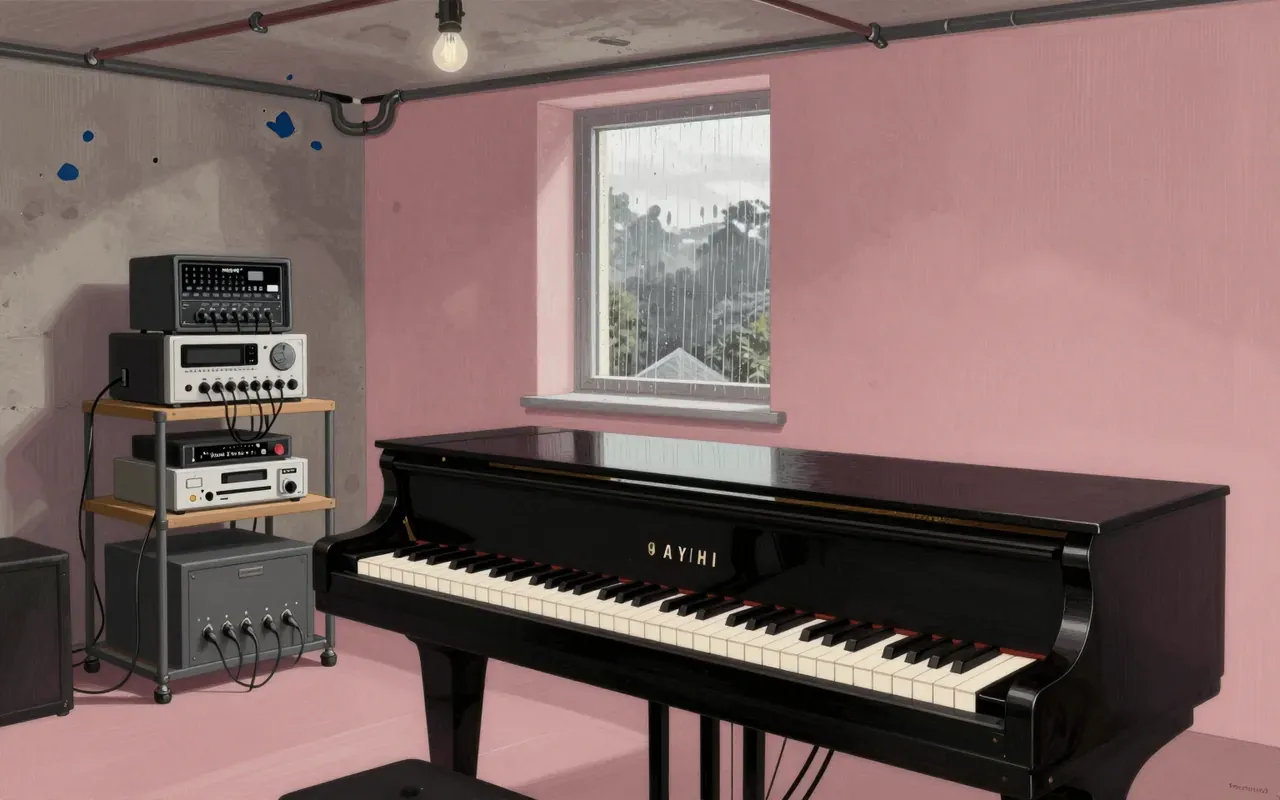
It sounds like rapid, meticulously programmed drum ‘n’ bass breakbeats alongside prepared piano pieces made using a modified Yamaha Disklavier and MIDI-controlled, solenoid-based drum mechanisms built by James. It includes ambient, electroacoustic, and classical-style piano works influenced by Erik Satie and John Cage. The album contains both older and newer material, with James selecting older-sounding tracks over newer, more stylistically unique ones.
What lands
Avril 14th lands: a solo piano piece played on a modified Yamaha Disklavier, emotionally direct yet mechanically precise. The rapid drum ‘n’ bass breakbeats land: intricate, exaggerated, physically demanding in their programming. The prepared piano and electroacoustic pieces land: austere, textural, deliberately unromantic.
What does not
It does not cohere as a unified statement. It does not privilege listener comfort. It does not hide its seams—some tracks sound seven or eight years old, others newly rushed. It does not offer resolution, warmth, or narrative arc.
The ideas inside it
The album treats programming as compositional labour—not spectacle—and positions the computer-controlled piano as an extension of early 20th-century avant-garde ideas: Satie’s austerity, Cage’s indeterminacy, and the physicality of preparation. It rejects novelty in favour of emotional effect achieved through obsessive detail.
Who should hear it, and who should not
Producers who study rhythm as architecture should hear it. Piano technicians and experimental composers should hear it. Listeners who treat albums as mood lighting or background texture should not.
Is it worth your time
Yes—if you want to hear abrasive, detail-obsessed electronic music where drum programming functions like guitar solos and piano pieces bypass sentimentality for mechanical precision. No—if you expect cohesion, accessibility, or emotional signposting.