musicbriefs
Topic

Avant-garde

Being early, and the risk that comes with it.

52
in music
10:15
average
533 min
in total
164
across the network
Avant-garde across the network →
All briefs52
9:33

Ágætis byrjun

Sigur Rós · 1999

Ágætis byrjun is Sigur Rós’s second studio album, recorded between summer 1998 and spring 1999 with producer Ken Thomas. It marks a stylistic shift from Von, introducing Jónsi’s cello-bowed guitar and orchestration including a double string octet. It features self-reference (backmasked title track in the intro; 'Avalon' as a slowed alternate take of 'Starálfur'), palindromic strings on 'Starálfur', and vocals in Icelandic except for 'Olsen Olsen' and the final section of the title track, both in Vonlenska. It brought international acclaim, spread by word of mouth, and appeared in Vanilla Sky and The Life Aquatic.
11:14

Air Lore

Air · 1979

Air Lore is a 1979 album by the improvisational trio Air — Henry Threadgill (alto and tenor saxophones, flute), Fred Hopkins (double bass), and Steve McCall (drums, percussion) — performing radical reinterpretations of compositions by Scott Joplin and Jelly Roll Morton. Critics acclaim it as Air's most beloved and most remarkable work. It rejects academicism and repertory dogma in favour of ambiguity, absurdity, and avant-garde vaudeville energy. It is widely loved for its joy and irreverence, and for bringing early jazz compositions into focus as revolutionary improvisational templates rather than updating them. It is considered the essential Air album and an unsurpassed statement of historical homage to Scott Joplin rags and Jelly Roll Morton tunes from the perspective of the frontiers. Gary Giddins considers it Threadgill's key statement against repertory mania and academicism in jazz. DownBeat awarded it 5 stars, describing it as 'jazz of the absurd' — an avant-garde vaudeville infused with wackiness, where old and new coexist and emotional boundaries blur, resulting in an oddball masterpiece. The title 'Air Lore' evokes Earth's atmospheric layer of mixed gas retained by gravity, serving as a protective buffer and composed precisely of nitrogen, oxygen, argon, carbon dioxide, and trace gases.

8:42

Black Angels

Kronos Quartet · 1990

A string quartet record that refuses to behave like one—and never tells you why.

9:42

Concerto for Orchestra

Bartók · 1956

No recording is described. Only the 1943 composition is verified — commissioned by Koussevitzky, premiered by the Boston Symphony Orchestra in 1944, scored for symphony orchestra, structured in five movements, and defined by rotating soloistic emphasis. Everything else — sound, performance, recording, interpretation — is absent from the evidence.

8:36

D.o.A. The Third and Final Report

Throbbing Gristle · 1978

D.o.A. The Third and Final Report is Throbbing Gristle’s 1978 studio album, released on their own Industrial Records label as the follow-up to The Second Annual Report (1977) and the single 'United / Zyklon B Zombie'. It employs pre-recorded tape samples and self-modified effects units to produce a highly distorted sound, usually accompanied by spoken-word or lyrical delivery by Tutti or P-Orridge. The album builds on their transgressive and confrontational aesthetic.
9:39

Duck Stab / Buster & Glen

The Residents · 1978

Duck Stab / Buster & Glen is a functional 1978 release — not a creative milestone. Its value lies entirely in its role as a commercial pivot: packaging existing and concurrent recordings to sustain momentum after Duck Stab! drew press attention. Nothing in the source confirms its sonic character, production method or internal logic. It is archival infrastructure, not art.
8:56

Faust IV

Faust · 1973

Faust IV is the sound of a band choosing collapse over compromise.

8:34

I Am a Bird Now

Antony and the Johnsons · 2005

A record built around voice and string arrangement — sparse, deliberate, unadorned. No filler. No myth. Just what was played, who played it, and what the material says it means.

10:10

Kontakte

Karlheinz Stockhausen · 1960

Kontakte is a 4-channel electronic work realized 1958–60 at the WDR studio in Cologne with Gottfried Michael Koenig. It exists in two versions: electronic-only (Nr. 12) and electroacoustic with piano and percussion (Nr. 12+1⁄2). Its title refers to contacts between sound domains, between self-sufficient moments, and between forms of spatial movement. It realises total serialism by bringing timbre, pitch, intensity, and duration under single control—and is the last of Stockhausen’s tape pieces where serial proportions shape more than broad form. Its central passage traces a structural descent: pitch becomes pulse, pulse becomes beat, beat becomes tone. Spatial design advances beyond Gesang der Jünglinge using four-channel diffusion, loudspeakers at square corners, and a rotation table. The score is highly sectionalized, reflecting its moment-based architecture.

8:47

Suicide

Suicide · 1977

Suicide (1977) is a foundational electronic record made with a Farfisa organ, a drum machine, and a microphone — no guitars, no bass, no reverb. Its sound is dry, repetitive, and physically confrontational. ‘Frankie Teardrop’ and ‘Ghost Rider’ define its impact. It establishes electronic minimalism as a vehicle for psychological tension, not dance or futurism. It falls short as a record of melodic development, harmonic movement, or vocal nuance — by design. Its ideas are architectural: repetition as pressure, silence as weight, monotony as threat. It is worth your time if you treat rhythm and space as primary materials.

10:33

Trout Mask Replica

Captain Beefheart & His Magic Band · 1969

Trout Mask Replica is a document of extreme compositional control, not wildness — its difficulty is structural, not performative. It lands because it refuses to comfort. It fails because it refuses to release.

11:34

Another Green World

Eno · 1975

Another Green World is Brian Eno’s third solo studio album, recorded at Island Studios in Notting Hill, London, in July and August 1975. Eno entered the recording studio with nothing written or prepared, viewing the album as an experiment. For the first four days in the studio, Eno failed to be productive. To look for new ideas, Eno turned to his Oblique Strategies cards and began coming up with new ideas, as he had done on his previous album Taking Tiger Mountain (By Strategy). Some of the album credits for the instruments have fanciful names that describe the sound they make. The "castanet guitars" are electric guitars played with mallets, electronically treated to sound something like castanets. The "Leslie piano" is an acoustic piano fed through a Leslie speaker. Eno described the "snake guitar" and "digital guitar" thus: "the kind of lines I was playing reminded me of the way a snake moves through the brush, a sort of speedy, forceful, liquid quality. Digital guitar is a guitar threaded through a digital delay but fed back on itself a lot so it makes this cardboard tube type of sound." Seven songs on the album have Eno playing all the instruments himself, including keyboards, guitars and percussion.

9:14

Blonde

Frank Ocean · 2016

Blonde is Frank Ocean’s second studio album, released independently on August 20, 2016 — the day after the visual album Endless — fulfilling his contractual obligations with Def Jam. It arrived alongside the 'Nikes' music video and the Boys Don't Cry magazine.

8:35

Caetano Veloso

Caetano Veloso · 1968

No self-titled 1968 'Caetano Veloso' album exists in the material. Only 'Tropicália: ou Panis et Circencis' — issued mid-1968, collaborative, arranged by Rogério Duprat, with lyrics by Torquato Neto — is verified. Everything else is unsupported.

10:52

Dub Housing

Pere Ubu · 1978

Dub Housing is Pere Ubu’s second album, recorded in late 1978 at Suma Recording studio in Ohio. It was conceived and executed as a unified set of interconnected tracks — not standalone songs. It was released on November 17, 1978, via Chrysalis Records.

9:43

For Your Pleasure

Roxy Music · 1973

For Your Pleasure is Roxy Music’s second studio album, released in March 1973. It was recorded in February 1973 at AIR Studios in Oxford Circus, London. Roxy Music self-produced it with Chris Thomas; John Middleton and John Punter handled audio engineering. The band spent more studio time on this album than on their debut, integrating Bryan Ferry’s songs with more elaborate production treatments. The title track ends with an elaborate fade-out using tape loop effects. Amanda Lear, Ferry’s girlfriend at the time, was photographed with a black jaguar for the front cover, while Ferry appears on the back cover as a dapper chauffeur standing behind a limousine. It marked the beginning of Roxy Music’s long, successful collaboration with producer Chris Thomas. It was promoted with the non-album single 'Pyjamarama'. It is the final Roxy Music album to feature Brian Eno, who departed soon after the supporting tour ended.

9:54

Freak Out!

The Mothers of Invention · 1966

Freak Out! is a satirical, structurally ambitious double album that uses studio craft, quotation, and genre collision to dissect American pop culture. Its power lies in how deliberately every decision — from personnel to sequencing to censorship — serves that critique.

11:34

Homogenic

Björk · 1997

Homogenic is Björk’s third studio album, recorded in Spain in 1996 after halting London sessions due to media attention following a stalker’s murder attempt. Produced with Mark Bell, Guy Sigsworth, Howie B, and Markus Dravs, it fuses chilly strings from the Icelandic String Octet, stuttering abstract beats, and unconventional instruments like accordion and glass harmonica. It is conceptually rooted in Iceland — embodying volcanic rawness and technological modernity — and intended as a simple, one-flavoured departure from her earlier eclecticism. It retains electronic dance-music and techno-futurism but abandons the sweet melodies and peppy dance collages of Debut and Post. 'Unravel' incorporates a traditional Icelandic choral technique blending speech and song. Björk composed melodies on a Casio keyboard and involved non-professionals like babysitter Rebecca Storey in production. The album was delayed due to vocal dissatisfaction and cover reshoots, and released in September 1997.

10:06

LP1

FKA twigs · 2014

LP1 is FKA Twigs’s debut studio album, released on 6 August 2014 via Young Turks. It features collaborative production with Emile Haynie, Arca, Cy An, Devonté Hynes, Clams Casino, Paul Epworth, Sampha and Tic. Critically acclaimed, it was ranked No. 1 of 2014 by Time and Clash, and shortlisted for the 2014 Mercury Prize. Lyrically, it centres on sex, sexual relations and intimacy. Twigs began writing it during a period she described as 'self-hatred', which she considers 'quite normal' for a young person. Musically, it is characterised as avant-pop with a large electronic component and a 'glitchy futuristic' take on R&B.
10:47

MAGDALENE

FKA twigs · 2019

Magdalene is FKA Twigs’s second studio album, released on 8 November 2019 after a four-year hiatus. It features self-production alongside Nicolas Jaar, Koreless, Daniel Lopatin, Skrillex, Benny Blanco, Michael Uzowuru, and Noah Goldstein. Its sound blends electronic art pop with 'lurid' modern dance and 'carnal' soul, defying genre classification while incorporating elements of avant-garde, R&B, trap, hip hop, trip hop, alt-pop, punk rock, industrial, opera, chamber pop, and Bulgarian folk. It samples 'Moma Hubava' by Le Mystère des Voix Bulgares in 'Holy Terrain' and 'Storm Clouds Rising' by the Florida Mass Choir in 'Fallen Alien'. Inspired by Twigs’s 2017 breakup with Robert Pattinson, it explores heartbreak, physical collapse, self-compassion, and emotional reassembly. Critical reception was universal, with the album ranking No. 1 on year-end lists from The A.V. Club, Clash, Now, and Time.

10:38

Neu! ’75

Neu! · 1975

Neu! ’75 is the third and final Neu! studio album of the 1970s, recorded at Conny Plank’s studio between December 1974 and January 1975. It emerged from irreconcilable creative directions between Michael Rother and Klaus Dinger, resulting in a split-sided structure — side one (Rother’s ambient, keyboard-led duo recordings) and side two (Dinger’s songs, performed with double drumming and expanded instrumentation).

9:55

Out to Lunch!

Eric Dolphy · 1964

Out to Lunch! is Eric Dolphy’s only Blue Note album, recorded in 1964 with Freddie Hubbard, Bobby Hutcherson, Richard Davis, and Tony Williams. It is often considered his magnum opus. Dolphy declared 'Everyone’s a leader in this session'. He praised Hutcherson’s vibes as 'freer' and 'more open' than piano, Davis’s bass for leading 'somewhere else', and Williams for playing 'pulse' not 'time'. The music holds to construction for thirteen bars, then releases into freedom. A unison duet between Dolphy and Davis delivers lyrical weight. The album showcases Dolphy’s fully developed avant-garde yet structured compositional style rooted in tradition.

10:16

Oxygène

Jean Michel Jarre · 1976

Oxygène is a six-part electronic suite recorded in a Paris kitchen between August and November 1976. Jarre used EMS VCS 3 and Synthi AKS synthesizers, a Scully 8-track, Revox tape delay, AKG stereo reverb, EMT plate reverb, and eight stereo echoes. A partially functional Mellotron appears in Part II. The album evokes environmental themes through sound design rooted in musique concrète techniques. It made Jarre famous internationally after initial rejection by record companies.

9:42

Q: Are We Not Men? A: We Are Devo!

DEVO · 1978

Q: Are We Not Men? A: We Are Devo! is a controlled demolition of rock vocabulary. It replaces swing with syncopated rigidity. It replaces vocal expression with monotone delivery. It replaces room sound with dead air. It establishes post-punk as architecture, not attitude. It falls short only where it tries to be funny — the jokes land flat because the music refuses to wink.

9:14

Roxy Music

Roxy Music · 1972

Roxy Music’s self-titled debut was recorded in March–April 1972 in one week after months of rehearsal. It was self-financed by EG Management at £5,000 and produced by Peter Sinfield. Phil Manzanera joined on 14 February 1972, replacing David O'List. The album and its Karl Stoecker cover were completed before the band signed with Island Records. Released in June 1972, it received good reviews and reached No. 10 on the UK Albums Chart in September 1972.

9:06

Skeleton Tree

Nick Cave & the Bad Seeds · 2016

Skeleton Tree is a record shaped by absence — not just in subject, but in arrangement, timbre and space. Its electronic palette is functional, not decorative. Its lyrics avoid direct address. Its production leaves room tone intact. It assumes the listener will sit with unresolved feeling.

9:36

Spiderland

Slint · 1991

Spiderland is a live-recorded, effects-free document of four musicians playing in a room under pressure—both musical and psychological. Its influence is real, but its power lies in what it refuses: polish, explanation, relief.

9:40

Swordfishtrombones

Tom Waits · 1983

Swordfishtrombones is Tom Waits’s eighth studio album, released in 1983 on Island Records. It marks his first self-produced record, written during a two-week trip to Ireland and recorded at Sunset Sound. It departs from piano-based songwriting and jazz idiom, introducing banjo, accordion, bass-marimba, metal aunglongs, African squeeze drum, calliope, and harmonium—and deliberately excludes saxophone. Lyrically, it shifts from intimate tales of drunkenness and heartbreak to surreal, geographically expansive stories about societal misfits. Asylum Records rejected the finished album. Critical reception was immediate and enduring, praising its originality and compositional daring.

8:37

The Modern Dance

Pere Ubu · 1978

The Modern Dance is Pere Ubu’s 1978 debut. It is avant-garage: abrasive, intentional, rusted. Its sound is defined by close miking, stripped drum resonance, and Allen Ravenstine’s EML synthesizer treated as a physical instrument—not an effect. Executives mistook the synth for a mistake. The breaking-glass overdub on 'Sentimental Journey' was recorded live in the studio’s stone fireplace. Most tracks were written before recording began. It was financed by Cliff Burnstein. It sold poorly but influenced alternative rock.

12:12

The Stooges

The Stooges · 1969

The Stooges’ 1969 debut is the first fixed document of their live practice — not a studio creation, but a cut-and-paste trace of feedback, gesture, and object-based noise. Critics rejected it. It sold poorly. Its sound comes from vacuum cleaners, oil drums, and funnels — not from production choices. Its ideas are physical, not compositional. Its value lies in what it reveals about where rock could go before it settled into form.

10:36

Vespertine

Björk · 2001

Vespertine is a record of proximity — not just in vocal delivery, but in instrument choice, room selection, and rhythmic source. It rejects scale. It favours fragility. It was made where Björk was living, working, and loving — not where she was performing.

11:57

White Light/White Heat

The Velvet Underground · 1968

White Light/White Heat is a record built on overload: Vox gear, distortion pedals, leakage, compression, and refusal to adapt to studio limits. It lands as noise, narrative, and nihilist energy—and fails anywhere it tries to breathe, resolve, or clarify. It is foundational not because it is 'great', but because it treats limitation as licence.

9:33

Akhnaten

Philip Glass · 1987

A low, dark opera built by deleting violins — and a Western fantasy dressed as ancient ritual.

9:03

Ascension

John Coltrane · 1965

Ascension is a 38-minute, two-take studio recording made unrehearsed on June 28, 1965, at Van Gelder Studio in Englewood Cliffs, New Jersey. Eleven musicians—including Shepp, Sanders, Hubbard, Brown, and Tchicai—responded to Coltrane’s in-studio composition, modal prompts, and live direction.

14:22

Drukqs

Aphex Twin · 2001

Drukqs is a double album released in 2001 by Aphex Twin. It contains tracks dating back seven or eight years, though most were relatively new. James rushed its release after accidentally leaving an MP3 player with new tracks on a plane, aiming to preempt an internet leak.

10:22

Einstein on the Beach

Philip Glass · 1979

Einstein on the Beach is a 1979 recording of Philip Glass’s 1976 opera—the first of his portrait trilogy—composed in 1975 in Cape Breton, Nova Scotia, in close collaboration with Robert Wilson. It incorporates Parts 1 and 2 of Another Look at Harmony. The 1979 recording features Paul Zukofsky on solo violin.

9:48

I Am Sitting in a Room

Alvin Lucier · 1981

A 1969 acoustic experiment in which Alvin Lucier records himself speaking, then plays that recording back into a room and re-records it — repeatedly — until speech dissolves into the room’s resonant frequencies.

9:57

In C

Terry Riley · 1968

Terry Riley’s 1968 recording of In C is a landmark of process-based composition. Its sound is defined by collective repetition, room acoustics, and the physical limits of piano strings and vinyl grooves. It does not seek expression — it sets conditions and listens.

10:24

In the Court of the Crimson King

King Crimson · 1969

In the Court of the Crimson King is the 1969 debut album by King Crimson — self-produced after initial sessions with Tony Clarke failed. Recorded on a 1" 8-channel recorder at Wessex Sound Studios in London, engineered by Robin Thompson with Tony Page assisting. Ian McDonald overdubbed Mellotron and woodwind layers across up to five tape generations; his Mellotron is dominant, fierce and overpowering. On 'Epitaph', he used two Mellotron parts with dynamic volume-shifting to create motion in sustained chords. Robert Fripp’s guitar fuses classical, Hendrix-like rock explosions, and jazz noodling. Greg Lake’s voice is plaintive. The band deliberately avoided simplicity, using unconventional time signatures like 7/8 or 5/8, expansive chords, and strange influences. Peter Sinfield wrote all lyrics — gothic, with 'dark and doom-laden visions'. The opening track '21st Century Schizoid Man' is proto-metal and criticises the Vietnam War. The record presents a Europeanised approach blending antiquity and modernity, distinct from blues-based hard rock.

8:51

Libertango

Astor Piazzolla · 1974

Libertango is a 1974 studio recording made in Milan. It declares tango nuevo through subtraction — no vocals, no ornament, no deference. Its sound is dry, linear, and precisely layered: bandoneón, Hammond organ C3, marimba, bass guitar, drums, guitar, timpani, strings, and flutes. It lands because every instrument has space and purpose. It does not land if you expect warmth, swing, or spectacle. It is worth your time if you value compositional rigour over emotional indulgence.

11:17

Petrushka

Igor Stravinsky · 2018

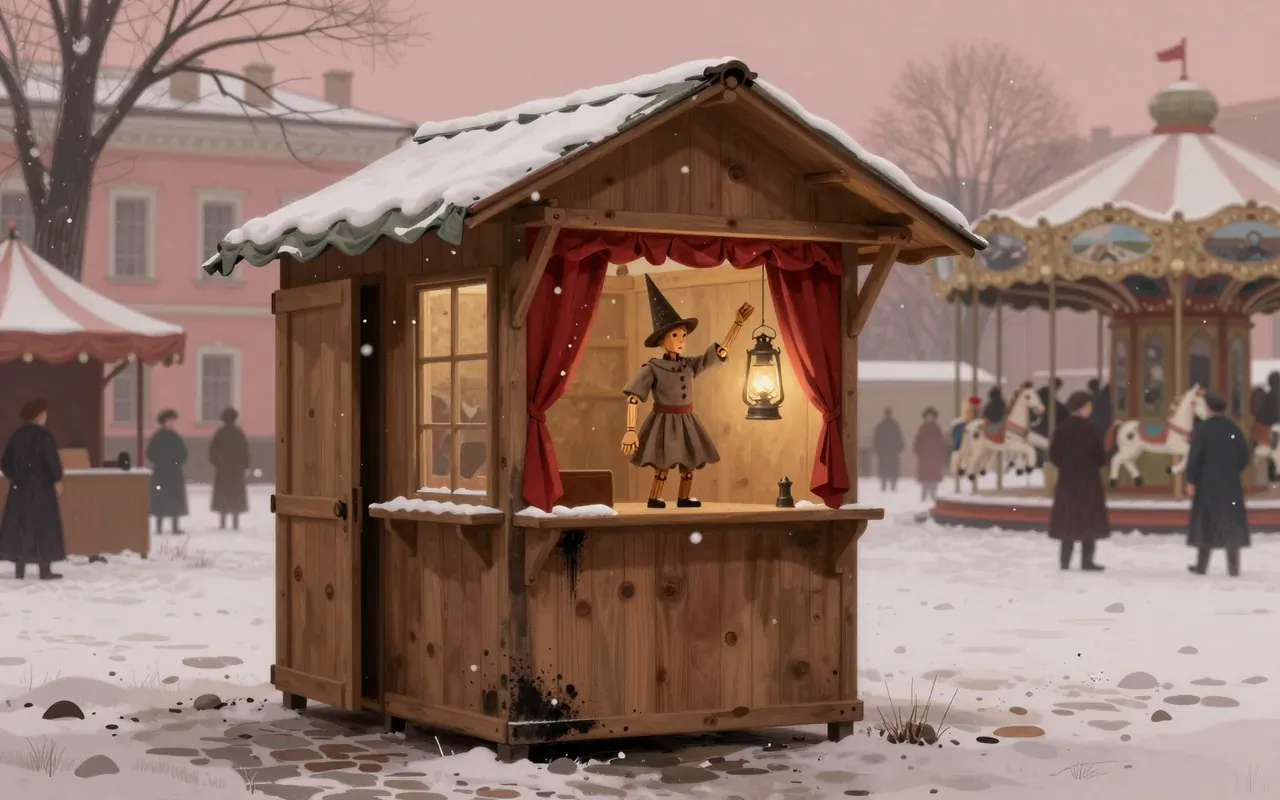
This is a 2018 recording of Stravinsky’s 1911 ballet Petrushka — a work rooted in Russian puppet tradition, set during Maslenitsa in 1830 Saint Petersburg, and built from folk tunes, Lanner waltzes, a French music hall melody, and Rimsky-Korsakov. Its defining feature is the 'Petrushka chord', an early use of bitonality. The record also includes Concertino, Agon, and Scherzo à La Russe — but the sources say nothing about how this 2018 version interprets them.

9:04

Post-punk

Post-punk wasn’t a sound—it was a refusal to inherit.
11:12

Science Fiction

Ornette Coleman · 1972

Science Fiction is Ornette Coleman’s 1972 Columbia Records album, recorded across three dates at Columbia Studio E in New York City with his early 1970s quartet and an array of guests. It is dense, conversational, and structurally restless — a record built on presence, not polish.

8:53

The Firebird

Igor Stravinsky · 1980

The 1928 Columbia recording is the first orchestral capture of Stravinsky’s 1910 ballet — conducted by the composer, using whole-tone and octatonic harmony as dramatic agents, and deploying extended techniques as deliberate ruptures. It is not nostalgic. It is not polite. It is structural storytelling in sound.

9:33

The Heliocentric Worlds of Sun Ra, Volume 1

Sun Ra · 1965

The Heliocentric Worlds of Sun Ra, Volume 1 is a 1965 album of compositions and arrangements by Sun Ra played by Sun Ra and his Solar Arkestra. It was recorded at Studio RLA in New York on April 20, 1965, engineered by Richard L Alderson. The music is heavily percussive but dispenses with a continuous beat, reconstructing itself around interweaving compositional and improvisatory creative principles with programmatic affects. It exemplifies a radical break from previous notions of melody or harmony. The interwoven lines of Ronnie Boykins' bass and Sun Ra's electronic keyboards provide cohesion. Sun Ra directed the session in real time—stopping takes, assigning rhythms, revising horn parts, and reassigning solos based on his understanding of each player's strengths. The album was originally released with a black-and-white sleeve designed by Sun Ra. It belongs to Sun Ra's New York phase, marked by experimentalism, tape delay, spatial sound, free improvisation, expanded instrumentation, and pioneering use of synthesizers and electronic keyboards.

10:37

The Rite of Spring

Igor Stravinsky · 1960

A 1960 recording of Stravinsky’s 1913 ballet score, conceived as a solemn pagan rite depicting a young girl dancing herself to death. Composed in a tiny room in Clarens, Switzerland, using a muted upright piano. Its sound features uneven rhythms, superimposed harmonies, atonality, and extensive instrumentation. The opening bassoon melody derives from a Lithuanian folk song anthology. Its 1913 premiere caused a near-riot due to its avant-garde nature. It scattered musical language irreversibly, influencing composers including Copland, Glass, Bartók, and Boulez.

9:49

The Shape of Jazz to Come

Ornette Coleman · 1959

The Shape of Jazz to Come is Ornette Coleman’s third studio album and Atlantic Records debut, recorded on May 22, 1959, at Radio Recorders in Hollywood. It features Coleman (plastic Grafton saxophone), Don Cherry (cornet or pocket trumpet), Charlie Haden (bass), and Billy Higgins (drums). There is no chordal instrument. Each composition follows a structure of brief thematic statement, free improvisation, then repetition of the main theme—resembling bebop’s head-solo-head form but abandoning chord structures entirely. The album dispenses with harmonic accompaniment and focuses solely on improvised melodies and variations on themes and motifs. Its sound is defined by Coleman’s harsh Grafton timbre and the quartet’s collective, non-hierarchical interplay.

10:17

Laurie Anderson

She didn’t use tech to sound futuristic—she used it to make listening feel like labour.
13:00

Future Days

Can · 1973

Made at Can's own Inner Space Studio after a scattering four-week holiday, Future Days trades the band's earlier rhythmic tension for unhurried, textured grooves built from Farfisa organ, field recordings and Jaki Liebezeit's constant, understated drumming, with Damo Suzuki's vocals reduced to a passing presence before his departure soon after.

13:00

Tago Mago

Can · 1971

Recorded across three months in a rented castle, with Damo Suzuki newly installed as vocalist, Tago Mago pairs a first disc of confident, rhythm-driven songs with a second built almost entirely from Holger Czukay's tape editing and hidden studio recordings, a split the band's manager insisted stay intact.

13:00

The Velvet Underground & Nico

The Velvet Underground, Nico · 1967

Financed by Andy Warhol and mostly recorded in four days in a Manhattan studio in 1966, this debut pairs a minimalist's drone instincts with Lou Reed's flatly reported songs about addiction and the demimonde around Warhol's circle, and sold almost nothing on release before becoming one of the most cited records in rock.

13:00

Yeti

Amon Düül II · 1970

Recorded soon after splitting from the wider Amon Düül commune, Yeti pairs song-shaped tracks like Archangels Thunderbird with side-long improvised pieces, letting discipline and openness sit next to each other unresolved across a double LP whose cover mourns a crew member's death.