What the record is and where it came from
Country Joe and the Fish released their debut in May 1967 after developing from an acoustic group into an electric band. Samuel Charters produced the sessions at Sierra Sound. Several pieces had already appeared in earlier versions on the group’s independently released EPs.
How it sounds, and how it was made
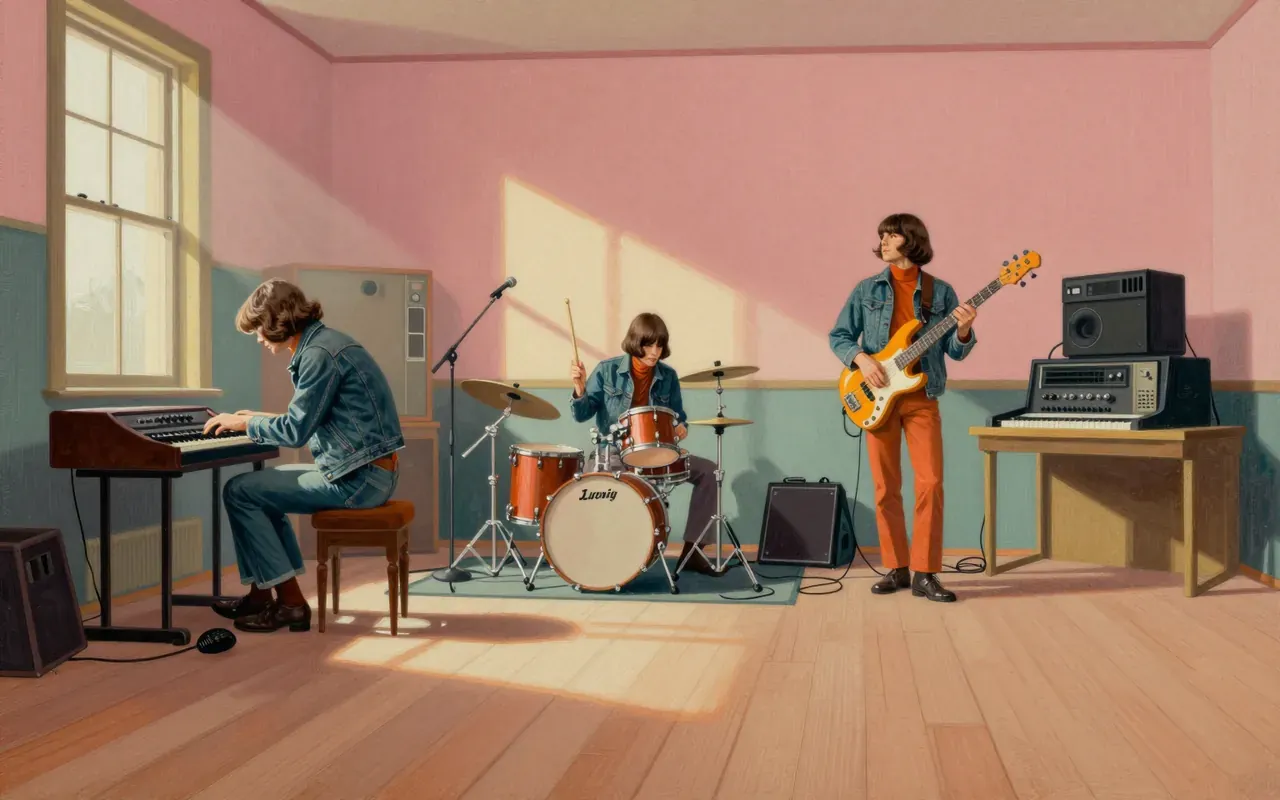
Guitars, David Cohen’s organ, bass and drums form the main setting. Instrumental backings were largely played together on four-track equipment, with McDonald’s vocals added afterward. “Section 43” makes extended instrumental construction part of the album’s identity alongside the songs.
What lands
“Not So Sweet Martha Lorraine” supplies a relatively direct entrance, while the instrumental material gives the players room to establish another kind of continuity. The record’s expansion is audible in the band setup and the allocation of time, rather than only in its period associations.
What does not
The countercultural language and exploratory stretches can feel dated or diffuse. Listeners who chiefly want the concision of the vocal songs may find the instrumental passages interrupt that appeal. Not every experiment needs to convince for the larger change to be apparent.
The ideas inside it
Changing instruments can change what a group considers a piece of music to be. The album retains a songwriting background while allowing collective instrumental activity to become an end in itself.
Who should hear it, and who should not
Hear it if the transition from folk repertoire to psychedelic rock interests you. It is less suitable for an uninterrupted sequence of short, plainly delivered songs.
Is it worth your time
Yes. Pair a vocal track with “Section 43” before deciding whether its wider instrumental territory is somewhere you want to stay.