What the record is and where it came from
Ella and Louis was released in 1956, the first of Fitzgerald and Armstrong’s three Verve albums together. Norman Granz selected the ballad repertoire and produced the session. Armstrong had the final say over songs and keys, making the partnership a practical arrangement as well as a marquee pairing.
How it sounds, and how it was made
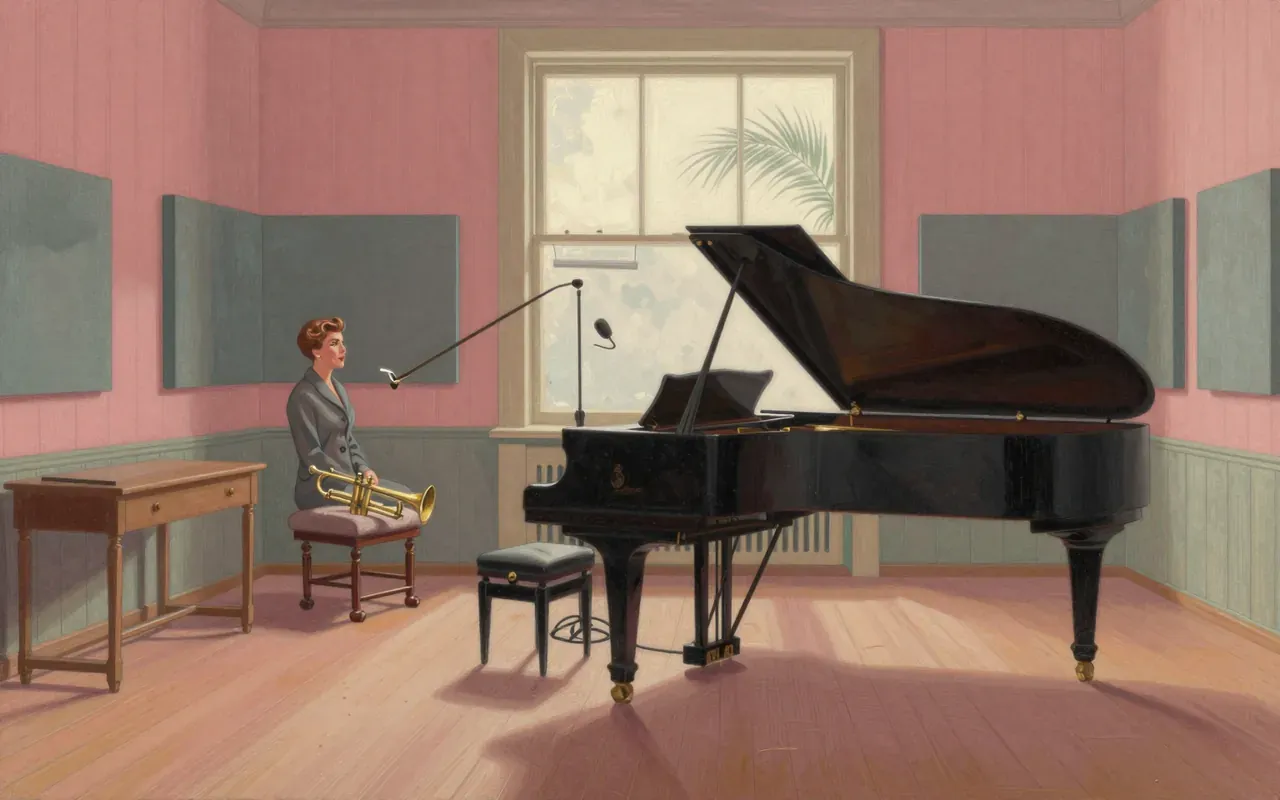
Oscar Peterson’s piano, Herb Ellis’ guitar, Ray Brown’s bass and Buddy Rich’s drums accompany the singers; Armstrong also plays trumpet. The predominantly slow and moderate settings leave the contrast between Fitzgerald’s clarity and Armstrong’s rougher vocal grain plainly exposed.
What lands
The difference between the voices is the attraction. Neither needs to imitate the other for a song to belong to both. The small backing group gives their exchanges a setting that can support a melody without competing for the listener’s main attention.
What does not
The restrained programme can seem too uniform if you arrive for Armstrong’s instrumental fire or Peterson’s virtuosity. Its ease can also encourage background listening that overlooks how differently the two singers approach the same material.
The ideas inside it
Compatibility does not require similarity. The record proposes a collaboration in which distinct musical identities remain intact, and the shared song supplies enough common ground for them to meet.
Who should hear it, and who should not
Hear it for singing and the character of a duet. Choose another setting if your immediate interest is extended instrumental improvisation or forceful ensemble movement.
Is it worth your time
Yes. Attend to the handovers between voices; the record’s argument is made in those differences, not in smoothing them away.