musicbriefs
11:27in productionCh. 1 · Written in Motion/ 11:27 · ceiling 15 min
Folk & singer-songwriter · Jazz

Hejira

A fretless bass and a moving car replaced the piano — and changed everything.

Hejira is Joni Mitchell’s 1976 album of road-written songs, defined by her guitar and Jaco Pastorius’s fretless bass. It contains no piano. It was made after Mitchell abandoned rock session players for jazz instrumentalists — a shift she initiated on their own recommendation. Pastorius’s bass appears on four tracks, overdubbed after basic tracking. The album is more cohesive and accessible than her later jazz work, yet was considered her most experimental to date at release. It underperformed commercially versus her earlier radio-friendly records. Mitchell regarded its songs as uniquely hers — unrepeatable by anyone else.

Chapters & takeaways4
  1. 1:20
    Written in Motion

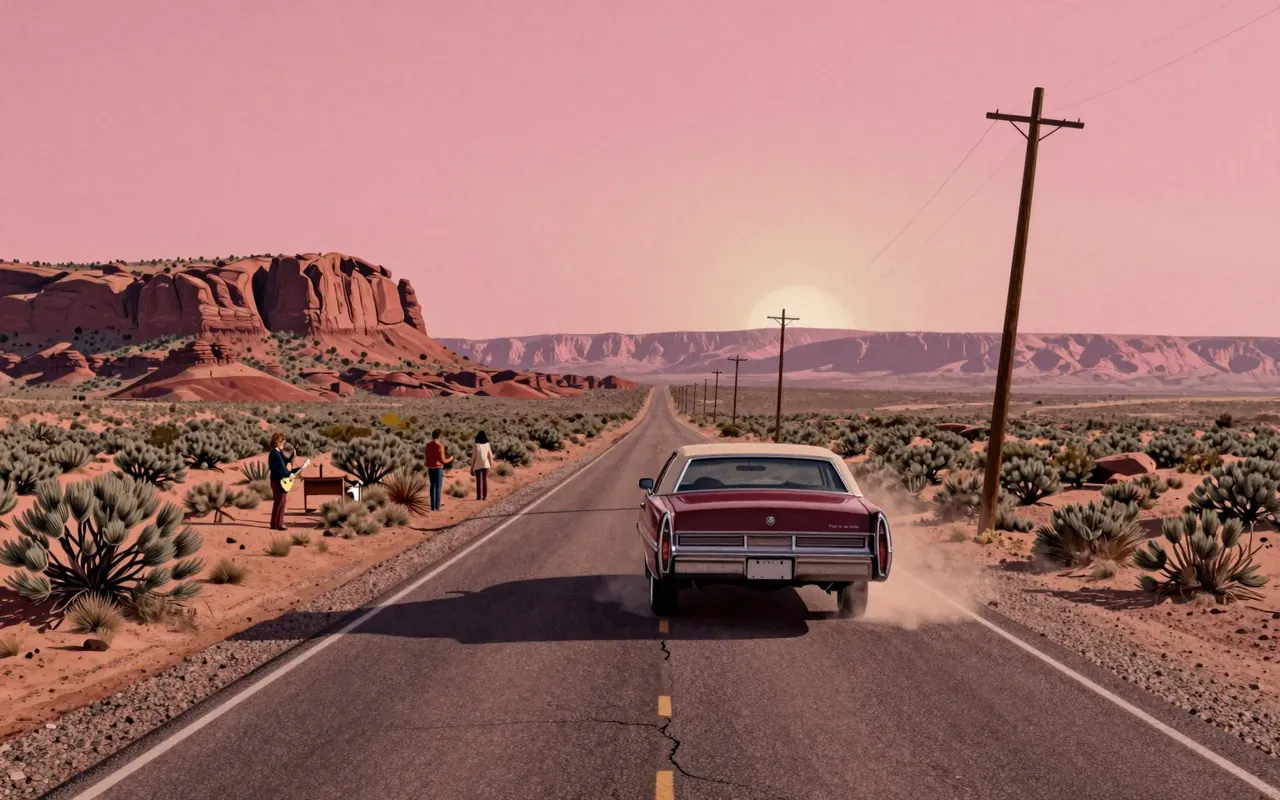
    No piano. No studio. Just a car, a guitar, and a long drive from Maine to California.

  2. 2:54
    Bass as Voice

    Jaco Pastorius’s fretless bass appears on four tracks — overdubbed after basic tracking — and reshapes the album’s harmonic gravity.

  3. 5:06
    A Shift Forced by Frustration

    Mitchell abandoned rock session players because they buried subtlety — and followed their own advice to hire jazz instrumentalists instead.

  4. 6:28
    Experimental but Grounded

    More cohesive and accessible than her later jazz work — yet still her most experimental album to date at release, and commercially quieter than her radio-friendly predecessors.

Running order9
  1. 01
  2. 02
    Amelia6:00
  3. 03
    Furry Sings the Blues5:03
  4. 04
  5. 05
    Hejira6:35
  6. 06
    Song for Sharon8:30
  7. 07
    Black Crow4:20
  8. 08
    Blue Motel Room5:03
  9. 09
    Refuge of the Roads6:37

Film placements are the ones described in each film's own entry, so the list is partial rather than complete.

Worth your time?

Yes. Hear the whole thing.

4.5/ 5
What works
  • the fretless bass as equal protagonist to voice and guitar
  • the discipline of writing without piano — forcing new voicings and phrasing
  • the quiet authority of lyrics shaped by miles, not studios
What does not
  • deliver radio-ready hooks
  • use piano
  • rely on drum-driven momentum
  • flatten vocal and bass into conventional hierarchy
Hear it if
  • listeners who prioritise textural interplay over structural predictability
  • people who hear bass as melodic counterpoint, not root reinforcement
  • anyone attuned to how physical movement shapes musical form
Skip it if
  • those seeking immediate melodic repetition
  • listeners dependent on steady backbeat or chordal piano
The written brief2 min read

What the record is and where it came from

Hejira is a 1976 album written during a solo cross-country drive from Maine back to California. Its material reflects Mitchell’s road experiences in late 1975 and early 1976. It contains no piano-based songs because it was composed while travelling by car.

How it sounds, and how it was made

The album is dominated by Joni Mitchell’s guitar and Jaco Pastorius’s fretless bass. It features no piano-based songs. Mitchell overdubbed Pastorius’s bass parts on four tracks. She worked with jazz-oriented instrumentalists — Pastorius, Larry Carlton, and John Guerin — after growing frustrated with rock session musicians who buried grace notes and subtleties on prior albums. She sought those players on the recommendation of the same rock session musicians.

What lands

Pastorius’s fretless bass lines land with uncanny fluidity and harmonic weight. Mitchell’s guitar textures — open-tuned, fingerpicked, often sparse — land as both architecture and atmosphere. The lyrics land as tightly observed vignettes: coyotes, motels, crows, roads, refuges. The absence of piano lands as a formal constraint that defines the record’s entire sonic logic.

What does not

It does not deliver hooks or choruses designed for repetition. It does not use drums as propulsion. It does not rely on piano. It does not flatten Mitchell’s voice into a lead-instrument hierarchy. It does not sound like Court and Spark or The Hissing of Summer Lawns.

The ideas inside it

Road solitude. Musical reinvention as necessity. The bass as melodic voice, not root anchor. Songs written in motion — no piano, no studio first, no fixed location. A record built from displacement, not destination.

Who should hear it, and who should not

Listeners who value guitar-and-bass dialogue over verse-chorus scaffolding. People who hear bass as melody, not foundation. Anyone curious how a songwriter retools her entire sound around a single instrument’s timbre and a single journey’s rhythm. Not for those needing immediate melodic payoff or rhythmic insistence.

Is it worth your time

Yes. It rewards attention to interplay, texture, and lyrical density. Its cohesion and accessibility set it apart from Mitchell’s later jazz-oriented work. It does not chase radio play, nor does it need to.
Same genre · Folk & singer-songwriter4 of 20
Up next in Music

Honky Tonk Heroes

Waylon Jennings · 1973 · 11:37

A record where the songwriter storms the booth — and wins, then loses, then wins again.

11:37