Saved
Rock · Folk & singer-songwriter

MTV Unplugged in New York

This isn’t acoustic. It’s amplified grief dressed as a funeral.

Worth your time?4.5/5Yes.Hear the whole thing.What works, what does not, who it is for ↓
9:04in productionCh. 1 · One night, one room, one take/ 9:04 · ceiling 15 min
4 chapters · 9:04Ceiling 15:00

The brief is written and checked. The video joins this page when it is cut.4 chapters · 2 min read · 9:04 planned

Read the brief

MTV Unplugged in New York is Nirvana’s 1994 live album, recorded at Sony Music Studios in Hell’s Kitchen, Manhattan, on November 18, 1993. It documents their MTV Unplugged appearance — 14 songs, filmed in one continuous take. Cobain insisted on running his acoustic guitar through an amplifier and effects pedals, disguised by a fake box built in front of the amp. He described the stage design — stargazer lilies, black candles, and a crystal chandelier — as 'like a funeral'. The title alludes to the Indian religious concept of nirvana: a 'blown out, extinguished' state of liberation from suffering and rebirth, first used soteriologically by Buddhists.

Chapters & takeaways4
  1. 0:56
    One night, one room, one take

    Recorded in one take at Sony Music Studios in Hell’s Kitchen on November 18, 1993.

  2. 2:14
    A funeral, not a concert

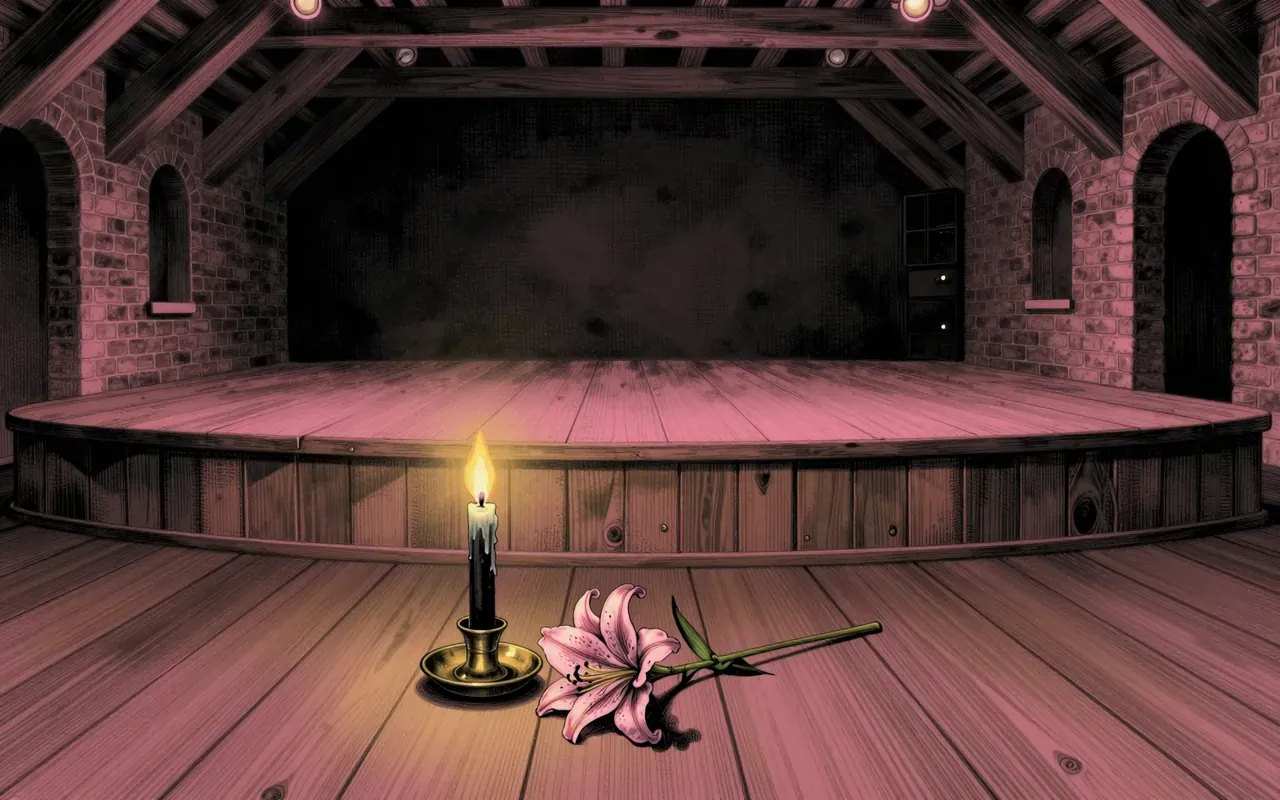
    Cobain designed the stage as a funeral — stargazer lilies, black candles, crystal chandelier.

  3. 3:59
    Unplugged is a lie

    Cobain ran his acoustic guitar through an amp and effects — disguised as a monitor wedge.

  4. 5:24
    No second chances

    All 14 songs were filmed in a single continuous take — no edits, no retakes.

1 more chapterFewer chapters
Running order14
  1. 01
    About a Girl3:38

    Heard in About a Girl (2014)Charlie and the Chocolate Factory (2005)

  2. 02
    Come as You Are4:14

    Heard in Singles (1992)The Vigil (1998)Kurt Cobain: About a Son (2006)Soaked in Bleach (2015)

  3. 03
    Jesus Doesn’t Want Me for a Sunbeam4:37
  4. 04
    The Man Who Sold the World4:21

    Heard in Kurt Cobain: About a Son (2006)Ziggy Stardust and the Spiders from Mars (1973)

  5. 05
    Pennyroyal Tea3:41
  6. 06
    Dumb2:53

    Heard in Death Wish II (1982)Howard the Duck

  7. 07
    Polly3:16

    Heard in 1991: The Year Punk Broke (1991)

  8. 08
    On a Plain3:45

    Heard in Human (2015)

  9. 09
    Something in the Way4:02

    Heard in The Batman (2022)

  10. 10
    Plateau3:38
  11. 11
    Oh Me3:26

    Heard in Tea for Two (1950)Six Dance Lessons in Six Weeks (2014)

  12. 12
    Lake of Fire2:56
  13. 13
    All Apologies4:23

    Heard in S.F.W.

  14. 14
    Where Did You Sleep Last Night5:07

    Heard in I Know What You Did Last Summer (1997)

Film placements are the ones described in each film's own entry, so the list is partial rather than complete.

Worth your time?

Yes. Hear the whole thing.

4.5/ 5
What works
  • The funeral atmosphere lands.
  • The single-take structure lands — no edits, no second chances, no safety net.
  • 'Where Did You Sleep Last Night' lands as a raw, unadorned collapse.
  • 'Something in the Way' lands as a whispered, submerged memory — not a hit, but a recollection.
What does not
  • It does not sound like a conventional acoustic session.
  • It does not offer resolution, uplift, or catharsis.
  • It does not hide Cobain’s reliance on amplification.
Hear it if
  • People who want to hear how texture and intention override genre.
  • People who listen for what is left out — no drum fills, no guitar solos, no crowd banter beyond Cobain’s dry asides.
Skip it if
  • Not people who need clarity, consistency, or comfort.
  • Not people who conflate 'unplugged' with 'gentle'.
Who should hear it, and who should skipHide who it is for
The written brief2 min read

What the record is and where it came from

It is Nirvana’s 1994 live album, recorded at Sony Music Studios in Hell’s Kitchen, Manhattan, on November 18, 1993. It documents their MTV Unplugged appearance — 14 songs, filmed in one continuous take. It is not a studio revision or retrospective. It is a fixed document of a specific evening, under self-directed conditions.

How it sounds, and how it was made

It sounds like an acoustic set filtered through distortion, reverb, and a live room’s low-end bleed. Cobain ran his acoustic guitar through an amplifier and effects pedals, disguised by a fake box built in front of the amp. The performance was recorded in a single take at Sony Music Studios in Hell’s Kitchen, Manhattan. The stage was dressed with stargazer lilies, black candles, and a crystal chandelier — Cobain called it ‘like a funeral’.

What lands

The funeral atmosphere lands. The lilies, candles, and chandelier shape the room’s visual and psychological weight before a note is played. The single-take structure lands — no edits, no second chances, no safety net. ‘Where Did You Sleep Last Night’ lands as a raw, unadorned collapse. ‘Something in the Way’ lands as a whispered, submerged memory — not a hit, but a recollection.

What does not

It does not sound like a conventional acoustic session. There are no clean fingerpicked passages, no warm mic placements for intimacy, no attempt to flatter the format. It does not offer resolution, uplift, or catharsis. It does not hide Cobain’s reliance on amplification — even on ‘The Man Who Sold the World’, the acoustic guitar is clearly processed through an amp.

The ideas inside it

The title alludes to the Indian religious concept of nirvana: a ‘blown out, extinguished’ state of liberation from suffering and rebirth. This is not metaphorical framing — it is lexical anchoring. The word was first used soteriologically by Buddhists. The record’s stillness, restraint, and funereal tone resonate with that meaning — not as irony, but as sonic alignment.

Who should hear it, and who should not

People who want to hear how texture and intention override genre. People who listen for what is left out — no drum fills, no guitar solos, no crowd banter beyond Cobain’s dry asides. Not people who need clarity, consistency, or comfort. Not people who conflate ‘unplugged’ with ‘gentle’.

Is it worth your time

Yes. It is worth your time if you want to hear a band dismantle its own myth in real time — not through polish or nostalgia, but through deliberate, unvarnished choices: amplified acoustics, sparse arrangements, and a room that swallows applause but keeps breath and string noise.
Same genre · Rock4 of 319
10:55
Brothers in ArmsDire Straits · 1985A digitally recorded rock album made in two phases: initial tracking at AIR Studios in Montserrat between 2 November and 21 December 1984, followed by overdubs at Power Station in New York in February 1985. Produced by Mark Knopfler and Neil Dorfsman, it features deliberate spatial arrangement of instruments in a small, acoustically limited room whose sonic character derived from its Neve 8078 desk; was among the first major rock albums recorded digitally on a Sony 24-track machine; suffered loss of material due to defective tape; and underwent key personnel changes—including Hal Lindes’ departure, Terry Williams’ suspension and replacement by Omar Hakim, and Guy Fletcher joining full-time as second keyboardist.
10:45
ElephantThe White Stripes · 2003Elephant is The White Stripes’ fourth studio album, recorded mostly between April 24 and May 13, 2002, at Toe Rag Studios in London. It was produced by Jack White using an 8-track tape machine, no computers, and pre-1960s gear. Engineer Liam Watson worked six-hour shifts across ten days. All songs—including B-sides—were mixed in one day at Toe Rag. Meg White sings lead for the first time on 'In the Cold, Cold Night'. 'I Just Don’t Know What to Do With Myself' was recorded separately at BBC’s Maida Vale Studios. The album was recorded on a budget of £4,000–£6,000. Jack returned in late September 2002 to re-record and remix certain vocals. The band exhausted the 8-track’s capacity deliberately, citing the Beatles’ precedent. Elephant features Jack’s first guitar solos and expands keyboard and piano use. Its red-white-black artwork was shot in Detroit.
11:08
Last SplashThe Breeders · 1993Last Splash is a record built on refusal: refusal to accept a bad room, refusal to separate performance from process, refusal to let gear choices remain neutral. Its sounds are specific, physical, and intentional — not atmospheric or symbolic. It is rock music as carpentry, not mythmaking.
10:25
In UteroNirvana · 1993In Utero is a rock record defined by refusal: to please, to clarify, to separate, to emerge. Its sound comes from physical space — a kitchen, a console, a six-day window — not from processing or arrangement. Its title and band name both point to endings, not beginnings. It lands where others retreat: in dryness, in bleed, in unvarnished presence.
Up next in Music

Murmur

R.E.M. · 1983 · 10:24

A debut built on subtraction: no solos, no synths, no clarity — just a band holding its breath in a room.

10:24