musicbriefs
2:00in production/ 2:00 · ceiling 15 min
Folk & singer-songwriter

Norman Fucking Rockwell!

Lana Del Rey lets soft-rock space hold both romantic attachment and disappointment in the American picture.

Released in 2019, Norman Fucking Rockwell! was chiefly produced by Lana Del Rey and Jack Antonoff. Its title invokes the American illustrator while the songs explore less reassuring versions of romance and place. The album's ambitions extend beyond a single relationship without abandoning intimate address.

Worth your time?

Yes. Hear the whole thing.

What works
    What does not
      Hear it if
      • Listeners drawn to piano ballads and patient, image-rich songwriting
      Skip it if
      • Listeners seeking brisk pacing and sharply contrasting moods
      The written brief1 min read

      What the record is and where it came from

      Released in 2019, Norman Fucking Rockwell! was chiefly produced by Lana Del Rey and Jack Antonoff. Its title invokes the American illustrator while the songs explore less reassuring versions of romance and place. The album’s ambitions extend beyond a single relationship without abandoning intimate address.

      How it sounds, and how it was made

      Piano ballads and soft-rock arrangements share space with psychedelic extensions, strings and synthesizer washes. References to earlier rock music help establish a cultural setting, but the production leaves Del Rey’s voice and writing central. The sound supports duration rather than continually demanding a new peak.

      What lands

      “Mariners Apartment Complex” and “Venice Bitch” offer different scales of the same patient approach. The record allows an image or emotional position to develop without immediately replacing it. California becomes both an attractive setting and something whose promise can be questioned.

      What does not

      The consistent mood can make the programme feel longer than its ideas require for some listeners. Classic-rock references may also become an enclosing vocabulary, with nostalgia supplying a ready-made significance. The quieter changes ask for active attention.

      The ideas inside it

      A person can remain attached to an image while recognising its failures. That applies to a lover and to a national or regional ideal. The record’s soft surfaces give those disappointments room to coexist with continuing desire.

      Who should hear it, and who should not

      Hear it if sustained atmosphere helps you follow lyrical detail. Choose something else when you want an album to keep changing its public face.

      Is it worth your time

      Yes. Its strongest writing rewards the space around it, especially when the familiar cultural references remain a setting rather than the whole subject.
      Same genre · Folk & singer-songwriter4 of 174
      8:10
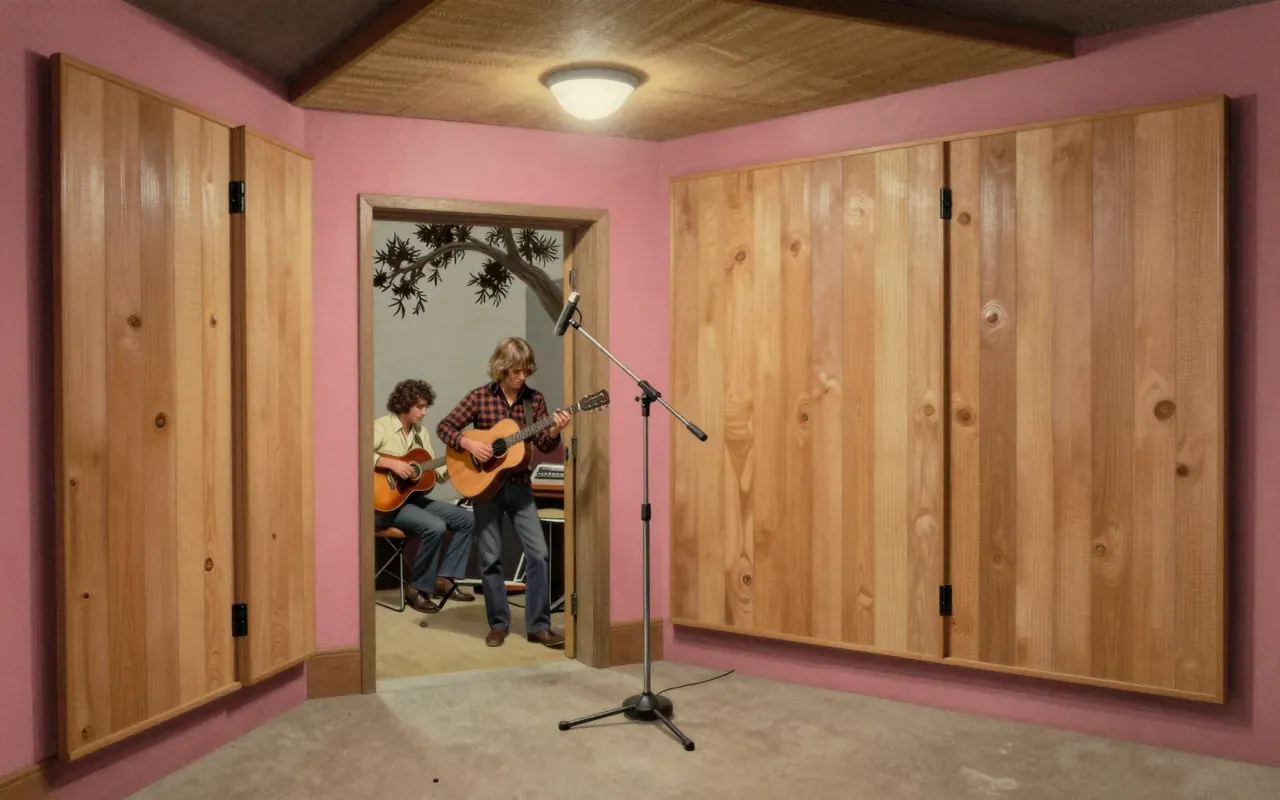
      Red Headed StrangerWillie Nelson · 1975Red Headed Stranger is a 1975 concept album by Willie Nelson, recorded at low cost in a quiet cypress-panelled room at Autumn Sound Studios in Garland, Texas. It features sparse arrangements limited to Nelson's guitar, piano, and drums, with no equalisation and no additional production — a direct rejection of Nashville conventions. Columbia executives initially mistook it for a demo, but Nelson's creative control and Waylon Jennings' insistence secured its release. The album includes a cover of Fred Rose's 1945 'Blue Eyes Crying in the Rain', which became Nelson's first number one hit. Its power lies in restraint: the Bosendorfer piano's deep bass, the dry drum hits, the absence of reverb or ornamentation. It is a record about silence as moral weight.
      2:05
      I Want to See the Bright Lights TonightRichard Thompson, Linda Thompson · 1974Recorded in London in 1973 and released the following year, I Want to See the Bright Lights Tonight was Richard and Linda Thompson's first credited album together. Richard co-produced with John Wood. Its songs move through a world where pleasure is attractive partly because ordinary life can be hard.
      9:24
      The Kinks Are the Village Green Preservation SocietyThe Kinks · 1968A 15-track studio album by The Kinks, recorded at Pye Studios in London between March and October 1968 (with one track dating to 1966–67), produced by Ray Davies — his first officially credited production. It uses harmonica, harpsichord, flute, and guitar feedback. Its sound is subdued, light on the bottom end, and demo-like. Assembled from songs written over two years, it presents thematic vignettes of English small-town life. Critically acclaimed on release but commercially modest (~100,000 copies), it later became the band’s best-selling original record.
      9:32
      BookendsSimon & Garfunkel · 1968Bookends is a tightly wound, formally precise meditation on time — not a sprawling statement, but a sequence of calibrated sonic decisions: acoustic guitar alone, viola tuning, nursing home voices, Moog bass, whispered pop phrases. Its power lies in restraint, not scale.
      Up next in Music

      Oar

      Alexander Spence · 1969 · 1:59

      Skip Spence’s solitary recordings leave the boundary between sketch and finished work unusually exposed.

      1:59