What the record is and where it came from
Sweet Baby James is James Taylor’s second studio album. Recorded December 8–17, 1969 at Sunset Sound in Los Angeles. Produced by Peter Asher. Made for $7,600 against a $20,000 budget. Released February 1970. It is a contractual obligation met with resourcefulness: ‘Suite for 20 G’ was assembled from three unfinished songs to fill the track count.
How it sounds, and how it was made
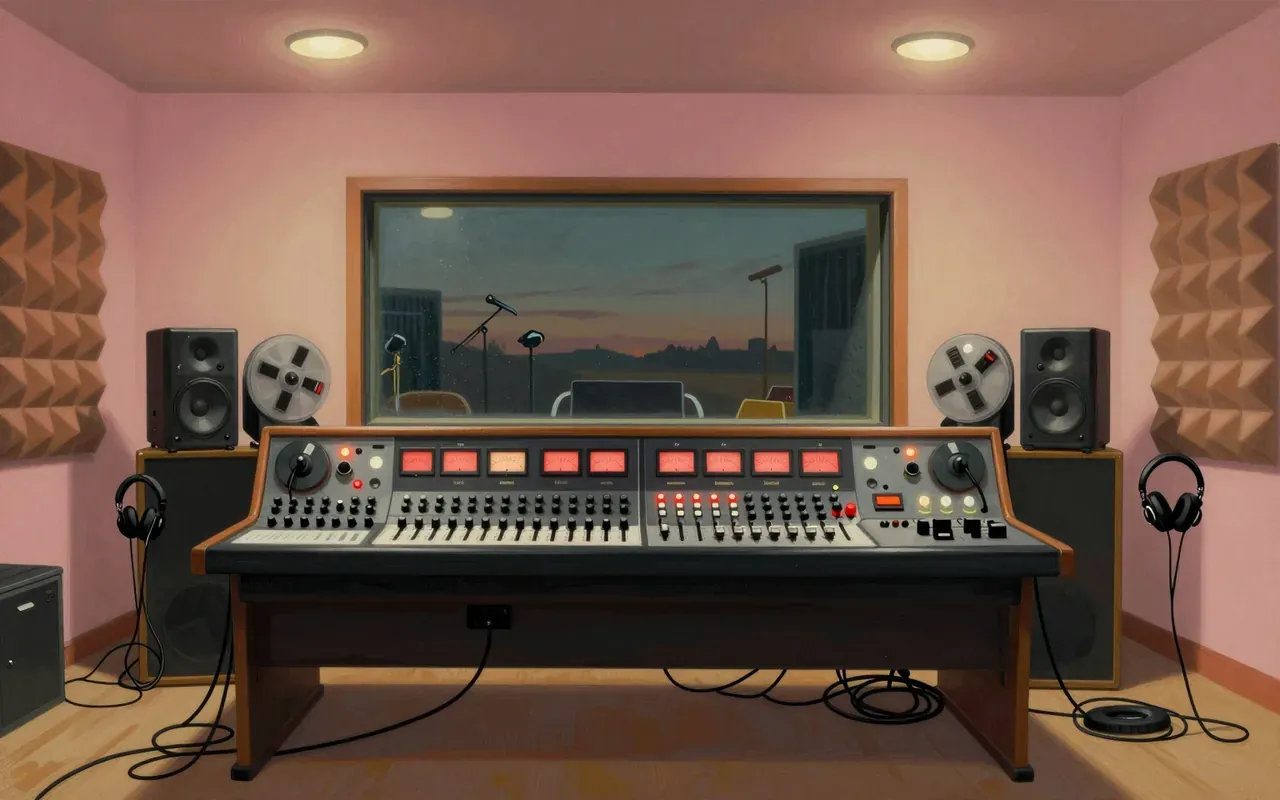
It sounds lean and room-conscious. Recorded in ten days at Sunset Sound in Los Angeles, the album uses minimal overdubs and leaves space for acoustic guitar, steel guitar, piano, double bass, and brushed drums. Carole King’s piano and backing vocals sit close in the mix. Peter Asher’s production avoids reverb-heavy treatment; the room is present but dry. Brass appears only on ‘Suite for 20 G’, arranged by Jack Bielan. No synthesizers, no electric bass except where noted, no studio effects beyond what the live room and tape machine provide.
What lands
‘Fire and Rain’ lands with surgical precision: voice, acoustic guitar, double bass, and Carole King’s piano chords in clean isolation. ‘Country Road’ lands through Randy Meisner’s bass line and the open-space cadence of its chorus. ‘Sweet Baby James’ lands via the intimacy of Taylor’s vocal take and the steel guitar’s slow, vaporous entrance.
What does not
It does not build momentum across tracks. It does not escalate in volume or intensity. It does not use distortion, feedback, or rhythmic propulsion. It does not resolve its emotional contradictions—it holds them in suspension.
The ideas inside it
Addiction. Grief. Recovery. Road travel as both escape and exposure. The tension between pastoral imagery and psychological fracture. ‘Fire and Rain’ names psychiatric treatment and suicide. ‘Country Road’ evokes movement without destination. ‘Suite for 20 G’ is structural pragmatism disguised as ambition.
Who should hear it, and who should not
People who listen for how a voice sits in a room. People who care about bass register and fingerpicking articulation. People who want songwriting that names real pain without metaphorical cover. Not people who need narrative arc, sonic development, or lyrical abstraction.
Is it worth your time
Yes—if you want a folk-rock record built on vocal clarity, instrumental restraint, and emotional directness. It rewards attention to phrasing, fingerpicked detail, and the weight of silence between lines. It does not reward passive listening or expectations of sonic expansion.