Saved
Topic

Addiction

Wanting without liking, and the industries that engineer for it.

47
in music
10:25
average
489 min
in total
95
across the network
Addiction across the network →
All briefs47
10:00

Art Pepper Meets the Rhythm Section

Art Pepper · 1957

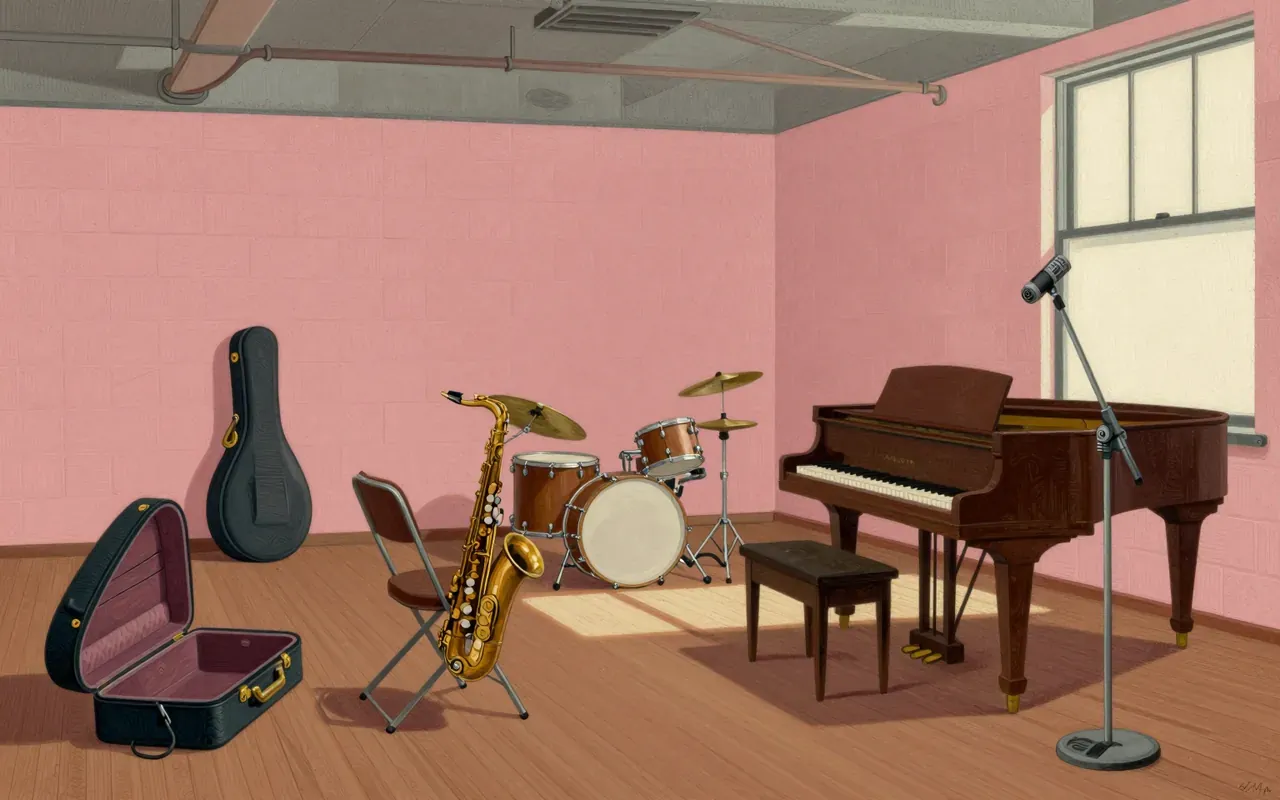
Art Pepper Meets the Rhythm Section is a 1957 jazz album recorded in one day at Contemporary’s Studios in Los Angeles, featuring Art Pepper on alto saxophone and the Miles Davis rhythm section — Red Garland, Paul Chambers, and Philly Joe Jones — musicians Pepper had never met before and learned he would play with only that morning. He played on a malfunctioning instrument while struggling with addiction. Accounts differ on how long he’d gone without playing — two weeks or six months — but the pressure was real, and the sound bears it. It is one of Pepper’s best-known 1950s albums, released on Contemporary in 1957 — not a comeback, not a debut, but a sudden, singular convergence.
8:15

Bert Jansch

Bert Jansch · 1965

A home-recorded folk album that rewrote guitar grammar before anyone noticed.

10:09

Blues From the Gutter

Champion Jack Dupree · 1958

A stark, unembellished blues record defined by its minimal personnel and clinical lyrical focus.

10:36

Dirt

Alice in Chains · 1992

Dirt is Alice in Chains’ second studio album, released on September 29, 1992. It was recorded from April to July 1992 across three studios — Eldorado in Burbank, London Bridge in Seattle, and One on One in Los Angeles — during the 1992 Los Angeles riots. The band evacuated to Joshua Tree with Tom Araya for four or five days before resuming work. Producer Dave Jerden returned from Facelift and crafted the album’s signature guitar tone using three distinct amps: a Bogner Fish preamp for low end, a Bogner Ecstacy for mids, and a Rockman Headphone amp for highs. "Would?" was recorded earlier by Rick Parashar for the Singles soundtrack. Jerry Cantrell wrote most songs; Layne Staley wrote "Hate to Feel" and "Angry Chair" solo and played guitar on both. Six of the thirteen songs address addiction. Cantrell described the process as soul searching and cleansing accumulated emotional poison. The album yielded five Mainstream Rock charting singles and remained on the charts for nearly two years.

11:01

Southeastern

Jason Isbell · 2013

Southeastern is a live-vocal, band-in-the-room album anchored by direct lyrical address and emotional specificity. It avoids sonic obfuscation. It names trauma, recovery, and memory without abstraction. Its power lies in what it refuses: polish, distance, and evasion.

11:16

Superunknown

Soundgarden · 1994

Superunknown is Soundgarden’s 1994 breakthrough—recorded song-by-song at Bad Animals Studio in Seattle using a Neve console, with drums and bass tracked first, then layered guitars and vocals. Producer Michael Beinhorn prioritised sonic experimentation and subtler forms of power, even having Chris Cornell study Frank Sinatra before recording 'Black Hole Sun'. The album is dark and mysterious, lyrically inspired by Sylvia Plath and interpreted as addressing substance abuse, suicide and depression; musically, it incorporates Middle-Eastern and Indian elements while retaining the band’s heaviness and creativity. Critics praised its range and emotional intensity, calling it more harrowing than Nirvana’s In Utero. It debuted at number one on the Billboard 200 and spawned five singles.

9:27

The Slider

T. Rex · 1972

The Slider is T. Rex’s 1972 album, written and demoed during their UK tour in fall and winter 1971. It was recorded across Rosenberg Studios (Copenhagen), Trident Studios (London), and Strawberry Studios in Château d'Hérouville — the latter chosen to avoid British taxing laws. Tony Visconti produced throughout. Marc Bolan’s drinking and cocaine use affected his personality during sessions, but recordings progressed quickly and efficiently. Musically, it features layered electric guitars, phasing, reverb, backwards guitars, string arrangements by Visconti, and androgynous backing vocals — though Visconti later claimed Flo & Eddie sang on only three tracks. Its lyrical themes include vulnerability, godhead imagery, and emotional states like sadness expressed in the title track’s refrain 'and when I'm sad, I slide'.

10:09

Tonight’s the Night

Neil Young · 1975

A raw, late-night studio document of grief, recorded live in a rented Hollywood rehearsal space with rented gear, featuring the surviving Crazy Horse rhythm section’s first session after Danny Whitten’s death. Young’s voice cracks. Mics are missed. Room echo stays in. Reprise delayed release for two years. It sold poorly in 1975 but is now regarded as a landmark—and Young called it the closest he ever came to art.

11:39

White Light Demo's

Gene Clark

A set of demos tethered to White Light—not a reissue, not a reconstruction, but a quiet echo of what came before the album’s quiet arrival.

9:36

Berlin

Lou Reed · 1973

Berlin is a concept album about two amphetamine-addicted lovers in Berlin. Lou Reed plays acoustic guitar throughout. The title track is re-arranged for solo piano, with simplified structure and a changed key. 'Oh, Jim' uses the Velvet Underground outtake 'Oh, Gin'. 'Caroline Says II' rewrites 'Stephanie Says'. 'Sad Song' revises an earlier Velvet Underground demo with milder lyrics. 'Men of Good Fortune' was played by the Velvet Underground as early as 1966. The album was recorded as a 64-minute double LP but edited down by RCA. An untitled one-minute piano solo by Allan Macmillan appears between 'Berlin' and 'Lady Day' on early 8-track and cassette editions.

9:57

Blood Sugar Sex Magik

Red Hot Chili Peppers · 1991

Blood Sugar Sex Magik was recorded over 30 days in seclusion at Houdini’s former Los Angeles mansion, where the band installed a full studio; Frusciante, Kiedis, and Flea each occupied private rooms and pursued individual creative work between sessions; Kiedis recorded all vocals in his room; the album was written more rapidly than its predecessor and marked a stylistic shift—reducing heavy metal guitar riffs and foregrounding Frusciante’s melodic songwriting—under Rick Rubin’s production guidance, which included collaborative input on drum beats, guitar melodies, and lyrics; the setting and process fostered lyrical completion and structural refinement, moving away from pure jam-based composition toward more deliberate song forms while retaining funk-punk roots and integrating new textures and emotional range.

10:24

Californication

Red Hot Chili Peppers · 1999

Californication is a dry, mono, live-in-one-room rock record made with Neve and Ampex hardware, built on melodic guitar textures and disciplined interplay — not myth, not volume, not legacy.

9:14

channel ORANGE

Frank Ocean · 2012

Channel Orange is Frank Ocean’s 2012 debut studio album, written in two weeks with producer Malay and recorded at EastWest Studios in Hollywood. It abandons sampling in favour of live instrumentation — keyboards, guitars, layered vocals, ambient noise and film dialogue — and draws on soul, funk, jazz and electronic music. Its songs tell specific stories about unrequited love, class, drugs and identity, anchored by precise sonic choices: falsetto, room tone, abrupt silences, and unconventional structures. It won Best Urban Contemporary Album at the 55th Grammys and was named best album of 2012 in HMV’s Poll of Polls.

11:38

De La Soul Is Dead

De La Soul · 1991

De La Soul Is Dead is a 1991 hip-hop album that rejects its predecessor's image through conceptual rupture, darker humour, and weighty themes—while holding onto playfulness in groove and skit. It is structured around format-specific sequencing, fictional radio framing, and a visual metaphor of death-as-metamorphosis. Its sound is defined by eclectic sampling and rhythmic experimentation—but no instrument, room, or technical detail beyond that is verified.

12:11

Disintegration

The Cure · 1989

Disintegration is a record built on constraint: dread as discipline, silence as method, keyboards as architecture. It refuses to be either pure goth or pure pop — instead, it holds both in tension, using 'Lovesong' and 'Pictures of You' not as palate cleansers but as structural counterweights. Its sound is defined by what is layered (keyboards), what is slowed (guitar), and what is withheld (Tolhurst’s presence, Smith’s speech). Nothing here is ambient. Everything is placed.

10:28

Let It Bleed

The Rolling Stones · 1969

Let It Bleed is the Rolling Stones’ final album of the 1960s, recorded between February and early November 1969 amid Brian Jones’s firing and Mick Taylor’s hiring. It reached No. 1 in the UK and No. 3 in the US. It features 'Gimme Shelter' with Merry Clayton, 'You Can’t Always Get What You Want' with the London Bach Choir, 'Midnight Rambler', and a cover of Robert Johnson’s 'Love in Vain'. Keith Richards played nearly all guitar parts; Jones contributed to only two tracks; Taylor added overdubs to two. Recording took place primarily at Olympic Studios in London and Elektra Sound Recorders in Los Angeles. Jimmy Miller produced. Charlie Watts did not play on 'You Can’t Always Get What You Want'.

10:58

Lust for Life

Iggy Pop · 1977

A hard rock record made fast, in a real room, with real instruments, by people who had just survived something. No myth. Just sound.

9:47

My Life

Mary J. Blige · 1994

My Life is a record built from the inside out: fourteen lyrics written by Blige during clinical depression, addiction, and an abusive relationship with K-Ci Hailey; Chucky Thompson hired last-minute after prior producers raised fees; Sean Combs shifting direction after hearing Thompson’s first track; Prince Charles Alexander joining late to engineer the cover of 'I'm Going Down'; The Notorious B.I.G.’s verse cut from 'K. Murray Interlude' over parental advisory concerns and replaced by Keith Murray. Its sound is rooted in soul sampling—Curtis Mayfield, Al Green, Marvin Gaye—and its structure reflects real-time negotiation over voice, visibility, and authorship. It is not a cultural artifact frozen in time. It is a living document of process.

10:39

Nick of Time

Bonnie Raitt · 1989

Nick of Time is Bonnie Raitt’s tenth studio album, released March 21, 1989. Produced by Don Was, it features a smooth and understated rock sound rooted in Raitt’s earlier laid-back blues rock style. There is grit in her singing and playing, even when surfaces are clean. The album explores blues rock, country, R&B, and pop. It was built around stripped-down arrangements developed first in demos at Was’ home studio, then recorded live over one week at Ocean Way Recording in Los Angeles. There is less production and less slickness — a return to Raitt’s roots. It was her first sober album and first Capitol Records release, reaching number one on the U.S. album chart and selling over five million copies in the U.S. It marked the debut of her enduring rhythm section with Ricky Fataar and James 'Hutch' Hutchinson.

11:07

On the Beach

Neil Young · 1974

On the Beach is a 1974 Neil Young album recorded mostly at Sunset Sound in Hollywood in late March and early April, with 'Walk On' and 'For the Turnstiles' cut earlier at his ranch. David Briggs missed most sessions due to illness; Ben Keith led recruitment of Rusty Kershaw, members of the Band, Crazy Horse, and CSNY. Honey slides shaped a melancholy, depressed atmosphere. Rusty Kershaw rejected rehearsal, favouring first-take immediacy. The album features varied instrumentation and shared production. Its second side — 'On the Beach', 'Motion Pictures', and 'Ambulance Blues' — lands with cumulative weight. It explores the collapse of 1960s folk ideals, the downside of success, and the underbelly of the Californian lifestyle. It sold poorly on release but later became a critical favourite.

11:25

Pacific Ocean Blue

Dennis Wilson · 1977

Pacific Ocean Blue is Dennis Wilson’s 1977 debut solo album — recorded at Brother Studios between autumn 1976 and spring 1977. It features grainy, soulful vocals, gospel choir augmentation on 'River Song', co-writes with Mike Love and Carl Wilson, and an unfinished vocal for 'Holy Man'. It reached No. 96 on Billboard — outperforming the next two Beach Boys albums — and sold nearly 250,000 copies. A planned solo tour was cancelled when record company support was withdrawn. Wilson performed selections from it during the 1977 Beach Boys tour. Though he dismissed it as having 'no substance', it has since gained cult status and critical esteem.

10:42

Pearl

Janis Joplin · 1971

Pearl is Janis Joplin’s final studio album, recorded between late August and early October 1970 in Los Angeles with producer Paul A. Rothchild. It was released posthumously in January 1971 after her death on October 4, 1970. Though unfinished, sufficient completed material existed to assemble the LP. It features her number-one hit 'Me and Bobby McGee', original songs 'Move Over' and 'Mercedes Benz', and covers including 'Trust Me' and 'Get It While You Can'. Joplin approved and arranged all nine tracks she sings on. She did not record vocals for 'Buried Alive in the Blues'. The album has a more polished sound than her earlier work with Big Brother and the Holding Company and the Kozmic Blues Band, due to Rothchild’s expertise and the Full Tilt Boogie Band. Many songs were first recorded live on stage in Canada two months before the LA sessions. It was crafted at Sunset Sound Recorders to showcase her extraordinary vocal talents.

10:14

Pills ’n’ Thrills and Bellyaches

Happy Mondays · 1990

Pills ’n’ Thrills and Bellyaches is the 1990 Happy Mondays album recorded at Capitol Studios in Los Angeles after their US tour. Produced by Paul Oakenfold and Steve Osborne, it fused house, funk, Krautrock, and northern soul into a propulsive, loop-driven sound defined by Gary Whelan’s layered drum work and Rowetta’s soulful vocals on 'Kinky Afro', 'Step On', and 'Bob’s Yer Uncle'. It went platinum in the UK, sold over 350,000 copies, and remains the band’s commercial and artistic zenith — a document of Madchester’s peak, not its myth.

13:16

Pretzel Logic

Steely Dan · 1974

Pretzel Logic is Steely Dan’s decisive turn from band to studio construct — dry, precise, and ruthlessly edited.

9:53

Ritual de lo habitual

Jane’s Addiction · 1990

Ritual de lo Habitual is a fractured, urgent document — not a polished statement. Its power lies in its unresolved tensions: between memory and erasure, command and collapse, mourning and performance.

9:43

Rocks

Aerosmith · 1976

Rocks is Aerosmith’s 1976 fourth studio album, recorded live at the Wherehouse in Waltham, Massachusetts. It is defined by total signal overload, a large metal room, stage monitors feeding sound back to the band, and meticulously constructed sound effects—including a whip made from a whirling cord and cap gun, and galloping hooves made from coconuts. It features two Top 40 hits ('Last Child' and 'Back in the Saddle') and the charting ballad 'Home Tonight'. It sold over four million copies and appears on Rolling Stone's 500 Greatest Albums of All Time. Kurt Cobain listed it as one of the most influential albums to Nirvana's sound.

10:36

Siamese Dream

Smashing Pumpkins · 1993

Siamese Dream is the Smashing Pumpkins’ 1993 album, recorded December 1992 to March 1993 at Triclops Studios in Marietta, Georgia. It was made under duress: Jimmy Chamberlin’s heroin addiction led to multi-day disappearances; Billy Corgan’s depression deepened to suicidal ideation; band members withdrew physically and emotionally; Corgan overdubbed most guitar and bass parts himself for efficiency; Butch Vig co-produced using analog tape; Alan Moulder mixed the final product after Corgan and Vig exhausted themselves. The album contains up to 40 guitar parts in 'Soma', achieved through obsessive layering—not reverb or delay. It ran four months and $250,000 over budget. It peaked at No. 10 on the Billboard 200 and sold over four million copies in the US.

9:38

Sweet Baby James

James Taylor · 1970

Sweet Baby James is a tightly recorded, emotionally exposed folk-rock album made quickly and economically in Los Angeles. Its sound is defined by acoustic intimacy, uncluttered arrangements, and vocal delivery that treats silence as structural material. It succeeds where it commits to clarity—not where it attempts breadth.

11:26

The Downward Spiral

Nine Inch Nails · 1994

The Downward Spiral is Nine Inch Nails’ second studio album, recorded at 10050 Cielo Drive — the Tate House — between July 4, 1992 and mid-1994. Reznor converted the house into ‘Le Pig’, named after the blood-written phrase on the door from the 1969 Manson murders. He lived and worked there for 18 months while struggling with depression and drug addiction. It is a loose concept album tracing a protagonist’s psychological descent into self-destruction, influenced by Pink Floyd and David Bowie’s 1970s output. Reznor used Pro Tools, TurboSynth, Zoom 9030, Akai and Kurzweil samplers to process guitars and vocals into abstract textures, pursuing a 'full-range' sound that eschews conventional verse-chorus structures and embraces dissonance, industrial noise, and unusual time signature changes. Flood co-produced several tracks, Alan Moulder mixed most of the album, and contributors included Adrian Belew, Stephen Perkins, and Chris Vrenna. The album debuted at number two on the Billboard 200 and became the band’s highest-selling US album, with over four million copies sold domestically and five million worldwide.

9:37

The Gilded Palace of Sin

The Flying Burrito Bros. · 1969

The Gilded Palace of Sin is the Flying Burrito Brothers’ 1969 debut, recorded at A&M Studios in Hollywood with producer Larry Marks and engineer Henry Lewy. It features Sneaky Pete Kleinow’s B6-tuned pedal steel guitar — routed through a rotating Hammond Leslie amplifier and fuzzbox — alongside vocal harmonies modelled on the Everly and Louvin Brothers. Most songs were written by Gram Parsons and Chris Hillman at their San Fernando Valley residence, ‘Burrito Manor’. The album includes originals by Parsons, Hillman, and Chris Ethridge, plus two covers by Dan Penn and Chips Moman. Fast Eddie Hoh was dismissed mid-session due to substance abuse, leading to use of session drummers including Jon Corneal and Popeye Phillips. Its themes fuse country, soul, and psychedelic rock with lyrical references to Larry Spector and Robert F. Kennedy, framed by irony — ‘gilded’ as surface opulence masking moral decay.

10:27

The Idiot

Iggy Pop · 1977

The Idiot is Iggy Pop’s 1977 debut solo album, produced by David Bowie and recorded at Château d'Hérouville in France and Musicland Studios in Munich. Bowie composed most music and played keyboards, guitar, saxophone and drum machine; Pop wrote lyrics in real time and recorded vocals in Munich. French session musicians Laurent Thibault and Michel Santangeli contributed bass and drums, with Santangeli’s parts retained despite his early dismissal. The album’s sound is mechanical, sparse and emotionally detached—a fusion of James Brown’s funk and Kraftwerk’s electronics. It has influenced post-punk, electronic and industrial artists.

9:14

Vincebus Eruptum

Blue Cheer · 1968

Vincebus Eruptum is Blue Cheer’s 1968 debut album. It is a power-trio document: Dickie Peterson (vocals, bass), Leigh Stephens (guitar), Paul Whaley (drums). It emerged after personnel reductions post-Monterey Pop Festival. It was recorded in 1967 at Amigo Studios in North Hollywood.

8:47

Visions

Grimes · 2012

Visions is a record defined by its making: solitary, chemically augmented, deadline-driven, and physically extreme. Its sound is synthetic, compact, and unrelenting — built from four tools in one room. It landed because it fused pop immediacy with experimental discipline. It does not expand outward. It compresses inward.

11:27

Who’s Next

The Who · 1971

Who’s Next is the fifth studio album by The Who, developed from the abandoned Lifehouse project. It was recorded primarily at Olympic Studios with engineer Glyn Johns after initial sessions at Stargroves using the Rolling Stones Mobile Studio. The album features prominent synthesizer use—especially on 'Won't Get Fooled Again' and 'Baba O'Riley'—and includes contributions from guest musicians Nicky Hopkins and Dave Arbus. Eight of its nine tracks originated from Lifehouse, with 'My Wife' being the sole exception, added late in the sessions. The recording process emphasized sonic clarity and impact over narrative cohesion, reflecting a shift from the conceptual ambitions of Lifehouse to a focused, track-driven studio album. The album’s production was shaped by Johns’ pragmatic, sound-first approach, contrasting with the earlier, more chaotic Lifehouse sessions involving Kit Lambert and the Young Vic concerts. Key personnel include Roger Daltrey (vocals), Pete Townshend (guitars, vocals, synthesizers, organ, piano), John Entwistle (bass, vocals, brass, piano), and Keith Moon (drums, percussion).

8:21

Young Americans

David Bowie · 1975

Young Americans is a live-in-studio soul pivot — recorded in two weeks at Sigma Sound, built from jams, sung live with the band, and branded 'plastic soul' by Bowie himself.

11:02

Atrocity Exhibition

Danny Brown · 2016

Atrocity Exhibition is Danny Brown’s third studio album, released in 2016 after signing with Warp Records. It is named after a Joy Division song. Paul White produced all tracks except ‘Really Doe’ (Black Milk), ‘Pneumonia’ (Evian Christ), and unspecified contributions from The Alchemist. Guest appearances include Kendrick Lamar, Ab-Soul, Earl Sweatshirt, B-Real, Kelela, and Petite Noir. The album draws stylistic influence from Talking Heads and Joy Division — and, while writing it, Brown also drew inspiration from Björk. It received continued critical acclaim but reduced commercial sales.

9:42

Fresh

Sly & the Family Stone · 1973

Fresh is Sly & the Family Stone’s 1973 album, made amid personnel losses and Sly’s escalating cocaine use. It follows There’s a Riot Goin’ On. It contains a track purportedly sourced from a 1968 outtake.

10:09

Grievous Angel

Gram Parsons · 1974

Grievous Angel is Gram Parsons’s final album, recorded in summer 1973 at Wally Heider Studio 4 in Hollywood and mixed at Capitol Studios before his death in Joshua Tree. It features Emmylou Harris and members of Elvis Presley’s TCB Band. Only two new songs appear — 'Return of the Grievous Angel' and 'In My Hour of Darkness'. The rest draws from Parsons’s Harvard folk period, The Byrds, the Flying Burrito Brothers, and rejected material from GP. The 'live' medley is fabricated with canned applause. Critical attention focuses on Harris’s vocal role, especially on 'Love Hurts', and on the album’s paradox: disciplined energy amid personal collapse. It peaked at number 195 on the Billboard chart.

9:35

Lupe Fiasco’s Food & Liquor

Lupe Fiasco · 2006

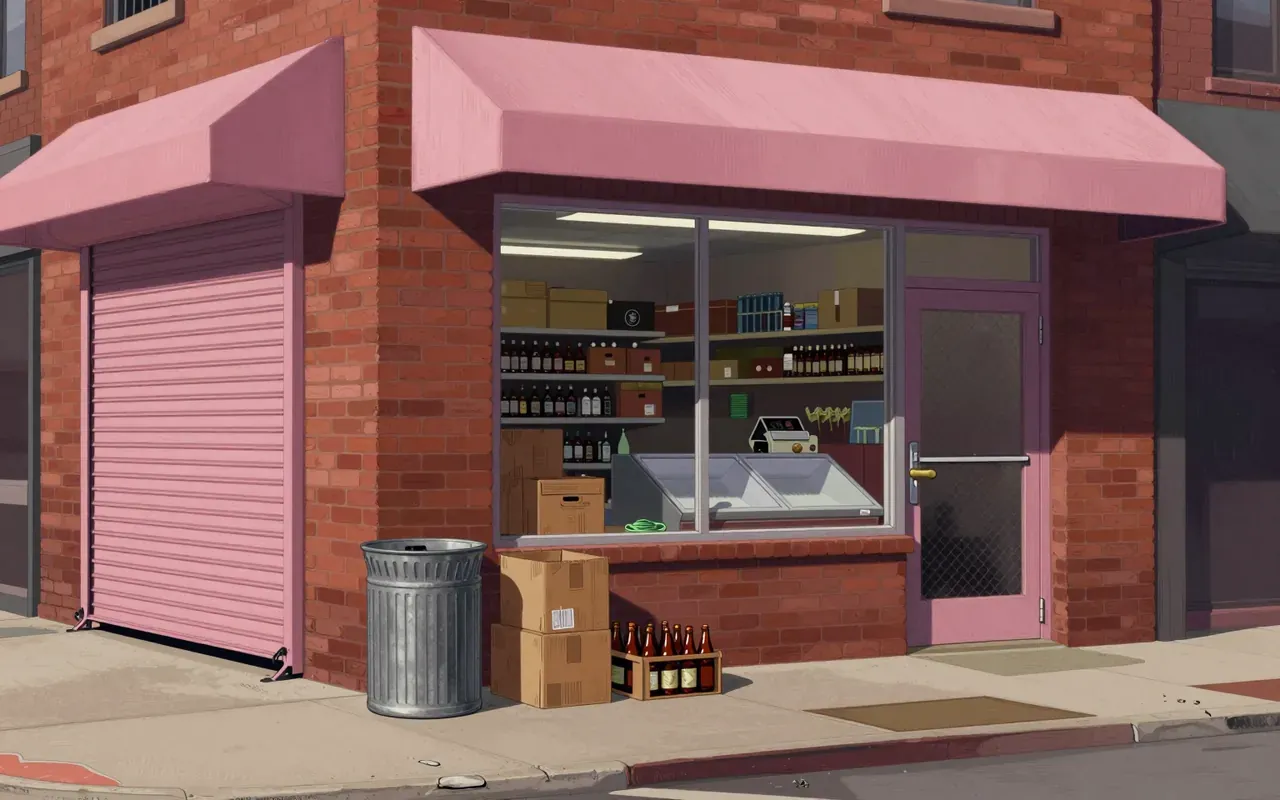
Lupe Fiasco’s Food & Liquor is a thematically dense, string-saturated hip-hop debut rooted in Chicago storefront logic—not abstract ambition. It lands where sound and subject align: 'Kick, Push', 'Daydreamin'', and 'American Terrorist'. It falters where runtime swells without function—especially the 'Outro'. No filler. No myth. Just food, liquor, strings, and scrutiny.

10:07

Master of Puppets

Metallica · 1986

A dry, precise, sober metal record made in Copenhagen to escape American studio acoustics. No synths. No gloss. No myth-making during recording. Themes: drugs, militaries, religion, rage, insanity, monsters.

10:16

Master of Reality

Black Sabbath · 1971

Master of Reality is Black Sabbath’s third album, recorded February–April 1971 at Island Studios in London under producer Rodger Bain—his final collaboration with the band. It was made without touring commitments, using expanded studio time and financial resources, including money for drugs. Iommi and Butler downtuned their instruments 1½ steps on key tracks to ease physical strain, directly shaping the album’s heavier sound. The band experimented with classical guitar, flute, piano, overdubs, bigger bass drums, and amplified bass presence. Osbourne struggled with rapid lyrics on 'Into the Void', requiring written cues; his vocals on 'Solitude' were doubled via delay. Drug use during sessions impaired idea retention. The album contains their first acoustic songs and key tracks like 'Sweet Leaf' and 'Children of the Grave'. Released July 1971, it marked a pivot toward studio-driven heaviness—not myth, but mechanics.
10:03

Recovery

Eminem · 2010

Recovery is a 2010 hip-hop album recorded from 2009 to 2010. It replaced the abandoned Relapse 2 project after Eminem scrapped most of its material and started over with new producers. It was announced via Twitter on April 14, 2010, and released on June 18.

11:50

Rust in Peace

Megadeth · 1990

Rust in Peace is Megadeth’s 1990 studio album, recorded at Rumbo Recorders in March 1990. It is the first Megadeth album completed with a producer who wasn’t fired — Mike Clink — though Mustaine later said most of the work was done by himself, Max Norman, and engineer Micajah Ryan.

9:42

Saturnz Return

Goldie · 1998

Saturnz Return is Goldie’s 1998 follow-up to Timeless. Its opening track 'Mother' is an hour-long orchestral drum and bass piece featuring a 30-piece string section and classically trained child singers. It was conceived as a sonic representation of Goldie’s adoption at age three, foster care, fame, and addiction. He described its arc as beginning with an unborn-child voice before descending into abandonment and rhythmic ferocity. He made it for one private moment: listening on headphones while seeing his mother’s body before her funeral. The album features David Bowie, Noel Gallagher and KRS-One, and received mixed reviews—including 'ambitious but monotonous and overlong—Pink Floyd with a gold tooth'.

10:01

The Sun’s Tirade

Isaiah Rashad · 2016

The Sun's Tirade is Isaiah Rashad's debut studio album, released on September 2, 2016. It was recorded during a period of personal struggle with depression and addiction. Its production draws from hip-hop, trap, trip hop, soul, and jazz. It is a loose concept album with reflective, conscious themes. It debuted at number 17 on the US Billboard 200, selling 19,000 copies in its first week.