Saved
Prog & art rock

The Yes Album

This is where Yes stopped imitating and started architecting — no synths, no myths, just bass, organ, voice, and room.

Worth your time?4.5/5Yes.Hear the whole thing.What works, what does not, who it is for ↓
9:17in productionCh. 1 · No Covers, No Compromises/ 9:17 · ceiling 15 min
4 chapters · 9:17Ceiling 15:00

The brief is written and checked. The video joins this page when it is cut.4 chapters · 2 min read · 9:17 planned

Read the brief

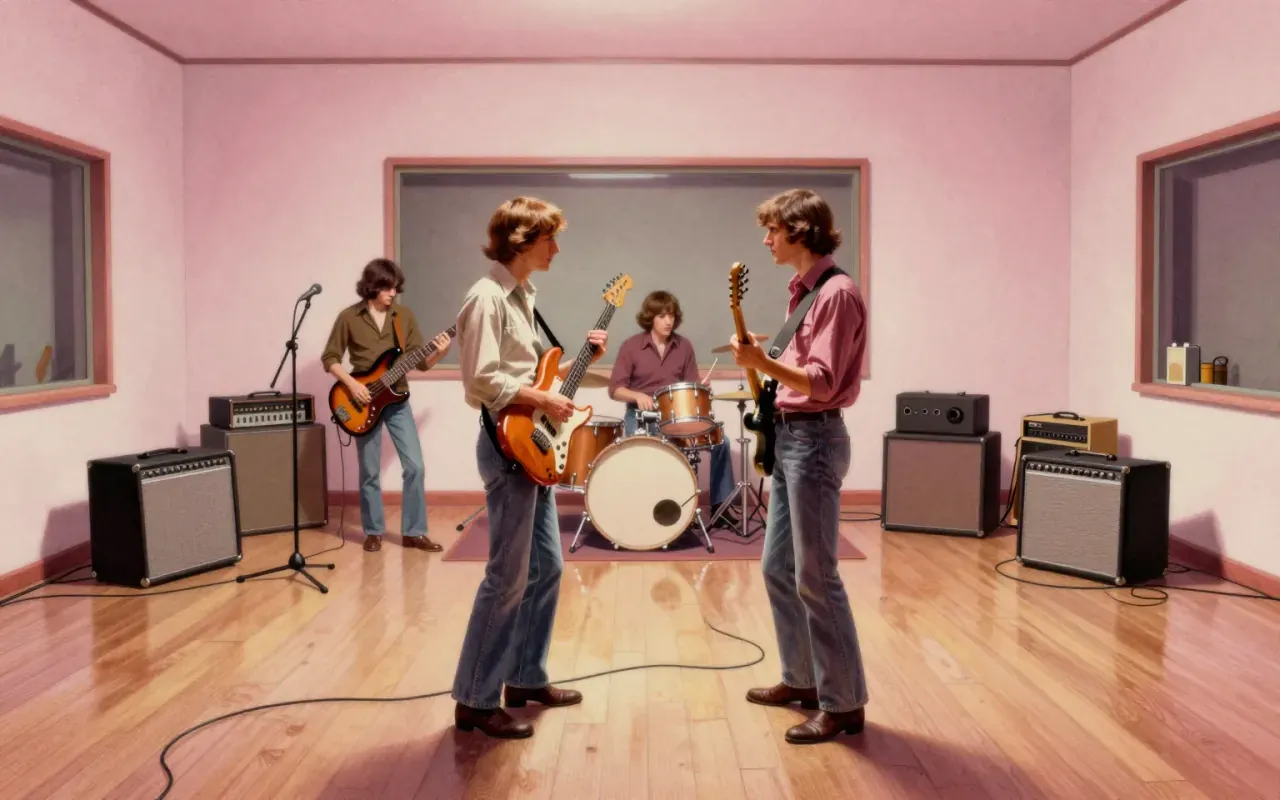
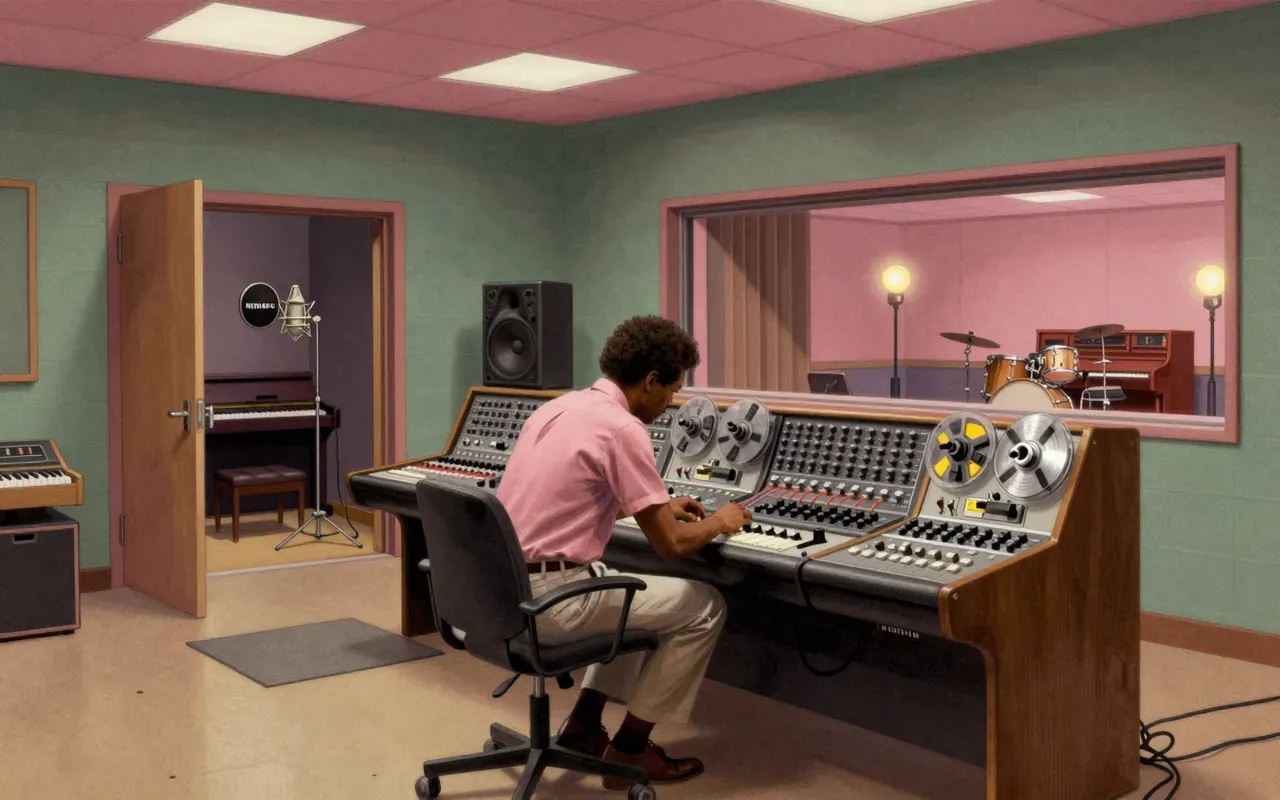
The Yes Album is Yes’s third studio album, their first consisting entirely of original material, written and rehearsed at Langley Farm in Romansleigh, Devon, and recorded at Advision Studios in London in autumn 1970.

Chapters & takeaways4
  1. 1:10
    No Covers, No Compromises

    It was written at a farmhouse in Devon and recorded in London — the first Yes album with no covers, no compromises.

  2. 2:22
    Hammond B-3 and Piano Share the Floor

    Kaye’s switch to the B-3 and piano solo on 'A Venture' marked a turning point — organ and piano now shared equal ground with bass and voice.

  3. 3:51
    One Guitar, One Room, One Take

    'Clap' was recorded live at the Lyceum Theatre using only a Gibson ES-175 and Martin 00-18 — no overdubs, no edits.

  4. 5:39
    Extended Form, Anchored by Bass

    Tracks were extended to allow development — Squire’s Rickenbacker bass, amplified through Marshall 100W and 4x12s, anchored every expansion.

1 more chapterFewer chapters
Running order6
  1. 01
    Yours Is No Disgrace9:42
  2. 02
  3. 03
    Starship Trooper: a. Life Seeker / b. Disillusion / c. Würm9:35
  4. 04
    I’ve Seen All Good People: a. Your Move / b. All Good People6:56
  5. 05
  6. 06
    Perpetual Change8:55

Film placements are the ones described in each film's own entry, so the list is partial rather than complete.

Worth your time?

Yes. Hear the whole thing.

4.5/ 5
What works
  • The vocal harmonies land with precision.
  • Squire’s bass lines land with melodic weight and rhythmic definition.
  • Kaye’s B-3 organ lands with warm, percussive presence.
  • Howe’s acoustic guitar on 'Clap' lands with room resonance and fingerpicked clarity.
What does not
  • It does not use synthesizers as lead voices.
  • It does not rely on studio effects or tape manipulation.
  • It does not feature guest vocals, string sections, or orchestration.
  • It does not quote or adapt external material — all compositions are original.
Hear it if
  • People who want to hear how rock instrumentation can be reorganised around interplay, not hierarchy.
  • People who care about how a bass tone cuts through a mix.
  • People who listen for where the room ends and the instrument begins.
Skip it if
  • People who need lyrics to carry narrative.
  • People who expect production to smooth out instrumental friction.
Who should hear it, and who should skipHide who it is for
The written brief2 min read

What the record is and where it came from

It is Yes’s third studio album, their first consisting entirely of original material, written and rehearsed at Langley Farm in Romansleigh, Devon, and recorded at Advision Studios in London in autumn 1970.

How it sounds, and how it was made

It sounds like close harmony singing over Kaye’s Hammond B-3 organ and Squire’s melodic bass, with jazz piano, funk, and acoustic textures layered in. It was made at Advision Studios in London in autumn 1970, with Howe recording ‘Clap’ live at the Lyceum Theatre using a Gibson ES-175 and Martin 00-18. Squire used a 1964 Rickenbacker RM1999 bass with Rotosound strings and Marshall 100W tube head with 4x12 cabinets. Kaye switched from the M-100 to the B-3 and played piano on ‘A Venture’. All members contributed ideas; tracks were extended for development.

What lands

The vocal harmonies land with precision. Squire’s bass lines land with melodic weight and rhythmic definition. Kaye’s B-3 organ lands with warm, percussive presence. Howe’s acoustic guitar on ‘Clap’ lands with room resonance and fingerpicked clarity. The piano solo on ‘A Venture’ lands as a jazzy, unhurried pivot.

What does not

It does not use synthesizers as lead voices. Kaye resisted them. It does not rely on studio effects or tape manipulation. It does not feature guest vocals, string sections, or orchestration. It does not quote or adapt external material — all compositions are original.

The ideas inside it

The idea that rock could absorb jazz piano, funk rhythm, and acoustic intimacy while retaining vocal precision and bass-led melody. The idea that extended form serves musical argument, not just virtuosity. The idea that a band’s sound is defined by who plays what — not just what they play.

Who should hear it, and who should not

People who want to hear how rock instrumentation can be reorganised around interplay, not hierarchy. People who care about how a bass tone cuts through a mix. People who listen for where the room ends and the instrument begins. Not people who need lyrics to carry narrative, or who expect production to smooth out instrumental friction.

Is it worth your time

Yes — if you want to hear how prog rock’s structural ambition and instrumental clarity first cohered without synth abstraction or conceptual sprawl.

Same genre · Prog & art rock4 of 76
9:50
FragileYes · 1971Fragile is Yes’s fourth studio album, released in late 1971. It marks Rick Wakeman’s debut and Tony Kaye’s departure over resistance to electronic keyboards. Recorded in August–September 1971 at Advision Studios on a 16-track machine, it features four group compositions and five individual member pieces — a structural choice driven by budget and time constraints. Eddy Offord co-produced with the band. The album introduced Wakeman’s expansive keyboard palette and established the band’s signature progressive sound.
9:42
The Piper at the Gates of DawnPink Floyd · 1967The Piper at the Gates of Dawn is Pink Floyd’s 1967 debut, recorded at Abbey Road with radical use of echo, reverb, and isolation. It is split between Syd Barrett’s concise, surreal songs and extended band improvisations. Its sound is defined by technical choices—not genre conventions.
9:52
Close to the EdgeYes · 1972Close to the Edge is Yes’s 1972 studio album, recorded at Advision Studios in London. It contains three tracks: an 18-minute four-movement title suite inspired by Hermann Hesse’s Siddhartha; the pastoral 'And You and I'; and the hard-driving 'Siberian Khatru'. Rick Wakeman’s Mellotron and church organ expand the band’s sonic palette. The album was assembled section-by-section from musical sketches written on tour by Jon Anderson and Steve Howe. Eddie Offord co-produced and engineered. It represents a peak in Yes’s 1970s progressive era.
13:00
Marquee MoonTelevision · 1977Marquee Moon is Television's debut, recorded at A&R Recording in New York in November 1976 after the CBGB regulars spent years turning down record deals they judged wrong for them. Produced by frontman Tom Verlaine and engineer Andy Johns, it favours interlocking guitar lines and extended structures over the blunt riffs of the punk scene the band emerged from, and its influence on the rock guitar playing that followed has far outpaced its modest original sales.
Up next in Music

There’s No Place Like America Today

Curtis Mayfield · 1975 · 8:58

A disillusioned soul record that names the problem but doesn’t solve it—and doesn’t try to.

8:58