musicbriefs
Genre

Prog & art rock

77
briefs
10:23
average
800 min
in total
54
artists
All briefs77
2:05

Here Come the Warm Jets

Brian Eno · 1974

Brian Eno's first solo album followed his departure from Roxy Music and appeared in 1974. It combines glam and pop forms with experimental working methods. A large cast of guests supplied performances that Eno could direct, combine and transform.

1:57

Larks' Tongues in Aspic

King Crimson · 1973

King Crimson's fifth album introduced a new lineup in 1973: Robert Fripp, John Wetton, David Cross, Bill Bruford and Jamie Muir. It was the only studio album made by this exact group. Modernist composition and free improvisation helped define its new direction.

8:46

A Moon Shaped Pool

Radiohead · 2016

A Moon Shaped Pool is Radiohead’s ninth studio album, released in 2016. It features Jonny Greenwood’s orchestral arrangements, includes older material such as 'True Love Waits', and incorporates strings and choral vocals by the London Contemporary Orchestra. The album was released digitally in May 2016 and physically in June via XL Recordings. Its sessions were affected by personal events including Nigel Godrich's father's death and Thom Yorke's separation from and later loss of his wife Rachel Owen, who died from cancer in 2016. The album was promoted with music videos for 'Daydreaming' and 'Burn the Witch' and received critical acclaim, appearing on year-end best-album lists and earning Grammy nominations including Best Alternative Music Album and Best Rock Song for 'Burn the Witch'. It became Radiohead's sixth UK number-one album and reached number three in the US. It was also nominated for the Mercury Prize, making Radiohead the most shortlisted act in Mercury history. The album was recorded at La Fabrique studio near Saint-Rémy-de-Provence, France, after initial work began in September 2014. Radiohead had previously attempted to write a theme for the James Bond film Spectre, but both submissions were rejected and later released independently. The album's release marked a return to more emotionally resonant and less cynical lyrical themes compared to earlier works, conveying wonder and amazement rather than alienation or political anger. It was followed by extensive touring across Europe, Japan, and North and South America, featuring Clive Deamer on drums until 2018, and later Chris Vatalaro on the 2025 tour. The album's production involved long-standing collaborators Nigel Godrich (producer), Stanley Donwood (cover artist), and Paul Thomas Anderson (music video director).

11:32

Country Life

Roxy Music · 1974

Country Life is Roxy Music’s fourth studio album, released on 15 November 1974. It entered the US Billboard 200 Top 40 at No. 37. Rolling Stone described it as 'a cabaret for psychotics'. Its sound features Eddie Jobson’s flanged violin, German oom-pah band passages, Elizabethan textures, and boogie-blues edges. The title and cover parody the British magazine Country Life. The original cover caused US retailers to wrap the album in opaque plastic. An alternative forest-only cover was later issued.

9:21

Dear Science

TV on the Radio · 2008

Dear Science is TV on the Radio’s third studio album, recorded in 2008 at Stay Gold studio in Brooklyn. It is described as indie rock, art rock, funk, soul, and post-punk. Its title originated from a studio note by Dave Sitek: 'Dear Science, please start solving problems and curing diseases or shut the fuck up.' It was released on September 23, 2008.

9:39

Duck Stab / Buster & Glen

The Residents · 1978

Duck Stab / Buster & Glen is a functional 1978 release — not a creative milestone. Its value lies entirely in its role as a commercial pivot: packaging existing and concurrent recordings to sustain momentum after Duck Stab! drew press attention. Nothing in the source confirms its sonic character, production method or internal logic. It is archival infrastructure, not art.

8:21

Histoire de Melody Nelson

Serge Gainsbourg · 1971

Histoire de Melody Nelson is a 1971 concept album by Serge Gainsbourg, co-written and arranged by Jean-Claude Vannier and produced by Jean-Claude Desmarty. It features funk-style electric guitar and bass guitar, Gainsbourg’s spoken word and Sprechgesang vocals, and lush string and choral arrangements. Personnel include Vic Flick, Big Jim Sullivan, Dave Richmond, Dougie Wright, Jean-Luc Ponty, and Jane Birkin. At just under twenty-eight minutes, its short running time and stylistic consistency give it qualities more in line with an extended play or a single continuous suite.

9:42

Kimono My House

Sparks · 1974

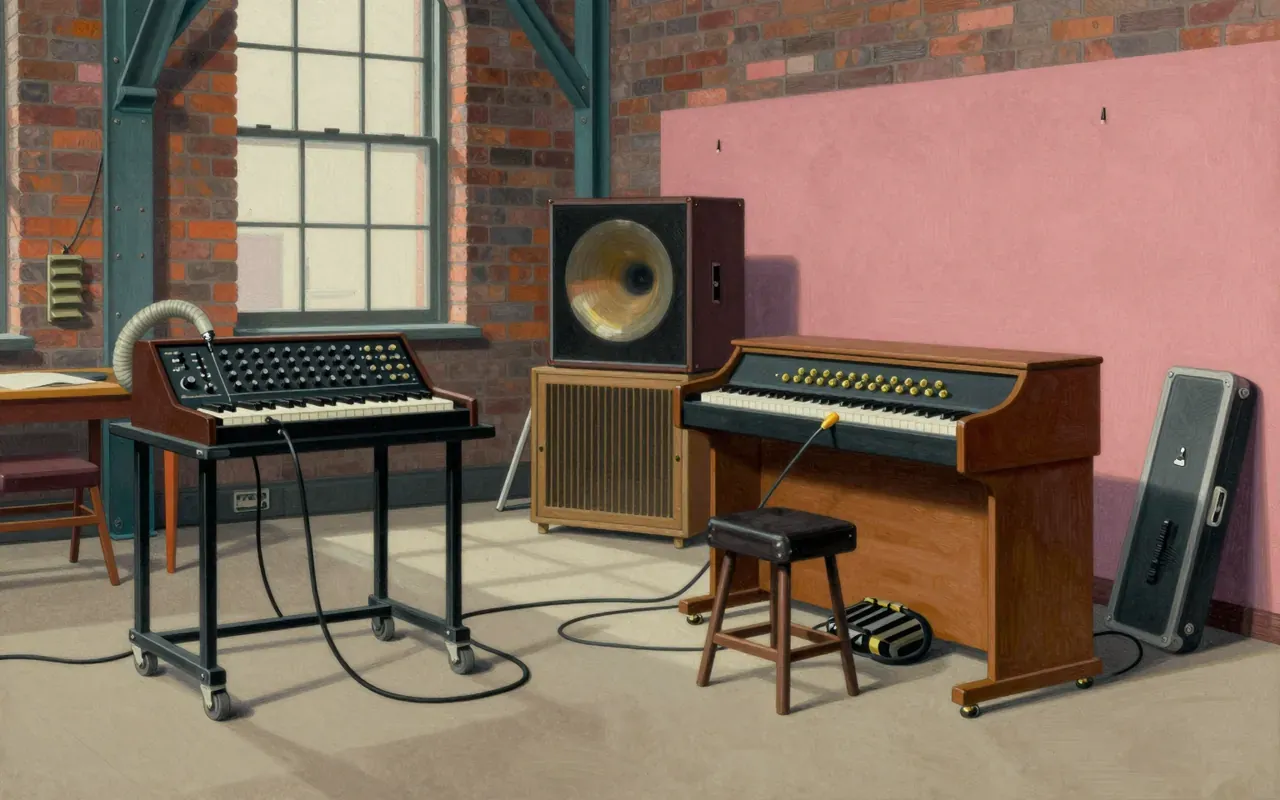
Kimono My House is a precise, high-wire pop record. It uses limited tools — Rickenbacker bass, Echoplex-delayed Electra-Piano, angular guitar — to build ten tightly wound songs. Its wit is structural, not lyrical. Its drama is in timing, not volume. It does not invite affection. It demands attention.

12:00

Madman Across the Water

Elton John · 1971

Madman Across the Water is Elton John’s first progressive rock album — a studio-built pivot using session players, Paul Buckmaster’s strings, and Davey Johnstone’s guitar. Only one track features his touring band. It was written alongside the 1971 film Friends. ‘Tiny Dancer’ and ‘Levon’ were hits. The title track was re-recorded after an earlier version with Mick Ronson was shelved. It was the last album fully recorded at London’s Trident Studios.

9:25

Millions Now Living Will Never Die

Tortoise · 1996

No verified claim about the record 'Millions Now Living Will Never Die' by Tortoise (1996) can be made from the provided material. All sources are either irrelevant (zoological) or insufficient (film placement without sonic description). The brief cannot describe the music, its makers, its methods, or its meaning — because the evidence contains none of it.

11:58

Odessa

Bee Gees · 1969

Odessa is the Bee Gees’ 1969 double album — their only one of original material — conceived as a concept about a fictional ship lost in 1899. Recording spanned July to November 1968. Vince Melouney left after eight tracks. Robin Gibb departed mid-1969 over the single choice ('First of May' vs. 'Lamplight'). Bill Shepherd added orchestral arrangements and three instrumentals after the band’s final session. Critics later hailed it as their finest 1960s work for its stylistic range: progressive rock, country-inflected songs, and string-laced ballads. It remains a document of fracture — artistic, interpersonal, structural.

11:39

Ogdens’ Nut Gone Flake

Small Faces · 1968

Ogdens’ Nut Gone Flake is a 1968 Small Faces concept album — side one: six eclectic songs; side two: a narrated fairy tale about Happiness Stan. Recorded at Olympic and Trident Studios. Engineered by Glyn Johns. Features wah-wah Hammond organ, strings conducted by David McCallum Senior, and Stanley Unwin’s ‘Unwinese’ narration — developed from the band’s private language observed during sessions. Conceived on the Thames after a disastrous 1968 tour. Packaged in a circular tin mimicking an antique tobacco tin. Reached No. 1 in the UK for six weeks. Performed live in full only once — on BBC’s Colour Me Pop. A studio-bound zenith, both cohesive and unrepeatable.

8:39

Peter Gabriel

Peter Gabriel · 1977

Peter Gabriel’s 1977 solo debut is a document of return—not reinvention. It bears the marks of a learning period: piano lessons, songwriting with Martin Hall, demos cut by end-1975. Recorded in Toronto with Bob Ezrin, it launched a series of four untitled albums, all ‘Peter Gabriel’, all Hipgnosis-designed. ‘Solsbury Hill’ anchors the record in place and autobiography—Solsbury Hill in Somerset. The rest floats, unmoored. No rhythm section dominates. No signature texture emerges. It is not cohesive. It is not polished. It is Gabriel, listening to himself again.

10:17

Pictures at an Exhibition

Emerson, Lake & Palmer · 1971

A live rock transcription that replaces the piano with ego, the orchestra with amplification, and the gallery with a packed northern English hall.

9:10

Queen II

Queen · 1974

Queen II is a decisive pivot toward studio-as-instrument. It is precise, intentional, and unromantic about process. Its sound is built on vocal layering, guitar doubling, and rigid scheduling—not mystique. It fails where it reaches too far, succeeds where it stays tight.

8:22

Sheet Music

10cc · 1974

Sheet Music is 10cc’s second album, released in 1974. It was recorded at Strawberry Studios at night while Paul McCartney used the same space by day. The band used his drum kit. Every track was co-written by a different pair of the four members. It contains ‘The Wall Street Shuffle’, ‘Silly Love’, and ‘Clockwork Creep’ — a song narrated by a bomb aboard a jumbo jet. It reached No. 9 in the UK and stayed on the chart for six months. It was self-produced and engineered by Eric Stewart. Kevin Godley described the sessions as creatively uninhibited and open to anything.

10:57

Something/Anything?

Todd Rundgren · 1972

Something/Anything? is a self-contained universe of sound built by one person’s relentless will to explore, adapt, and express—without compromise, without precedent, and without looking back.

10:44

We’re Only in It for the Money

The Mothers of Invention · 1968

We’re Only in It for the Money is a 1968 album by The Mothers of Invention, recorded in New York between March and October 1967. It features tape splicing, speed manipulation, and layered vocals applied to psychedelic rock, musique concrète, and orchestral fragments. Its satire targets both mainstream politics and the commodification of the counterculture. Zappa produced it alone — the first time — with Tom Wilson as executive producer. Its cover parodies Sgt. Pepper’s. It was selected for the National Recording Registry in 2005.

9:41

2112

Rush · 1976

2112 is Rush’s fourth studio album, recorded in January 1976 at Toronto Sound Studios with producer Terry Brown. It followed financial and creative crisis after Caress of Steel underperformed. The band composed material on the road in 1975—Peart writing lyrics first, Lee and Lifeson building songs on acoustic guitars to match their mood—departing from prior electric-based writing. They minimized overdubbing for live fidelity, used varied guitars (ES-335, Les Paul, B-45, Dove, Stratocaster), Fender amps, and Lee’s stereo-output Rickenbacker bass routed unconventionally. 'The Temples of Syrinx' was developed backstage in Sault Ste. Marie; the 'Overture' was the final piece written. It was the first Rush album to 'really sound like Rush'.

11:15

A Night at the Opera

Queen · 1975

A Night at the Opera is not a miracle. It is a construction — four months, seven studios, £40,000, 24-track tape, and four musicians assigning themselves roles like actors in a play. Its power lies in how tightly its ideas are bound to its making: no Trident, no compromise, no unassigned instrument, no unmotivated genre shift. It is prog not as indulgence but as method — and art rock not as pose but as precision.

10:04

A Wizard, a True Star

Todd Rundgren · 1973

A Wizard, a True Star is a studio-as-instrument document: chaotic, synthetic, structurally audacious, and technically frayed. It rewards attention to process over polish.

10:58

Aqualung

Jethro Tull · 1971

Aqualung is Jethro Tull’s fourth studio album, recorded mostly in December 1970 at Island Records’ newly opened Basing Street Studios in London. It marks the debut of Jeffrey Hammond on bass and John Evan as a full-time keyboardist, and Clive Bunker’s final appearance with the band. Technical difficulties at the new studio—including cold, echoey acoustics—shaped the record’s raw, textural sound. Two tracks were laid down earlier in 1970 at Morgan Studios with Glenn Cornick on bass; he was fired after the last 1970 US tour and replaced by Hammond. The album rejects the 'concept album' label despite recurring themes of homelessness, religion, and alienation. Its sonic identity rests on Ian Anderson’s flute, Martin Barre’s electric guitar, and John Evan’s Mellotron—recorded in a room that refused to behave.

11:28

Before and After Science

Brian Eno · 1977

Before and After Science is Brian Eno’s fifth solo studio album, recorded over two years while he worked concurrently on Music for Films, Discreet Music, and David Bowie’s Low and 'Heroes'. Released in December 1977, it concludes his pop and rock phase and was inspired by Oblique Strategies. It features electronic and artistic rock compositions with vocals, built via 'deconstruction and elimination'. Only two tracks are instrumental: 'Energy Fools The Magician' and 'Through Hollow Lands' (dedicated to Harold Budd). Guest musicians include Fred Frith, Jaki Liebezeit, Cluster, Dave Mattacks, Andy Fraser, Percy Jones, and Phil Collins. It received equalised acclaim upon release.

9:36

Berlin

Lou Reed · 1973

Berlin is a concept album about two amphetamine-addicted lovers in Berlin. Lou Reed plays acoustic guitar throughout. The title track is re-arranged for solo piano, with simplified structure and a changed key. 'Oh, Jim' uses the Velvet Underground outtake 'Oh, Gin'. 'Caroline Says II' rewrites 'Stephanie Says'. 'Sad Song' revises an earlier Velvet Underground demo with milder lyrics. 'Men of Good Fortune' was played by the Velvet Underground as early as 1966. The album was recorded as a 64-minute double LP but edited down by RCA. An untitled one-minute piano solo by Allan Macmillan appears between 'Berlin' and 'Lady Day' on early 8-track and cassette editions.

9:52

Close to the Edge

Yes · 1972

Close to the Edge is Yes’s 1972 studio album, recorded at Advision Studios in London. It contains three tracks: an 18-minute four-movement title suite inspired by Hermann Hesse’s Siddhartha; the pastoral 'And You and I'; and the hard-driving 'Siberian Khatru'. Rick Wakeman’s Mellotron and church organ expand the band’s sonic palette. The album was assembled section-by-section from musical sketches written on tour by Jon Anderson and Steve Howe. Eddie Offord co-produced and engineered. It represents a peak in Yes’s 1970s progressive era.

10:54

Crime of the Century

Supertramp · 1974

Crime of the Century is Supertramp’s third studio album, recorded in 1974 at Trident and Ramport Studios with co-producer Ken Scott. It features eight songs selected from ~42 demos, includes field recordings from London Paddington and Leicester Square, and reflects collaborative and individual songwriting between Rick Davies and Roger Hodgson.

9:43

For Your Pleasure

Roxy Music · 1973

For Your Pleasure is Roxy Music’s second studio album, released in March 1973. It was recorded in February 1973 at AIR Studios in Oxford Circus, London. Roxy Music self-produced it with Chris Thomas; John Middleton and John Punter handled audio engineering. The band spent more studio time on this album than on their debut, integrating Bryan Ferry’s songs with more elaborate production treatments. The title track ends with an elaborate fade-out using tape loop effects. Amanda Lear, Ferry’s girlfriend at the time, was photographed with a black jaguar for the front cover, while Ferry appears on the back cover as a dapper chauffeur standing behind a limousine. It marked the beginning of Roxy Music’s long, successful collaboration with producer Chris Thomas. It was promoted with the non-album single 'Pyjamarama'. It is the final Roxy Music album to feature Brian Eno, who departed soon after the supporting tour ended.

9:50

Fragile

Yes · 1971

Fragile is Yes’s fourth studio album, released in late 1971. It marks Rick Wakeman’s debut and Tony Kaye’s departure over resistance to electronic keyboards. Recorded in August–September 1971 at Advision Studios on a 16-track machine, it features four group compositions and five individual member pieces — a structural choice driven by budget and time constraints. Eddy Offord co-produced with the band. The album introduced Wakeman’s expansive keyboard palette and established the band’s signature progressive sound.

9:54

Freak Out!

The Mothers of Invention · 1966

Freak Out! is a satirical, structurally ambitious double album that uses studio craft, quotation, and genre collision to dissect American pop culture. Its power lies in how deliberately every decision — from personnel to sequencing to censorship — serves that critique.

13:23

Hot Rats

Frank Zappa · 1969

Hot Rats is a studio-constructed jazz-rock fusion record built on overdubs and dedicated to Zappa’s newborn son, Dweezil. It was recorded on a custom-built 16-track machine at TTG Studios, with four tracks reserved for stereo drum recording — the first time this was done on a rock album. Five of the six tracks are instrumental; only 'Willie the Pimp' features vocals, by Captain Beefheart. Zappa described it as 'a movie for your ears'. It features his first extended guitar solos and includes 'Peaches en Regalia', one of his most enduring compositions. Jazz, blues and R&B session players shaped its rhythmic and harmonic language. It became popular in England and had a major influence on jazz-rock fusion.

10:14

Hotel California

Eagles · 1976

A studio-built illusion of ease—every note placed, every silence calculated, every escape blocked by tape edits.

10:55

Hounds of Love

Kate Bush · 1985

Hounds of Love is a structurally intentional, sonically sourced, format-aware record — not a mood piece, not a retrospective, not a ‘masterpiece’ by default.

10:39

Houses of the Holy

Led Zeppelin · 1973

Houses of the Holy is Led Zeppelin’s 1973 studio album, recorded primarily at Stargroves in April 1972 using the Rolling Stones Mobile Studio, with additional sessions at Olympic Studios and Electric Lady Studios. It was produced by Jimmy Page and engineered by Eddie Kramer. The album marks a stylistic pivot toward cleaner, more eclectic sounds—incorporating reggae, funk, swing, and psychedelic elements—built from fully developed compositions Page and John Paul Jones brought from their home studios. It features experimental use of mellotron and synthesizers, avoids blues-rock distortion, and prioritises arrangement over improvisation. Its cover, designed by Hipgnosis, shows nude children at the Giant's Causeway and carried no band or album name—a deliberate, controversial choice. It topped global charts and anchored a record-breaking 1973 North American tour.

10:43

In Rainbows

Radiohead · 2007

In Rainbows is Radiohead’s seventh studio album, self-released in 2007. It was recorded between March 2005 and June 2007 across four locations: their Oxfordshire studio, Halswell House, Tottenham House, and the Hospital Club in London. After initial unproductive sessions without Nigel Godrich and a failed collaboration with Spike Stent, the band re-enlisted Godrich in 2006. The lyrics are less political and more personal than previous albums, exploring mortality, embodiment, and transience. Production techniques include merging rhythm tracks, phasing guitars inspired by Steve Reich, and capturing white noise via full-scale string clusters. The album runs 45 minutes. Its release used a 'pay what you want' digital download model. It won the 2009 Grammy Award for Best Alternative Music Album.

10:27

John Barleycorn Must Die

Traffic · 1970

John Barleycorn Must Die is Traffic’s 1970 fourth studio album, emerging from sessions initially intended as Steve Winwood’s solo project Mad Shadows. It marks the band’s reunion without Dave Mason and a decisive turn toward jazz fusion, blues, and modernized traditional folk. The album features extensive multi-instrumental contributions from Winwood, Capaldi, and Wood, and was co-produced by Chris Blackwell and Winwood on most tracks, with Guy Stevens producing two. Its stylistic looseness and jam orientation distinguish it from prior Traffic work and set the course for their 1970s output.

11:00

Live at Leeds

The Who · 1970

Live at Leeds is the Who’s only live album with their classic line-up — recorded at the University of Leeds Refectory on 14 February 1970, after scrapping earlier live tapes and abandoning plans for a double album. It features six raw, hard rock arrangements — no Tommy material, no audience noise, no studio processing — capturing the band’s volatile, physical live sound in stark contrast to their recent studio work.

9:34

Mellon Collie and the Infinite Sadness

The Smashing Pumpkins · 1995

Mellon Collie and the Infinite Sadness is a 1995 double album by The Smashing Pumpkins. It contains 28 songs spanning over two hours. It was recorded with producers Flood and Alan Moulder, abandoning longtime producer Butch Vig. The band recorded first in a rehearsal space, used two rooms simultaneously, and employed Pro Tools for overdubs. All guitars were tuned down a half-step. The album was conceived as a double album from the outset, partly inspired by the Beatles' self-titled album. Corgan described it as 'The Wall for Generation X'. The songs were intended to symbolise the cycle of life and death. Time magazine praised it as 'the group's most ambitious and accomplished work yet'. It debuted at number one on the Billboard 200 in October 1995.

10:02

Moving Pictures

Rush · 1981

Moving Pictures is a 1981 prog-rock album by Rush, recorded at Le Studio in Morin-Heights, Quebec using 48-track tape and an early Sony digital mastering machine. Its sound is defined by surgical drum-bass separation, chest-mounted ambience capture, and rhythmic rigour over expressive looseness.

11:22

Neon Bible

Arcade Fire · 2007

Neon Bible is Arcade Fire’s second studio album, recorded mostly in a renovated church in Farnham, Quebec, with additional sessions in Budapest and along the Hudson River. It features pipe organ, hurdy-gurdy, mandolin, accordion, military choir, and orchestra. Self-produced by the band, it was mixed by Nick Launay over a month with engineer Marcus Strauss. The album explores television’s influence and oceanic imagery as symbols of loss of control, anchored by a neon Bible sign — not the John Kennedy Toole novel — which also inspired the Juno Award–winning artwork. Critics praised its grandiosity, but it avoids intimacy, favouring scale and texture over immediacy.

10:24

OK Computer

Radiohead · 1997

OK Computer is Radiohead’s third studio album, released in May 1997. Most of it was recorded in 1996–1997 at two locations: Canned Applause, a converted apple shed near Didcot, Oxfordshire, and St Catherine’s Court, a 15th-century mansion near Bath owned by Jane Seymour. The band abandoned Canned Applause due to its proximity to home and lack of basic facilities. At St Catherine’s Court, they recorded 80% of the album live, exploiting room acoustics—vocals for 'Exit Music (for a Film)' were captured on a stone staircase; 'Let Down' was tracked in a ballroom at 3 am. Strings were recorded separately at Abbey Road Studios in London. Production avoided artificial reverb and minimised overdubbing. Nigel Godrich co-produced. The album marks a departure from the guitar-centred introspection of The Bends, favouring atmospheric density, thematic abstraction, and collective, room-responsive experimentation. Lyrics shift from personal confession to fragmented, character-based narratives reflecting 'end-of-the-millennium blues'.

11:01

Out of the Blue

Electric Light Orchestra · 1977

Out of the Blue is a double LP released in 1977. Written in three and a half weeks in a Swiss Alps chalet. Recorded over two months in Munich. A multi-platinum pop record built around weather, travel, and studio-as-instrument thinking.

9:42

Paris 1919

John Cale · 1973

Paris 1919 is John Cale’s third solo studio album, recorded in 1972–1973 at Sunwest Studios in Los Angeles and produced by Chris Thomas to add objectivity. It features Lowell George, Richie Hayward, Wilton Felder, and the UCLA Symphony Orchestra — uncredited on the original LP. Musically, it departs from Cale’s experimental tendencies toward an orchestral singer-songwriter style influenced by Brian Wilson, the Bee Gees, and Procol Harum’s 1972 live album. Lyrically, it references the 1919 Paris Peace Conference, Dylan Thomas, and Graham Greene. Critically acclaimed upon release and since, it is widely regarded as Cale’s most accessible and traditionally structured solo work — and retrospectively considered his masterpiece.

9:09

Quadrophenia

The Who · 1973

Quadrophenia is a concept album about Jimmy, a young mod with a four-way split personality, set in 1965 London and Brighton. It features four interwoven musical themes representing each band member, layered synthesizers recorded at home, overdubbed horns, and field recordings. It was recorded using Ronnie Lane’s Mobile Studio due to delays in completing Ramport Studios. The album reached No. 2 in both the UK and US charts.

9:53

Ritual de lo habitual

Jane’s Addiction · 1990

Ritual de lo Habitual is a fractured, urgent document — not a polished statement. Its power lies in its unresolved tensions: between memory and erasure, command and collapse, mourning and performance.

10:11

Rock Bottom

Robert Wyatt · 1974

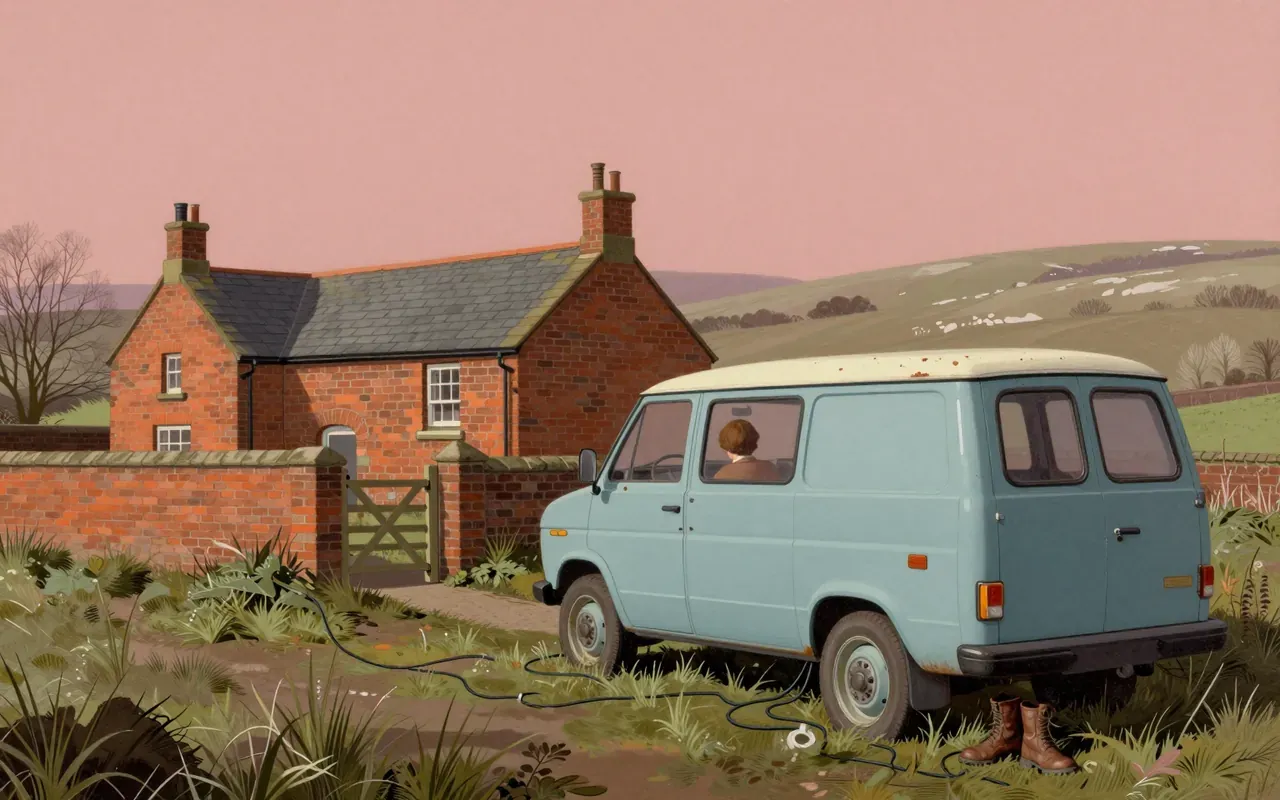
Rock Bottom is Robert Wyatt’s 1974 solo debut, produced by Nick Mason and recorded across three locations: a non-soundproofed van in a Wiltshire field, The Manor Studio, and CBS Studios in London. It combines jazz looseness, instrumentation, and improvisation with rock/folk song forms — an 'upside down' fusion designed to avoid the 'noodling' Wyatt associated with existing jazz-rock. Wyatt performed on vocals, keyboards, percussion, slide guitar, James’ drum, Delfina’s wineglass, Delfina’s tray, and a small battery. Much was composed pre-accident in Venice; arrangements and lyrics were reworked during convalescence. Collaborators included Mike Oldfield, Ivor Cutler, and Fred Frith. The album received mostly positive reviews.

9:14

Roxy Music

Roxy Music · 1972

Roxy Music’s self-titled debut was recorded in March–April 1972 in one week after months of rehearsal. It was self-financed by EG Management at £5,000 and produced by Peter Sinfield. Phil Manzanera joined on 14 February 1972, replacing David O'List. The album and its Karl Stoecker cover were completed before the band signed with Island Records. Released in June 1972, it received good reviews and reached No. 10 on the UK Albums Chart in September 1972.

9:25

S.F. Sorrow

The Pretty Things · 1968

S.F. Sorrow is the first rock opera: a studio-bound, narrative-driven, sonically dense 1968 record made at Abbey Road with experimental instrumentation, relentless tape bouncing, and zero concern for live performance. It landed as a landmark—not because it succeeded on all fronts, but because it attempted everything at once, in real time, with limited tools and no map.

10:20

Selling England by the Pound

Genesis · 1973

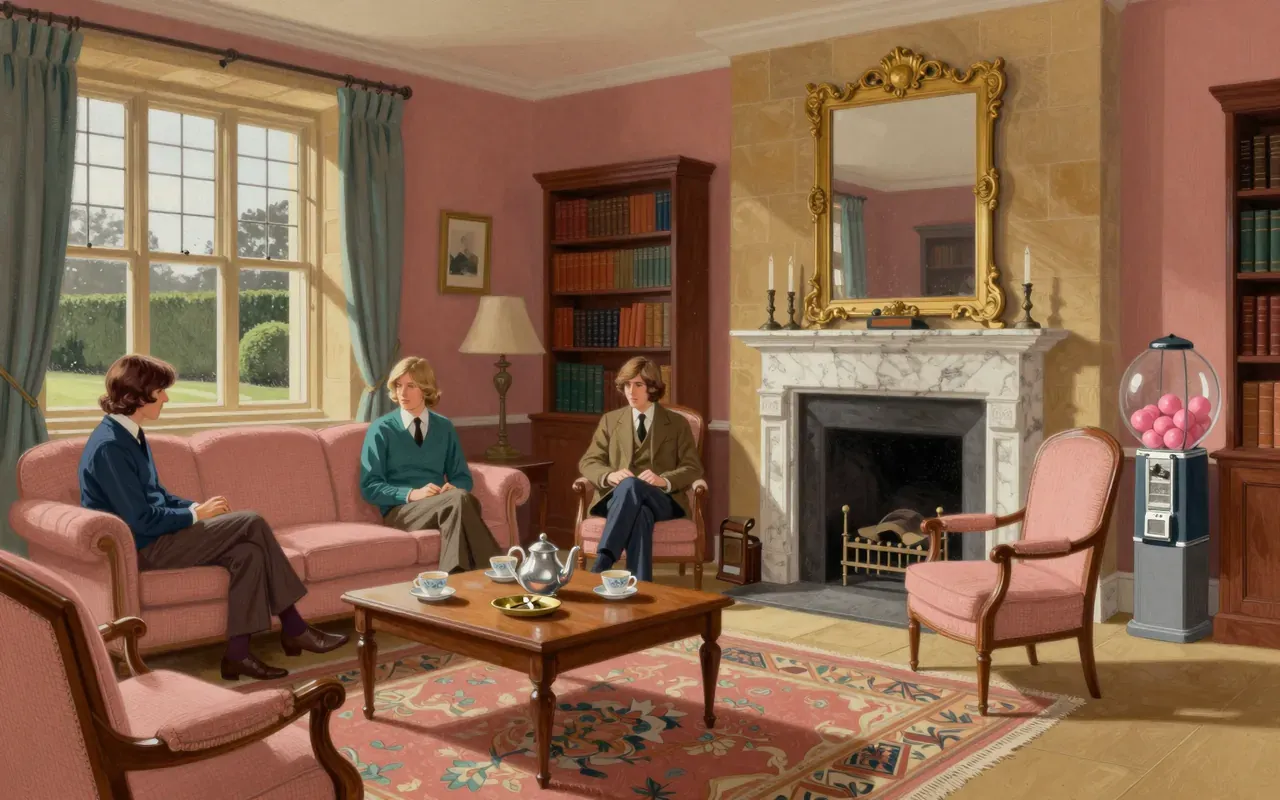
Selling England by the Pound is a 1973 Genesis record written in domestic rehearsal spaces — a rambling old stately home in Chessington and a basement beneath the Una Billings School of Dance. Its sound reflects those conditions: Phil Collins’ drumming uses complicated time signatures influenced by Mahavishnu Orchestra; Steve Hackett contributes guitar licks rather than full songs, lending a jazz fusion feel; and Gabriel writes all lyrics in two days. Recording at Island Studios uses an Echoplex and ARP Pro Soloist, prioritising sonic clarity and arrangement complexity. The album’s English identity is not mythic but material — curfews, bubble gum machines, living rooms, and firths. It lands strongest on ‘I Know What I Like’, ‘Dancing With the Moonlit Knight’, and ‘Firth of Fifth’. It does not sustain cohesion across its full runtime. It is worth your time if you listen for where music is made — not just what it says.

10:22

SMiLE

Brian Wilson · 2004

SMiLE is not an album you listen to—it’s a forensic archive of ambition collapsing under its own weight.

11:18

Surf's Up

The Beach Boys · 1971

Surf's Up is the Beach Boys' 1971 studio album, recorded intermittently between January and July 1971. Carl Wilson assumed de facto leadership and produced the bulk of the recordings, marking a shift from Brian Wilson’s earlier dominance. Brian Wilson was not especially active in the production, resulting in thinner vocal arrangements compared to Sunflower. Carl Wilson's first major solo compositions — 'Long Promised Road' and 'Feel Flows' — were recorded almost entirely by him. The title track 'Surf’s Up' was completed in June 1971 using archival recordings from late 1966, newly overdubbed by Carl and augmented with Moog and vocals. The album reflects a deliberate shift toward topical lyricism under Rieley’s influence, with socially conscious songs like 'Student Demonstration Time' and 'Don't Go Near the Water'. Brian contributed 'Til I Die', crafted over weeks amid existential crisis with drum machine, vibraphone, and organ, and co-wrote 'A Day in the Life of a Tree' with Jack Rieley, scored with antique and smaller pipe organs. Bruce Johnston wrote 'Disney Girls (1957)' in response to drug-affected youth in their audience, and Al Jardine contributed the Sunflower outtake 'Take a Load Off Your Feet' and co-wrote 'Lookin' at Tomorrow (A Welfare Song)' with Gary Winfrey.

10:23

Tarkus

Emerson, Lake & Palmer · 1971

Tarkus is a studio document of creative fracture—not a concept album, but a contract renegotiation set to Moog and Hammond.

10:16

The Lamb Lies Down on Broadway

Genesis · 1974

The Lamb Lies Down on Broadway is Genesis’s sixth studio album and final one with Peter Gabriel. It is a rock opera following Rael’s surreal journey in New York City. Gabriel insisted on sole conceptual and lyrical control, breaking the band’s collaborative tradition. His absences—due to work with William Friedkin and his wife’s difficult pregnancy—meant instrumental backing was built through jam sessions by the remaining members. Recording took place at Headley Grange and Glaspant Manor using Island Studios’ mobile facility: two 3M 24-track recorders, a Helios Electronics 30-input mixing console, Lockwood monitors, and two A62 Studer tape machines. Vocal experimentation occurred in unconventional spaces—a bathroom and a cowshed two miles away. The album departs from Genesis’s earlier pastoral English themes toward American imagery, experimental instrumentation, and tighter song forms. Brian Eno contributed vocal effects ('Enossification') on select tracks. Though initially met with mixed reviews, it has since been acclaimed as a landmark progressive rock work.

9:42

The Piper at the Gates of Dawn

Pink Floyd · 1967

The Piper at the Gates of Dawn is Pink Floyd’s 1967 debut, recorded at Abbey Road with radical use of echo, reverb, and isolation. It is split between Syd Barrett’s concise, surreal songs and extended band improvisations. Its sound is defined by technical choices—not genre conventions.

10:12

The Wall

Pink Floyd · 1979

The Wall is Pink Floyd's 1979 double-album rock opera, conceived by Roger Waters during the 1977 In the Flesh tour and developed from a 90-minute demo titled Bricks in the Wall. It is a studio-built narrative about isolation, trauma, and psychological fragmentation, centred on the composite character Pink.

11:06

The Who Sell Out

The Who · 1967

The Who Sell Out is a 1967 concept album by The Who that parodies pirate radio, which had recently been outlawed in the UK. It features humorous jingles, mock commercials (including ads for canned milkshakes and the American Cancer Society), the mini rock opera 'Rael', and the single 'I Can See For Miles'. The band framed the project as an extension of their pop art identity, asserting that advertising was an artform and declaring, 'We don't change offstage. We live pop art.'

9:17

The Yes Album

Yes · 1971

The Yes Album is Yes’s third studio album, their first consisting entirely of original material, written and rehearsed at Langley Farm in Romansleigh, Devon, and recorded at Advision Studios in London in autumn 1970.

8:22

Tommy

The Who · 1969

Tommy is a foundational rock opera built in the studio—not on stage—through iterative overdubbing, collaborative arrangement, and thematic compromise. Its power lies in texture, not storytelling.

9:29

Tubular Bells

Mike Oldfield · 1973

Tubular Bells is a self-performed, structurally bifurcated, technically inventive record made by a 19-year-old working alone in a single studio across two distinct sessions — one week in 1971, nights in early 1973.

10:21

Twelve Dreams of Dr. Sardonicus

Spirit · 1970

Twelve Dreams of Dr. Sardonicus is Spirit’s fourth studio album, produced by David Briggs in 1970. It features Jay Ferguson (vocals, percussion, keyboards), Randy California (guitars, vocals, bass), John Locke (keyboards, art direction), Mark Andes (bass, vocals), Ed Cassidy (drums, percussion), and Matt Andes (Dobro on 'Nothin’ to Hide'). The record avoids psychedelia-as-noise and prog-as-epic. Instead, it delivers concise, well-arranged songs built on piano, organ, Dobro, and tight rhythm-section interplay. 'Nature’s Way', 'Space Child', 'When I Touch You', and 'Life Has Just Begun' stand out for their clarity and craft. 'Why Can’t I Be Free?' feels abrupt. 'Soldier' is not about war. No synthesizers. No strings. No concept beyond the title's dream motif. It rewards listeners who value arrangement over abstraction.
9:34

Veckatimest

Grizzly Bear · 2009

Veckatimest is Grizzly Bear’s third studio album, recorded in summer 2008 at Allaire Studios in the Catskill Mountains, produced by Chris Taylor, and distinguished by a new collaborative writing process, tape-based recording with rich sonic detail, contributions from Nico Muhly and additional musicians including the Brooklyn Youth Choir and Acme String Quartet, and instrumental roles including omnichord and string arrangements by band members. The album’s title references Veckatimest Island in Massachusetts, tied to Ed Droste’s family connection to the region. An unmastered version leaked before release, compromising audio fidelity despite the band’s meticulous production efforts. The artwork was created by William O'Brien and selected by Droste, who had known the artist since high school. The album received widespread critical acclaim and appeared in multiple year-end lists, while several tracks were later used in films Jack Goes Boating and Blue Valentine. It was released on May 26, 2009, by Warp Records, debuted at

11:11

Yankee Hotel Foxtrot

Wilco · 2002

Yankee Hotel Foxtrot is Wilco’s fourth studio album, recorded at the Wilco Loft in Chicago between late 2000 and early 2001. It features a more atmospheric and experimental sound than prior releases, blending art rock and indie rock. It was the band’s first album with drummer Glenn Kotche and last with multi-instrumentalist Jay Bennett. Reprise Records rejected the album after completion and released Wilco from their contract, giving them the master tapes for free. Jim O'Rourke remixed key tracks and reshaped several songs—including 'Poor Places', which features only the Loose Fur trio—while crediting Bennett’s noise separately. The recording sessions were documented in the film I Am Trying to Break Your Heart.

10:24

In the Court of the Crimson King

King Crimson · 1969

In the Court of the Crimson King is the 1969 debut album by King Crimson — self-produced after initial sessions with Tony Clarke failed. Recorded on a 1" 8-channel recorder at Wessex Sound Studios in London, engineered by Robin Thompson with Tony Page assisting. Ian McDonald overdubbed Mellotron and woodwind layers across up to five tape generations; his Mellotron is dominant, fierce and overpowering. On 'Epitaph', he used two Mellotron parts with dynamic volume-shifting to create motion in sustained chords. Robert Fripp’s guitar fuses classical, Hendrix-like rock explosions, and jazz noodling. Greg Lake’s voice is plaintive. The band deliberately avoided simplicity, using unconventional time signatures like 7/8 or 5/8, expansive chords, and strange influences. Peter Sinfield wrote all lyrics — gothic, with 'dark and doom-laden visions'. The opening track '21st Century Schizoid Man' is proto-metal and criticises the Vietnam War. The record presents a Europeanised approach blending antiquity and modernity, distinct from blues-based hard rock.

8:59

Karma

Kamelot · 2001

Karma is Kamelot’s fifth studio album, released a few months after their mid-2000 New Allegiance Tour. It is one of fourteen studio albums the band released as of 2026. The album uses the Sanskrit concept of karma—action and its consequences—as a structural device, particularly in the three-part 'Elizabeth' suite. It features layered guitar harmonies, orchestral synth pads, and clean, high-register vocals. Drums are both programmed and live, with gated reverb on snares. Bass is present but recessed. Vocals are double-tracked and treated with plate reverb. The album does not incorporate Indian musical elements. It is worth hearing for fans of early-2000s European power metal who value narrative continuity over instrumental complexity.

10:16

Master of Reality

Black Sabbath · 1971

Master of Reality is Black Sabbath’s third album, recorded February–April 1971 at Island Studios in London under producer Rodger Bain—his final collaboration with the band. It was made without touring commitments, using expanded studio time and financial resources, including money for drugs. Iommi and Butler downtuned their instruments 1½ steps on key tracks to ease physical strain, directly shaping the album’s heavier sound. The band experimented with classical guitar, flute, piano, overdubs, bigger bass drums, and amplified bass presence. Osbourne struggled with rapid lyrics on 'Into the Void', requiring written cues; his vocals on 'Solitude' were doubled via delay. Drug use during sessions impaired idea retention. The album contains their first acoustic songs and key tracks like 'Sweet Leaf' and 'Children of the Grave'. Released July 1971, it marked a pivot toward studio-driven heaviness—not myth, but mechanics.

10:29

One Nation Under a Groove

Funkadelic · 1978

A functional, tightly wound funk record that trades psychedelic sprawl for groove discipline — built on fuzz, banjo, and Junie Morrison’s keys.

9:42

Saturnz Return

Goldie · 1998

Saturnz Return is Goldie’s 1998 follow-up to Timeless. Its opening track 'Mother' is an hour-long orchestral drum and bass piece featuring a 30-piece string section and classically trained child singers. It was conceived as a sonic representation of Goldie’s adoption at age three, foster care, fame, and addiction. He described its arc as beginning with an unborn-child voice before descending into abandonment and rhythmic ferocity. He made it for one private moment: listening on headphones while seeing his mother’s body before her funeral. The album features David Bowie, Noel Gallagher and KRS-One, and received mixed reviews—including 'ambitious but monotonous and overlong—Pink Floyd with a gold tooth'.
13:00

“Heroes”

David Bowie · 1977

Bowie, Brian Eno and Tony Visconti regrouped at Hansa Studio 2 in West Berlin in mid-1977, months after finishing Low, and built songs largely from scratch in the room with a returning rhythm section and a guest guitarist flown in on short notice. The setting bleeds into the record, and the title track has outlasted almost everything else Bowie made.

13:00

Hunky Dory

David Bowie · 1971

Made after his backing band and management both fell away, Hunky Dory finds David Bowie composing on piano for the first time, tipping between domestic tenderness and grand artistic reinvention across eleven songs recorded at Trident Studios.

13:00

Low

David Bowie · 1977

Made after Bowie left a Los Angeles addiction behind for Europe, Low pairs Tony Visconti's harmonized drum sound with Brian Eno's ambient textures, opening with fractured songs before giving its second side over to instrumental mood pieces.

13:00

Marquee Moon

Television · 1977

Marquee Moon is Television's debut, recorded at A&R Recording in New York in November 1976 after the CBGB regulars spent years turning down record deals they judged wrong for them. Produced by frontman Tom Verlaine and engineer Andy Johns, it favours interlocking guitar lines and extended structures over the blunt riffs of the punk scene the band emerged from, and its influence on the rock guitar playing that followed has far outpaced its modest original sales.

13:00

Remain in Light

Talking Heads · 1980

Made across studios in Nassau and New York with producer Brian Eno in mid-1980, Remain in Light grew out of instrumental jams built on African polyrhythm rather than finished songs, with David Byrne adding scattered, half-improvised lyrics only once the band returned to the United States. Extra musicians, a struggling frontman and a near-collapse in the writing process all shaped a record now widely treated as the band's finest hour.

13:00

Spirit of Eden

Talk Talk · 1988

The fourth Talk Talk album, recorded at Wessex Studios through 1987 and 1988 with producer Tim Friese-Greene, turned hours of improvised playing into six songs of near-silence and sudden noise. It flopped commercially and became, over decades, one of the most influential records of its kind.

13:00

Station to Station

David Bowie · 1976

David Bowie's tenth album, cut at Cherokee Studios in late 1975 while he shot a film and lived on a diet of peppers and cocaine, sets the funk band from Young Americans against a new, mechanical pulse borrowed from German records. The result is the hinge between his LA period and the trilogy that followed.

13:00

The Dark Side of the Moon

Pink Floyd · 1973

Pink Floyd's eighth album, built around a theme Roger Waters proposed at a 1971 band meeting and tested on tour for more than a year before it was finished, sets songs about time, money, conflict and mental collapse inside some of the clearest studio production of its decade.

13:00

The Rise and Fall of Ziggy Stardust and the Spiders From Mars

David Bowie · 1972

Recorded fast at Trident Studios with Mick Ronson's guitar doing much of the heavy lifting, Ziggy Stardust turns a loosely stitched science-fiction plot into cover for songwriting about sex, stardom and ruin that the early-seventies charts would not otherwise have carried under Bowie's own name.

13:00

The Velvet Underground & Nico

The Velvet Underground, Nico · 1967

Financed by Andy Warhol and mostly recorded in four days in a Manhattan studio in 1966, this debut pairs a minimalist's drone instincts with Lou Reed's flatly reported songs about addiction and the demimonde around Warhol's circle, and sold almost nothing on release before becoming one of the most cited records in rock.

13:00

Wish You Were Here

Pink Floyd · 1975

Pink Floyd's ninth album wraps an attack on the music business around a long tribute to former member Syd Barrett, and was shadowed by his own unannounced, unrecognisable appearance in the studio while the band mixed the very song written for him.