Saved
Rock

Tom Petty and the Heartbreakers

A studio document, not a statement — every note here was assigned, not improvised.

Worth your time?3.5/5Yes.Hear the whole thing.What works, what does not, who it is for ↓
11:13in productionCh. 1 · The First Record/ 11:13 · ceiling 15 min
4 chapters · 11:13Ceiling 15:00

The brief is written and checked. The video joins this page when it is cut.4 chapters · 2 min read · 11:13 planned

Read the brief

Tom Petty and the Heartbreakers’ 1976 debut is a studio document: recorded and mixed at Shelter Studio in Hollywood, with instrument assignments confirmed per track, no speculative production claims, and impact tied to external placements — not internal reinvention.

Chapters & takeaways4
  1. 1:05
    The First Record

    This is the start: no prior recordings, no lineup changes, no label history — just the first take.

  2. 2:25
    One Room Only

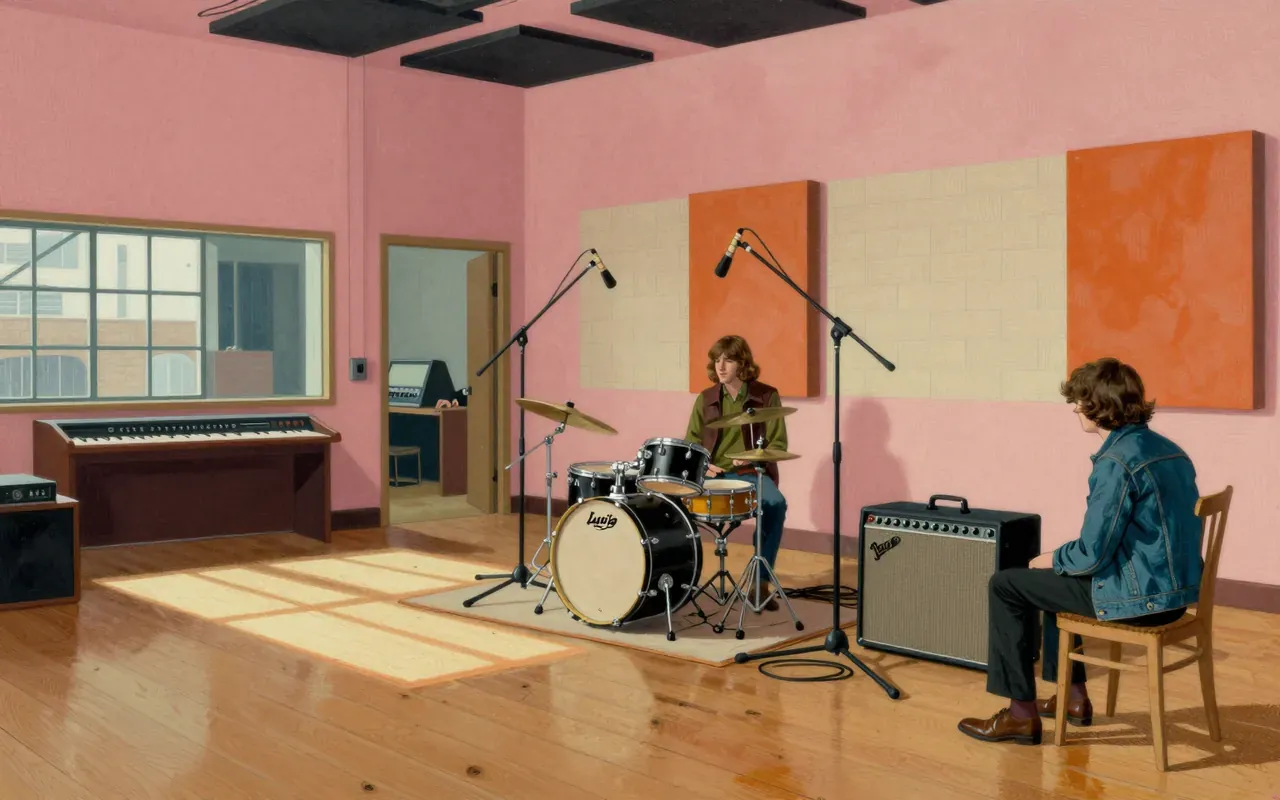
    Shelter Studio in Hollywood shaped the sound — no other room, no other location, no remote tracking.

  3. 4:14
    Who Played What

    Each instrument was assigned per track — no blanket credits, no assumed doubling, no uncredited parts.

  4. 6:38
    Where It Landed

    Its impact came from placement — Top of the Pops, FM soundtrack, McGuinn’s cover — not internal innovation.

1 more chapterFewer chapters
Running order10
  1. 01
    Rockin’ Around (With You)2:28
  2. 02
  3. 03
    Hometown Blues2:14
  4. 04
    The Wild One, Forever3:02
  5. 05
    Anything That’s Rock ’n’ Roll2:25
  6. 06
    Strangered in the Night3:32
  7. 07
    Fooled Again (I Don’t Like It)3:52
  8. 08
    Mystery Man3:04
  9. 09
    Luna4:00
  10. 10
    American Girl3:30

    Heard in Dementia 13 (1963)Fast Times at Ridgemont High (1982)Chasing Liberty (2004)Runnin' Down a Dream (2007)

Film placements are the ones described in each film's own entry, so the list is partial rather than complete.

Worth your time?

Yes. Hear the whole thing.

3.5/ 5
What works
  • as a studio document
  • as evidence of a working band’s first session
What does not
  • cover-versions
  • film-music
Hear it if
  • listeners who want to hear how a specific band played in a specific room in 1976
Skip it if
  • fans of mythic '70s rock
Who should hear it, and who should skipHide who it is for
The written brief2 min read

What the record is and where it came from

Tom Petty and the Heartbreakers’ self-titled 1976 debut album. Their first recording. Made in Hollywood. Not a demo, not a compilation, not a reissue.

How it sounds, and how it was made

It was recorded and mixed at Shelter Studio in Hollywood, California. Tom Petty played vocals, electric guitar, acoustic guitar, and Hammond organ on track 9. Mike Campbell played electric and acoustic guitar. Benmont Tench played piano and Hammond organ. Ron Blair played bass guitar on tracks 1–2, 4–5, 7–10, and cello on track 4. Stan Lynch played drums on tracks 1–2, 4–5, 7–10, and synthesizer on track 9. Jeff Jourard played electric guitar on tracks 2, 6–8. Donald ‘Duck’ Dunn played bass guitar on track 3.

What lands

‘Breakdown’ lands as the lead single — its arrangement relies on Campbell’s electric guitar, Tench’s Hammond organ, Blair’s bass, and Lynch’s drums, with Jourard’s electric guitar added only on that track. ‘American Girl’ lands as a signature song — built around Petty’s vocals and guitar, Campbell’s electric guitar, Tench’s piano, Blair’s bass, and Lynch’s drums — and it was covered by Roger McGuinn in 1977.

What does not

It does not sound like a live club set. It does not feature strings, horns, or backing vocalists beyond what is credited. It does not use tape loops, effects units, or studio-as-instrument techniques — none are mentioned in the personnel or location documentation.

The ideas inside it

The record establishes the band as a vehicle for Petty’s songwriting within a tight, guitar-forward rock framework — not as a Southern or heartland concept, but as a working unit defined by its players’ assigned roles across ten tracks.

Who should hear it, and who should not

People who want to hear how a specific band played in a specific room in 1976 — not fans of mythic ‘70s rock, but listeners who care about who played what, where, and when.

Is it worth your time

Yes — if you want to hear how a lean, studio-built American rock band sounded in 1976, with no overdubs beyond what the personnel credits confirm, and no production gloss beyond Shelter Studio’s known live-room setup.
Same genre · Rock4 of 319
12:45
MottMott the Hoople · 1973Mott is a tightly wound, rhythm-forward rock record that trades the theatricality of All the Young Dudes for leaner, grittier execution. Its strength lies in instrumental clarity and forward momentum — not in grand statements or sonic expansion.
13:21
Radio CityBig Star · 1974Radio City is a fragmented, urgent pop record made by a reformed trio in Memphis’ Ardent Studios — full of uncredited co-writes, rotating rhythm sections, and wishful thinking named in its title.
10:38
Ride the LightningMetallica · 1984Ride the Lightning is Metallica’s second studio album, recorded in three weeks at Sweet Silence Studios in Copenhagen with co-producer Flemming Rasmussen. Drums were tracked in an unsoundproofed warehouse, creating a long, uncontrollable reverb. Rhythm guitar and drums were recorded live; bass and lead guitar were overdubbed. Songs were assembled from pre-studio 'riff tape' jam sessions. Dave Mustaine co-wrote two tracks. Released July 27, 1984, it reached No. 100 on the Billboard 200.
14:25
Honky ChâteauElton John · 1972Honky Château is Elton John’s fifth studio album, recorded at Château d'Hérouville in France and released on 19 May 1972. It marks the first full-album studio collaboration with John's touring band — Dee Murray, Nigel Olsson, and newly permanent member Davey Johnstone — and features distinctive musical elements including a New Orleans funk opener with horn arrangements, the debut of the trio's trademark backing vocals on 'Rocket Man', and a remastered alternate version of 'Slave' added in 1995. The album was critically acclaimed for its eclecticism and focus, and it launched John's streak of US number-one albums.
Up next in Music

Tonight’s the Night

Neil Young · 1975 · 10:09

This isn’t an album about loss—it’s loss happening in real time, in a rented room, with a cracked voice and a mic two feet away.

10:09