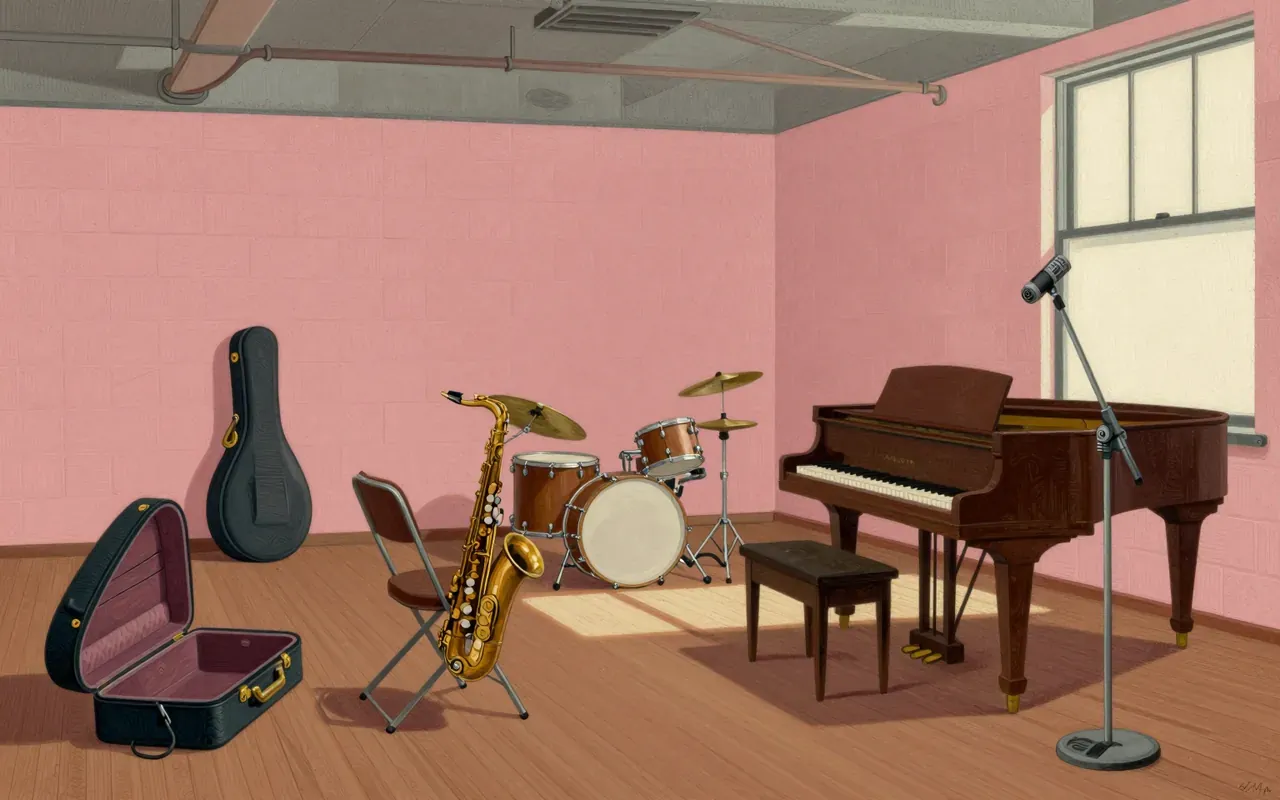
What the record is and where it came from
It is a 1957 jazz album by Art Pepper, recorded in one session at Contemporary’s Studios in Los Angeles. It features Pepper on alto saxophone and the Miles Davis rhythm section — Red Garland, Paul Chambers, and Philly Joe Jones — musicians he had never met before and learned he would play with only that morning.
How it sounds, and how it was made
It sounds like a saxophone pushed hard through a room with no reverb, against a deep, dry groove. The alto is raw and urgent, sometimes fraying at the edges. The rhythm section locks in tight — piano chords land with weight, bass walks with unbroken focus, drums snap with crisp, immediate attack. No studio tricks are mentioned. It was made in one day, January 19, 1957, at Contemporary’s Studios in Los Angeles, with no prior meeting between Pepper and the Miles Davis rhythm section.
What lands
What lands is Pepper’s tone — bright but worn, lyrical but edged with fatigue — cutting through the rhythm section’s grounded swing. The contrast between his alto and Red Garland’s piano voicings, Paul Chambers’ walking bass, and Philly Joe Jones’ drum articulation is immediate and physical. Each track feels like a single take, with no edits or fixes noted.
What does not
It does not sound polished, rehearsed, or conceptual. There is no lush reverb, no overdubs, no arrangement beyond the quartet’s live interplay. It does not try to soothe, impress, or explain itself. It does not hide its urgency behind technique.
The ideas inside it
The idea is not cool versus hot, West Coast versus East Coast — it is what happens when preparation collapses and responsiveness takes over. It proposes that musical authority comes from listening, not control; that clarity emerges from friction, not polish; that a record can be both unvarnished and deeply composed in feel.
Who should hear it, and who should not
People who want to hear jazz as dialogue, not display. People who value presence over perfection. People who listen for how players adjust to each other in real time. Not people who need narrative arc, studio sheen, or biographical reassurance.
Is it worth your time
Yes. It is worth your time if you want to hear how constraint shapes expression: a player on a broken instrument, under personal strain, meeting elite collaborators for the first time, and making music that breathes, stumbles, and burns with real-time conviction.