musicbriefs
Artist · Musician · 1926–1991

Miles Davis

10
briefs
10:14
average
102 min
in total
On music.briefs10
1:55

Miles Ahead

Miles Davis · 1957

Miles Ahead was released in 1957, reuniting Miles Davis with Gil Evans after their earlier nonet work. Producer George Avakian conceived a larger setting that would place Davis prominently in front. The project changes the relationship between soloist and ensemble rather than simply enlarging the usual quintet.
9:08

Ascenseur pour l’échafaud

Miles Davis · 1958

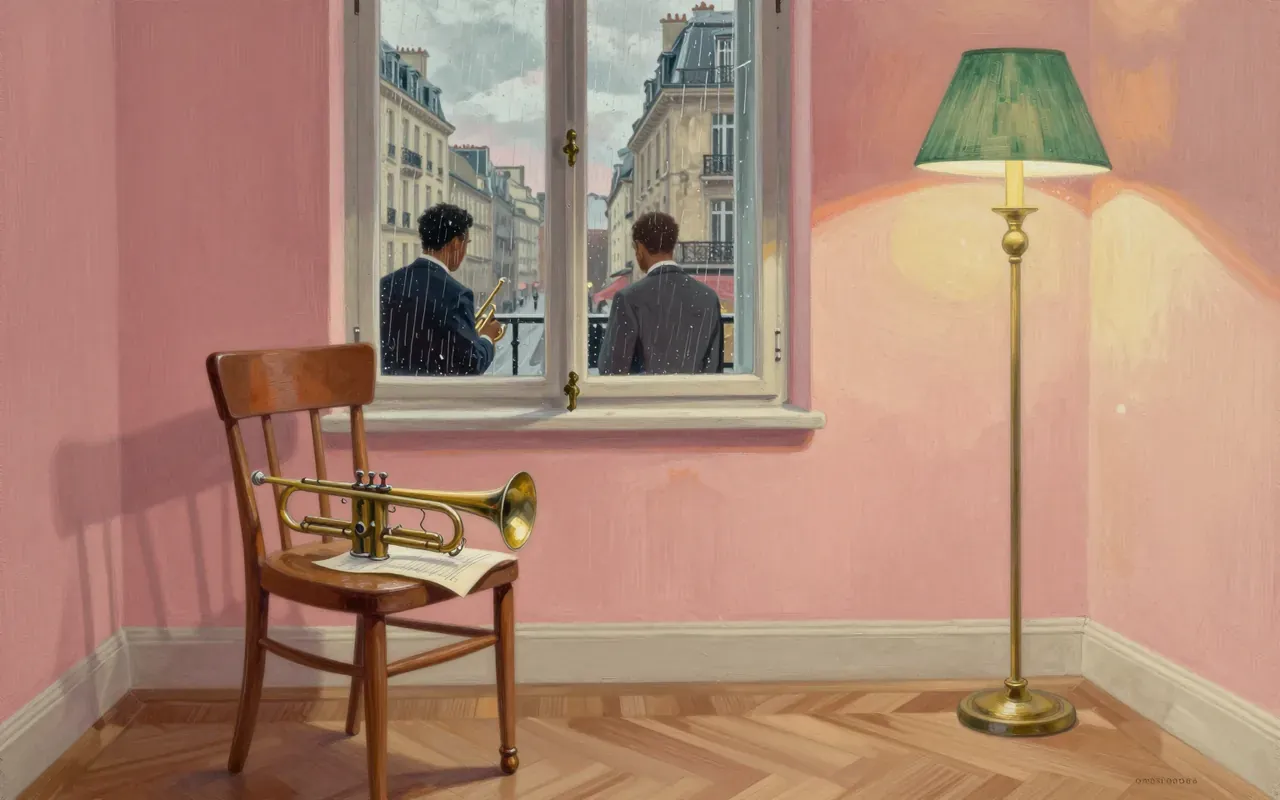
Ascenseur pour l’échafaud is the 1958 soundtrack album for Louis Malle’s Elevator to the Gallows, recorded in Paris in November 1957 by Miles Davis and a quartet of French and American musicians during a single improvised session.

10:09

Milestones

Miles Davis · 1958

Milestones is a pivotal 1958 studio album by Miles Davis, recorded with his revived sextet — including Cannonball Adderley and a newly drug-free John Coltrane — and released by Columbia Records in September 1958. It marks Davis’s decisive turn toward modal composition, most clearly on the title track, which abandons key centres in favour of scale-based improvisation over static harmony. Davis plays piano on 'Sid's Ahead' only because Red Garland was absent; 'Billy Boy' spotlights Garland’s block chords. The album was originally mono, later remixed in true stereo. It is a transitional document — raw, urgent, and unfinished — not a manifesto.

10:31

Porgy and Bess

Miles Davis · 1958

Porgy and Bess (1959) is a studio album by Miles Davis featuring orchestral jazz arrangements of George Gershwin’s 1935 opera, co-created with Gil Evans. Recorded in summer 1958 at Columbia’s 30th Street Studio in New York City, it applies modal improvisation — using scales instead of chords — to reframe familiar melodies. Philly Joe Jones drums on most tracks; Jimmy Cobb plays on four. Cannonball Adderley and Paul Chambers perform as part of Davis’s sextet. The album is the second of five Davis–Evans collaborations between 1957 and 1962.

10:06

Birth of the Cool

Miles Davis · 1957

Birth of the Cool is a foundational, studio-made statement — not a live document, not a commercial success, but a precise, collaborative reworking of jazz’s expressive grammar. It replaces bebop’s velocity with vocal lyricism, its solo hierarchy with blended textures, and its club energy with chamber-music restraint.

11:48

Sketches of Spain

Miles Davis · 1960

Sketches of Spain is a studio album by Miles Davis and Gil Evans, recorded between November 1959 and March 1960 at Columbia’s 30th Street Studio in New York City. It features arrangements of Spanish classical and folk works—including the adagio from Rodrigo’s Concierto de Aranjuez and 'Will o’ the Wisp' from de Falla’s El amor brujo—as well as Evans originals inspired by Alan Lomax’s 1955 field recordings from Galicia and Andalusia. Davis performed on flugelhorn and trumpet. The album marks Davis’s first collaboration with producer Teo Macero. It was critically acclaimed despite recording challenges: classical musicians struggled with improvisation; jazz musicians with complex notation. It won the 1961 Grammy for Best Jazz Composition of More Than Five Minutes Duration.

13:00

Bitches Brew

Miles Davis · 1970

Recorded across three days in August 1969 at Columbia's Studio B, Bitches Brew pushed Miles Davis's turn toward electric instruments into a full, sprawling double album built from loose sketches, two bassists, up to three drummers and three electric pianists playing at once. Producer Teo Macero then spliced and looped the tapes into their final shape, a process as central to the record's identity as anything played live in the room.

13:00

In a Silent Way

Miles Davis · 1969

Recorded in a single February 1969 session at Columbia's Studio B and shaped afterward by producer Teo Macero's editing, In a Silent Way marked Miles Davis's full turn toward electric instruments. Built from just two long pieces stitched from a handful of takes by an expanded band including three electric pianists and a guitarist new to New York, it plays as a hushed, largely beatless record that unsettled jazz and rock critics alike on release.

13:00

Kind of Blue

Miles Davis · 1959

Recorded in two sessions in March and April 1959 at Columbia's 30th Street Studio, Kind of Blue found Miles Davis trading bebop's dense chord changes for loose modal sketches, handed to his sextet with barely any rehearsal. The gamble produced five tracks, from So What to Flamenco Sketches, that have shaped how musicians well outside jazz think about improvisation ever since.