Saved
Jazz · Classical

Sketches of Spain

This is not Spanish music. It is jazz listening to Spain—and refusing to mimic what it hears.

Worth your time?4.5/5Yes.Hear the whole thing.What works, what does not, who it is for ↓
11:48in productionCh. 1 · Flugelhorn over guitar/ 11:48 · ceiling 15 min
6 chapters · 11:48Ceiling 15:00

The brief is written and checked. The video joins this page when it is cut.6 chapters · 2 min read · 11:48 planned

Read the brief

Sketches of Spain is a studio album by Miles Davis and Gil Evans, recorded between November 1959 and March 1960 at Columbia’s 30th Street Studio in New York City. It features arrangements of Spanish classical and folk works—including the adagio from Rodrigo’s Concierto de Aranjuez and 'Will o’ the Wisp' from de Falla’s El amor brujo—as well as Evans originals inspired by Alan Lomax’s 1955 field recordings from Galicia and Andalusia. Davis performed on flugelhorn and trumpet. The album marks Davis’s first collaboration with producer Teo Macero. It was critically acclaimed despite recording challenges: classical musicians struggled with improvisation; jazz musicians with complex notation. It won the 1961 Grammy for Best Jazz Composition of More Than Five Minutes Duration.

Chapters & takeaways6
  1. 1:03
    Flugelhorn over guitar

    The album opens with a joint Davis–Evans arrangement of Rodrigo’s Concierto de Aranjuez adagio—played on flugelhorn, not guitar.

  2. 2:20
    Copied off the record

    It began with one rare LP of the Concierto, copied 'off the record because there was no score'—then branched into Galician and Andalusian field recordings.

  3. 3:43
    Two worlds, one room

    Classical and jazz musicians clashed in the studio—yet the result is a 'quasi-symphonic, quasi-jazz world of sound'.

  4. 4:56
    Folk forms, not flavour

    It contains Rodrigo and de Falla—but also Evans originals rooted in real Spanish forms: saeta (religious procession), soleá (Andalusian lament), alborada (Galician dawn song).

  5. 6:42
    First Macero production

    Teo Macero produced it—the first of many Davis–Macero collaborations—and helped shape its spatial, immersive quality.

  6. 7:51
    30th Street Studio

    Five months of recording in Columbia’s 30th Street Studio—a resonant, live room that shaped its orchestral depth.

3 more chaptersFewer chapters
Running order5
  1. 01
    Concierto de Aranjuez16:23

    Heard in Brassed Off (1996)Ghost in the Shell 2: Innocence (2004)Wardeh Deesheh

  2. 02
    Will O’ the Wisp3:50
  3. 03
    The Pan Piper3:57
  4. 04
    Saeta5:03

    Heard in High Heels (1991)

  5. 05
    Solea12:14

    Heard in High Heels (1991)

Film placements are the ones described in each film's own entry, so the list is partial rather than complete.

Worth your time?

Yes. Hear the whole thing.

4.5/ 5
What works
  • Concierto de Aranjuez
  • Saeta
  • Solea
What does not
  • swing
  • feature extended trumpet solos in conventional jazz syntax
  • use Spanish instruments (guitar, castanets, cajón)
  • quote Rodrigo or de Falla literally beyond the Concierto adagio and 'Will o’ the Wisp'
Hear it if
  • people who listen to how space is used in music
  • people who care about timbre as meaning
  • people who hear orchestration as narrative
Skip it if
  • people who need forward momentum
  • people who need syncopation
  • people who need virtuosic display
Who should hear it, and who should skipHide who it is for
The written brief2 min read

What the record is and where it came from

A studio album recorded between November 1959 and March 1960 at Columbia’s 30th Street Studio in New York City. It is a collaboration between Miles Davis and Gil Evans, built around Spanish classical and folk sources—including Rodrigo’s Concierto de Aranjuez and de Falla’s El amor brujo—and Evans’s originals. It began as a single-piece project, expanded through deep listening to field recordings and live performance, and was produced by Teo Macero—their first work together.

How it sounds, and how it was made

It opens with the Concierto de Aranjuez adagio on flugelhorn—soft, lyrical, resonant—then moves into a ‘quasi-symphonic, quasi-jazz world of sound’. Classical and jazz musicians played together in Columbia’s 30th Street Studio, but struggled: classical players couldn’t improvise; jazz players couldn’t read Evans’s complex arrangements. The folk-derived tracks draw from Alan Lomax’s 1955 field recordings of Galician and Andalusian music. There is no jazz rhythm in much of it. Davis used flugelhorn for the Concierto’s melody and trumpet elsewhere, shifting timbre deliberately.

What lands

The Concierto de Aranjuez arrangement lands first—its flugelhorn melody, its slow unfolding, its orchestral weight. ‘Saeta’ lands in High Heels as sorrow made audible during a cemetery scene. ‘Solea’ lands as solitude—named, felt, sustained. The album’s structure lands as a journey: landmark, then procession, then prayer, then isolation, then pastoral return.

What does not

It does not swing. It does not feature extended trumpet solos in conventional jazz syntax. It does not use Spanish instruments (guitar, castanets, cajón). It does not quote Rodrigo or de Falla literally beyond the Concierto adagio and ‘Will o’ the Wisp’. It does not include vocals, percussion-driven grooves, or call-and-response forms.

The ideas inside it

Spain as sonic idea—not geography, not tourism, but a set of listening practices: copying music ‘off the record because there was no score’, learning from live flamenco, translating guitar lines to flugelhorn, embedding an original Evans ‘chorus’ across tracks. It is about making things connect, not replicate. It is third stream by design: a deliberate synthesis, not stylistic overlap.

Who should hear it, and who should not

People who listen to how space is used in music. People who care about timbre as meaning. People who hear orchestration as narrative. People who want jazz to hold still, breathe, and build tension without tempo. Not people who need forward momentum, syncopation, or virtuosic display.

Is it worth your time

Yes—if you want music that treats silence, dynamics, and orchestral texture as rhythmic forces. It demands attention to connection over groove, restraint over projection, and coherence over convention. It is not background music. It is not for those who need swing, pulse, or solo pyrotechnics.
Same genre · Jazz4 of 167
13:00
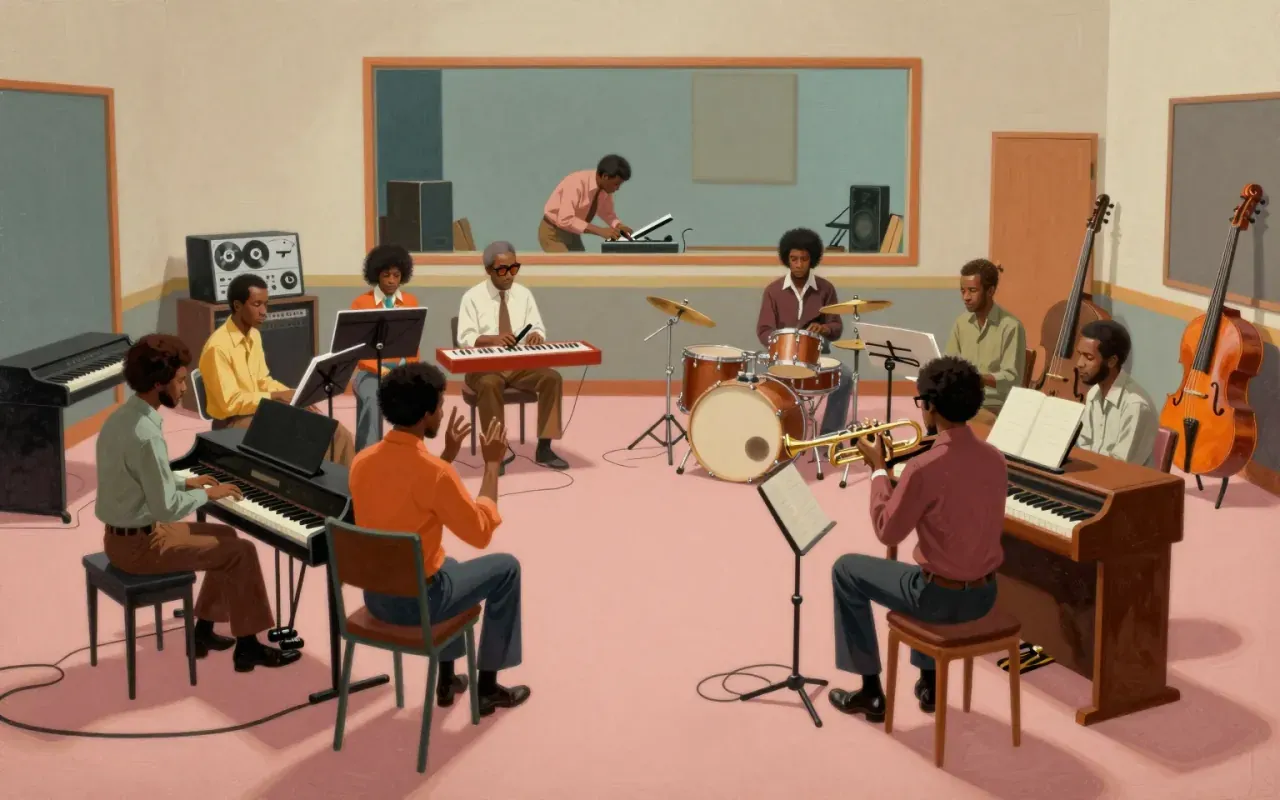
Bitches BrewMiles Davis · 1970Recorded across three days in August 1969 at Columbia's Studio B, Bitches Brew pushed Miles Davis's turn toward electric instruments into a full, sprawling double album built from loose sketches, two bassists, up to three drummers and three electric pianists playing at once. Producer Teo Macero then spliced and looped the tapes into their final shape, a process as central to the record's identity as anything played live in the room.
8:52
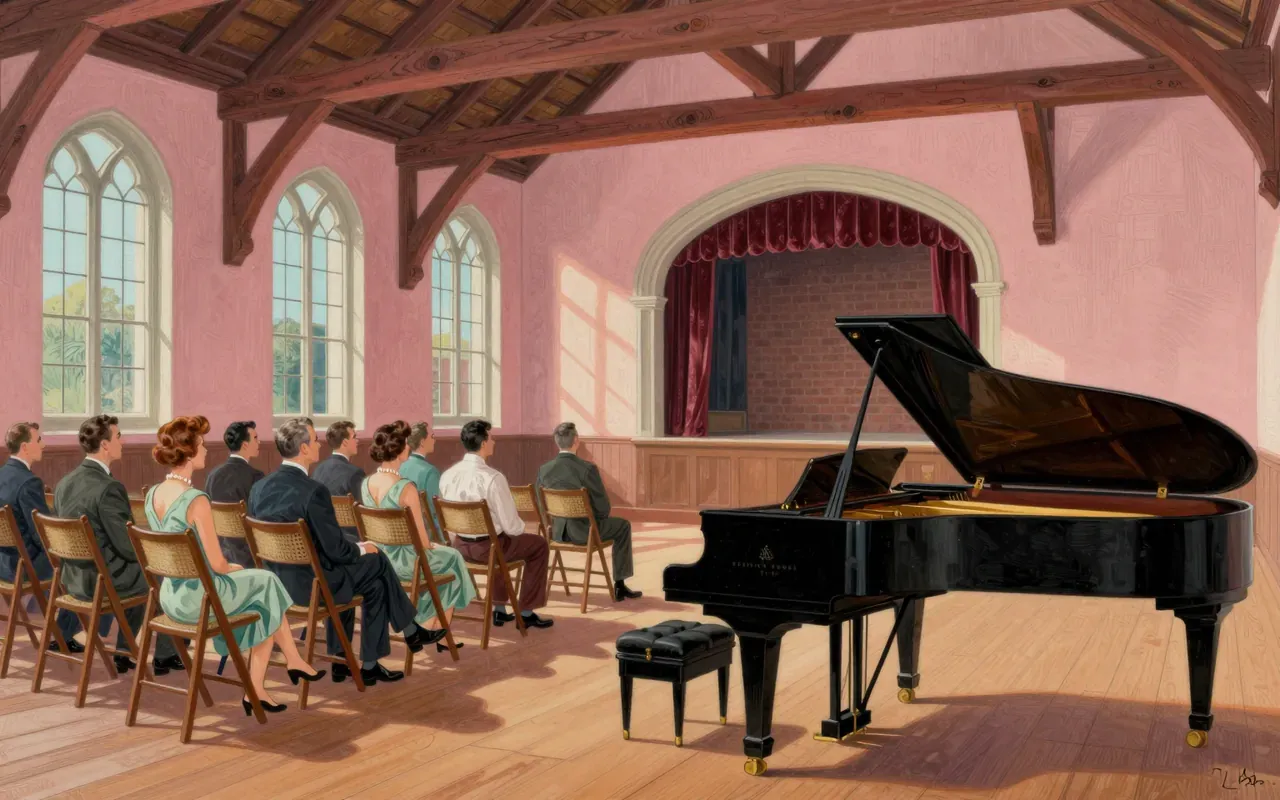
Concert by the SeaErroll Garner · 1956Concert by the Sea is a 1955 live Erroll Garner Trio album recorded at Sunset School in Carmel-by-the-Sea. It features Eddie Calhoun on bass and Denzil Best on drums. The piano is out of tune. The bass and drums are receded. The acoustics are poor. The recording was made with primitive sound equipment. It was captured unofficially by Armed Forces Radio Network engineer Will Thornbury. Manager Martha Glaser discovered the tape backstage, edited it, and persuaded George Avakian to release it. Servicemen from Fort Ord were bused to attend. The concert took place in a gothic-revivalist assembly hall. It was a best-selling jazz album in its day. The decision to release it was easy for Avakian.
10:31
Porgy and BessMiles Davis · 1958Porgy and Bess (1959) is a studio album by Miles Davis featuring orchestral jazz arrangements of George Gershwin’s 1935 opera, co-created with Gil Evans. Recorded in summer 1958 at Columbia’s 30th Street Studio in New York City, it applies modal improvisation — using scales instead of chords — to reframe familiar melodies. Philly Joe Jones drums on most tracks; Jimmy Cobb plays on four. Cannonball Adderley and Paul Chambers perform as part of Davis’s sextet. The album is the second of five Davis–Evans collaborations between 1957 and 1962.
9:41
’Round About MidnightMiles Davis · 1957A contractual and personnel landmark — not a sonic manifesto.
Up next in Music

Slanted and Enchanted

Pavement · 1992 · 8:52

A bass-less, budget-built debut that makes absence sound like intention.

8:52