What the record is and where it came from
It is a 1959 studio album of instrumental jazz arrangements drawn from George Gershwin’s 1935 opera Porgy and Bess. It is the second of five collaborative albums between Miles Davis and Gil Evans, recorded in summer 1958.
How it sounds, and how it was made
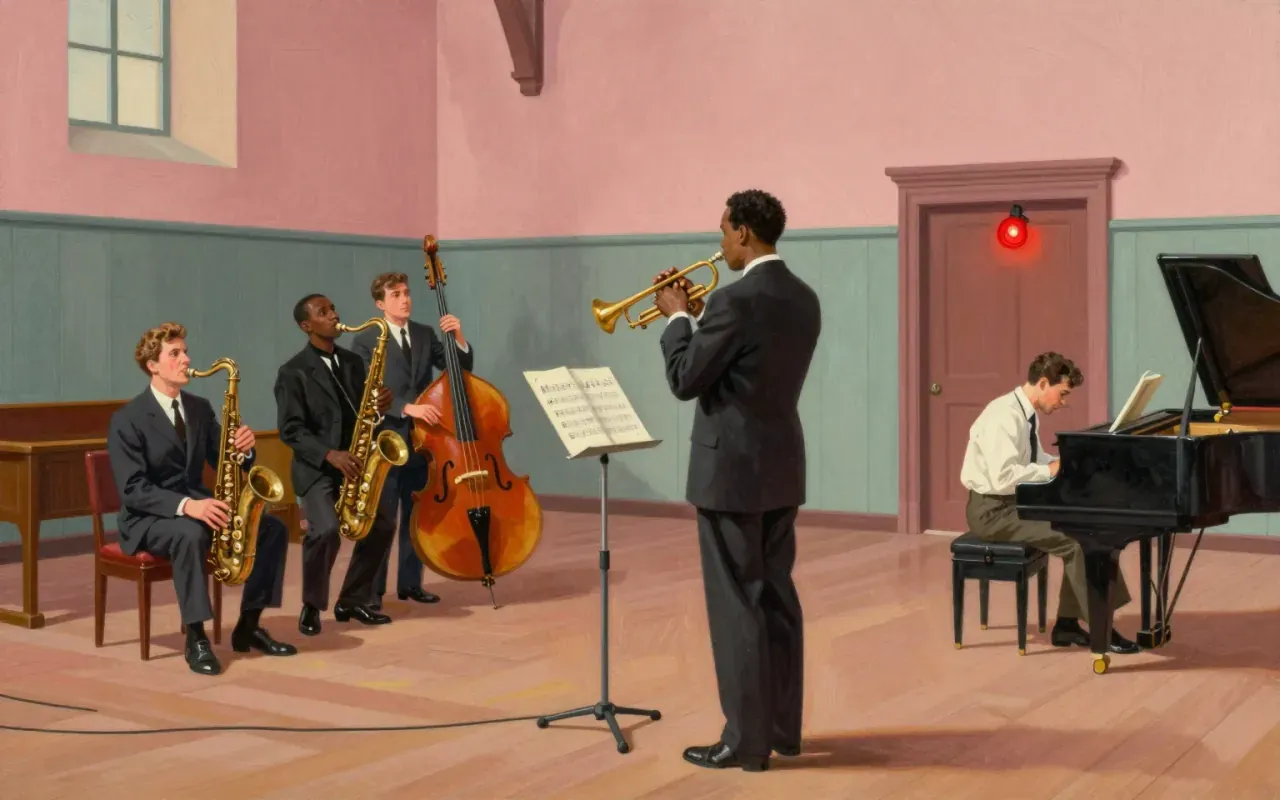
The album is orchestral jazz. Gil Evans co-arranged with Miles Davis. The arrangements use scale-based frameworks instead of chordal structures. Philly Joe Jones drums on most tracks. Jimmy Cobb drums on four: ‘Bess, You Is My Woman Now’, ‘It Ain’t Necessarily So’, ‘Here Come de Honey Man’, and ‘I Loves You, Porgy’. Cannonball Adderley and Paul Chambers play. It was recorded at Columbia’s 30th Street Studio in New York City across four dates in summer 1958.
What lands
‘I Loves You, Porgy’ lands. Gil Evans wrote only a scale — no chords — for Davis to improvise over. The result is spacious, unhurried, and tonally open. ‘Summertime’ lands. Its arrangement isolates Davis’s trumpet against muted brass and low strings. ‘Bess, You Is My Woman Now’ lands. Its slow pulse and layered brass voicings create weight without density.
What does not
It does not swing like bebop. It does not feature vocal interpretations. It does not quote the opera’s libretto. It does not use strings or woodwinds in classical concert roles. It does not replicate the opera’s dramatic arc.
The ideas inside it
Modal improvisation replaces functional harmony. Scales replace chords. Freedom comes from absence — fewer harmonic signposts, more room to hear. This idea was first tested on Milestones earlier in 1958.
Who should hear it, and who should not
People who listen for how space is used in music. People who want to hear modal thinking applied to American songbook material. People who value arrangement as composition. Not people who want virtuosic solos, fast tempos, or lyrical fidelity to the original opera.
Is it worth your time
Yes. It rewards focused listening. It is not background music. It demands attention to texture, space, and restraint.