This isn’t soul’s evolution — it’s its calibration.
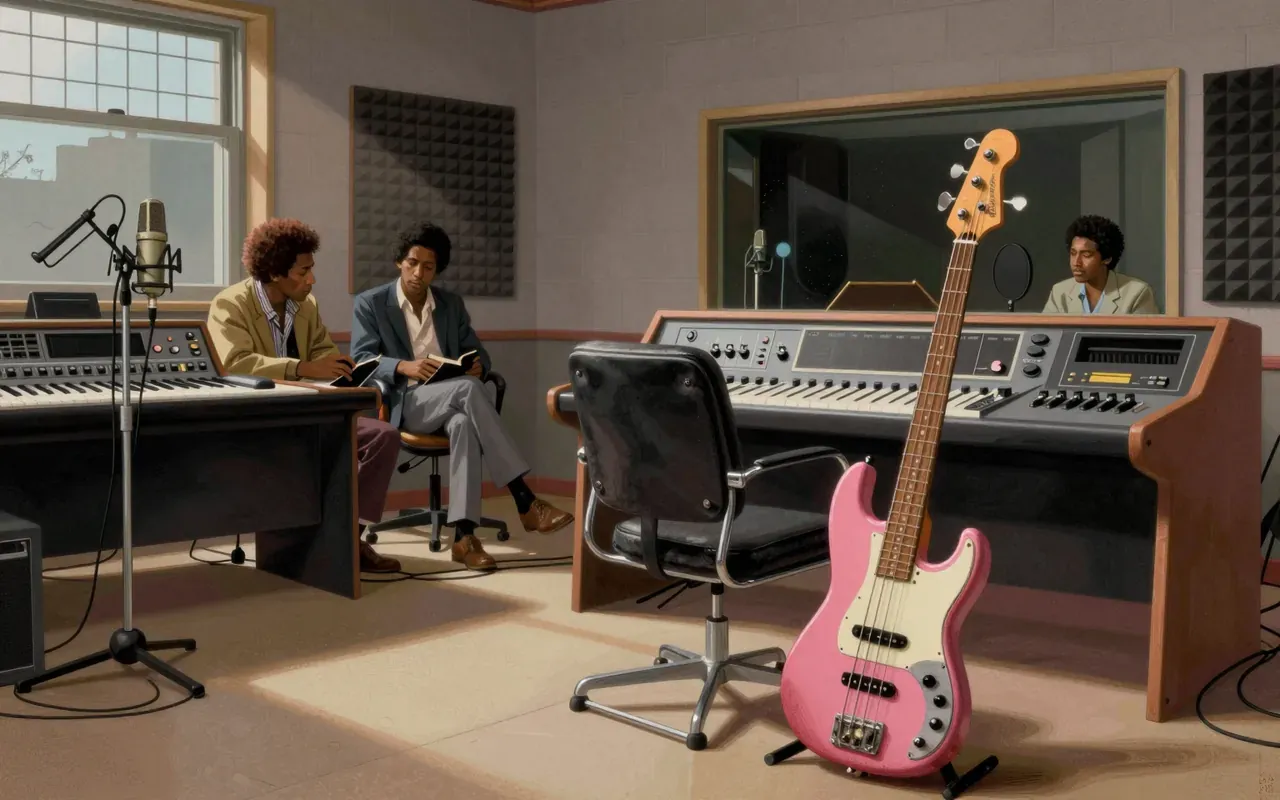
Call Me is Al Green’s sixth album, released in April 1973 — though one source says July 18 — and produced by Green and Willie Mitchell. It emerged from Green’s long partnership with Mitchell and the Hi Rhythm Section. Charles Hodges plays Hammond organ and piano. Jack Hale Sr. plays trombone. Charles Chalmers arranges horns and sings background vocals. Howard Grimes drums. Leroy Hodges plays bass. The room is tight, dry, and close-miked — no reverb tail, no bleed between instruments. The three top-10 singles land: 'Call Me (Come Back Home)', 'Here I Am (Come and Take Me)', and 'You Ought to Be with Me'. Each uses the same tight rhythm bed, layered background vocals, and Green’s clipped, urgent phrasing — all anchored by Hodges’ Hammond organ stabs and Grimes’ drum pocket. It does not break from the Green-Mitchell template. There are no new textures, no structural risks, no instrumental solos, no lyrical abstraction. The groove stays locked. The vocal delivery stays contained. Devotion as discipline. Longing as ritual. Love as a vow repeated until it sticks. The lyrics circle return, apology, and presence — never confession, never explanation. People who want to hear how a signature sound is maintained, not reinvented. Not for those seeking rupture, expansion, or rawness — this is polished, rehearsed, repeatable. Yes. It holds up as a precise, controlled exercise in Memphis soul craft — not a leap forward, but a refinement of what Green and Mitchell had already built.
Call Me is Al Green’s sixth album, released in April 1973 — though one source cites July 18.
2:40
Who made it
Green and Willie Mitchell co-produced; Mitchell engineered; the Hi Rhythm Section played on every track.
4:38
What it contains
Charles Chalmers arranged horns and sang backup. Jack Hale Sr. played trombone. Charles Hodges played Hammond organ and piano. Three singles hit the top 10.
6:47
Where it fits
The album belongs to Green’s long partnership with Willie Mitchell and the Hi Rhythm Section — not a solo statement, but a team output.
Film placements are the ones described in each film's own entry, so the list is partial rather than complete.
Worth your time?
Yes. Hear the whole thing.
4/ 5
What works
the three top-10 singles
the tight rhythm bed
layered background vocals
Green’s clipped, urgent phrasing
What does not
break from the Green-Mitchell template
introduce new textures
take structural risks
feature instrumental solos
Hear it if
people who want to hear how a signature sound is maintained
listeners who value precision over rupture
Skip it if
those seeking rawness
those seeking expansion
The written brief1 min read
What the record is and where it came from
Call Me is Al Green’s sixth album, released in April 1973 — though one source says July 18 — and produced by Green and Willie Mitchell. It emerged from Green’s long partnership with Mitchell and the Hi Rhythm Section.
How it sounds, and how it was made
The album was made in Willie Mitchell’s Memphis studio with the Hi Rhythm Section. Charles Hodges plays Hammond organ and piano. Jack Hale Sr. plays trombone. Charles Chalmers arranges horns and sings background vocals. Howard Grimes drums. Leroy Hodges plays bass. The room is tight, dry, and close-miked — no reverb tail, no bleed between instruments.
What lands
The three top-10 singles land: ‘Call Me (Come Back Home)’, ‘Here I Am (Come and Take Me)’, and ‘You Ought to Be with Me’. Each uses the same tight rhythm bed, layered background vocals, and Green’s clipped, urgent phrasing — all anchored by Hodges’ Hammond organ stabs and Grimes’ drum pocket.
What does not
It does not break from the Green-Mitchell template. There are no new textures, no structural risks, no instrumental solos, no lyrical abstraction. The groove stays locked. The vocal delivery stays contained.
The ideas inside it
Devotion as discipline. Longing as ritual. Love as a vow repeated until it sticks. The lyrics circle return, apology, and presence — never confession, never explanation.
Who should hear it, and who should not
People who want to hear how a signature sound is maintained, not reinvented. Not for those seeking rupture, expansion, or rawness — this is polished, rehearsed, repeatable.
Is it worth your time
Yes. It holds up as a precise, controlled exercise in Memphis soul craft — not a leap forward, but a refinement of what Green and Mitchell had already built.