What the record is and where it came from
A mid-1970s studio collaboration between Chet Atkins and Les Paul. No other musicians. No label, studio, or engineer named in the source material. Recorded during Atkins’s RCA years, but the document does not confirm location or date beyond ‘mid-1970s’.
How it sounds, and how it was made
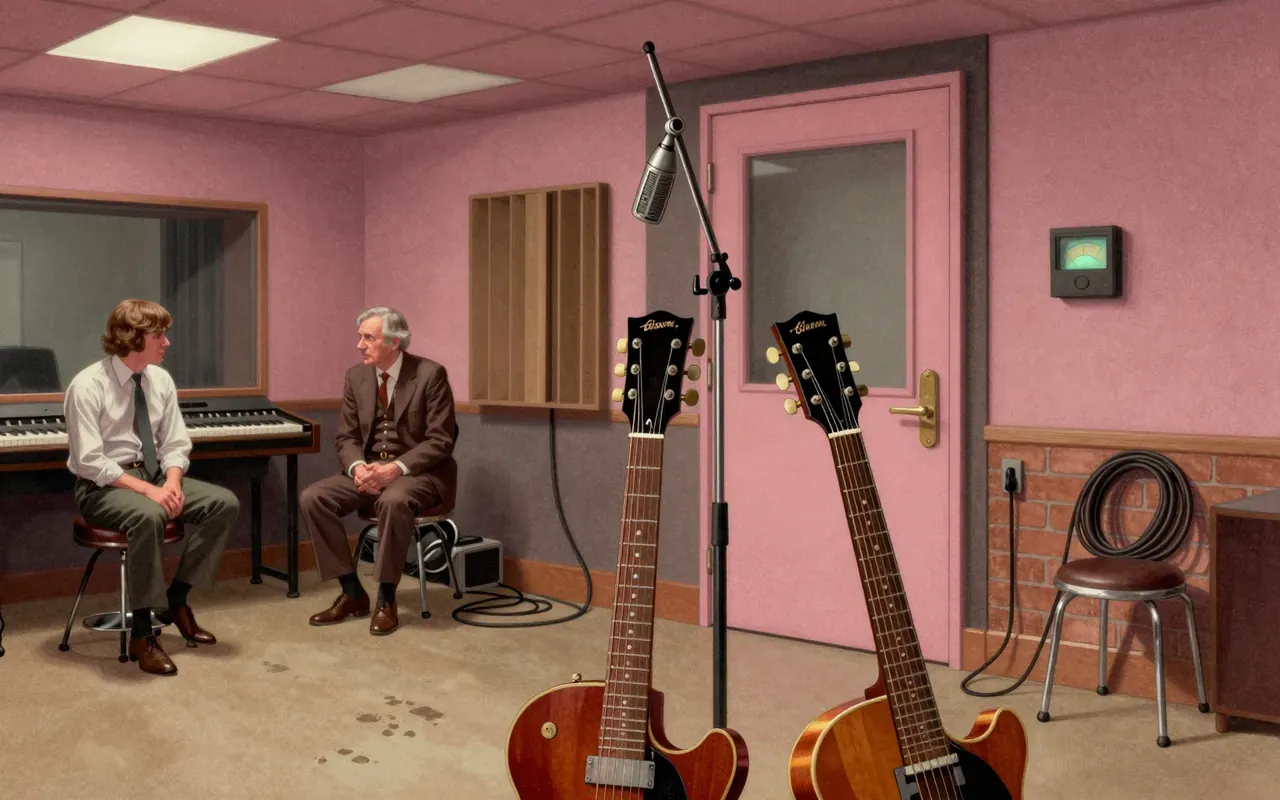
Two guitars only. No bass, no drums, no strings, no reverb. Just Atkins and Paul trading lines in a dry room. The arrangements leave space for both players’ phrasing—no overdubs, no edits, no studio effects beyond what two guitars sound like in close proximity.
What lands
The interplay on ‘Caravan’ lands: Paul’s staccato chords lock into Atkins’s walking line, then break apart cleanly. ‘Avalon’ lands too—the six-and-a-half-minute take holds its breath, never rushing, never filling silence.
What does not
It does not swing hard. It does not build tension. It does not vary dynamics much. It does not use the room’s acoustics—it avoids them. It does not feature solos longer than eight bars.
The ideas inside it
Jazz as conversation. Not repertoire, not virtuosity, not genre tourism—but listening, yielding, and answering. The record treats standards as shared language, not monuments.
Who should hear it, and who should not
Guitarists who study phrasing. Listeners who value clarity over colour. People who know ‘It Had to Be You’ from Casablanca or Annie Hall and want to hear it stripped to its harmonic bones. Not for those seeking atmosphere, narrative, or emotional escalation.
Is it worth your time
Yes—if you want to hear how two guitarists with distinct vocabularies negotiate swing, counterpoint, and restraint without a rhythm section. No—if you expect lushness, groove, or surprise.