Saved
World · Folk & singer-songwriter

Clandestino

A laptop crash killed the drums — and gave birth to the most influential street-sound album of the late 1990s.

Worth your time?4/5Yes.Hear the whole thing.What works, what does not, who it is for ↓
8:47in productionCh. 1 · Studio Clandestino/ 8:47 · ceiling 15 min
5 chapters · 8:47Ceiling 15:00

The brief is written and checked. The video joins this page when it is cut.5 chapters · 1 min read · 8:47 planned

Read the brief

Clandestino is a document of accidental minimalism — made mobile, made human, made urgent.

Chapters & takeaways5
  1. 0:51
    Studio Clandestino

    The album was recorded on a laptop dubbed 'Estudio Clandestino' — a portable studio built for movement, not control.

  2. 2:10
    Field Recordings First

    Street sounds weren’t added later — they were captured first, then woven into the music’s skeleton.

  3. 3:05
    The Glitch That Gave It Shape

    A computer glitch erased electronic beats — and forced an acoustic pivot that defined the record’s identity.

  4. 4:24
    Tested on Children

    Final track selection was guided not by critics or charts — but by how children in Paris responded to rough mixes.

  5. 5:38
    A New Language, Not a New Volume

    This is not Mano Negra reborn — it’s a deliberate break: Spanish-led, street-vibed, and stripped of punk’s aggression.

2 more chaptersFewer chapters
Running order16
  1. 01
    Clandestino2:30
  2. 02
    Desaparecido3:49
  3. 03
    Bongo Bong2:40
  4. 04
    Je ne t’aime plus2:05
  5. 05
    Mentira…4:39

    Heard in Al Compás de tu Mentira (1950)

  6. 06
    Lágrimas de oro3:00
  7. 07
    Mama Call2:23
  8. 08
    Luna y sol3:09
  9. 09
    Por el suelo2:24
  10. 10
    Welcome to Tijuana4:07
  11. 11
    Día luna… Día pena1:32
  12. 12
    Malegría2:58
  13. 13
    La vie à 23:02
  14. 14
    Minha galera2:24
  15. 15
    La despedida3:12
  16. 16

Film placements are the ones described in each film's own entry, so the list is partial rather than complete.

Worth your time?

Yes. Hear the whole thing.

4/ 5
What works
  • Bongo Bong
  • Mentira…
  • Welcome to Tijuana
What does not
  • sustain momentum across its 16 tracks
  • offer consistent rhythmic drive
  • clarify its political ideas beyond gesture
Hear it if
  • listeners who value texture over polish
  • people who trust field recordings as compositional material
Skip it if
  • people who need defined grooves
  • people who rely on lyrical exposition
Who should hear it, and who should skipHide who it is for
The written brief1 min read

What the record is and where it came from

Clandestino is Manu Chao’s 1998 solo debut — a globally recorded, self-produced album shaped by travel, technical accident, and deliberate simplification. It emerged from years of movement with Radio Bemba Sound System across South and Central America.

How it sounds, and how it was made

It sounds like street recordings layered with acoustic guitar, hand percussion, and vocal fragments — all stripped of most electronic elements and drums by a computer glitch. It was made on a laptop called ‘Estudio Clandestino’, with field recordings captured on a portable recorder during travels across South and Central America. Chao and producer Renaud Letang tested mixes on children in Paris, selecting the versions that resonated most.

What lands

The short, conversational songs land — especially ‘Bongo Bong’, ‘Mentira…’, and ‘Welcome to Tijuana’. Their vocal cadence, percussive clarity, and collage-like brevity hold attention without overstatement.

What does not

It does not sustain momentum across its 16 tracks. The lo-fi spontaneity flattens dynamics. The absence of drums and electronics leaves some tracks rhythmically adrift.

The ideas inside it

It carries anarchist resonance through Subcomandante Marcos soundbites and street-level political intimacy. It treats language as fluid: Spanish dominates, French recedes, and untranslated fragments act as sonic punctuation rather than exposition.

Who should hear it, and who should not

People who listen for atmosphere over arrangement. People who trust field recordings as compositional material. Not people who need defined grooves, consistent timbre, or lyrical exposition.

Is it worth your time

Yes — if you want music that feels gathered, not constructed; if you value texture over polish and immediacy over precision.

Same genre · World4 of 17
13:00
PlayMoby · 1999Made at Moby's own Manhattan studio after a career-threatening previous album, Play folds vocal hooks lifted from Alan Lomax's field recordings into electronic production, letting decades-old voices carry new songs. Slow to catch on, it eventually sold over twelve million copies largely through film and advertising licensing.
10:35
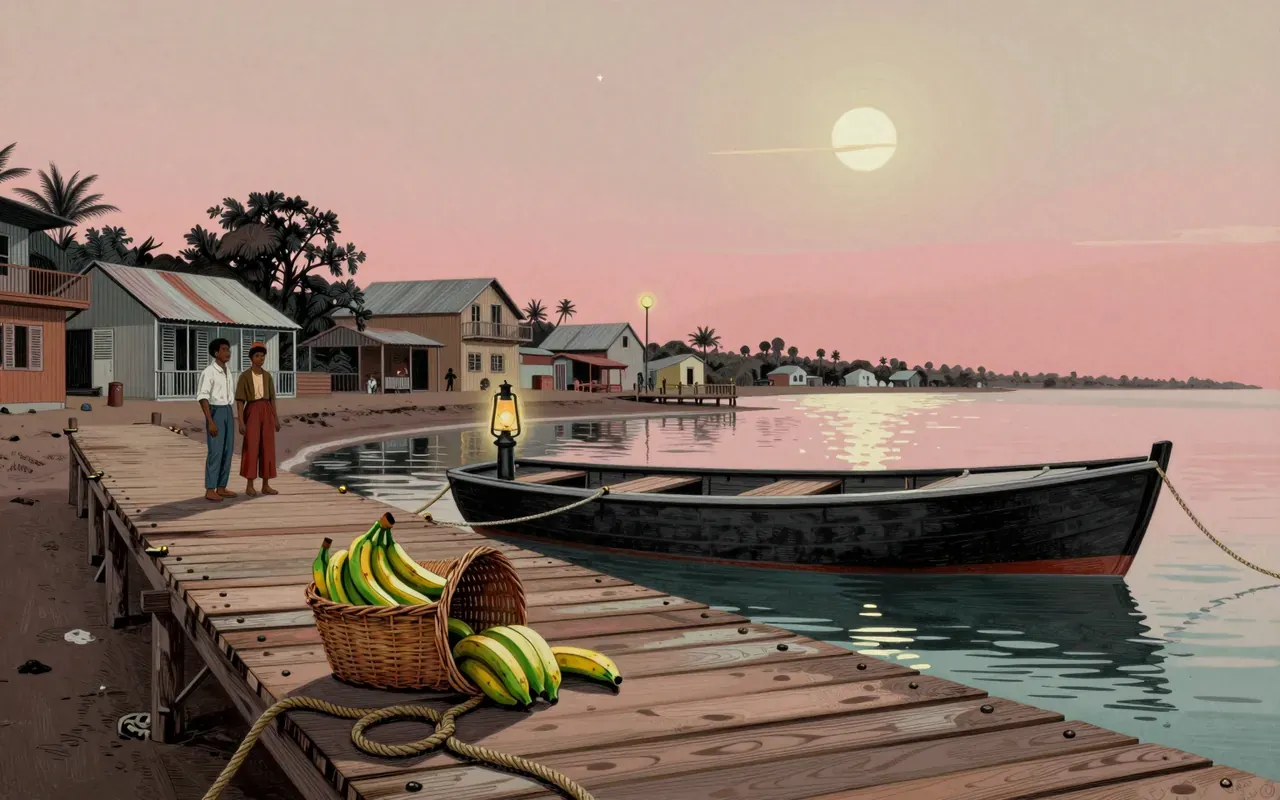
CalypsoHarry Belafonte · 1956Calypso is Harry Belafonte's third studio album, released in 1956 on RCA Victor. It features vocal performances backed by guitarists Millard J. Thomas and Frantz Casseus, Tony Scott and His Orchestra, and The Norman Luboff Choir on select tracks. It includes 'Day-O (The Banana Boat Song)', sung from the perspective of banana dock workers awaiting daylight, alongside 'Star-O' as a lyrical variant reprise, and 'Jamaica Farewell', a mento folk song published here for the first time. Production involved multiple producers, a conductor, a chorus leader, and contributors to visual and textual elements of the release.
11:02
How Will the Wolf Survive?Los Lobos · 1984How Will the Wolf Survive? is Los Lobos’s major label debut (October 1984), composed informally at Louie Pérez’s brother-in-law’s home, drawing lyrical inspiration from a National Geographic article about survival and identity; musically, it fuses Mexican traditions with R&B, country, and blues, and centres immigrant experience in songs like 'A Matter of Time' and 'Will the Wolf Survive?'.
1:52
Call of the ValleyHariprasad Chaurasia, Brij Bhushan Kabra, Shivkumar Sharma · 1968Call of the Valley brings Hariprasad Chaurasia, Brij Bhushan Kabra and Shivkumar Sharma together in a suite following a Kashmiri shepherd's day. This record uses the 1968 release dating found in the album reference and label-linked digital catalogue; some discographies date it 1967.
Up next in Music

Close to the Edge

Yes · 1972 · 9:52

This isn’t prog as spectacle — it’s prog as architecture: every Mellotron chord, every drum fill, every pause is load-bearing.

9:52