musicbriefs
10:29in productionCh. 1 · The Pivot/ 10:29 · ceiling 15 min
Disco, funk & soul · Prog & art rock

One Nation Under a Groove

Funkadelic swapped chaos for command — and made their most functional album by tightening the groove, not loosening it.

A functional, tightly wound funk record that trades psychedelic sprawl for groove discipline — built on fuzz, banjo, and Junie Morrison’s keys.

Chapters & takeaways5
  1. 0:52
    The Pivot

    This is Funkadelic’s tenth album and their most successful and influential — a pivot point, not a peak.

  2. 2:08
    Where It Was Made

    Recorded in Detroit and live in Monroe, Louisiana, with Junie Morrison’s keyboards redefining the band’s harmonic palette.

  3. 3:52
    How It Sounds

    Hendrix-style fuzz and progressive rock logic are built into the groove — not layered on top.

  4. 5:22
    What It Holds Together

    Verbal anarchy and tight funk grooves coexist because the music leaves space for both.

  5. 6:40
    Who Plays

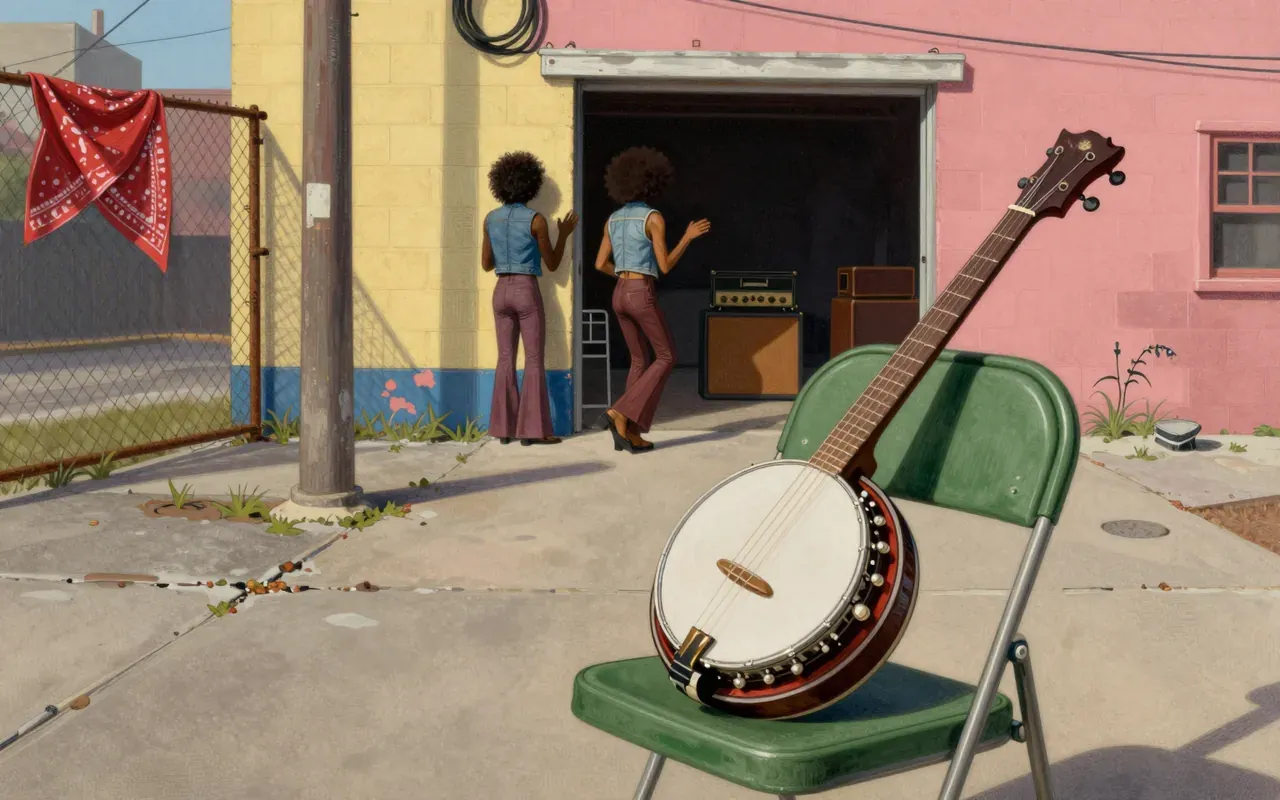
    Two guitarists and a banjo player lock into a single rhythmic intention — no solos, no hierarchy.

Running order6
  1. 01
    One Nation Under a Groove7:29

    Heard in Young Soul Rebels (1991)

  2. 02
    Groovallegiance7:00
  3. 03
    Who Says a Funk Band Can’t Play Rock?6:19
  4. 04
    Promentalshitbackwashpsychosis Enema Squad (The Doo-Doo Chasers)10:47
  5. 05
    Into You5:43
  6. 06
    Cholly (Funk Getting Ready to Roll!)4:28

Film placements are the ones described in each film's own entry, so the list is partial rather than complete.

Worth your time?

Yes. Hear the whole thing.

4.5/ 5
What works
  • The title track lands hardest: seven minutes of layered fuzz, syncopated bass, and Morrison’s keyboard textures locking into a hypnotic, room-filling groove.
  • 'Cholly (Funk Getting Ready to Roll!)' lands as a compact, high-energy release — four minutes of unbroken forward motion.
  • Fuzzed-out, Hendrix-style guitar licks run through every track, even the dancefloor-oriented ones.
What does not
  • It does not sustain its own density across all six tracks.
  • It does not offer lyrical clarity or tonal consistency.
  • It does not prioritise brevity.
Hear it if
  • DJs who need functional, textured grooves.
  • Guitarists who want to hear fuzz used structurally, not just decoratively.
  • Listeners who treat rhythm as architecture, not background.
Skip it if
  • Those who require lyrical clarity.
  • Those who demand tonal consistency.
  • Those who prefer brevity.
The written brief1 min read

What the record is and where it came from

One Nation Under a Groove is Funkadelic’s tenth studio album. It was released on September 22, 1978, on Warner Bros. Records. It marks Walter ‘Junie’ Morrison’s debut as keyboardist and songwriter, and reflects a more melodic, dance-based sound amid Parliament’s rising mainstream success.

How it sounds, and how it was made

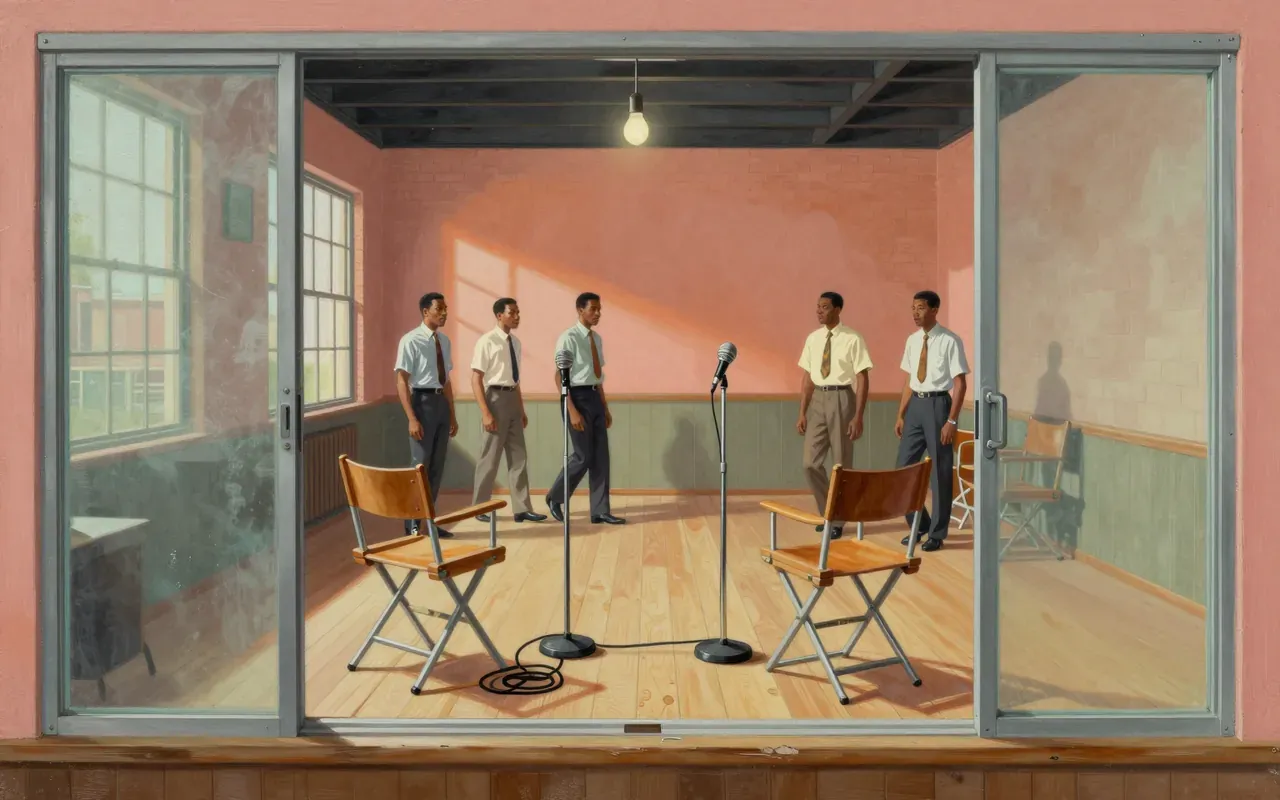
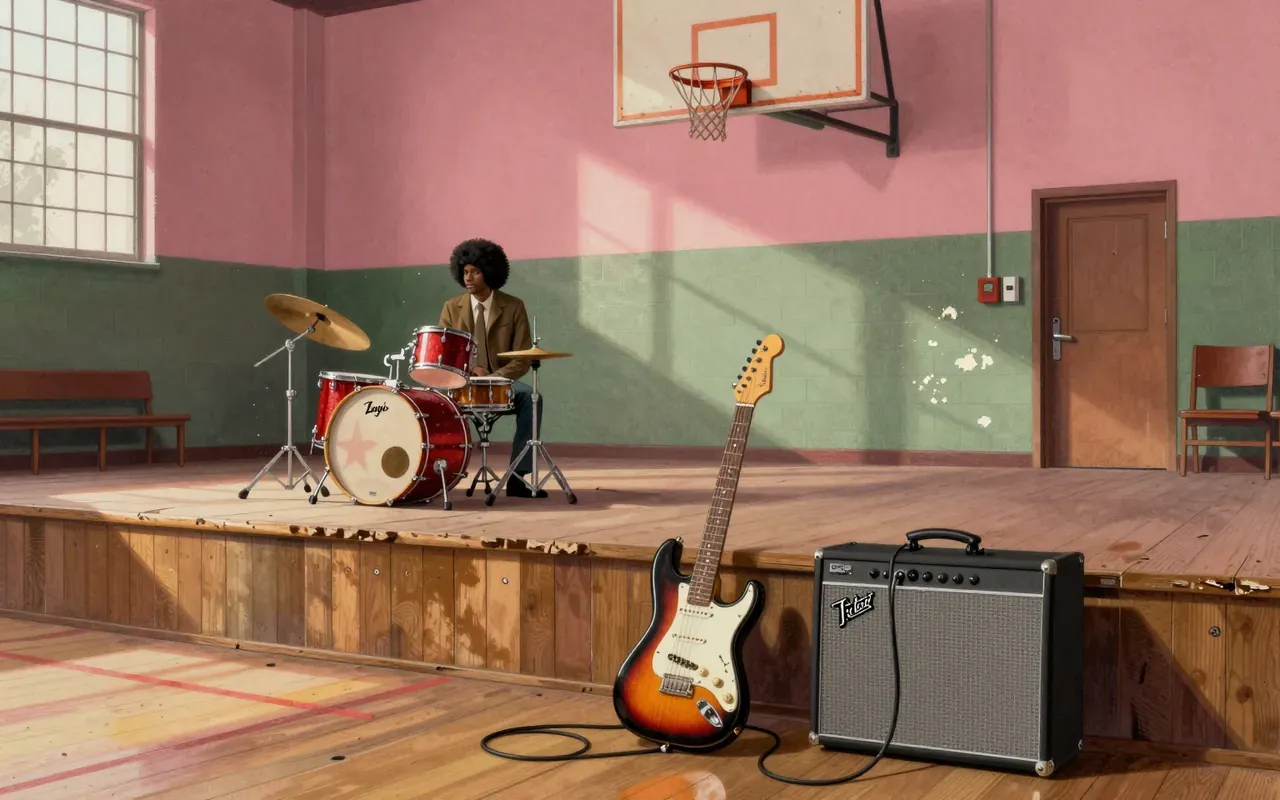
Fuzzed-out, Hendrix-style guitar licks run through every track, even the dancefloor-oriented ones. The album was recorded at United Sound Studio in Detroit, with one song captured live on April 15, 1978, at the Monroe Civic Center in Monroe, Louisiana. Walter ‘Junie’ Morrison plays keyboards and writes frequently; Mike ‘Kidd Funkadelic’ Hampton and Gary Shider play guitar; Bobby Lewis plays banjo.

What lands

The title track lands hardest: seven minutes of layered fuzz, syncopated bass, and Morrison’s keyboard textures locking into a hypnotic, room-filling groove. ‘Cholly (Funk Getting Ready to Roll!)’ lands as a compact, high-energy release — four minutes of unbroken forward motion.

What does not

It does not sustain its own density across all six tracks. The 10:47 runtime of ‘Promentalshitbackwashpsychosis Enema Squad (The Doo-Doo Chasers)’ overextends the groove without adding new rhythmic or harmonic information.

The ideas inside it

Verbal anarchy meets tight funk grooves. The record distils George Clinton’s concepts without softening their edges. It draws from progressive rock, progressive soul, Jimi Hendrix, and Sly Stone — not as references, but as structural logic.

Who should hear it, and who should not

DJs who need functional, textured grooves. Guitarists who want to hear fuzz used structurally, not just decoratively. Listeners who treat rhythm as architecture, not background. It is not for those who require lyrical clarity, tonal consistency, or brevity.

Is it worth your time

Yes. It is Funkadelic’s most successful and influential album — a rare convergence of melodic dance focus, progressive rock ambition, and tight funk execution.
Same genre · Disco, funk & soul4 of 20
11:19
AqueminiOutKast · 1998Aquemini is OutKast’s third studio album, released 29 September 1998. It was recorded primarily at Bosstown and Doppler Studios in Atlanta using live instrumentation, rotating session musicians, and extended jam-based composition. Big Boi and André self-produced most tracks, drawing on soul, trip hop, and electro textures — and reggae, via André’s constant listening to Bob Marley. The title merges their zodiac signs. It was certified double platinum and reached number two on the Billboard 200.
10:23
Funkentelechy vs. the Placebo SyndromeParliament · 1977Funkentelechy vs. the Placebo Syndrome is Parliament’s sixth studio album, released November 28, 1977, on Casablanca Records. It is a loose concept album set within the P-Funk mythology warning of the 'Placebo Syndrome' — consumerism and disco music, which George Clinton viewed as a crass commercialized variant of funk. The album features layered vocal performances, synthesizer-heavy arrangements (especially on 'Flash Light'), and collaborative guitar work across multiple tracks. 'Flash Light' became an R&B number one single, built around a prominent Minimoog bass line played by Bernie Worrell. The original vinyl release included a 22″×33″ poster of Sir Nose D'Voidoffunk and an 8-page comic book explaining the concept — both illustrated by Overton Loyd. Vocalists include George Clinton, Ray Davis, Glenn Goins, Garry Shider, Debbie Wright, Jeanette Washington, Lynn Mabry, Dawn Silva, Cordell Mosson, and Mallia Franklin (though Franklin is not listed on the liner notes). Guitarists include Michael Hampton, Glenn Goins, Garry Shider, and Phelps Collins (on 'Flash Light'). 'Sir Nose d'Voidoffunk (Pay Attention – B3M)' quotes 'Baa, Baa, Black Sheep' and 'Three Blind Mice', with altered lyrics referring to drug use.
9:00
Get Up Offa That ThingJames Brown · 1976A live-in-studio funk single that lands like a command. Recorded in two takes. No overdubs. No pause. No mercy. It is urgent, lean, and tax-avoidant.
8:56
Midnight StarMidnight Star · 1988Midnight Star (1988) is a post-breakout album with no documented commercial performance, stylistic departure, or critical repositioning. It relies on the same R&B/funk/vocoder foundation established by No Parking on the Dance Floor (1983), but none of its tracks charted, none received significant airplay, and none are cited as defining the band’s identity.
Up next in Music

Only Built 4 Cuban Linx…

Raekwon · 1995 · 10:26

A crime saga cut in a basement — no gloss, no guidebook, just strings, slang, and slow-burn stakes.

10:26