What the record is and where it came from
Dance Mania, released in 1958, places Tito Puente at the head of an orchestra built for dancing. His roles as leader, arranger and percussionist are inseparable from the result. The album offers a useful way into a band whose rhythmic identity involves many coordinated players.
How it sounds, and how it was made
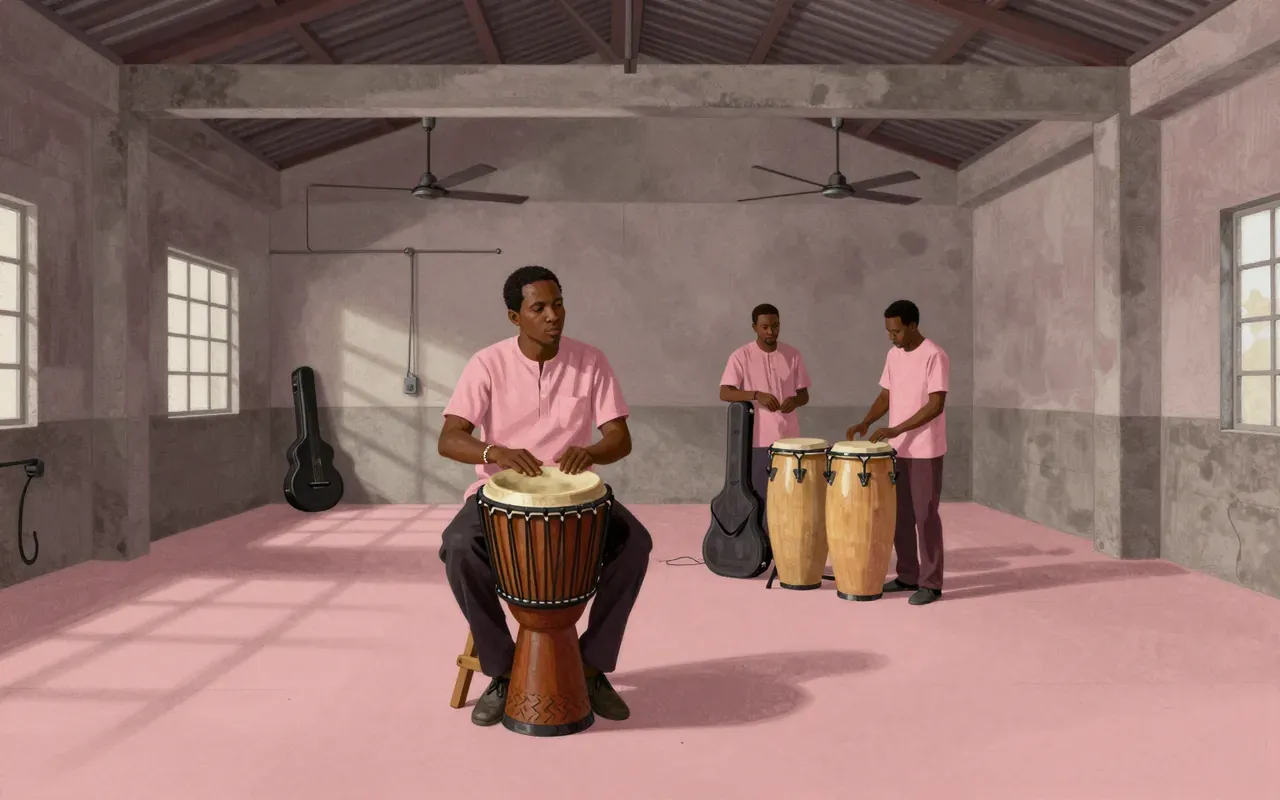
Timbales, congas and bongos share the arrangement with trumpet and saxophone sections, piano and bass. Ray Barretto is among the percussionists; Santitos Colón supplies lead vocals and chorus parts. Puente’s instrumental credits also include vibraphone and marimba, widening the colours available beyond a single percussion voice.
What lands
The attraction is the division of labour. Several percussion instruments can be active without serving identical functions, while the horn arrangements give the ensemble another means of emphasis. Vocal passages add a human focal point without reducing the surrounding band to a neutral backing.
What does not
The orchestra’s density can initially make its internal relationships harder to follow. A listener approaching it as a collection of percussion solos may miss the importance of arranged material. Its outward-facing dance purpose also leaves less room for the kind of quiet intimacy associated with smaller ensembles.
The ideas inside it
Dance music can be intricate because it serves movement. Coordination between players is part of what makes collective participation possible. Puente’s position within the ensemble suggests a form of leadership expressed through organising other people’s contributions as well as displaying his own.
Who should hear it, and who should not
Hear it if you want a dance record that rewards attention to ensemble detail. It is less suited to a search for sparse instrumentation or freely unfolding improvisation.
Is it worth your time
Yes. Change your focus between percussion, horns and voices; the record becomes more intelligible as those roles separate in your attention.