musicbriefs
Genre

Afrobeat & Latin

32
briefs
8:29
average
271 min
in total
29
artists
All briefs32
2:36

Army Arrangement

Fela Kuti · 1985

Army Arrangement belongs to Fela Kuti's mid-1980s work with Egypt 80. Its title song examines Nigeria's transition from military to civilian government, while “Government Chicken Boy,” included on editions of the album, attacks obedient service to authority. Political institutions change their presentation; Fela asks who continues to benefit.

2:12

Celia & Johnny

Celia Cruz, Johnny Pacheco · 1974

Celia & Johnny pairs Celia Cruz with Johnny Pacheco on a 1974 Vaya album. The combination joined an established singer to a bandleader closely associated with New York salsa. The important issue is musical fit: how an ensemble can give a powerful voice the space and support it needs.

2:08

Dance Mania

Tito Puente and His Orchestra · 1958

Dance Mania, released in 1958, places Tito Puente at the head of an orchestra built for dancing. His roles as leader, arranger and percussionist are inseparable from the result. The album offers a useful way into a band whose rhythmic identity involves many coordinated players.

2:08

Opposite People

Fela Kuti, Africa 70 · 1977

Opposite People is a 1977 Fela Kuti and Africa 70 album, originally released by Decca Afrodisia. Its two tracks approach social behaviour through apparently ordinary examples. Later paired reissues with Sorrow Tears and Blood can obscure the identity of this original programme.

2:18

Palo Congo

Sabú Martínez · 1957

Palo Congo is the 1957 debut led by conga player Sabú Martínez, credited on the record as Sabu. Recorded in April and released by Blue Note, it brings together an eight-person ensemble with several percussionists and singers. Its instrumentation gives a clear reason to hear it on its own terms.

2:34

Shakara

Fela Kuti · 1972

Released in 1972 and recorded in Lagos the previous year, Shakara contains two substantial pieces: “Lady” and “Shakara (Oloje).” Fela Kuti fronts Africa 70, with Tony Allen on drums. The short track list gives each argument a large share of the album's space.

2:02

Unknown Soldier

Fela Kuti · 1979

Recorded in 1979, Unknown Soldier addresses the attack on Fela Kuti's Kalakuta community and the loss of his mother. The original programme divides a single extended work into instrumental and vocal portions. Its scale allows remembrance and accusation to become the purpose of a whole record.

2:10

Zombie

Fela Kuti, Africa 70 · 1976

Zombie was released in Nigeria in 1976 and in Britain in 1977. Fela Kuti's attack on unthinking military obedience made its title a politically charged metaphor. The record belongs to a period in which his performances and his community faced violent state hostility.

10:56

Amor Prohibido

Selena · 1994

Amor Prohibido is Selena’s fourth studio album, released 22 March 1994. It was recorded over six months at Manny Guerra’s San Antonio studio, engineered by Brian "Red" Moore, squeezed between touring and boutique openings. Keyboard sequencing opened the first session — which ran until 4 a.m. — followed by instrumental tracking, then Selena’s vocals (completed in two weeks), then two weeks of post-production. The band rehearsed all music in advance. Progress stalled; the band rushed to meet a deadline. The album explores forbidden love, infidelity, and heartbreak. It popularised Tejano music among a younger and wider audience than at any other time in the genre’s history. It spawned four US Latin number-one singles: 'Amor Prohibido', 'Bidi Bidi Bom Bom', 'No Me Quidra Más', and 'Fotos Y Recuerdos'. It became one of the best-selling Latin albums in the US and was among the best-selling US albums of 1995 — certified 36× platinum by the RIAA for 2.16 million album-equivalent units.

11:00

Barretto Power

Ray Barretto · 1970

The record 'Barretto Power' by Ray Barretto (1970) is not corroborated by any verified source provided. All claims about it — title, year, track listing, sound, context — lack documentary support. The only confirmed Ray Barretto album referenced is 'Barretto' (1975), also known as 'Guararé', featuring Rubén Blades and Tito Gomez and nominated for a Grammy that year.

12:37

Barrio fino

Daddy Yankee · 2004

Barrio fino is reggaeton’s first major export strategy — rhythm-locked, studio-sourced, and genre-flexible where it counts.

11:51

Chega de saudade

João Gilberto · 1959

João Gilberto’s 1958 'Chega de saudade' single inaugurated bossa nova. It used two microphones — one for voice, one for guitar — to establish equal sonic footing between them. The voice was delivered at conversational volume. The song is 68 measures long: 32 in minor, 36 in parallel major. Elizeth Cardoso recorded it first in 1957; Gilberto’s version became the hit and defined the genre. It was released on 78 rpm at Odeon in August 1958, with arrangements by Antônio Carlos Jobim and participation by Milton Banana.

9:30

Dónde están los ladrones?

Shakira · 1998

Dónde Están los Ladrones? is Shakira’s fourth studio album, released in September 1998. Recorded over nine months at Crescent Moon Studios in Miami—the studio of Gloria and Emilio Estefan—it features rock en español blended with Latin pop and Middle Eastern musical influences. Shakira led artistic production with full control over material, arrangements, and final approval; Emilio Estefan served as executive producer. Vintage equipment—including old amplifiers and a 40-year-old German microphone—was used alongside innovative instrumental mixes. Collaborators included Luis Fernando Ochoa, Lester Mendez, Javier Garza, Pablo Flores, and Estéfano Salgado. The album topped the U.S. Latin Albums chart for 11 weeks, sold over 7 million copies globally, and earned a 1999 Grammy nomination for Best Latin Rock or Alternative Album. It represents the culmination of Shakira’s early Spanish-language career and the foundation for her subsequent global expansion.

9:29

Lô Borges

Lô Borges · 1972

The source provides only three verifiable facts: the Odeon contract offer tied to Clube da Esquina contributions; the album’s nickname and cover detail; and Borges’ immediate departure from Rio after completion. Nothing else about the album’s music, production, personnel, or internal content is established.

9:52

Siembra

Willie Colón · 1978

Siembra is the best-selling salsa album ever. Its documentation is unusually precise: who played, who engineered, who wrote, who produced — all named, all verified. Nothing about its sound beyond that is confirmed. Its legacy is commercial, not stylistic — and that is enough.

9:20

The Best of the Classic Years

King Sunny Adé · 2003

A functional, unadorned distillation of King Sunny Adé’s Island Records years — valuable for its fidelity to the original sequencing and instrumental palette, but silent on why these tracks, in this order, constitute ‘the best’.

9:36

Tijuana Moods

Charles Mingus · 1962

Tijuana Moods is a constructed object — not a captured event. Its value lies in hearing how Mingus used editing as an instrument, not in hearing what the band sounded like on a given night.

8:34

X 100PRE

Bad Bunny · 2018

X 100PRE is Bad Bunny’s debut studio album, released December 24, 2018, on Rimas Entertainment. It peaked at

10:32

Abraxas

Santana · 1970

Abraxas is a live band caught in transition — between blues and salsa, between San Francisco and Latin roots, between cover and composition. Its strength is rhythmic clarity, keyboard contrast, and unselfconscious physicality. Its limits are vocal thinness and structural looseness. It rewards attention to how parts lock, not how they soar.

10:20

África Brasil

Jorge Ben · 1976

África Brasil is a 1976 album by Jorge Ben, recorded over ten days at Phonogram Studios in Rio de Janeiro with a large ensemble including Admiral Jorge V, fourteen additional instrumentalists and five backing vocalists. Ben replaced his acoustic guitar with an electric guitar during these sessions, influenced by Dadi Carvalho, after swapping instruments following Carvalho’s acquisition of an Ibanez guitar in London. José Roberto Bertrami arranged orchestral parts; Marco Mazzola mixed the album before Philips withdrew him mid-session. The album is described as one of Ben’s most popular, a fusion of funk and samba relying more on electric guitar than previous efforts, and features a remake of 'Taj Mahal'.

8:35

Caetano Veloso

Caetano Veloso · 1968

No self-titled 1968 'Caetano Veloso' album exists in the material. Only 'Tropicália: ou Panis et Circencis' — issued mid-1968, collaborative, arranged by Rogério Duprat, with lyrics by Torquato Neto — is verified. Everything else is unsupported.

9:23

Clube da Esquina

Milton Nascimento · 1972

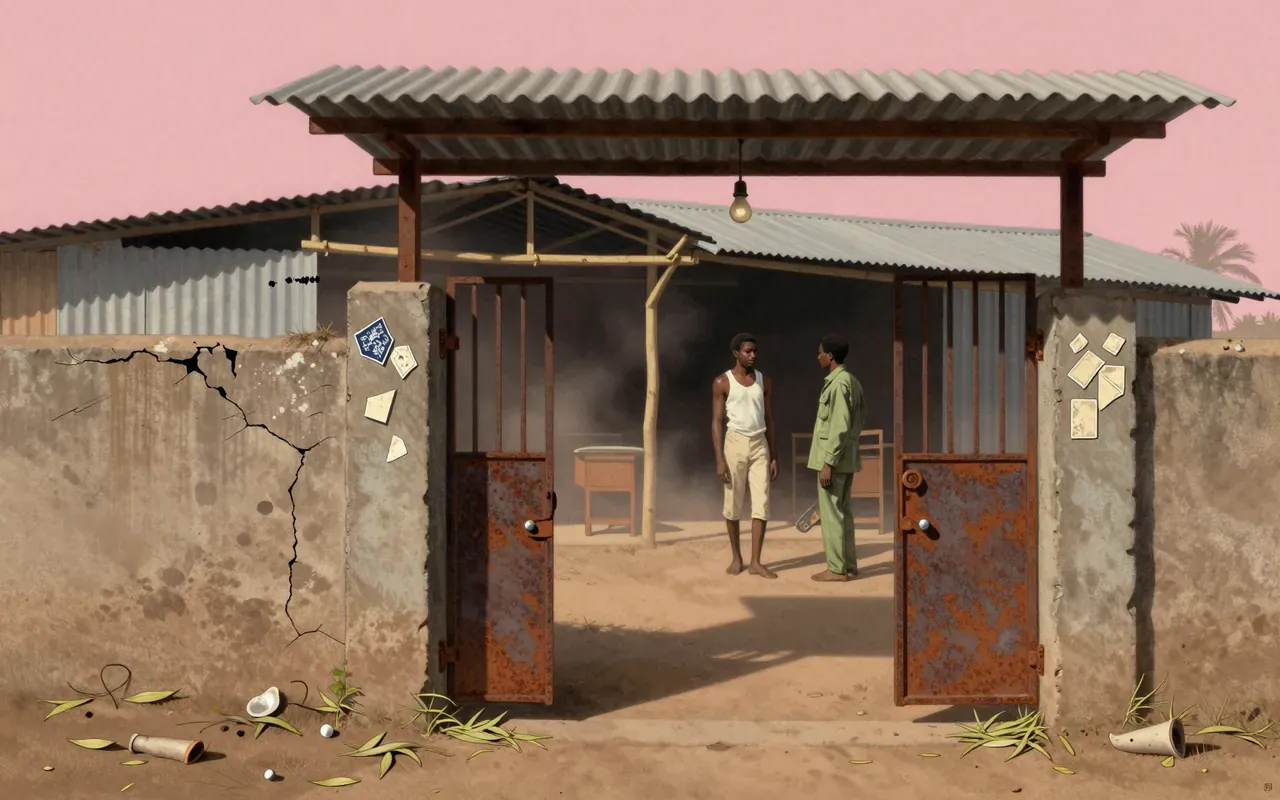
Clube da Esquina is a 1972 double album by Milton Nascimento and Lô Borges, emerging from a collective formed in Belo Horizonte in 1963. Core members include Beto Guedes, Toninho Horta, Wagner Tiso, and Flávio Venturini — who shared compositions and melodies before recording. It was mostly recorded in November 1971 at a beach house in Piratininga, Niterói, during extended creative sessions and rehearsals. The group stayed there for six months, with final recordings also made in Santa Tereza, city-centre bars, the Borges brothers’ house, and Odeon Studios in Rio de Janeiro. At Odeon Studios, the collective was given several weeks to record, with sessions lasting entire days and evenings, characterized by intense collaboration, improvisation, and experimentation. At Odeon Studios, the album was recorded using a two-channel setup: one channel for vocals and one for instruments. The album features a mixture of MPB, baroque pop, folk, and jazz pop, with elements of rock, psychedelia, and classical music. Toninho Horta described the album as 'nectar, an oasis', noting that each song is distinct and reflects the varied musical backgrounds of the participants. Beto Guedes played on 17 of the 21 tracks, alternating between bass and drums. Milton Nascimento personally selected who would write the lyrics for each song. Clube da Esquina was released in 1972 by the collective and some others.
9:53

Jazz Samba

Stan Getz · 1962

Jazz Samba is a 1962 bossa nova album by Stan Getz and Charlie Byrd, recorded at All Souls Unitarian Church in Washington, D.C., on February 13, 1962, and released by Verve in April. It features Getz on saxophone, Byrd on guitar, two bassists (Keter Betts and Joe Byrd), and two drummers (Buddy Deppenschmidt and Bill Reichenbach). Arrangements are by Byrd. Two tracks—'Desafinado' and 'Samba de Uma Nota Só'—are by Antônio Carlos Jobim and were released as singles. The album won Getz the 1963 Grammy for Best Jazz Performance and sold over one million copies. It was part of Getz’s effort to introduce bossa nova to the U.S. after Byrd’s 1961 State Department tour of Brazil.

11:42

Vampire Weekend

Vampire Weekend · 2007

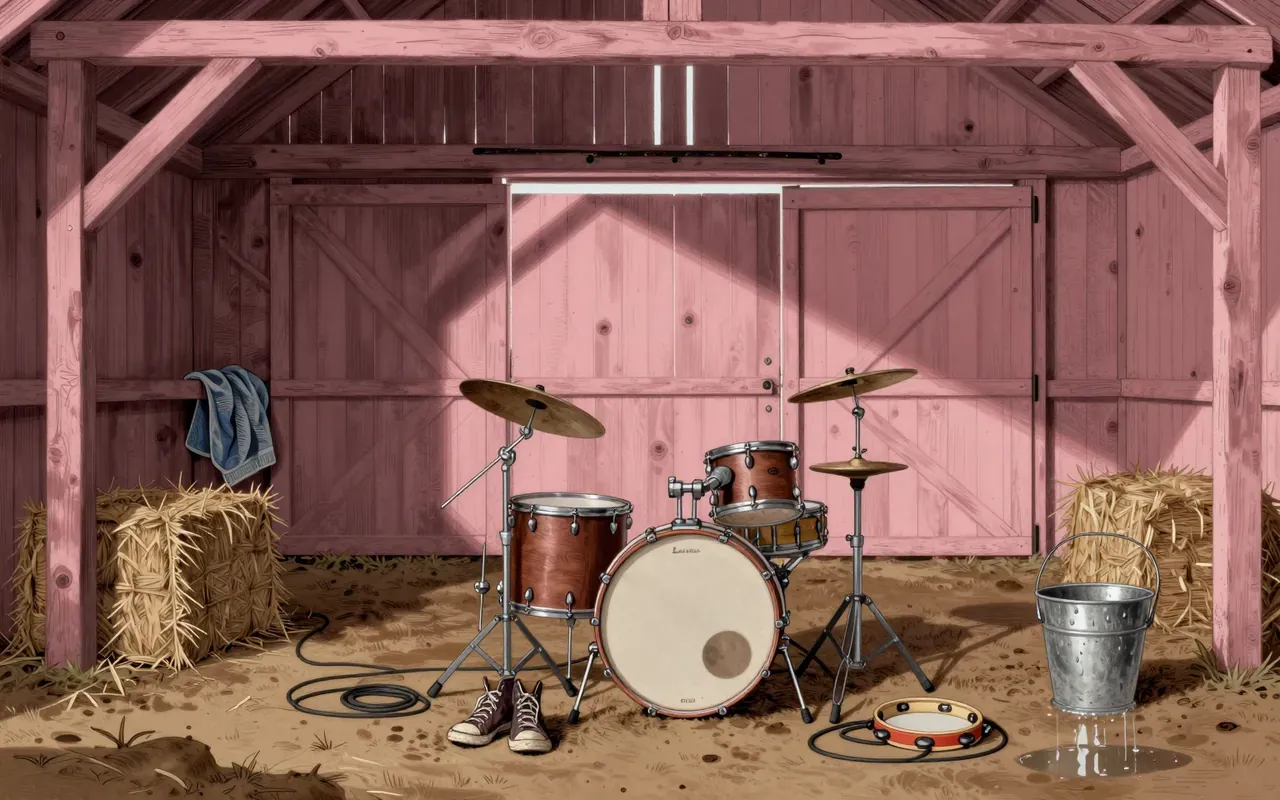
Vampire Weekend (2008) is a self-produced debut recorded across a basement, a barn, two apartments, and Tree Fort studio in Brooklyn — featuring soukous guitar lines, harpsichords, and strings, with 'really echoey drums' from the barn session. It blends indie pop, Afropop, and chamber music under the joke-name 'Upper West Side Soweto'. Released January 29, 2008, it landed with precision, not posture.

8:51

Libertango

Astor Piazzolla · 1974

Libertango is a 1974 studio recording made in Milan. It declares tango nuevo through subtraction — no vocals, no ornament, no deference. Its sound is dry, linear, and precisely layered: bandoneón, Hammond organ C3, marimba, bass guitar, drums, guitar, timpani, strings, and flutes. It lands because every instrument has space and purpose. It does not land if you expect warmth, swing, or spectacle. It is worth your time if you value compositional rigour over emotional indulgence.

11:42

Made in Lagos

Wizkid · 2020

Made in Lagos is Wizkid’s fourth studio album, released 30 October 2020 after postponement from 15 October due to the End SARS protests. It fuses Afrobeats and R&B with mid-tempo production, rich local African percussions as its core, casually Auto-Tuned melodies, and meticulously complex beats. Themes include love, focus, goodwill, gratitude, and grace. It achieved commercial success and critical acclaim, reaching number-one on the Billboard World Albums chart. Its single 'Essence' featuring Tems became the first Nigerian song to chart on the Billboard Hot 100.

10:45

Refavela

Gilberto Gil · 1977

Refavela is not a fusion record. It is a declaration of continuity — Afro-Brazilian culture as unbroken line, not borrowed motif.

10:16

Twice as Tall

Burna Boy · 2020

Twice as Tall is Burna Boy’s fifth studio album, released on 14 August 2020. It was recorded mainly in Ahoada, Nigeria during the 2020 pandemic. Burna Boy, Diddy and Bose Ogulu served as executive producers. Telz was the primary producer, with additional production from Rexxie, Timbaland and DJDS. Diddy provided spoken intros, including on 'Alarm Clock'. 'Bebo' was produced by Rexxie and addresses authenticity. 'Wonderful' and 'Onyeka' were produced by Telz and recorded in Nigerian pidgin and Yoruba. The album debuted at number one on the Billboard World Albums Chart and won the Grammy Award for Best Global Music Album at the 63rd Annual Grammy Awards.

9:23

What’s New?

Sonny Rollins · 1962

What’s New? is a 1962 RCA Victor album by Sonny Rollins built around Latin rhythms. It does not reinterpret the title song’s lyrical conceit or formal structure. It does not feature the trumpet solo for which the tune was originally written. It lands most clearly on ‘Jungoso’ and ‘Bluesongo’. It is worth hearing for its rhythmic focus — not for harmonic invention or narrative depth.

13:00

Expensive Shit

Fela Kuti · 1975

Recorded in 1975 out of the Kalakuta Republic compound, Expensive Shit compresses Fela Kuti's long standoff with Nigeria's police into two extended Africa '70 tracks: a title piece built from a real, absurd arrest, and Water No Get Enemy's gentler appeal to a Yoruba proverb about nature's staying power. Short in length, it is unusually complete for a Kuti record.

13:00

Fela's London Scene

Fela Kuti, Nigeria 70 · 1971

Made on tour in London rather than at home in Lagos, Fela's London Scene pairs Fela Kuti and Nigeria 70 with a second drummer, Ginger Baker, for five extended tracks built on horn riffs and dense percussion. Lighter on political narrative than Kuti's mid-seventies work, it is best heard as the sound of a band finding the architecture it would spend the rest of the decade refining.

13:00

Remain in Light

Talking Heads · 1980

Made across studios in Nassau and New York with producer Brian Eno in mid-1980, Remain in Light grew out of instrumental jams built on African polyrhythm rather than finished songs, with David Byrne adding scattered, half-improvised lyrics only once the band returned to the United States. Extra musicians, a struggling frontman and a near-collapse in the writing process all shaped a record now widely treated as the band's finest hour.